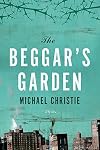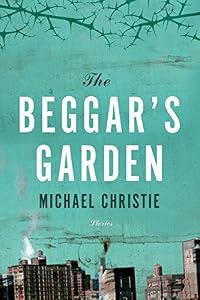
Beggar's Garden
by Michael Christie
On This Page
Description
Longlisted for the 2011 Scotiabank Giller Prize Critically lauded, The Beggar's Garden is a brilliantly surefooted, strikingly original collection of nine linked short stories that will delight as well as disturb. The stories follow a diverse group of curiously interrelated characters, from bank manager to crackhead to retired Samaritan to web designer to car thief, as they drift through each other's lives in Vancouver's Downtown Eastside. These engrossing stories, free of moral judgment, show more are about people who are searching in the jagged margins of life--for homes, drugs, love, forgiveness--and collectively they offer a generous and vivid portrait of humanity, not just in Vancouver but in any modern urban centre. The Beggar's Garden is a powerful and affecting debut. Its individual stories have been anthologized in The Journey Prize Stories and have been nominated for major awards, including a National Magazine Award for fiction. The collection has been longlisted for the Frank O'Connor International Short Story Award. show lessTags
Recommendations


























Member Recommendations

Member Reviews
This is a fine collection of linked short stories. Christie worked in homeless shelter in the rough Eastside neighborhood of Vancouver BC. Clearly he was touched by the people he met there, for the empathy he feels for the people he writes about -- the addicted, the mentally ill, the forgotten and marginalized of society -- is palpable.
What's equally impressive is that Christie writes about them without it feeling exploitative. He looks deeply into their lives, their thoughts and their hearts, but there's no sense of voyeurism, just as the is no moralizing. The sympathy he creates is entirely due to his talent at making us see his characters as humans no so unlike us, broken, fragile, floundering, perhaps, but still us and not some show more judgment-inducing "them".
The writing is clean and precise, and creates the perfect tone -- neither too stark, nor too romantic.
I recommend this book. I would be surprised if you don't find some aspect of yourself within its pages. show less
What's equally impressive is that Christie writes about them without it feeling exploitative. He looks deeply into their lives, their thoughts and their hearts, but there's no sense of voyeurism, just as the is no moralizing. The sympathy he creates is entirely due to his talent at making us see his characters as humans no so unlike us, broken, fragile, floundering, perhaps, but still us and not some show more judgment-inducing "them".
The writing is clean and precise, and creates the perfect tone -- neither too stark, nor too romantic.
I recommend this book. I would be surprised if you don't find some aspect of yourself within its pages. show less
This collection of short stories is set in the “riotous and hellish, but strangely contained, slum of [Vancouver’s] Downtown Eastside”. This area which includes part of Hastings Street is infamous across Canada. As one of Christie’s characters observes: “It was as if the country had been tipped up at one end and all the sorry b!@#$%$s had slid west, stopping only when they reached the sea, perhaps because the sea didn’t want them either.”
Told from various points of view – the grandfather who leaves food and clothing in dumpsters that he knows his drug-addicted grandson dives, an addict who has just spent his entire welfare cheque on a giant dope trip, a woman who runs a second-hand store, and so on – the stories all show more intrigued me. Short story collections always seem to have a few weaker pieces. I didn’t think this had any.
Read this if: you’re interested in knowing just how close any one of us is to being on the street; or you’d like some insight into the people in a Canadian city’s slum. 4 stars show less
Told from various points of view – the grandfather who leaves food and clothing in dumpsters that he knows his drug-addicted grandson dives, an addict who has just spent his entire welfare cheque on a giant dope trip, a woman who runs a second-hand store, and so on – the stories all show more intrigued me. Short story collections always seem to have a few weaker pieces. I didn’t think this had any.
Read this if: you’re interested in knowing just how close any one of us is to being on the street; or you’d like some insight into the people in a Canadian city’s slum. 4 stars show less
I really wanted to love this book! After all, I have lived in Vancouver for many years, and I am familiar with the plight of those in Vancouver Downtown Eastside.
This is a small volume of nine short stories (262pages) that take place on Vancouver's Downtown Eastside. To the author's credit, the stories are told without judgement, morality, or sentimentality. The author worked on the Vancouver Downtown Eastside for a time as a homeless shelter, reaching out to those in need, so I'm sure he knows his subject.
However, I found that I was left a bit cold by some of the short stories. I found the book to be uneven, which I suppose is not unexpected in book of short stories. Some tales really grabbed me - like "Discard" - the story of a show more widower left on his own, who decides to seek out his long forgotten grandson by going to live in the alleys where unbeknownst to his grandson, he meets up with him and they join forces." Good Bye PorkPie Hat" was a look into rooming houses in the downtown Eastside and a man addicted to crack. " King Me" was a fascinating look into the lives - one in particular - of those still left in Vancouver's Mental Hospital, Riverview. That story was quite heartbreaking -and yet - those people probably have it better than those who have been turned out of Riverview Hospital to the Downtown Eastside. Another story tugged at my heartstrings -" The Queen of Cans and Jars". In summary, it's the tale of a woman who worked in the shoe department of Woodwards. After losing her job at Woodwards she choses to run and live in within the premises of a second hand thrift shop in the Downtown Eastside. Another stab at the heart concerns the story of a mentally disabled man, who relies on a somewhat dishonest buddy to manage his affairs, rather than live in a boarding house. I don't want to say to much more - so as not to spoil the book for any of you. The last story is an interesting twist of a tale.
While this book did not grab me the way I expected - in retrospect, I suppose the majority of the stories were worthwhile reads. This author did particularly well in portraying the poor, the marginalized, and the mentally ill -and how so many of us could be but a short step from those on the street. For that reason alone, perhaps this is an important read. show less
This is a small volume of nine short stories (262pages) that take place on Vancouver's Downtown Eastside. To the author's credit, the stories are told without judgement, morality, or sentimentality. The author worked on the Vancouver Downtown Eastside for a time as a homeless shelter, reaching out to those in need, so I'm sure he knows his subject.
However, I found that I was left a bit cold by some of the short stories. I found the book to be uneven, which I suppose is not unexpected in book of short stories. Some tales really grabbed me - like "Discard" - the story of a show more widower left on his own, who decides to seek out his long forgotten grandson by going to live in the alleys where unbeknownst to his grandson, he meets up with him and they join forces." Good Bye PorkPie Hat" was a look into rooming houses in the downtown Eastside and a man addicted to crack. " King Me" was a fascinating look into the lives - one in particular - of those still left in Vancouver's Mental Hospital, Riverview. That story was quite heartbreaking -and yet - those people probably have it better than those who have been turned out of Riverview Hospital to the Downtown Eastside. Another story tugged at my heartstrings -" The Queen of Cans and Jars". In summary, it's the tale of a woman who worked in the shoe department of Woodwards. After losing her job at Woodwards she choses to run and live in within the premises of a second hand thrift shop in the Downtown Eastside. Another stab at the heart concerns the story of a mentally disabled man, who relies on a somewhat dishonest buddy to manage his affairs, rather than live in a boarding house. I don't want to say to much more - so as not to spoil the book for any of you. The last story is an interesting twist of a tale.
While this book did not grab me the way I expected - in retrospect, I suppose the majority of the stories were worthwhile reads. This author did particularly well in portraying the poor, the marginalized, and the mentally ill -and how so many of us could be but a short step from those on the street. For that reason alone, perhaps this is an important read. show less
Although the title for Michael Christie’s story collection is drawn from the final story, it might well have been pulled from the second story’s title, “Discard”.
It’s at the heart of this debut collection: that which has been left behind, tossed out, put in the trash, given away, or dismissed as no longer useful/valuable/functional.
(Literally “at the heart”, for the author clearly feels a strong emotional connection with the discarded.)
People or objects that have been cast aside: these are the flora and fauna of The Beggar’s Garden.
Don’t let that put you off, however: these stories are not bleak and sorrow-filled stories of the disenfranchised.
Indeed, there are plenty of humourous moments in these tales.
(I have lot show more more to say about this collection here, if you're interested. It will have a wide appeal, even for those who normally prefer novels to stories.) show less
It’s at the heart of this debut collection: that which has been left behind, tossed out, put in the trash, given away, or dismissed as no longer useful/valuable/functional.
(Literally “at the heart”, for the author clearly feels a strong emotional connection with the discarded.)
People or objects that have been cast aside: these are the flora and fauna of The Beggar’s Garden.
Don’t let that put you off, however: these stories are not bleak and sorrow-filled stories of the disenfranchised.
Indeed, there are plenty of humourous moments in these tales.
(I have lot show more more to say about this collection here, if you're interested. It will have a wide appeal, even for those who normally prefer novels to stories.) show less
"The writing is brilliant, strong, and humorous‚Ãîbut not derogatory. Christie writes straightforwardly about the characters conditions, and some stories donÂÃôt even deal with someone directly linked to the DTES, but someone they know or love.
Read my full review: http://www.monniblog.com/2011/02/the-beggars-garden-by-michael-christie/"
Read my full review: http://www.monniblog.com/2011/02/the-beggars-garden-by-michael-christie/"
On the Giller Longlist
Ratings
Members
- Recently Added By
Published Reviews
ThingScore 100
The gravity of these words echoes throughout the eight other stories in Christie’s first book, The Beggar’s Garden, a skillfully composed collection of short fiction illustrating the gritty textures of life in places like Vancouver’s Downtown Eastside and Coquitlam’s Riverview Hospital. The narratives showcase lonely characters who scour for connection while struggling with drugs, show more mental illness, or regret; their encounters with charity are often tainted by a need for redemption or distraction, either their own or someone else’s....This volume’s transcendent tales speak of yearning, remorse, and renewal, and their grimness is offset by apposite bolts of black humour...His assured prose compassionately describes these characters’ internal orbits and discloses the personal histories that rustle through back alleys and hide beneath the ragged façades we pass on the street show less
added by vancouverdeb
It is to his credit that Christie never demonizes his characters, nor does he reduce them to a series of tics or pat psychology. The people in these stories are complex individuals, fully capable of surprising the reader by acting in ways that are unexpected, yet wholly appropriate....In Christie’s hands, the Downtown Eastside becomes every bit as thriving and alive as Richler’s St. Urbain show more Street or Michel Tremblay’s Plateau-Mont-Royal. The Beggar’s Garden takes the pulse of history by unsentimentally dramatizing the way a certain segment of society lives now, and in so doing stands as a sympathetic and compassionate examination of modern urban loneliness and disaffection. show less
added by vancouverdeb
Michael Christie’s debut collection of nine linked stories is dazzling. Drawing on his experience working in a homeless shelter in Vancouver’s Downtown Eastside, Christie explores the intense humanity of people living on the margins of society. His characters include addicts, homeless people, hospital patients, and those who interact with the city’s outcasts....Christie manages to create show more sympathy for his characters, no matter how damaged or drug-addled....Employing straightforward, disarming prose, Christie gives voice to the disaffected and unwanted figures in our society, forcing readers to pay attention to a class of humans they would most often ignore show less
added by vancouverdeb
Author Information

5 Works 1,153 Members
Awards and Honors
Awards
Notable Lists
Common Knowledge
- Canonical title*
- Le jardin du mendiant
- Original title
- The Beggar's Garden
- Original publication date
- 2011
- Important places
- Downtown Eastside, Vancouver, British Columbia, Canada; Vancouver, British Columbia, Canada
- Dedication
- For Cedar
- Blurbers
- Galloway, Steven; O'Neill, Heather; Henderson, Lee; Whittall, Zoe
*Some information comes from Common Knowledge in other languages. Click "Edit" for more information.
Classifications
Statistics
- Members
- 79
- Popularity
- 400,175
- Reviews
- 6
- Rating
- (4.03)
- Languages
- English, French
- Media
- Paper, Ebook
- ISBNs
- 4
- ASINs
- 2