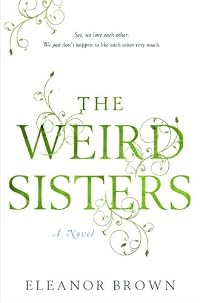
The Weird Sisters
by Eleanor Brown 
On This Page
Description
Unwillingly brought together to care for their ailing mother, three sisters who were named after famous Shakespearean characters discover that everything they have been avoiding may prove more worthwhile than expected.Tags
Recommendations




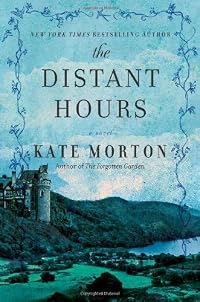
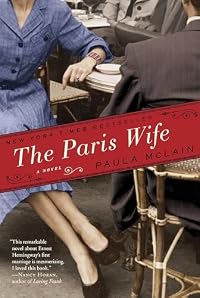
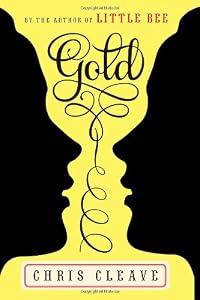
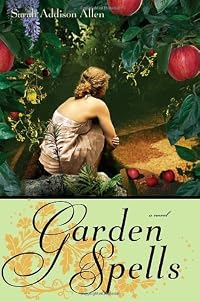

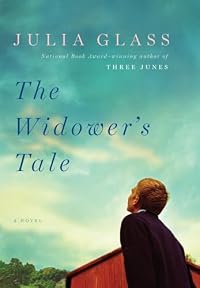
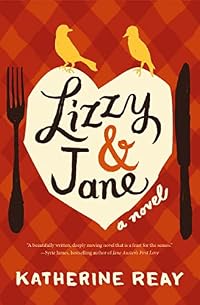
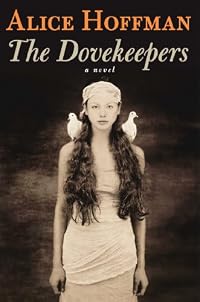
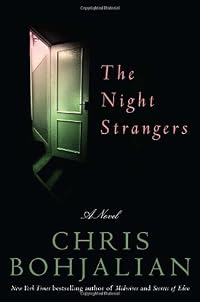

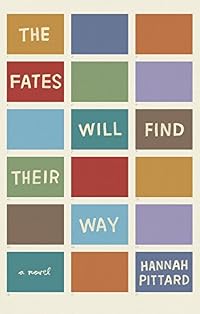
Member Recommendations
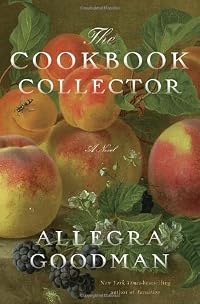
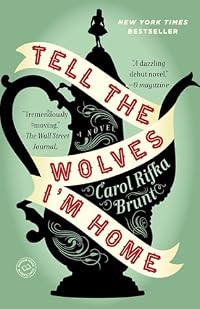
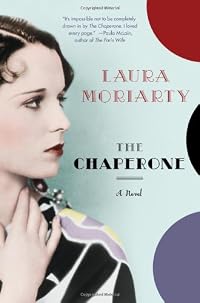
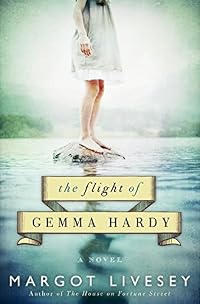
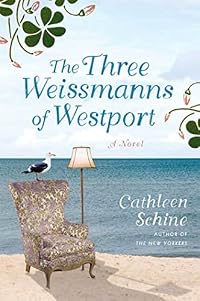
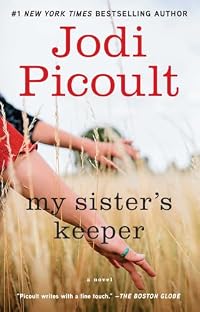
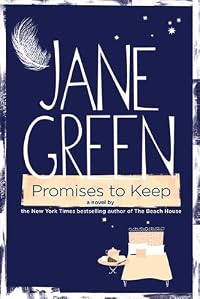
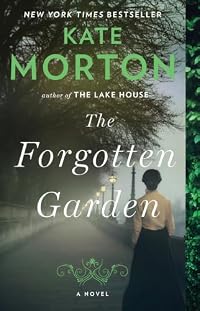
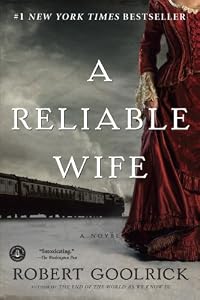
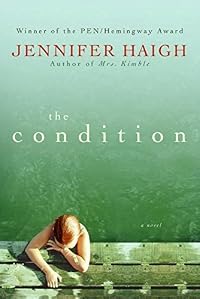
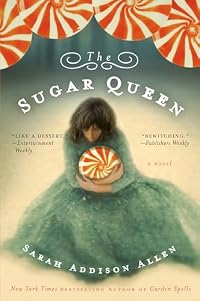
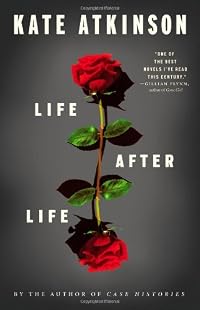
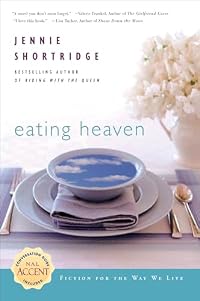
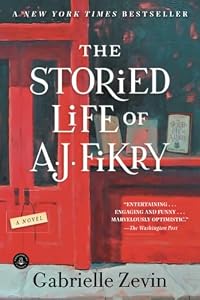
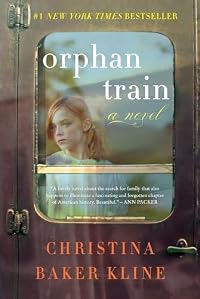
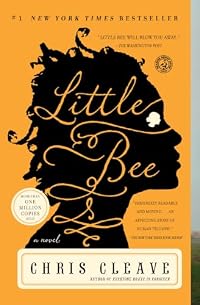
anonymous user Similar story line - 3 sisters who come home to deal with a family crisis and end up facing their own demons.
11
elbakerone Both books center on heroines named after Shakespearean characters and deal with the theme of a destiny or personality based on their literary counterparts.
11

by anonymous user
Member Reviews
I am going to tell you right up front that I did not like this book. Sometimes I just can't get into a book, but this was different. This was objectively bad, and I was sort of angry at the book in an uncharacteristic way. So, fair warning on that -- here are my thoughts.
Remember how on Sex and the City each character was a cut-out, a Manhattan archetype, but together they were a blast. After some time it became clear that though each character was one dimensional, all togeter they made one complete person - the four women were one character at the end of the day. Sure that person was a pure egoist, sophisticated yet utterly lacking in substance, but man was she entertaining. So, the Weird Sisters are exactly the same as the SatC show more characters, each woman flat and selfish (in slightly different ways)but all made to fit together into one character. To underline the fact that these characters make one person the book is written in some sort of multiple first person. This is a really irritating device.
Where do the women here part company with the SatC crew? Well, instead of witty and pretty these women are entirely humorless and badly dressed. (There is one sister who is supposed to be very stylish, and then she is described as wearing a short linen jacket with a long denim skirt. Trendy sister wears Indian skirts and tank tops. Fair to say that the writer has no idea what would be considered stylish outside of a small town gardening club or Burning Man.) Not one of these women has anything about her which is appealing so when blended they make this polymorphous character who has absolutely nothing to interest anyone. Rose is a self-righteous prig, Bianca is a pathetic, self-centered dishonest slut, and Cordelia is a ridiculous flighty modern day hippie who wears pigtails though nearly in her 30's and takes no responsibility for anything. Add to that the fact that these women are in a small town in Ohio (I am thinking Oberlin.) A lovely bucolic place, but not NYC by a long shot, so the most interesting character in SatC, namely The City, is absent too.
Don't get me wrong, I enjoy unlikeable intersting characters. I love Chuck Palahniuk, Jennifer Egan, Philip Roth and Jonathan Franzen among others, and there are not many people to love in the work of any of those authors. I do require that the people who inhabit a story be interesting, that there be something about them I want to figure out. There are no layers here to pull back. I really can't think why anyone would want to know more about any of these women. I wanted to get away from them.
So, we have established that I found the leads awful, poorly drawn and fundamentally ugly but the secondary and tertiary characters are even worse. The father, a Shakespeare scholar, really just needs to die. He is utterly disconnected to everyone around him and speaks in quotes from the Bard. He named his daughters for 3 of Shakespeare's most difficult women characters. Let me emphasize that he speaks essentially entirely in quotes from Shakespeare's plays (not sonnets for some reason.) How boring and useless do you need to be to speak only with someone else's words. Granted, if you are going to channel someone, Shakespeare is a good source, but at the end of the day this person is no more than a high-falutin' Charlie McCarthy. The mother, coffee bar boy, philanderer, and fiance are ciphers. Blech!
There are so many good books out there. Don't waste your time here. show less
Remember how on Sex and the City each character was a cut-out, a Manhattan archetype, but together they were a blast. After some time it became clear that though each character was one dimensional, all togeter they made one complete person - the four women were one character at the end of the day. Sure that person was a pure egoist, sophisticated yet utterly lacking in substance, but man was she entertaining. So, the Weird Sisters are exactly the same as the SatC show more characters, each woman flat and selfish (in slightly different ways)but all made to fit together into one character. To underline the fact that these characters make one person the book is written in some sort of multiple first person. This is a really irritating device.
Where do the women here part company with the SatC crew? Well, instead of witty and pretty these women are entirely humorless and badly dressed. (There is one sister who is supposed to be very stylish, and then she is described as wearing a short linen jacket with a long denim skirt. Trendy sister wears Indian skirts and tank tops. Fair to say that the writer has no idea what would be considered stylish outside of a small town gardening club or Burning Man.) Not one of these women has anything about her which is appealing so when blended they make this polymorphous character who has absolutely nothing to interest anyone. Rose is a self-righteous prig, Bianca is a pathetic, self-centered dishonest slut, and Cordelia is a ridiculous flighty modern day hippie who wears pigtails though nearly in her 30's and takes no responsibility for anything. Add to that the fact that these women are in a small town in Ohio (I am thinking Oberlin.) A lovely bucolic place, but not NYC by a long shot, so the most interesting character in SatC, namely The City, is absent too.
Don't get me wrong, I enjoy unlikeable intersting characters. I love Chuck Palahniuk, Jennifer Egan, Philip Roth and Jonathan Franzen among others, and there are not many people to love in the work of any of those authors. I do require that the people who inhabit a story be interesting, that there be something about them I want to figure out. There are no layers here to pull back. I really can't think why anyone would want to know more about any of these women. I wanted to get away from them.
So, we have established that I found the leads awful, poorly drawn and fundamentally ugly but the secondary and tertiary characters are even worse. The father, a Shakespeare scholar, really just needs to die. He is utterly disconnected to everyone around him and speaks in quotes from the Bard. He named his daughters for 3 of Shakespeare's most difficult women characters. Let me emphasize that he speaks essentially entirely in quotes from Shakespeare's plays (not sonnets for some reason.) How boring and useless do you need to be to speak only with someone else's words. Granted, if you are going to channel someone, Shakespeare is a good source, but at the end of the day this person is no more than a high-falutin' Charlie McCarthy. The mother, coffee bar boy, philanderer, and fiance are ciphers. Blech!
There are so many good books out there. Don't waste your time here. show less
I loved this satisfying, hopeful, intelligent book from start to finish. It’s a sort of belated coming of age story about three twenty-something sisters who grew up in the small college town where their father is employed as a Shakespeare scholar. Their mother has just been diagnosed with cancer and they are all back home.
Each of the sisters is named for a heroine from Shakespeare and the title, The Weird Sisters, comes from Shakespeare’s play Macbeth. When Macbeth was written the word “weird” meant something closer to fate, and the book’s story contains a mixture of determinism, because each sister is influenced by being born with a particular birth order into a household consumed with Shakespeare, and free will, since each show more sister immediately sets out to carve her own life.
When I read in reviews that The Weird Sisters has a first person plural narrator, a "we" that includes all three sisters, I pictured a homogenized Greek chorus and was extremely skeptical that the book could delve deeply enough into any of them to be interesting. That turned out to be far from true, and far from being interchangeable these sisters have stark differences that make it hard for them to get along sometimes. Part of why the first person plural works so well—and it would be worth reading the book for that alone—is that being family the sisters spring from a common origin, share a common history, have common understandings and know each other very well, in spite of their dissimilarities.
And they all love reading. When a soon to be dumped New York City boyfriend of Bianca’s asks incredulously how she has time to finish a few hundred books a year, she narrows her eyes and, in a speech that will be thrilling to the reading addicts in the audience, she tells him she doesn’t waste hours flipping through cable channels complaining that nothing is on, doesn’t spend her entire Sunday on pre-game, in-game and post-game TV, and doesn’t hang out every night drinking overpriced beer with other hot shot financial workers. Instead, every moment in line, on the train, or eating she, and her sisters, spend reading.
But their differences are as significant as their similarities and all three have big decisions to make. Rosalind, the oldest, and has a passion for order, being in charge and staying put. Bianca, the middle child, has taken great risks because she longs for attention, glamour and the kind of cosmopolitan life that can only be found far from their Ohio hometown. Cordelia, the youngest, is a hippie vagabond and is newly pregnant with no father in sight, which is straining her role of being Daddy’s favorite.
Part of the charm of the book is that it is full of beautiful scenes, especially the ones that have some of their common memories of childhood, like the time they danced with wild abandon together on their porch and the time they “borrowed” the family car when none of them was old enough to drive because they wanted to eat oversize, late night ice cream cones. I am looking forward to Eleanor Brown's next book. show less
Each of the sisters is named for a heroine from Shakespeare and the title, The Weird Sisters, comes from Shakespeare’s play Macbeth. When Macbeth was written the word “weird” meant something closer to fate, and the book’s story contains a mixture of determinism, because each sister is influenced by being born with a particular birth order into a household consumed with Shakespeare, and free will, since each show more sister immediately sets out to carve her own life.
When I read in reviews that The Weird Sisters has a first person plural narrator, a "we" that includes all three sisters, I pictured a homogenized Greek chorus and was extremely skeptical that the book could delve deeply enough into any of them to be interesting. That turned out to be far from true, and far from being interchangeable these sisters have stark differences that make it hard for them to get along sometimes. Part of why the first person plural works so well—and it would be worth reading the book for that alone—is that being family the sisters spring from a common origin, share a common history, have common understandings and know each other very well, in spite of their dissimilarities.
And they all love reading. When a soon to be dumped New York City boyfriend of Bianca’s asks incredulously how she has time to finish a few hundred books a year, she narrows her eyes and, in a speech that will be thrilling to the reading addicts in the audience, she tells him she doesn’t waste hours flipping through cable channels complaining that nothing is on, doesn’t spend her entire Sunday on pre-game, in-game and post-game TV, and doesn’t hang out every night drinking overpriced beer with other hot shot financial workers. Instead, every moment in line, on the train, or eating she, and her sisters, spend reading.
But their differences are as significant as their similarities and all three have big decisions to make. Rosalind, the oldest, and has a passion for order, being in charge and staying put. Bianca, the middle child, has taken great risks because she longs for attention, glamour and the kind of cosmopolitan life that can only be found far from their Ohio hometown. Cordelia, the youngest, is a hippie vagabond and is newly pregnant with no father in sight, which is straining her role of being Daddy’s favorite.
Part of the charm of the book is that it is full of beautiful scenes, especially the ones that have some of their common memories of childhood, like the time they danced with wild abandon together on their porch and the time they “borrowed” the family car when none of them was old enough to drive because they wanted to eat oversize, late night ice cream cones. I am looking forward to Eleanor Brown's next book. show less
The best thing I can say about The Weird Sisters is that I managed to finish it, which I would not have done if it hadn't been an Early Reader commitment. The narrator of the book, who is annoyingly the "spirit" of the three sisters, says early on that this is not a book about magic but rather a book about fate. Not so. This book is full of magic, the magic women have long been encouraged to embrace. There's the magic of unplanned pregnancy: if the irresponsible, rootless woman only embraces her unexpected fecundity all will work out in the end with job, man, and family acceptance. There's the magic of dreams cast aside: if a woman will only give up her life long dream and an unexpected (and these days, golden) tenure track position in show more the university she has always loved in order to follow the dreams of her chosen man, she will be eternally happy. There's more magic of dreams cast aside: if the attention seeking bombshell will only give up dreams of staring in a younger version of Sex in the City she can find joy as a small town librarian. There's also, of course, the overwhelming magic that women are vain, competitive creatures whom wonderful, steady, wise men can still find attractive. Before finishing the last few pages I would have said that there's not a single surprise in the book, but I would have been wrong. The romantic embrace (complete with twisted ankle and streetlights on the evening sidewalk) does not lead to romance, but there's not quite enough magic in the book for that sort of nonsense. Amoral narcissists frequently become pastors, but a pastor's wife needs much less devotion to self.
I highly recommend this book to the god never gives us more than we can bear, all things happen for a reason, it's a blessed life crowd. Anyone seeking realistic fiction should look elsewhere. show less
I highly recommend this book to the god never gives us more than we can bear, all things happen for a reason, it's a blessed life crowd. Anyone seeking realistic fiction should look elsewhere. show less
 This review was written for LibraryThing Early Reviewers.
Eleanor Brown's debut novel The Weird Sisters (Amy Einhorn Books, 2011) makes for a most enjoyable read. The titular sisters are the three daughters of a Shakespeare scholar—thus their names: Rosalind (Rose), Bianca (Bean) and Cordelia (Cordy)—and we meet them all as they are headed home. Their mother is ailing, but each of the sisters has met with a bump in the road as well, and the only place to go is back to Barnwell, the rural college town of their youth.
The book is narrated in first person plural, as if by all three sisters at once. This put me off a bit at the beginning, in the same way that Wolf Hall did, but once I got used to the style all was smooth sailing. The sisters, each with her own problems and concerns to deal show more with, must come to grips with their mother's illness, their father's near-inscrutability (it's a rare event when something other than a Shakespeare quotation crosses his lips), and decide whether Barnwell is truly the place for her.
Brown has seeded the book with some absolutely fantastic lines; I lost track of how many times I laughed out loud. The different dynamics she's built up—between the sisters themselves, between the sisters and their parents, the sisters and the men in their lives—all were cooked to perfection. And there is much here for any reader to delight in, from the examination of the sisters' different reading styles to the small-town library one of them rediscovers (and of course, the Shakespeare quotations).
A delightful novel of family, love, and choices. Or perhaps Shakespeare himself described the novel best, in a (slightly-ripped-from-context-but-appropriate) line from Two Gentlemen of Verona: The Weird Sisters is "a deep story of a deeper love."
http://philobiblos.blogspot.com/2011/03/book-review-weird-sisters.html show less
The book is narrated in first person plural, as if by all three sisters at once. This put me off a bit at the beginning, in the same way that Wolf Hall did, but once I got used to the style all was smooth sailing. The sisters, each with her own problems and concerns to deal show more with, must come to grips with their mother's illness, their father's near-inscrutability (it's a rare event when something other than a Shakespeare quotation crosses his lips), and decide whether Barnwell is truly the place for her.
Brown has seeded the book with some absolutely fantastic lines; I lost track of how many times I laughed out loud. The different dynamics she's built up—between the sisters themselves, between the sisters and their parents, the sisters and the men in their lives—all were cooked to perfection. And there is much here for any reader to delight in, from the examination of the sisters' different reading styles to the small-town library one of them rediscovers (and of course, the Shakespeare quotations).
A delightful novel of family, love, and choices. Or perhaps Shakespeare himself described the novel best, in a (slightly-ripped-from-context-but-appropriate) line from Two Gentlemen of Verona: The Weird Sisters is "a deep story of a deeper love."
http://philobiblos.blogspot.com/2011/03/book-review-weird-sisters.html show less
Hm. This book. One of my updates gave my biggest pet peeve of the book, which was all of the freakin' Shakespeare quoting. I understand that was kind of the "thing" with this book: the father a Shakespeare scholar, the girls all named after Shakespeare characters, the title of the book referring to the witches in Macbeth. Yeah, I get it. Stop bludgeoning me over the head with it.
Let me be clear: I've spent a lot of time with really smart people, some of whom were actual Shakespeare scholars (or Joyce scholars, or your general run-of-the-mill English PhDs). While they could all expound from their academic high horses, not one of them would so pompously quote Shakespeare (or their literary figure of choice) in lieu of having a real show more conversation. If they did, they'd look like a total douche. And, well, that's definitely how the father came across, and the sisters did at times as well.
The sisters. I didn't really like any of them, except for possibly Cordelia (at times), and it's hard for me to enjoy a book if I want to slap every one of the characters. Of course they were all redeemed at the end -- that was the point of the book, I suppose -- but, man, was it a difficult journey for this reader.
I did like other characters, like their mother, Dan, Father Aiden, and Jonathan. But they were supporting players, perhaps the Greek Chorus of the book, the people who were actually on an even keel and were instrumental in getting the sisters straightened out. I am glad that the author didn't take the cliche route with Father Aiden. show less
Let me be clear: I've spent a lot of time with really smart people, some of whom were actual Shakespeare scholars (or Joyce scholars, or your general run-of-the-mill English PhDs). While they could all expound from their academic high horses, not one of them would so pompously quote Shakespeare (or their literary figure of choice) in lieu of having a real show more conversation. If they did, they'd look like a total douche. And, well, that's definitely how the father came across, and the sisters did at times as well.
The sisters. I didn't really like any of them, except for possibly Cordelia (at times), and it's hard for me to enjoy a book if I want to slap every one of the characters. Of course they were all redeemed at the end -- that was the point of the book, I suppose -- but, man, was it a difficult journey for this reader.
I did like other characters, like their mother, Dan, Father Aiden, and Jonathan. But they were supporting players, perhaps the Greek Chorus of the book, the people who were actually on an even keel and were instrumental in getting the sisters straightened out. I am glad that the author didn't take the cliche route with Father Aiden. show less
I often felt the lack of a sister in my life. Having brothers is wonderful, and they each brought women into their lives as wives, who, I feel, have bridged the "no sister" gap of my childhood. But my wish for a sister was more of the idealized best friend version, not the nitty gritty realism of complex relationships. Just because my mother and her sister had a wonderful fit wouldn't guarantee that if I had a sister from birth, we might get along about as well as I did with my elementary school arch enemy.
The sisters in this book, each named after one of Shakespeare's leading ladies, are as different as chalk and cheese, or maybe as different as Hermia and Helena. Yet they work together, clash, love, and forge ahead in a wonderful show more fashion, united in their different views of how to make life work for their parents, when illness rears its unwelcome head.
One of the things I liked the most about this book was the fluid p.o.v. of the narrator -- the weird sisters themselves, sliding easily from sister to sister, or sisters, never identifying who was speaking, but always sister. I've never read a book with this type of constant, yet changing narrative, always "we" and "our", never in the singular. show less
The sisters in this book, each named after one of Shakespeare's leading ladies, are as different as chalk and cheese, or maybe as different as Hermia and Helena. Yet they work together, clash, love, and forge ahead in a wonderful show more fashion, united in their different views of how to make life work for their parents, when illness rears its unwelcome head.
One of the things I liked the most about this book was the fluid p.o.v. of the narrator -- the weird sisters themselves, sliding easily from sister to sister, or sisters, never identifying who was speaking, but always sister. I've never read a book with this type of constant, yet changing narrative, always "we" and "our", never in the singular. show less
Amazing story about three sisters, Rosalind, Bianca, and Cordelia, each coming to terms with her place in the family and their individual identities. Written in first-person plural, which made me feel more connected to all of the characters, even when the story was only focused on one of the women at a time. The sisters have a complicated relationship, which was refreshingly honest, and sometimes it's downright easy to despise them for the poor choices they make. However, I was hesitant to finish the book because I was so drawn into these women, their "issues", their father who replies to questions with (sometimes) indecipherable Shakespearean quotations (notice the girls' names?) and their mother who is struggling with breast cancer. show more It got a little long-winded towards the end; the climax tended to happen with really long monologues, but that's really my only complaint. Best adult fiction I've read in quite a while. show less
Members
- Recently Added By
Published Reviews
ThingScore 75
"Indeed, The Weird Sisters is a book worth celebrating. Because their father is a renowned Shakespearean scholar, the Andreas family communicates largely through the words of the Bard. It is not unusual for them to drop Shakespearean quotes into a conversation about, say, wedding rings or what to eat for breakfast."
added by clamairy
There are times when the sisters are exasperated by the burden imposed on them. “Sometimes we had the overwhelming urge to grab our father by the shoulders and shake him until the meaning of his obtuse quotations fell from his mouth like loosened teeth,” they say. Readers may sometimes feel similarly about Ms. Brown but more often appreciate the good sense and good humor that keep her show more story buoyant. She does have storytelling talent. Or, to quote one of the Weird Sisters quoting you-know-who: “This is a gift that I have; simple, simple.” show less
added by CSMcMahon
Eleanor Brown's likable debut novel is the story of three grown sisters who return home when their mother falls ill.....The first third of the book moves slowly, with too much explanation of who the sisters are, and too much insistence on how different each is from the other, and a sort of bulky setting-up of their rather implausible situations, and -- enough, already! Get the story moving! show more And when it does start moving, it is a delight. show less
added by vancouverdeb
Lists

Best Books With Sisters
130 works; 30 members

Great Audiobooks
96 works; 10 members

Books To Get From The Library
115 works; 5 members

Books Set in Small Towns and Villages
278 works; 16 members

Retellings of Shakespeare Plays
42 works; 12 members

Books Read in 2013
1,629 works; 51 members

ALA The Reading List
490 works; 28 members

Penguin Random House
458 works; 4 members

To Read
617 works; 7 members

AlphaKIT: Brown
21 works; 4 members

Books Read in 2012
59 works; 1 member
Author Information

4+ Works 3,636 Members
Eleanor Brown was born and raised in the Washington, D.C. area. She has lived in St. Paul, San Francisco, Philadelphia, South Florida, and Oxford, London, and Brighton, England. Eleanor's writing has appeared in anthologies, journals, magazines, and newspapers. The Weird Sisters, her first novel, hit the New York Times, Publishers Weekly, and show more national Indie best seller lists, and is available now from Amy Einhorn Books. Eleanor lives in Colorado with her partner writer J.C. Hutchins. (Bowker Author Biography) show less
Eleanor Brown is a LibraryThing Author, an author who lists their personal library on LibraryThing.
Awards and Honors
Awards
Distinctions
Series
Belongs to Publisher Series
Common Knowledge
- Canonical title
- The Weird Sisters
- Original title
- The Weird Sisters
- Original publication date
- 2011-05
- People/Characters
- Rosalind "Rose" Andreas; Bianca "Bean" Andreas; Cordelia "Cordy" Beatrice Andreas; Jonathan Campbell; Dan Miller; Edward Manning (show all 14); James Andreas; Mrs. Andreas; Father Aidan Moore; Lila Manning; Ian; Max; Mrs. Landrige; Ariel Andreas
- Important places
- Barnwell, Ohio, USA; Columbus, Ohio, USA; New York, New York, USA; University of Oxford, Oxford, Oxfordshire, England, UK
- Epigraph
- But we only called the fire brigade, and soon the fire engine came and three tall men in helmets brought a hose into the house and Mr. Prothero got out just in time before they turned it on. Nobody could have had a noisier Ch... (show all)ristmas Eve. And when the firemen turned off the hose and were standing in the wet, smoky room, Jim's Aunt, Miss Prothero, came downstairs and peered in at them. Jim and I waited, very quietly, to hear what she would say to them. She said the right thing, always. She looked at the three tall firemen in their shining helmets, standing among the smoke and cinders and dissolving snowballs, and she said, "Would you like anything to read?" —DYLAN THOMAS, A Child's Christmas In Wales
I dreamt last night of the three weird sisters. —WILLIAM SHAKESPEARE, Macbeth - Dedication
- TO CHRIS, For springtime, for a rock-and-roll show, forever
- First words
- We came home because we were failures.
- Quotations
- She never managed to find herself in these books no matter how she tried, exhuming traits from between the pages and donning them for an hour, a day, a week. We think, in some ways, we have all done this our whole lives, sear... (show all)ching for the book that will give us the keys to ourselves, let us into a wholly formed personality as though it were a furnished room to let. As though we could walk in and look around and say to the gray-haired landlady behind us, "We'll take it."
We were fairly certain that if anyone made public the various and variegated ways in which being an adult sucked eggs, more people might opt out entirely.
She narrowed her eyes and considered the array of potential answers in front of her. Because I don't spend hours flippping through cable complaining there's nothing on? Because my entire Sunday is not eaten up with pre-game, ... (show all)in-game, and post-game talking heads? Because I do not spend every night drinking overpriced beer and engaging dick-swinging contests with the other financirati? Because when I am waiting in line, at the gym, on the train, eating lunch, I am not complaining about the wait/staring into space/admiring myself in available reflective surfaces? I am reading!
What if the name you were given had already been lived in?
He was not a reader. And that was the sort of nonsense up with which we will not put.
There are times in our lives when we have to realize our past is precisely what it is, and we cannot change it. But we can change the story we tell ourselves about it, and by doing that, we can change the future. - Last words
- (Click to show. Warning: May contain spoilers.)Inside, the tree, surrounded with presents, the people we love. Inside, our beds, our memories, our history, our fates, our destinies. Inside, we three. The Weird sisters. Hand in hand. EXEUNT.
- Blurbers
- Sullivan, J. Courtney; Simonson, Helen; Blake, Sarah; Pearl, Nancy; Leavitt, Caroline
Classifications
Statistics
- Members
- 2,960
- Popularity
- 6,011
- Reviews
- 243
- Rating
- (3.48)
- Languages
- 9 — Chinese, Czech, Dutch, English, French, German, Hungarian, Italian, Spanish
- Media
- Paper, Audiobook, Ebook
- ISBNs
- 31
- ASINs
- 16
