
On This Page
Description
Pulitzer Prize winner and American master Anne Tyler brings us an inspired, witty and irresistible contemporary take on one of Shakespeare’s most beloved comedies.Kate Battista feels stuck. How did she end up running house and home for her eccentric scientist father and uppity, pretty younger sister Bunny? Plus, she’s always in trouble at work – her pre-school charges adore her, but their parents don’t always appreciate her unusual opinions and forthright manner.
Dr. Battista show more has other problems. After years out in the academic wilderness, he is on the verge of a breakthrough. His research could help millions. There’s only one problem: his brilliant young lab assistant, Pyotr, is about to be deported. And without Pyotr, all would be lost.
When Dr. Battista cooks up an outrageous plan that will enable Pyotr to stay in the country, he’s relying – as usual – on Kate to help him. Kate is furious: this time he’s really asking too much. But will she be able to resist the two men’s touchingly ludicrous campaign to bring her around? show less
Tags
Recommendations

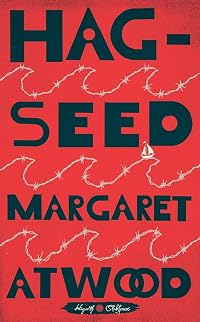
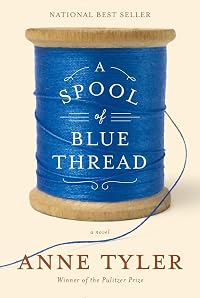
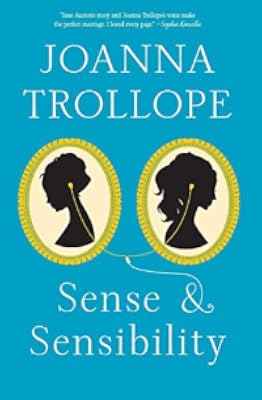

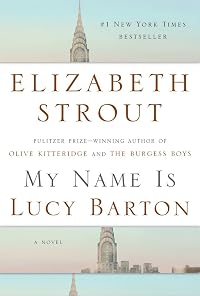





























Member Recommendations
akblanchard Socially awkward characters find love.

VenusofUrbino Another Shakespeare retelling (this time "A Midsummer Night's Dream") that was really fun.
Member Reviews
At the risk of incurring the wrath of literary muses, I must say that I enjoyed Anne Tyler’s retelling of The Taming of the Shrew more than the original. Tyler’s witty handling of this theme has added a dimension to the story that the original lacked: Kate, as well her betrothed Pyotr are thoroughly likable characters. Pyotr is about to deported because his visa is expiring, and such a catastrophe would destroy all the research that he and Kate’s father have done for the last several years. As Kate is getting up in years (29 – horrors!), her father’s solution is a marriage that would appease immigration people but not really entangle Kate and Pyotr any more than necessary. Well, we all know what is said about the best laid show more plans, and wouldn’t you know it, mice ARE involved! A quick and quite delightful read. show less
I don't know why, but I always seem to forget how much I love Tyler's writing, and then I start one of her books and wonder why I waited so long. Her characters are normal people with all of their rough edges. They are sharp and prickly and sometimes hard to get to know and hard to love, but isn't that how people are in real life? I loved taking the time to get to know - and love - Kate in Vinegar Girl. While this was a shorter, more simple book than most of Tyler's other titles, all of the things I expect in her writing are there: complete wold-building with just enough description to put you in the world of the book, and stories of real people living real life, with all its warts and deformities and beauty. It's been a long time since show more I read The Taming of the Shrew (college, maybe?), and so the details of the plot are a bit fuzzy. Tyler sticks to the spirit of the play, though, and, just like with the play, the reader realizes that she has fallen for Pyotr much sooner than Kate does. (Should that have a spoiler alert? Oops.) I thoroughly enjoyed Vinegar Girl, and am looking forward to reading the other volumes in the Hogarth Shakespeare series. show less
 This review was written for LibraryThing Early Reviewers.
I'm pleased that Hogarth didn't go the route of putting Taming in the hands of somebody who'd bring out the acerbic nature of the story, for that feels both too easy and too dangerous. Anne Tyler delivers a cover that seems, at times, to be a light comedy - which, let us not forget, is how Shakespeare's play is categorized - but that also paints a complicated portrait of feminism and the patriarchy, pushing up against what we (here meaning like-minded liberals/feminists) believe to be okay (is it right that Kate accept this marriage in order to escape the house she grew up in, to use it to springboard into what she hopes will be her actual life?) while also making very clear that the concept of the subservient woman is beyond outdated show more and should be destroyed accordingly. I do wish it had gone a little farther, both with continuing some of the early comedic bits that are dropped along the way (the children! bless them) as well as digging further into the nitty-gritty of why Kate comes around. Still, the novel goes a long way towards redeeming a text that many people these days think to be completely reprehensible - and that alone is an accomplishment worth celebrating.
More in June at RB: show less
More in June at RB: show less
This review was written for LibraryThing Early Reviewers.Meh. Too hamstrung by its source material to be compelling. It flirts with a backstory that converts Kate's shrewishness into a tactlessness, without convincingly making the case that someone could be so un-self-aware while also being as deeply intelligent as she is. Maybe if she'd been a sociopath, or some kind of high functioning autistic it would have been believe. But the high wire act to make the narrator of Curious Incident of the Dog in the Nighttime lovable might be beyond Anne Tyler.
I love Anne Tyler’s writing. It is so simple and under-stated. She lets you slip so easily into the head and the world of her characters. This is her re-working of Shakespeare’s ‘The Taming of the Shrew’. Generally I dislike these artificial re-writes, but I made an exception for Tyler. After this, I may try some of the others.
Kate is a pre-school teaching assistant and housekeeper for her distracted scientist father and teenage sister. She is dissatisfied with her life, can never seem to get things right, but doesn’t know how to change things. Admonished by her headmistress for being too frank with her young charges, she is not in the best of moods when her father introduces her to his lab assistant, Pytor. He seems a show more lumbering foreigner and Kate does not understand her father’s eagerness that they meet. Pytor has a problem, his work visa is about to expire and he must leave the country. Kate’s father is frantic, he simply cannot lose his irreplaceable assistant or his research project into autoimmune disorders will fail when it is so near success. What happens next is predictable except Tyler turns Shakespeare’s tale of Katherina and Petruchio into a modern tale about tolerance and freedom, without the overtones of ‘man tames untameable woman’.
Read more of my book reviews at http://www.sandradanby.com/book-reviews-a-z/ show less
Kate is a pre-school teaching assistant and housekeeper for her distracted scientist father and teenage sister. She is dissatisfied with her life, can never seem to get things right, but doesn’t know how to change things. Admonished by her headmistress for being too frank with her young charges, she is not in the best of moods when her father introduces her to his lab assistant, Pytor. He seems a show more lumbering foreigner and Kate does not understand her father’s eagerness that they meet. Pytor has a problem, his work visa is about to expire and he must leave the country. Kate’s father is frantic, he simply cannot lose his irreplaceable assistant or his research project into autoimmune disorders will fail when it is so near success. What happens next is predictable except Tyler turns Shakespeare’s tale of Katherina and Petruchio into a modern tale about tolerance and freedom, without the overtones of ‘man tames untameable woman’.
Read more of my book reviews at http://www.sandradanby.com/book-reviews-a-z/ show less
It takes courage for an author to take on the project of rewriting Shakespeare, but Tyler gamely has a go at “The Taming of the Shrew.” (Other take-offs include Cole Porter's "Kiss Me, Kate" and the 1999 film "10 Things I Hate About You.")
How can a re-writer avoid comparisons to Shakespeare? One way is updating of course, but another is to eschew all but the bare bones of the plot, which Tyler does here. The original story depicts the courtship of Petruchio and Katherina, who is portrayed as a headstrong, obdurate “shrew.” Suitors of her more “desirable” younger sister Bianca want to get Katherina married off, since Bianca cannot be married before her older sister. Petruchio, who is not from Padua but is an adventurer from show more Verona, is looking for a wealthy bride. When Katherina’s father offers a lot of money to anyone who marries her, Petruchio decides he is the man to conquer Katherina and teach her to “obey” her husband.
It should be noted that Shakespeare’s England was a patriarchal society. Most women had no choice but to conform to societal roles in order to survive. (Indeed, in Tyler’s 21st Century rendition, Kate still finds that she is suddenly more “acceptable” to everyone at work when she announces her engagement to be married: “All at once they were interested in what she had to say.”) As for Petruchio, he had the idea that he should train his new bride the way a falconer trains a haggard, “a type of falcon that cannot be trained,” a common idea of a husband’s “duty” at the time. On their wedding day, Petruchio arrives late, ill-dressed, and undisposed to allow the tired and hungry Katherina to partake in the wedding feast. He proudly boasts:
“Thus have I politicly begun my reign,
And ‘tis my hope to end successfully.
My falcon now is sharp and passing empty,
And till she stoop, she must not be full-gorg’d,
Another way I have to man my haggard,
To make her come, and know her keeper’s call . . . “
He eventually wears Katherine down, and she indeed becomes an obedient wife. How does Tyler make this plot acceptable to modern audiences?
For one thing, Tyler’s Kate, 29, is not “shrewish” at all. Although her boss at work feels the need to counsel her continually on “tack, restraint, and diplomacy,” to me, she just seems “authentic.” Indeed, it is Kate’s 15-year-old sister “Bunny” who is mostly unbearable; Kate is much more sympathetic. Petruchio becomes Pyotr Shcherbakov, a 28-year-old microbiologist assisting Kate’s brilliant but addlepated father Louis, who is desperate for Pyotr to stay on and help him with his research into autoimmune disorders. Pyotr’s visa will expire in two months, and the only way Pyotr can stay on with Johns Hopkins is if he marries an American.
Louis is determined that Kate save his work by marrying Pyotr. It will only be cosmetic, he insists. She is deeply hurt by his scheme: "He must think she was of no value; she was nothing but a bargaining chip in his single-minded quest for a scientific miracle," she ruminates. Nevertheless, she has always gone along with her father’s requests, and she agrees. As insulting and unsavory as it all may be, remaining a nursemaid to her father and her truculent disobedient sister isn’t so appealing either.
Nevertheless, Kate isn’t going to be “tamed” in the way anyone thinks. When, following their marriage, Pyotr says, ““Hand me keys, Katherine. I am husband and I say hand me keys,” Katherine replies “I am wife and I say no.” She also gives a twist on Katherine’s famous monologue at the end of Shakespeare’s play, which is a defense of men. In The Taming of the Shrew, Kate declares:
"Thy husband is thy lord, thy life, thy keeper,
Thy head, thy sovereign; one that cares for thee
And for thy maintenance; commits his body
To painful labor both by sea and land,
To watch the night in storms, the day in cold,
Whilst thou li'st warm at home, secure and safe;
And craves no other tribute at thy hands
But love, fair looks, and true obedience--
Too little payment for so great a debt."
In Tyler’s version, first Bunny accuses Kate of being a disgusting zombie for backing down, marrying Pyotr, and even sticking up for him. Kate responds that it is hard to be a man:
“Have you ever thought about that? Anything that’s bothering them, men think they have to hide it. They think they should seem in charge, in control; they don’t dare show their true feelings. No matter if they’re hurting or desperate or stricken with grief, if they’re heartsick or they’re homesick or some huge dark guilt is hanging over them or they’re about to fail big-time at something - ‘Oh, I’m okay,’ they say. ‘Everything’s just fine.’ They’re a whole lot less free than women are, when you think about it.”
An Epilogue eleven years later lets us know just how the couple has fared.
Discussion: Tyler employs a great deal of wry humor in her story. I loved this passage in which Kate’s father explains her late mother’s depression:
“Your mother thought we should have weekends. Vacations, even! She didn’t understand. . .. She disliked being alone; can you imagine? … More than once, she told me she didn’t see any point to life.”
Kate clamped her arms across her chest.
“I told her, ‘Well, of course you don’t, dearest. I can’t in good conscience say that there is any point. Did you ever believe there was?’ This didn’t seem to comfort her, though.”
“‘Really,’ Kate said. She reached for her wineglass and took a large swig.”
I also enjoyed the way Pyotr grew on Kate. I’m not sure I ever understood Pyotr very well, however; his character seemed mostly a prop to illuminate the nature of the others, and the strange way American habits seem to foreign immigrants.
Evaluation: This short retelling retains just enough of the original plot to be recognizable, but only barely. It is an entertaining in and of itself as a humorous look at families, the modern workplace, and male/female relationships. show less
How can a re-writer avoid comparisons to Shakespeare? One way is updating of course, but another is to eschew all but the bare bones of the plot, which Tyler does here. The original story depicts the courtship of Petruchio and Katherina, who is portrayed as a headstrong, obdurate “shrew.” Suitors of her more “desirable” younger sister Bianca want to get Katherina married off, since Bianca cannot be married before her older sister. Petruchio, who is not from Padua but is an adventurer from show more Verona, is looking for a wealthy bride. When Katherina’s father offers a lot of money to anyone who marries her, Petruchio decides he is the man to conquer Katherina and teach her to “obey” her husband.
It should be noted that Shakespeare’s England was a patriarchal society. Most women had no choice but to conform to societal roles in order to survive. (Indeed, in Tyler’s 21st Century rendition, Kate still finds that she is suddenly more “acceptable” to everyone at work when she announces her engagement to be married: “All at once they were interested in what she had to say.”) As for Petruchio, he had the idea that he should train his new bride the way a falconer trains a haggard, “a type of falcon that cannot be trained,” a common idea of a husband’s “duty” at the time. On their wedding day, Petruchio arrives late, ill-dressed, and undisposed to allow the tired and hungry Katherina to partake in the wedding feast. He proudly boasts:
“Thus have I politicly begun my reign,
And ‘tis my hope to end successfully.
My falcon now is sharp and passing empty,
And till she stoop, she must not be full-gorg’d,
Another way I have to man my haggard,
To make her come, and know her keeper’s call . . . “
He eventually wears Katherine down, and she indeed becomes an obedient wife. How does Tyler make this plot acceptable to modern audiences?
For one thing, Tyler’s Kate, 29, is not “shrewish” at all. Although her boss at work feels the need to counsel her continually on “tack, restraint, and diplomacy,” to me, she just seems “authentic.” Indeed, it is Kate’s 15-year-old sister “Bunny” who is mostly unbearable; Kate is much more sympathetic. Petruchio becomes Pyotr Shcherbakov, a 28-year-old microbiologist assisting Kate’s brilliant but addlepated father Louis, who is desperate for Pyotr to stay on and help him with his research into autoimmune disorders. Pyotr’s visa will expire in two months, and the only way Pyotr can stay on with Johns Hopkins is if he marries an American.
Louis is determined that Kate save his work by marrying Pyotr. It will only be cosmetic, he insists. She is deeply hurt by his scheme: "He must think she was of no value; she was nothing but a bargaining chip in his single-minded quest for a scientific miracle," she ruminates. Nevertheless, she has always gone along with her father’s requests, and she agrees. As insulting and unsavory as it all may be, remaining a nursemaid to her father and her truculent disobedient sister isn’t so appealing either.
Nevertheless, Kate isn’t going to be “tamed” in the way anyone thinks. When, following their marriage, Pyotr says, ““Hand me keys, Katherine. I am husband and I say hand me keys,” Katherine replies “I am wife and I say no.” She also gives a twist on Katherine’s famous monologue at the end of Shakespeare’s play, which is a defense of men. In The Taming of the Shrew, Kate declares:
"Thy husband is thy lord, thy life, thy keeper,
Thy head, thy sovereign; one that cares for thee
And for thy maintenance; commits his body
To painful labor both by sea and land,
To watch the night in storms, the day in cold,
Whilst thou li'st warm at home, secure and safe;
And craves no other tribute at thy hands
But love, fair looks, and true obedience--
Too little payment for so great a debt."
In Tyler’s version, first Bunny accuses Kate of being a disgusting zombie for backing down, marrying Pyotr, and even sticking up for him. Kate responds that it is hard to be a man:
“Have you ever thought about that? Anything that’s bothering them, men think they have to hide it. They think they should seem in charge, in control; they don’t dare show their true feelings. No matter if they’re hurting or desperate or stricken with grief, if they’re heartsick or they’re homesick or some huge dark guilt is hanging over them or they’re about to fail big-time at something - ‘Oh, I’m okay,’ they say. ‘Everything’s just fine.’ They’re a whole lot less free than women are, when you think about it.”
An Epilogue eleven years later lets us know just how the couple has fared.
Discussion: Tyler employs a great deal of wry humor in her story. I loved this passage in which Kate’s father explains her late mother’s depression:
“Your mother thought we should have weekends. Vacations, even! She didn’t understand. . .. She disliked being alone; can you imagine? … More than once, she told me she didn’t see any point to life.”
Kate clamped her arms across her chest.
“I told her, ‘Well, of course you don’t, dearest. I can’t in good conscience say that there is any point. Did you ever believe there was?’ This didn’t seem to comfort her, though.”
“‘Really,’ Kate said. She reached for her wineglass and took a large swig.”
I also enjoyed the way Pyotr grew on Kate. I’m not sure I ever understood Pyotr very well, however; his character seemed mostly a prop to illuminate the nature of the others, and the strange way American habits seem to foreign immigrants.
Evaluation: This short retelling retains just enough of the original plot to be recognizable, but only barely. It is an entertaining in and of itself as a humorous look at families, the modern workplace, and male/female relationships. show less
This review was written for LibraryThing Early Reviewers.Hogarth Shakespeare is issuing editions of rewritten Shakespeare, and Anne Tyler's take on Taming of the Shrew is a gem! Set in Baltimore, as always, her Kate is a college dropout, malcontented assistant teacher on her last warning at a pre-school. She's blunt spoken and vexed with her scientist father Dr. Battista, and her vapid teenaged sister Bunny. Her father wants to green-card-marry her off to Pyotr, a Russian orphan researcher, so he can continue working in Dr. Battista's lab. There are some wonderful ancillary characters, and unlike the horribly sexist and defeatist ending to the Bard's Taming of The Shrew, Kate triumphs. As usual, Anne Tyler's insights and gentle humor warm the reader like almost no other author. Quote:
Dr. show more Battista: "The most trivial little thing would send her into despair. More than once, [your mother] told me that she didn't see any point to life. I told her , "Well, of course you don't, dearest. I can't in good conscience say that there is any point. Did you ever believe there was? That didn't seem to comfort her, though."
"Really", Kate said. show less
Dr. show more Battista: "The most trivial little thing would send her into despair. More than once, [your mother] told me that she didn't see any point to life. I told her , "Well, of course you don't, dearest. I can't in good conscience say that there is any point. Did you ever believe there was? That didn't seem to comfort her, though."
"Really", Kate said. show less
Members
- Recently Added By
Lists

Books Read in 2016
4,666 works; 199 members

Contemporary Fiction
109 works; 7 members

Stories Inspired by Other Fiction
127 works; 24 members

Retellings of Shakespeare Plays
42 works; 12 members

Steph Laymon's 2016 Read
34 works; 1 member

Books Read in 2019
4,052 works; 110 members
Author Information

66+ Works 56,200 Members
Anne Tyler was born in Minneapolis, Minnesota on October 25, 1941. She graduated from Duke University at the age of 19 and completed graduate work in Russian studies at Columbia University. Before becoming a full-time author, she worked as a librarian and bibliographer. Her first novel, If Morning Ever Comes, was published in 1964. Her other works show more include Saint Maybe, Back When We Were Grownups, Digging to America, Noah's Compass, The Beginner's Goodbye, A Spool of Blue Thread, and Vinegar Girl. She has won several awards including the PEN Faulkner Award in 1983 for Dinner at the Homesick Restaurant, the 1985 National Book Critics Circle Award for The Accidental Tourist, and the 1988 Pulitzer Prize for Breathing Lessons. The Accidental Tourist was adapted into a 1988 movie starring William Hurt and Geena Davis. In 2018 her title, Clock Dance, made the bestsellers list. (Bowker Author Biography) Anne Tyler was born in Minneapolis, Minnesota, and grew up in Raleigh, North Carolina. "Back When We Were Grownups" is her 15th novel; her 11th, "Breathing Lessons", won the Pulitzer Prize in 1988. She is a member of the American Academy of Arts & Letters. She lives in Baltimore, Maryland. (Publisher Provided) show less
Some Editions
Awards and Honors
Distinctions
The Guardian Book of the Day (2016-06-09)
Series

Work Relationships
Was inspired by
Common Knowledge
- Canonical title
- Vinegar Girl
- Original publication date
- 2016-06-21
- People/Characters
- Katherine "Kate" Battista; Bunny Battista; Louis Battista; Pyotr Shcherbakov; Adam Barnes; Edward Mintz (show all 10); Mrs. Murphy; Mrs. Liu; Mrs. Chauncey; Mrs. Darling
- Important places
- Baltimore, Maryland, USA
- First words
- Kate Battista was gardening out back when she heard the telephone ring in the kitchen.
- Quotations
- "Not all scientists prefer blondes."
(The unsatisfying thing about practicing restraint was that nobody knew you were practicing it.)
The thought didn't disturb her. She had used this room up, she felt. She had used this life up.
But she was pleased, in spite of herself. She knew what he was trying to say. ¶ It crossed her mind that if her mother had known too—if she had been able to read the signals—the lives of all four of them might have been ... (show all)much happier. ¶ For the first time, it occurred to her that she herself was getting better at reading signals. - Last words
- (Click to show. Warning: May contain spoilers.)It was true they were standing in a door, but they were both in the one door side by side and very close together, neither one in front or behind, and they were holding hands and smiling.
- Original language
- English US
Classifications
Statistics
- Members
- 1,978
- Popularity
- 10,706
- Reviews
- 238
- Rating
- (3.48)
- Languages
- 13 — Czech, Danish, Dutch, English, Estonian, Finnish, French, German, Polish, Portuguese, Spanish, Swedish, Turkish
- Media
- Paper, Audiobook, Ebook
- ISBNs
- 47
- ASINs
- 11
