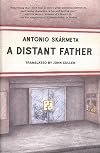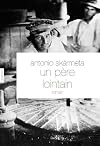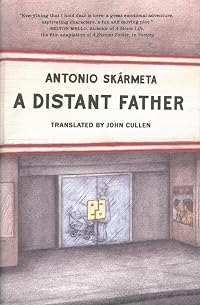
A Distant Father
by Antonio Skármeta
On This Page
Description
Jacques is a schoolteacher in a small Chilean village, and a French translator for the local paper. He owes his passion for the French language to his Parisian father, Pierre, who, one year before, abruptly returned to France without a word of explanation. Jacques and his mother's sense of abandonment is made more acute by their isolation in this small community where few read or think. While Jacques finds distraction in a crush on his student's older sister, his preoccupation with his show more father's disappearance continues to haunt him. But there is often more to a story than the torment it causes. This one is about forgiveness and second chances. show lessTags
Recommendations











Member Reviews
A Distant Father, Antonio Skármeta, Translated from the Spanish by John Cullen
Other Press
ISBN: 978-1-59051-625-6
$15.95, 101 pages
A Distant Father by Antonio Skármeta is a spare but arresting novella. A master at work, Skármeta proves that it isn’t necessary to painstakingly draw every individual brick in a wall; a few suggestive brushstrokes, mere scaffolding, can deliver full impact.
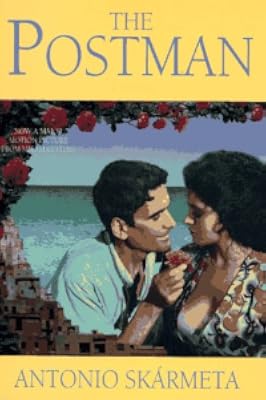
The author of Il Postino: The Postman, which inspired the Academy Award-winning film of the same name, Skármeta won the Premio Iberoamericano Planeta Casa de América de Narrativa for his novel The Days of the Rainbow. He was awarded Chile’s National Literature Prize earlier this year. In his latest, Skármeta begins casting his spell immediately, show more on page one:
“My life is made up of rustic elements, rural things: the dying wail of the local train, winter apples, the moisture on lemons touched by early morning frost, the patient spider in a shadowy corner of my room, the breeze that moves my curtains.”
Jacques is a young teacher in the tiny, provincial village of Contulmo, Chile, who also translates works in French for newspapers while dreaming of one day publishing his own poetry. On the day he arrived home a year ago with his teaching degree in hand, he stepped off the train onto the platform in time for his father to kiss him and climb onto that same train and disappear. Jacques’s description of the effect his father’s departure has on his mother is a perfect example of those few, deceptively simple brushstrokes evoking depths of feeling: “When Dad went away, my mother was suddenly extinguished, like a candle blown out by a gust of frosty wind.”
In keeping with Skármeta’s framework style, humor occurs in discrete pockets; it insinuates, never shouts, as when Jacques explains why his second job is necessary: “A nurse in the hospital initiated me into the vice of smoking cheap cigarettes, and in order to support this habit—which gave me bronchitis—I’ve had to find a second job.” And when he speaks of his attempts to have his own poems published: “Sometimes I include an original poem of my own in the envelope with my translations and ask the editor to consider publishing it. His response, though negative, is courteous, given that he never rejects my poems and never prints them either.”
Eloquent of loss and bewilderment, Skármeta’s sentences are succinct while simultaneously offering pleasant surprises in their keen observations. These astute sentences regularly bring you up short, packing an unexpected wallop: “Everybody around here is very respectable, and I have no doubt that Teresa and Elena come from a good family, but every time they go to Santiago, they buy dresses with plunging necklines and tight jeans that cling to their hips and squeeze the air out of my lungs.”
Jacques’s floundering attempts to become his own man, without the guidance of his father, lead him into questionable alliances and situations, liaisons that, while not necessarily dangerous, do threaten to expose secrets that are held close by every small town. In the end, Jacques asserts himself, instead of letting events control him, and engineers a generous and loving orchestration of his own.
This review first appeared in Monkeybicycle. show less
Other Press
ISBN: 978-1-59051-625-6
$15.95, 101 pages
A Distant Father by Antonio Skármeta is a spare but arresting novella. A master at work, Skármeta proves that it isn’t necessary to painstakingly draw every individual brick in a wall; a few suggestive brushstrokes, mere scaffolding, can deliver full impact.
The author of Il Postino: The Postman, which inspired the Academy Award-winning film of the same name, Skármeta won the Premio Iberoamericano Planeta Casa de América de Narrativa for his novel The Days of the Rainbow. He was awarded Chile’s National Literature Prize earlier this year. In his latest, Skármeta begins casting his spell immediately, show more on page one:
“My life is made up of rustic elements, rural things: the dying wail of the local train, winter apples, the moisture on lemons touched by early morning frost, the patient spider in a shadowy corner of my room, the breeze that moves my curtains.”
Jacques is a young teacher in the tiny, provincial village of Contulmo, Chile, who also translates works in French for newspapers while dreaming of one day publishing his own poetry. On the day he arrived home a year ago with his teaching degree in hand, he stepped off the train onto the platform in time for his father to kiss him and climb onto that same train and disappear. Jacques’s description of the effect his father’s departure has on his mother is a perfect example of those few, deceptively simple brushstrokes evoking depths of feeling: “When Dad went away, my mother was suddenly extinguished, like a candle blown out by a gust of frosty wind.”
In keeping with Skármeta’s framework style, humor occurs in discrete pockets; it insinuates, never shouts, as when Jacques explains why his second job is necessary: “A nurse in the hospital initiated me into the vice of smoking cheap cigarettes, and in order to support this habit—which gave me bronchitis—I’ve had to find a second job.” And when he speaks of his attempts to have his own poems published: “Sometimes I include an original poem of my own in the envelope with my translations and ask the editor to consider publishing it. His response, though negative, is courteous, given that he never rejects my poems and never prints them either.”
Eloquent of loss and bewilderment, Skármeta’s sentences are succinct while simultaneously offering pleasant surprises in their keen observations. These astute sentences regularly bring you up short, packing an unexpected wallop: “Everybody around here is very respectable, and I have no doubt that Teresa and Elena come from a good family, but every time they go to Santiago, they buy dresses with plunging necklines and tight jeans that cling to their hips and squeeze the air out of my lungs.”
Jacques’s floundering attempts to become his own man, without the guidance of his father, lead him into questionable alliances and situations, liaisons that, while not necessarily dangerous, do threaten to expose secrets that are held close by every small town. In the end, Jacques asserts himself, instead of letting events control him, and engineers a generous and loving orchestration of his own.
This review first appeared in Monkeybicycle. show less
An opening scene that really left an impression on me. A son, having completed his education, returns to his village, gets off the train. As he gets off, his father gets on, same train, same car. A father leaving his wife and son. Of course there is also that beautiful paragraph that I quoted in the update section.
A short novella about the relationship between a father and son, told almost tenderly and with a great deal of insight. A young man, a schoolteacher, wanting only to be a better man, finds a few unexpected answers and attempts to put plans in place where he hopes many things will work out. Touching story, wonderfully told about a small village with many quaint characters.
Arc from NetGalley.
A short novella about the relationship between a father and son, told almost tenderly and with a great deal of insight. A young man, a schoolteacher, wanting only to be a better man, finds a few unexpected answers and attempts to put plans in place where he hopes many things will work out. Touching story, wonderfully told about a small village with many quaint characters.
Arc from NetGalley.
En Contulmo, una aldea del sur de Chile, la vida del joven Jacques se verá marcada para siempre por la marcha de su padre a su París natal. Profesor en la escuela del pueblo, entabla una relación muy especial con un alumno, Augusto Gutiérrez, de 15 años, quien por su cumpleaños le pide que le acompañe a la ciudad vecina, Angol, para perder la virginidad. Jacques visitará antes el prostíbulo y, así, él mismo conoce el sexo por primera vez.
En su iniciático viaje topa de forma casual con su padre, a quien todo el mundo imaginaba viviendo en París, quien le relatará que quiso cortar con su anterior vida tras tener un hijo con la hermana de Augusto, de sólo 19 años. La chica, sin embargo, los abandona y regresa a Contulmo. show more Así, el padre deberá arreglárselas para sobrevivir. La madre de Jacques, ajena a todo, sigue sumida en una depresión y no alcanza a entender el porqué de la marcha de su marido. Jacques, que desea darle una madre al bebé de su padre, propiciará un reencuentro del matrimonio. show less
En su iniciático viaje topa de forma casual con su padre, a quien todo el mundo imaginaba viviendo en París, quien le relatará que quiso cortar con su anterior vida tras tener un hijo con la hermana de Augusto, de sólo 19 años. La chica, sin embargo, los abandona y regresa a Contulmo. show more Así, el padre deberá arreglárselas para sobrevivir. La madre de Jacques, ajena a todo, sigue sumida en una depresión y no alcanza a entender el porqué de la marcha de su marido. Jacques, que desea darle una madre al bebé de su padre, propiciará un reencuentro del matrimonio. show less
Oct 26, 2010Spanish
Ratings
Members
- Recently Added By
Lists

Novels featuring language professionals
98 works; 12 members
Author Information

56+ Works 2,633 Members
Author Antonio Skármeta was born in Antofagasta, Chile on November 7, 1940. He studied literature and philosophy in Chile and at Columbia University. He taught literature at the University of Chile from 1967 to 1973. He left his country in 1973 because he was profoundly affected by his country's political travail. After the collapse of Pinochet's show more military dictatorship, Skármeta returned to Chile and hosted a television program on literature and the arts. He served as the Chilean ambassador in Germany from 2000 to 2003. He has written several novels including Ardiente Paciencia, which inspired the 1994 Academy Award-winning movie Il Postino (The Postman); The Insurrection, about the Nicaraguan Revolution just before Somoza's fall; and Chileno!, a young adult book drawing on Skármeta 's own experience of exile. (Bowker Author Biography) show less
Common Knowledge
- Canonical title*
- Mein Vater aus Paris
- Original title
- Un padre de película
- Original publication date
- 2010
- Important places*
- Chile
- First words*
- Von Beruf bin ich Dorflehrer.
- Last words*
- (Click to show. Warning: May contain spoilers.)Der Stationsvorsteher bläst in seine Pfeife und vergewissert sich zum zehnten Mal mit einem Blick auf sein Handgelenk, dass es vier Uhr nachmittags ist, während die Uhr auf dem Bahnsteig seit fünf Jahren auf zehn nach drei steht.
*Some information comes from Common Knowledge in other languages. Click "Edit" for more information.
Classifications
- Genres
- Fiction and Literature, General Fiction
- DDC/MDS
- 863.64 — Literature & rhetoric Spanish Literature Spanish fiction 20th Century 1945-2000
- LCC
- PQ8098.29 .K3 .P3313 — Language and Literature French, Italian, Spanish and Portuguese literatures Spanish literature Provincial, local, colonial, etc. Spanish America
- BISAC
Statistics
- Members
- 57
- Popularity
- 538,166
- Reviews
- 3
- Rating
- (3.56)
- Languages
- 6 — English, French, German, Italian, Portuguese (Portugal), Spanish
- Media
- Paper, Ebook
- ISBNs
- 10
- ASINs
- 1