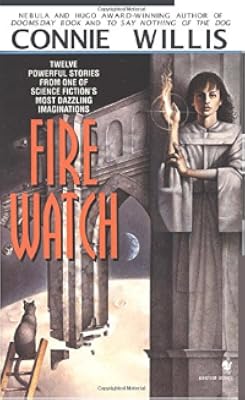
Fire Watch
by Connie Willis
On This Page
Description
Fantasy. Fiction. Science Fiction. Short Stories. HTML:Winner of six Nebula and five Hugo awards, Connie Willis is one of the most acclaimed and imaginative authors of our time. Her startling and powerful works have redefined the boundaries of contemporary science fiction. Here in one volume are twelve of her greatest stories, including double award-winner "Fire Watch," set in the universe of Doomsday Book and To Say Nothing of the Dog, in which a time-traveling student learns one of show more history's hardest lessons. In "A Letter from the Clearys," a routine message from distant friends shatters the fragile world of a beleaguered family. In "The Sidon in the Mirror," a mutant with the unconscious urge to become other people finds himself becoming both killer and victim. Disturbing, revealing, and provocative, this remarkable collection of short fiction brings together some of the best work of an incomparable writer whose ability to amaze, confound, and enlighten never fails. show lessTags
Recommendations













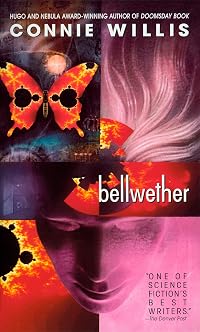
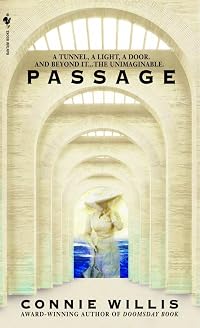


Member Recommendations
Member Reviews
I remember reading "Fire Watch" when it first came out in a magazine I took. I remember the power within the story. It still has the same power. The rest of the stories were new to me. From "Samaritan" written in 1978 to "All My Darling Daughters" written in 1985, the stories all bore the hallmarks of the author: a clarity of view, beautifully used language, and well-told stories that make the reader think.
A couple of the stories were deeply disturbing. That doesn't mean I didn't like them, but the story made me itchy inside my skin. Most were serious, but a couple were downright funny. "Mail Order Clone" made me laugh out loud; "Blued Moon" felt like it would make a lovely madcap comedy movie.
I'm a fan of Connie Willis, so it show more shouldn't be a surprise that I loved the collection. If you like science fiction short stories, I think you'd like it, too. In some ways the writing reminds me of Ray Bradbury -- the skill with which the scene is set comes to mind. The style isn't as lyrical, but is perfect for the stories told. show less
A couple of the stories were deeply disturbing. That doesn't mean I didn't like them, but the story made me itchy inside my skin. Most were serious, but a couple were downright funny. "Mail Order Clone" made me laugh out loud; "Blued Moon" felt like it would make a lovely madcap comedy movie.
I'm a fan of Connie Willis, so it show more shouldn't be a surprise that I loved the collection. If you like science fiction short stories, I think you'd like it, too. In some ways the writing reminds me of Ray Bradbury -- the skill with which the scene is set comes to mind. The style isn't as lyrical, but is perfect for the stories told. show less
Overall Review and Recommendation: Fire Watch is a collection of Willis's short stories, most of them with a science fiction slant to them, but with sub-genres that cover the sci-fi gamut, from the titular story that involves the time-travelling Oxford history department from her other books, to stories that are dystopian or apocalyptic, that involve space travel, ghosts, and strange visitors. It's an old collection, with stories that are older still: most of them were originally published in the late 70s and early 80s. However, they're hardly showing their age, which is not always the case with older science fiction; the only obvious clue to the fact that they are 30-odd years old was the fact that the communists are still considered show more to be the bad guys. Overall, the stories were interesting and enjoyable to read, and there were a few standouts, although most of them didn't leave me with a particularly strong impression one way or the other. It's not a bad read, and the title story in particular is worth checking out, but it's not on a level with the novels of Willis's that I've read.
As a note, I read the Kindle version of this book, and it was pretty poorly copy-edited. I suspect the errors came from mistakes in scanning: "lea" for "tea", missed appostophes and other punctuation, and other similar problems. Not enough to make things unintelligible, but still distracting. 3.5 out of 5 stars.
Individual Stories:
- "Fire Watch" is the longest, and in my opinion the best, story of the bunch. It involves a Oxford history student who has trained to go back to biblical times and travel with St. Paul, but is instead sent back to St. Paul's Cathedral during the London Blitz, where he joins the team of volunteers that keeps the church from burning during bombing raids. Willis is great about evoking the feeling of London during the Blitz, and it's a lovely story about history, and permanence, and the importance of acts both big and small.
- "Service for the Burial of the Dead" is about a manipulative young man, and his jilted lover who continues to be susceptible to his charms, even after he's ostensibly dead.
- "Lost and Found" is a story of a small church, some miraculous discoveries, and a literal approach to the quote "The Son of Man is come to save that which is lost." I don't spend a lot of time thinking about the Christian view of the end of the world, but I certainly do appreciate a story that can turn the stereotypical ideas of the Second Coming on their ear. This story reminded me of Carrie Vaughn's Discord's Apple, with the artifacts from myth and history collecting in an unlikely place.
- "All My Darling Daughters" is a story of a troublemaker at a boarding school who gets an innocent new roommate, and a disturbing new fad that is sweeping the campus. The voice and tone of this story are different from every other one in the collection, and for all that several other stories involve the end of the world, this one was by far the most dark and disturbing in its implications.
- "The Father of the Bride" is a very short piece that looks at what everyone else in Sleeping Beauty's castle must have been feeling after they woke up from their 100 years of sleep.
- "A Letter from the Clearys" involves a girl who finds a letter from some friends at the post office, but does not get the expected reaction when she brings it home to her parents. This story didn't quite work for me; it was well-written, but what I think was supposed to be the big reveal did not particularly surprise me.
- "And Come from Miles Around" features a young family that has travelled to a remote town in Montana to view a solar eclipse, only to discover that they're not the only ones with the same idea. I liked this one, partly because I read it just about the time that everyone was making a big deal about the recent solar eclipse, and partly because it's a nice example of Willis's skill at subtle storytelling: lots of effective showing, without ever outright telling.
- "The Sidon in the Mirror" involves a newcomer to a mining town, who has a score to settle and the secret ability (or curse) of mimicry. I appreciated the Western flavor to this story, but I was never quite clear on how the copying worked, which hampered my enjoyment somewhat.
- "Daisy, in the Sun" is another story about the end of the world, and how life and growing up still go on despite it all. Not my favorite, it was too fragmented and strange for me really to get a decent hold on it.
- "Mail-Order Clone" is a quick and humorous piece about a man who places an order for a clone, but doesn't get quite what he was expecting.
- "Samaritan" is a story about an orangutan who is taught sign language, and who has decided he wants to be baptized, and the controversy that descends on the pastor who must make the decision about whether or not to do it. Interesting food for thought here, even for those who are not religious.
- "Blued Moon" is a comedy of errors involving the unintended consequences of a company's new waste treatment plan, and its effects on the atmosphere and the laws of probability. On its own merits, this was probably my second-favorite story; it's very clever and witty and well-structured. However, its light, almost farcical tone made it an odd fit with the other stories in this collection, which were mostly darker and more serious fare. show less
As a note, I read the Kindle version of this book, and it was pretty poorly copy-edited. I suspect the errors came from mistakes in scanning: "lea" for "tea", missed appostophes and other punctuation, and other similar problems. Not enough to make things unintelligible, but still distracting. 3.5 out of 5 stars.
Individual Stories:
- "Fire Watch" is the longest, and in my opinion the best, story of the bunch. It involves a Oxford history student who has trained to go back to biblical times and travel with St. Paul, but is instead sent back to St. Paul's Cathedral during the London Blitz, where he joins the team of volunteers that keeps the church from burning during bombing raids. Willis is great about evoking the feeling of London during the Blitz, and it's a lovely story about history, and permanence, and the importance of acts both big and small.
- "Service for the Burial of the Dead" is about a manipulative young man, and his jilted lover who continues to be susceptible to his charms, even after he's ostensibly dead.
- "Lost and Found" is a story of a small church, some miraculous discoveries, and a literal approach to the quote "The Son of Man is come to save that which is lost." I don't spend a lot of time thinking about the Christian view of the end of the world, but I certainly do appreciate a story that can turn the stereotypical ideas of the Second Coming on their ear. This story reminded me of Carrie Vaughn's Discord's Apple, with the artifacts from myth and history collecting in an unlikely place.
- "All My Darling Daughters" is a story of a troublemaker at a boarding school who gets an innocent new roommate, and a disturbing new fad that is sweeping the campus. The voice and tone of this story are different from every other one in the collection, and for all that several other stories involve the end of the world, this one was by far the most dark and disturbing in its implications.
- "The Father of the Bride" is a very short piece that looks at what everyone else in Sleeping Beauty's castle must have been feeling after they woke up from their 100 years of sleep.
- "A Letter from the Clearys" involves a girl who finds a letter from some friends at the post office, but does not get the expected reaction when she brings it home to her parents. This story didn't quite work for me; it was well-written, but what I think was supposed to be the big reveal did not particularly surprise me.
- "And Come from Miles Around" features a young family that has travelled to a remote town in Montana to view a solar eclipse, only to discover that they're not the only ones with the same idea. I liked this one, partly because I read it just about the time that everyone was making a big deal about the recent solar eclipse, and partly because it's a nice example of Willis's skill at subtle storytelling: lots of effective showing, without ever outright telling.
- "The Sidon in the Mirror" involves a newcomer to a mining town, who has a score to settle and the secret ability (or curse) of mimicry. I appreciated the Western flavor to this story, but I was never quite clear on how the copying worked, which hampered my enjoyment somewhat.
- "Daisy, in the Sun" is another story about the end of the world, and how life and growing up still go on despite it all. Not my favorite, it was too fragmented and strange for me really to get a decent hold on it.
- "Mail-Order Clone" is a quick and humorous piece about a man who places an order for a clone, but doesn't get quite what he was expecting.
- "Samaritan" is a story about an orangutan who is taught sign language, and who has decided he wants to be baptized, and the controversy that descends on the pastor who must make the decision about whether or not to do it. Interesting food for thought here, even for those who are not religious.
- "Blued Moon" is a comedy of errors involving the unintended consequences of a company's new waste treatment plan, and its effects on the atmosphere and the laws of probability. On its own merits, this was probably my second-favorite story; it's very clever and witty and well-structured. However, its light, almost farcical tone made it an odd fit with the other stories in this collection, which were mostly darker and more serious fare. show less
This collection of a dozen short stories is from the earlier part of Connie Willis's career. Most of the stories included were published between 1979 and 1984. Even though all are technically science fiction, they show quite a range for a young author, with their variety of points of view and theme.
I knew very little of what I should expect going into this short story collection. I only knew that the title story had some characters related to the time traveling books that I'd already read, and that St. Paul's Cathedral figured prominently. In fact, St. Paul's was why I read this book now - coming back from my trip to London and seeing St. Paul's and Westminster Abbey made me want to read as much fiction and nonfiction about London and show more England as possible. I'd rather expected most of the stories to be interrelated, but that was not at all the case. As in many short story collections, I liked some and hated others. "All My Darling Daughters" disgusted me and I nearly put down the collection for good there. But I'm glad I continued, because the last story, "Blued Moon," was light and funny and left a smile on my face. Most of the other stories were somewhere in between, making this a decent collection and worth a browse for those interested in '80s science fiction. show less
I knew very little of what I should expect going into this short story collection. I only knew that the title story had some characters related to the time traveling books that I'd already read, and that St. Paul's Cathedral figured prominently. In fact, St. Paul's was why I read this book now - coming back from my trip to London and seeing St. Paul's and Westminster Abbey made me want to read as much fiction and nonfiction about London and show more England as possible. I'd rather expected most of the stories to be interrelated, but that was not at all the case. As in many short story collections, I liked some and hated others. "All My Darling Daughters" disgusted me and I nearly put down the collection for good there. But I'm glad I continued, because the last story, "Blued Moon," was light and funny and left a smile on my face. Most of the other stories were somewhere in between, making this a decent collection and worth a browse for those interested in '80s science fiction. show less
The last story in this collection ("Blued Moon") is my favorite of the lot. It has coincidences and misunderstandings, and is just generally a lot of fun. (And to reference the intro to the story: yes, she makes it look easy.)
I also particularly enjoyed a few of the others, mostly "And Come From Miles Around" and "A Letter From the Clearys." It's a typical short story collection in that everyone will like different stories to different degrees, and I didn't enjoy all of the stories equally.
Overall, though, this is a solid addition to my Connie Willis collection.
I also particularly enjoyed a few of the others, mostly "And Come From Miles Around" and "A Letter From the Clearys." It's a typical short story collection in that everyone will like different stories to different degrees, and I didn't enjoy all of the stories equally.
Overall, though, this is a solid addition to my Connie Willis collection.
Short story collection
I usually don't read older science fiction (1979-1984), but it was available at my local library & fit the category for my LT group. In this case being dated gave an interesting perspective to the title story. Set in WWII, so anti-nazi feeling is high, a minor plot tells us it is the communists we really have to watch out for. Another story, "A Letter from the Clearys" is post-devastation, not very realistically done based on what we now know about nuclear winter, but the father presciently remarks "I don't think the Russians started it or the United States either. I think it was some little terrorist group somewhere or maybe just one person."
The first few stories were pretty interesting, with a surprising ending. show more But a number of them seemed contrived, "so what?". Or maybe it's what happens with every short story collection by a single author; they all start to sound alike after a while.
2011 review show less
I usually don't read older science fiction (1979-1984), but it was available at my local library & fit the category for my LT group. In this case being dated gave an interesting perspective to the title story. Set in WWII, so anti-nazi feeling is high, a minor plot tells us it is the communists we really have to watch out for. Another story, "A Letter from the Clearys" is post-devastation, not very realistically done based on what we now know about nuclear winter, but the father presciently remarks "I don't think the Russians started it or the United States either. I think it was some little terrorist group somewhere or maybe just one person."
The first few stories were pretty interesting, with a surprising ending. show more But a number of them seemed contrived, "so what?". Or maybe it's what happens with every short story collection by a single author; they all start to sound alike after a while.
2011 review show less
I am a little surprised I'd never read any Willis before -- she is a prominent and prolific author of just the kind of Ray Bradburyish, feminist without beating you over the head with it, science fiction that I really love. The stories in this collection cover some familiar sci-fi tropes (time travel, other planets, apocalyptic futures) but with a focus on character and humanity that is missing in some science fiction. Highly recommended.
[full review here: http://spacebeer.blogspot.com/2012/03/fire-watch-by-connie-willis-1985.html ]
[full review here: http://spacebeer.blogspot.com/2012/03/fire-watch-by-connie-willis-1985.html ]
Dated. The explanatory blurb before each story distracts from the story's positive qualities by making Willis seem too narrow minded to imagine expansive anything let alone expansive futures. She is good at the mind blowing twist though, especially in stories like "A Letter from the Clearys."
Members
- Recently Added By
Lists

Short and Sweet
246 works; 24 members

Speculative Fiction to Read
706 works; 32 members

Science Fiction Short Story Collections
9 works; 2 members

Books Read in 2016
4,666 works; 199 members

Books Read in 2022
5,168 works; 114 members
Author Information

97+ Works 40,858 Members
Connie Willis lives in Greeley, Colorado, with her family. (Publisher Provided) Connie Willis was born on December 31, 1945. She graduated from Colorado State College in 1967. Her first story, The Secret of Santa Titicaca, was published in Worlds of Fantasy in 1971. After receiving an NEA grant in 1982, she left her teaching job to become a show more full-time writer. Her works include Doomsday Book, Lincoln's Dreams, Bellwether, To Say Nothing of the Dog, Fire Watch, Blackout, and All Clear. She has received 10 Hugo Awards, 11 Locus Poll Awards and 6 Nebula Awards. In 2009, she was inducted into the Science Fiction Hall of Fame. (Bowker Author Biography) show less
Some Editions
Series
Belongs to Publisher Series
Work Relationships
Contains
Common Knowledge
- Canonical title*
- Les veilleurs du feu
- Original publication date
- 1985 (Collection) (Collection); 1982 (Fire Watch) (Fire Watch); 1982 (Service for the Burial of the Dead) (Service for the Burial of the Dead); 1982 (Lost and Found) (Lost and Found); 1985 (All My darling Daughters) (All My darling Daughters); 1982 (The Father of the Bride) (The Father of the Bride) (show all 13); 1982 (A Letter from the Clearys) (A Letter from the Clearys); 1979 (And Come From Miles Around) (And Come From Miles Around); 1983 (The Sidon in the Mirror) (The Sidon in the Mirror); 1979 (Daisy, in the Sun) (Daisy, in the Sun); 1982 (Mail Order Clone) (Mail Order Clone); 1978 (Samaritan) (Samaritan); 1984 (Blued Moon) (Blued Moon)
- People/Characters
- Kivrin Engle; John Bartholomew
- Important places
- London, England, UK; St Paul's Cathedral, London, England, UK; University of Oxford, Oxford, Oxfordshire, England, UK
- Important events
- World War II; The Blitz
- Original language
- English
- Disambiguation notice
- This is the collection. Please do not combine with the novelette. Or the novel.
*Some information comes from Common Knowledge in other languages. Click "Edit" for more information.
Classifications
Statistics
- Members
- 1,103
- Popularity
- 23,059
- Reviews
- 33
- Rating
- (3.81)
- Languages
- English, French, German, Polish
- Media
- Paper, Ebook
- ISBNs
- 8
- ASINs
- 7