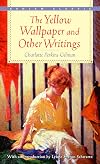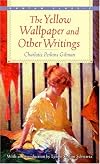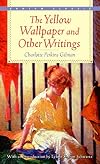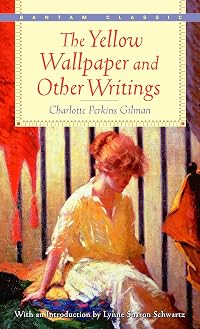
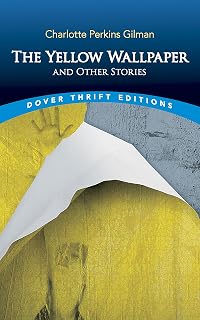
The Yellow Wallpaper and Other Writings {Bantam Classics}
by Charlotte Perkins Gilman
On This Page
Description
Classic Literature. Fiction. Literature. Short Stories. HTML:Known primarily for her classic and haunting story "The Yellow Wallpaper," Charlotte Perkins Gilman was an enormously influential American feminist and sociologist. Her early-twentieth-century writings continue to inspire writers and activists today. This collection includes selections from both her fiction and nonfiction work.In addition to the title story, there are seven short stories collected here that combine humor, anger, show more and startling vision to suggest how women's "place" in society should be changed to benefit all. The nonfiction selections are from Gilman's The Man-Made World: Our Androcentric Culture and her masterpiece, Women And Economics, which was translated into seven languages and established her international reputation as a theorist.
Also included in a delightful excerpt from Gilman's utopian novel, Herland, an acidly funny tale about three American male explorers who stumble into an all-female... show less
Tags
Recommendations
















Member Reviews
I knew Gilman’s name chiefly from Herland, an early novel about a feminist utopia, which I own in the Women’s Press SF edition but have yet to read. ‘The Yellow Wallpaper’ is perhaps her best known piece of short fiction. The narrator and her husband move into an old house, and the narrator becomes obsessed by the wallpaper in an attic room. She is convinced there is someone hidden inside the wallpaper who is desperate to escape and… well, it’s very atmospheric. The other stories, such as ‘If I Were a Man’ or ‘Turned’, are of their time, except for their overt feminist sensibilities. I’ve read early genre fiction by women writers, like Francis Stevens, Agatha Christie, Leslie F Stone, and, of course, CL Moore… show more but none them seemed to my mind to have as strong a female point of view as the stories in Gilman’s collection. The book also included an except from Herland, and a couple of excerpts from some of Gilman’s non-ficiton writing. I found the book in a charity shop a while ago, and bought it because I knew the name. But now I’m really glad I own a copy of it. show less
first off, you must read The Yellow Wallpaper. it's only 20 pages and it's online here (http://www.library.csi.cuny.edu/dept/history/lavender/wallpaper.html), very accessible. and it's about (a probably irretrievable) descent into madness. what more could you want?
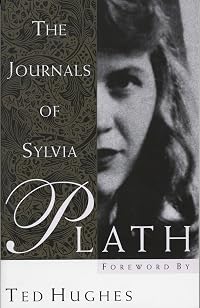
I find myself comparing it to The Bell Jar. it's much shorter and even more swift and sure than The Bell Jar. also, TBJ ends with the character at least temporarily overcoming the problem (which might or might not be levenned out by the fact that everyone knows it's an autobiographical work and that Sylvia Plath did attempt suicide again, that time succeeding) while there is probably very little chance that the character in The Yellow Wallpaper, or the multiple characters that show more she becomes, ever manages to put things together again.
I like The Bell Jar, but I love The Yellow Wallpaper.
also I find myself comparing TYW to Fight Club. brill, that movie. primarily because it also handles the fracturing of the main character as sublty as the character himself perceives it. so, watch Fight Club, read The Yellow Wallpaper.
The Yellow Wallpaper = 5
ok. um. the other stories in the book are meant to be didactic pieces; ideas presented in the most palatable form. the utopian novel Herland is not meant to be 100% realistic (so don't start about the virgin births). it's just an avenue to display ideas. the other writings (treatises) including Women and Economics and Our Androcentric Culture are, basically, revolutionary feminism... or what was considered revolutionary feminism in the 1890s.
it's worth paying attention to the fact she wasn't necessarily pushing political emanicpation or sexual emacipation for women but rather economical emancipation. she makes very good sense and many of the changes that have come about between now and then in this quarter have been just that---women are more free to work and live and have families outside the then-traditional home; women are no longer absolutely dependent on their fathers/brothers/husbands for money and upkeep; women are outgrowing their role as manipulative seducers of men and as ravenous consumers of ridiculous petty pretty things such as feathered hats... although this has a long long way to go still. I rather agree with her on the old male-female economic relationship, in all ways, esp as encouraging materialism. show less
I find myself comparing it to The Bell Jar. it's much shorter and even more swift and sure than The Bell Jar. also, TBJ ends with the character at least temporarily overcoming the problem (which might or might not be levenned out by the fact that everyone knows it's an autobiographical work and that Sylvia Plath did attempt suicide again, that time succeeding) while there is probably very little chance that the character in The Yellow Wallpaper, or the multiple characters that show more she becomes, ever manages to put things together again.
I like The Bell Jar, but I love The Yellow Wallpaper.
also I find myself comparing TYW to Fight Club. brill, that movie. primarily because it also handles the fracturing of the main character as sublty as the character himself perceives it. so, watch Fight Club, read The Yellow Wallpaper.
The Yellow Wallpaper = 5
ok. um. the other stories in the book are meant to be didactic pieces; ideas presented in the most palatable form. the utopian novel Herland is not meant to be 100% realistic (so don't start about the virgin births). it's just an avenue to display ideas. the other writings (treatises) including Women and Economics and Our Androcentric Culture are, basically, revolutionary feminism... or what was considered revolutionary feminism in the 1890s.
it's worth paying attention to the fact she wasn't necessarily pushing political emanicpation or sexual emacipation for women but rather economical emancipation. she makes very good sense and many of the changes that have come about between now and then in this quarter have been just that---women are more free to work and live and have families outside the then-traditional home; women are no longer absolutely dependent on their fathers/brothers/husbands for money and upkeep; women are outgrowing their role as manipulative seducers of men and as ravenous consumers of ridiculous petty pretty things such as feathered hats... although this has a long long way to go still. I rather agree with her on the old male-female economic relationship, in all ways, esp as encouraging materialism. show less
This is really a novella. It's only about 40 pages, probably not even that long, and only took me an hour or so to read.
It was an interesting and thought provoking book about a woman's descent into madness. I thought it was very well written, quite sinister in tone and tragic really. I could certainly relate to some extent on how the woman thinks there is nothing wrong with her, but everybody else can see that things are not right.
It was an interesting and thought provoking book about a woman's descent into madness. I thought it was very well written, quite sinister in tone and tragic really. I could certainly relate to some extent on how the woman thinks there is nothing wrong with her, but everybody else can see that things are not right.
The Yellow Wallpaper is a 19th-century semi-autobiographical tale of a woman's descent into madness. After suffering from what we now call post-partum depression and what was then called "melancholy" or "melancholia," Charlotte Perkins Gilman's husband took her to see an up-and-coming specialist on nervous diseases who had recently invented "The Rest Cure." The rest cure required the patient to spend several weeks or months shut away from family and friends in a quiet, darkened room, making sure she didn't exert herself with any physical or mental pursuits. Additionally, it was suggested that she eat bland food and refrain from using her hands at all. Most of her time was to be spent lying quietly in bed.
Gilman found that rather than show more curing her of her depression, the treatment severely worsened it. Eventually she decided that the best thing for her was to reengage in normal activity. This successfully cured her condition, and she decided to write the story, embellished with a few exaggerations, to show the dangers of this kind of treatment. Besides being an enthralling read, The Yellow Wallpaper serves as an important social commentary on women, their feelings and emotions, and their place in 19th-century America. show less
Gilman found that rather than show more curing her of her depression, the treatment severely worsened it. Eventually she decided that the best thing for her was to reengage in normal activity. This successfully cured her condition, and she decided to write the story, embellished with a few exaggerations, to show the dangers of this kind of treatment. Besides being an enthralling read, The Yellow Wallpaper serves as an important social commentary on women, their feelings and emotions, and their place in 19th-century America. show less
This short story is a psychologically rich description of a woman's physical and mental confinement. An astounding work of fiction, chilling in many ways.
Charlotte Perkins Gilman was a great feminist thinker, and author of many books on social architecture, as well as other fiction and non-fiction.
Charlotte Perkins Gilman was a great feminist thinker, and author of many books on social architecture, as well as other fiction and non-fiction.
Five stars for The Yellow Wallpaper.
Three for her other fiction except Herland.
Two stars for Herland, the social feminist version of Ayn Rand (building a world just for your social ideas doesn’t work, especially when it’s not particularly well written).
One star for the non-fiction, which is full of fallacies and sophistry.
Three for her other fiction except Herland.
Two stars for Herland, the social feminist version of Ayn Rand (building a world just for your social ideas doesn’t work, especially when it’s not particularly well written).
One star for the non-fiction, which is full of fallacies and sophistry.
a must read for anybody who doesn't like being locked in a room and told to "rest."
Members
- Recently Added By
Lists

Scary Stories for the Season
160 works; 94 members

2017 Goal
18 works; 2 members
Author Information

142+ Works 14,832 Members
Charlotte Perkins Gilman was born in 1860 in Hartford, Conn. Her traumatic childhood led to depression and to her eventual suicide. Gilman's father abandoned the family when she was a child and her mother, who was not an affectionate woman, recruited relatives to help raise her children. Among these relatives was Harriet Beecher Stowe, the author show more of Uncle Tom's Cabin. Due to her family situation, Gilman learned independence, but also became alienated from her many female relatives. Gilman married in 1884 and was soon diagnosed with depression. She was prescribed bed rest, which only seemed to aggravate her condition and she eventually divorced her husband, fearing that marriage was partly responsible for her depressed state. After this, Gilman became involved in feminist activities and the writing that made her a major figure in the women's movement. Books such as Women and Economics, written in 1898, are proof of her importance as a feminist. Here she states that only when women learn to be economically independent can true equality be achieved. Her fiction works, particularly The Yellow Wallpaper, are also written with feminist ideals. A frequent lecturer, she also founded the feminist magazine Forerunner in 1909. Gilman, suffering from cancer, chose to end her own life and committed suicide on August 17, 1935. More information about this fascinating figure can be found in her book The Living of Charlotte Perkins Gilman: An Autobiography, published in 1935. (Bowker Author Biography) Charlotte Perkins Gilman was born in 1860 in Hartford, Conn. Her traumatic childhood led to depression and to her eventual suicide. Gilman's father abandoned the family when she was a child and her mother, who was not an affectionate woman, recruited relatives to help raise her children. Among these relatives was Harriet Beecher Stowe, the author of Uncle Tom's Cabin. Due to her family situation, Gilman learned independence, but also became alienated from her many female relatives. Gilman married in 1884 and was soon diagnosed with depression. She was prescribed bed rest, which only seemed to aggravate her condition and she eventually divorced her husband, fearing that marriage was partly responsible for her depressed state. After this, Gilman became involved in feminist activities and the writing that made her a major figure in the women's movement. Books such as Women and Economics, written in 1898, are proof of her importance as a feminist. Here she states that only when women learn to be economically independent can true equality be achieved. Her fiction works, particularly The Yellow Wallpaper, are also written with feminist ideals. A frequent lecturer, she also founded the feminist magazine Forerunner in 1909. Gilman, suffering from cancer, chose to end her own life and committed suicide on August 17, 1935. More information about this fascinating figure can be found in her book The Living of Charlotte Perkins Gilman: An Autobiography, published in 1935. (Bowker Author Biography) show less
Some Editions
Series
Belongs to Publisher Series
Work Relationships
Contains
Is an abridged version of
Common Knowledge
- Canonical title
- The Yellow Wallpaper and Other Writings {Bantam Classics}
- Related movies
- The Yellow Wallpaper (1977 | IMDb); The Yellow Wallpaper (1989 | IMDb); Paper Walls (1992 | IMDb); The Yellow Wallpaper (2009 | IMDb)
- Original language
- English
- Disambiguation notice
- This collection contains 8 stories and selections for three of Ms. Gilman's non-fiction writing. For exact titles, see description. Please distinguish between the collection contained in this Bantam Classics edition and oth... (show all)er, similarly-titled collections. Thank you.
Classifications
- Genres
- Fiction and Literature, General Fiction
- DDC/MDS
- 818.409 — Literature & rhetoric American literature in English American miscellaneous writings in English Later 19th Century 1861-1900
- LCC
- PS1744 .G57 .A15 — Language and Literature American literature American literature Individual authors 19th century
- BISAC
Statistics
- Members
- 566
- Popularity
- 52,213
- Reviews
- 7
- Rating
- (3.73)
- Languages
- English
- Media
- Paper, Ebook
- ISBNs
- 5
- ASINs
- 2