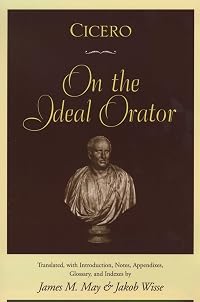
On the orator [De oratore]
by Marcus Tullius Cicero
On This Page
Description
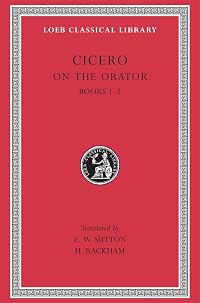
Cicero's De Oratore is one of the masterpieces of Latin prose. A literary dialogue in the Greek tradition, it was written in 55 BCE in the midst of political turmoil at Rome, but reports a discussion 'concerning the (ideal) orator' that supposedly took place in 90 BCE, just before an earlier crisis. Cicero features eminent orators and statesmen of the past as participants in this discussion, presenting competing views on many topics. This edition of Book III is the first since 1893 to show more provide a Latin text and full introduction and commentary in English. It is intended to help advanced students and others interested in Roman literature to comprehend the grammar and appreciate the stylistic nuances of Cicero's Latin, to trace the historical, literary, and theoretical background of the topics addressed, and to interpret Book III in relation to the rest of De Oratore and to Cicero's other works. show lessTags
Recommendations















Member Reviews
"read the Orations of Demosthenes & Cicero. analyse these orations, and examine the correctness of the disposition, language, figures, states of the cases, arguments Etc." - Thomas Jefferson to John Minor, 30 Aug. 1814 [PTJ:RS 7:625-631]
"your Latin & Greek should be kept up assiduously by reading at spare hours: and, discontinuing the desultory reading of the schools. I would advise you to undertake a regular course of history & poetry in both languages, in Greek, go first thro’ the Cyropaedia ... in Latin read Livy, Caesar, Sallust Tacitus, Cicero’s Philosophies, and some of his Orations, in prose ..." - Thomas Jefferson to Francis Eppes, 6 Oct. 1820
" ... the lofty, rythmical, full-flowing eloquence of Cicero ... " - Thomas show more Jefferson to Francis Eppes, 19 Jan. 1821
"for Senatorial eloquence Demosthenes is the finest model; for the bar Cicero. the former had more logic, the latter more imagination." - Thomas Jefferson to John Garland, 27 Feb. 1822 show less
"your Latin & Greek should be kept up assiduously by reading at spare hours: and, discontinuing the desultory reading of the schools. I would advise you to undertake a regular course of history & poetry in both languages, in Greek, go first thro’ the Cyropaedia ... in Latin read Livy, Caesar, Sallust Tacitus, Cicero’s Philosophies, and some of his Orations, in prose ..." - Thomas Jefferson to Francis Eppes, 6 Oct. 1820
" ... the lofty, rythmical, full-flowing eloquence of Cicero ... " - Thomas show more Jefferson to Francis Eppes, 19 Jan. 1821
"for Senatorial eloquence Demosthenes is the finest model; for the bar Cicero. the former had more logic, the latter more imagination." - Thomas Jefferson to John Garland, 27 Feb. 1822 show less
Edition: // Descr: // Series: Call No. { 875 C48 45 } Edited by Otto Jahn. // //
SOBRE EL ORADOR
Algo sobre el autor:
Marco Tulio Ciocerón , nació en el seno de una familia acomodada que no pertenecía a la élite senatorial y sera Cicerón el primero de su familia en llegar al Senado; es decir fue un" homo novus":Acontecio en el año 106 a.C en la ciudad de Arpino ,cercana a Roma. Fue educado en la retórica, la jurisprudencia y la filosofía por los mejores maestros , destacando en estos campos lo que le convertiria en el mejor orador de Roma _no es de extrañar por tanto esta obra_. Con 16 años participa en la guerra social a las ordenes de Pompeyo y quiza también en la campaña contra los marsos bajo el mando de Sila. Pero nunca destaco en las armas , sucampo de batalla fué el Foro y sus armas las palabras.
A show more los 25 años pronuncia otro en relación a un parricido.
A posteriori viaja por Grecia perfeccionando su retórica y filosofía. A su regreso Sila había dejado la dictadura , Roma era distinta así empezo a los 30 el "Cursus Honorum" siendo elegido "quaestor "en el 75 a.C.
A los 39 es elegidom praetor .Llegaría a ocupar la maistratura máxima , el consulado pocos años después fue desterrado .
Fue asesinado en el $3 a.C por partidarios de Marco Antonio .
Sobre la obra:
Dividida en tres libros, en ella se dirige a su hermano Quinto donde con peculiar estilo le va a narrar en un supuesto dialogo que tiene lugar en el 98
a.C , entre distintos personajes de la Roma del momento en el que precisamente se hablara sobre oratoria,podría haber optado por realizar un manual sobre oratoria , pues lo que contiene son consejos sobre todo, y teorías basícas de retórica .Sin embargo, el ya dice que no loes , y por ello a lo klargo de éste evita los tecnicismos que si serían propios de un manual.
Los personajes que intervienen en éste dialogo ,son:Lucio Craso, Marco Antonio, Sulpicio Rufo ,Aurelio Cota ;Quinto Mucio Esvola:Craso inicia la conversación haciendo elogío de la elocuencia argumentando que es un rasgo civilizador de las sociedades , pero desarrollado tardiamente en Roma y en Grecia... show less
Algo sobre el autor:
Marco Tulio Ciocerón , nació en el seno de una familia acomodada que no pertenecía a la élite senatorial y sera Cicerón el primero de su familia en llegar al Senado; es decir fue un" homo novus":Acontecio en el año 106 a.C en la ciudad de Arpino ,cercana a Roma. Fue educado en la retórica, la jurisprudencia y la filosofía por los mejores maestros , destacando en estos campos lo que le convertiria en el mejor orador de Roma _no es de extrañar por tanto esta obra_. Con 16 años participa en la guerra social a las ordenes de Pompeyo y quiza también en la campaña contra los marsos bajo el mando de Sila. Pero nunca destaco en las armas , sucampo de batalla fué el Foro y sus armas las palabras.
A show more los 25 años pronuncia otro en relación a un parricido.
A posteriori viaja por Grecia perfeccionando su retórica y filosofía. A su regreso Sila había dejado la dictadura , Roma era distinta así empezo a los 30 el "Cursus Honorum" siendo elegido "quaestor "en el 75 a.C.
A los 39 es elegidom praetor .Llegaría a ocupar la maistratura máxima , el consulado pocos años después fue desterrado .
Fue asesinado en el $3 a.C por partidarios de Marco Antonio .
Sobre la obra:
Dividida en tres libros, en ella se dirige a su hermano Quinto donde con peculiar estilo le va a narrar en un supuesto dialogo que tiene lugar en el 98
a.C , entre distintos personajes de la Roma del momento en el que precisamente se hablara sobre oratoria,podría haber optado por realizar un manual sobre oratoria , pues lo que contiene son consejos sobre todo, y teorías basícas de retórica .Sin embargo, el ya dice que no loes , y por ello a lo klargo de éste evita los tecnicismos que si serían propios de un manual.
Los personajes que intervienen en éste dialogo ,son:Lucio Craso, Marco Antonio, Sulpicio Rufo ,Aurelio Cota ;Quinto Mucio Esvola:Craso inicia la conversación haciendo elogío de la elocuencia argumentando que es un rasgo civilizador de las sociedades , pero desarrollado tardiamente en Roma y en Grecia... show less
Mar 5, 2018Spanish
Edition classique publiée avec des arguments et des notes en français par V. Bétolaud, professeur au lycée Charlemagne.
French
Ratings
Members
- Recently Added By
Lists

CCE 100 Great Books List
145 works; 8 members
Author Information

2,148+ Works 26,708 Members
Born in Arpinum on January 3, 106 B.C., Marcus Tullius Cicero was a Roman orator, writer, and politician. In Rome, Cicero studied law, oratory, philosophy, and literature, before embarking on a political career. Banished from Rome in 59 B.C. for the execution of some members of the Catiline group, Cicero devoted himself to literature. Cicero was show more pardoned by Julius Caesar in 47 B.C., and returned to Rome to deliver his famous speeches, known as the "Philippics," urging the senate to declare war on Marc Antony. Cicero's chief works, written between 46 and 44 B.C., can be classified in the categories of philosophical works, letters, and speeches. The letters, edited by his secretary Tiro, showcase a unique writing style and charm. The most popular work of the period was De Officiis, a manual of ethics, in which Cicero espoused fundamental Christian values half a century before Christ. Cicero was murdered in Formiae, Italy, on December 4, 43 B.C., by Antony's soldiers after the triumvirate of Antony, Lepidus, and Octavius was formed. (Bowker Author Biography) show less
Some Editions
Awards and Honors
Notable Lists
Series
Belongs to Publisher Series
Olms Paperbacks (9)
Work Relationships
Is contained in
Common Knowledge
- Canonical title
- On the orator [De oratore]
- Original title
- De oratore
- First words*
- Utrum difficilius aut maius esset negare tibi saepius idem roganti an efficere id quod rogares diu multumque, Brute, dubitavi.
- Original language*
- Latin
- Disambiguation notice
- De oratore (in three books, written 55 BC) and Orator (in one book, written 46 BC) are two different works
*Some information comes from Common Knowledge in other languages. Click "Edit" for more information.
Classifications
- Genres
- Philosophy, Fiction and Literature
- DDC/MDS
- 808.51 — Literature & rhetoric Literature, rhetoric & criticism Rhetoric and collections of literary texts from more than two literatures Public Speaking, Debate Public speaking
- LCC
- PA6308 .D6 .M39 — Language and Literature Greek language and literature. Latin language and literature Roman literature Individual authors Cicero, Marcus Tullius
- BISAC
Statistics
- Members
- 533
- Popularity
- 56,050
- Reviews
- 4
- Rating
- (3.70)
- Languages
- 10 — Catalan, Dutch, English, Finnish, French, German, Italian, Latin, Norwegian (Bokmål), Spanish
- Media
- Paper, Ebook
- ISBNs
- 60
- ASINs
- 5