On This Page
Description
A fictional retelling of the experiences of twelve-year-old Mary Jemison, who after being captured by a Shawnee war party during the French and Indian War, is rescued and subsequently adopted by two Seneca sisters with whom she ultimately chooses to stay.Tags
Recommendations





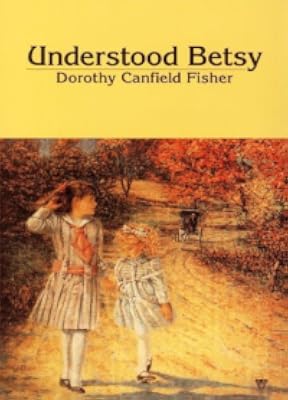
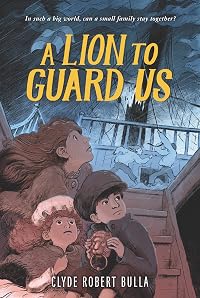

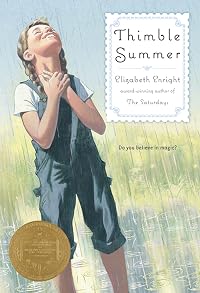
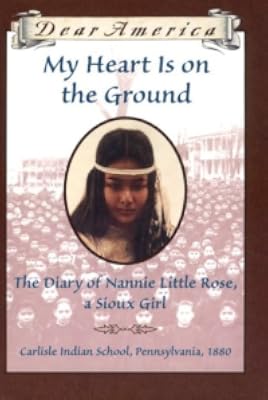
Member Recommendations

Member Reviews
It might be easy to assume that this book is dated because of its subject and age, but except for calling the Seneca "Indians", this book has stood the test of time amazingly well. The detail about the Seneca's way of life is captivating, and I'm impressed with the depiction of Mary's struggle between the life she was born to and the life she chooses, with the Seneca. It has to be hard for people to understand since she chose to stay with the people that had killed her family, but as she said, "War killed her family."
This is a fictionalized account of the story of Mary Jemison, a young teenager who was kidnapped by the Seneca Indians in the year 1758. Back then, the custom among the Seneca was to kill or kidnap a white settler for every one of their own people who were killed by the invading pioneers. Indian Captive tells the tale of Mary's capture and her subsequent adjustment to life among the Seneca. I found it to be a fascinating tale, as Mary moves from terror to sorrow to finally finding a place in her new community. To my thinking, the whole concept of an "indian captive" is barbaric, yet the practice does contain an element of justice. The whole book reflects the tension well. The Seneca endeavor to make Mary feel loved and welcome, yet that show more can't erase the harm they caused by killing her family and kidnapping her in the first place. That Mary finally is able to accept her new people despite their transgressions is an accurate reflection of what it means to live with the flaws of one's family, friends and neighbors. I will definitely look to find a copy of Mary Jemison's actual memoirs once I get back to the States. Until then, I'll just have to make sure this book stays on my shelf.
--J. show less
--J. show less
This book for 5th or 6th grade readers tells the story of Mary Jemison. When she was 12 years old her family was taken captive. She was separated from the rest of them and taken to a Seneca village. At first she hated it because she missed her family, but when she was given the chance to return to her old lifestyle she didn't want to leave the Native Americans she had befriended. This book takes a look at assimilation from an unusual viewpoint. Here she is assimilating to the world of Native Americans rather than them being forced to assimilate to the white world.
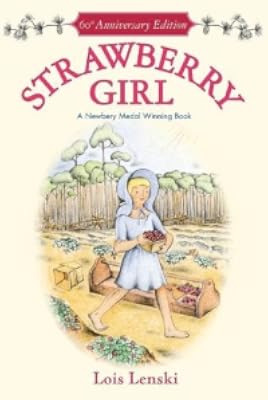
Author and illustrator Lois Lenski has been a favorite of mine since my grade school years long ago. She wrote and illustrated many charming picture books in the early 1940s that featured the Small Family, most of which are still in print. She illustrated the beloved Betsy-Tacy series as well as the 1946 Newbery Award winner Strawberry Girl, that she also wrote.
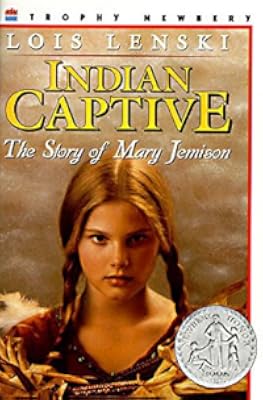
When I recently came across a paperback edition of her 1941 children's book, Indian Captive: The Story of Mary Jemison I was torn between my desire to read yet another book by a favorite children's author and my fear that the depiction of the Seneca Indians would be stereotypical and inaccurate. The illustration on the book's cover, 1995 cover art by Joanie Schwartz, depicting a show more young girl looking more like a Seventeen Magazine model than a frontier youngster/Indian captive, didn't help.
I was pleasantly surprised to discover that in this wonderful book, Lois Lenski has outdone herself in her illustrations, her story telling, and her research into her subject. A Newbery Honor book in 1942, it tells the true story of a young frontier girl who lived in a tiny settlement near what is current day Gettysburg, Pennsylvania.
Set during the French and Indian War, it is the fictionalized version of the Life of Mary Jemison, who in 1758 at the age of 15 was abducted by the Shawnee Indians along with her parents, two sisters, two younger brothers and a neighbor family. After a grueling forced march to Fort Duquesne, current day Pittsburg, Mary's family is killed and she is sold to two sisters of the Seneca tribe and adopted into the Seneca tribe as one of their own. It was the way of the Seneca to take captives to fill the places of their own loved ones who had been killed by enemies. The details of their practices are not sugar-coated, neither are they exaggerated.
Ms. Lenski really did her homework in preparing for this book and has faithfully captured in her art and words the lifestyle of the Seneca and of the larger Hodenosaunee or Iroquois Confederation. She has told the moving story of Mary Jemison with sympathy and yet she has not mired us down in tragedy but has helped us see the strength and beauty that came into Mary's life as she adjusted to her new family. Lenski's illustrations are primitive folk style art, in black and white, rich with detail and evocative.
The real life Mary Jemison stayed with her adopted family, living as a true Seneca until the end of her days at 91. Ms. Lenski spoke with descendants of Mary who still reside on reservations in New York and Ontario. She faithfully researched museums and historical libraries and leads us into the daily routine of the Senecas. Sharing myths and folk stories, accurate drawings of implements, utensils, garments, and ceremony, she captures the Indian way of looking at things and conveys nuances of attitude and philosophy with honesty and clarity.
Intended for the 9-12 year old readership, the story flows with simplicity, but is exciting and interesting enough for older readers as well. Living in Oneida country as I do, I was glad to have such an abundance of information on the Seneca who along with the Oneidas, the Cayugas, the Mohawks and the Onondagas, the tribes of the Hodenosaunee, were a part of the first Democracy to ever flourish upon this land, hundreds of years before white men ever set foot here.
Mary became known as The Two Falling Voices and her story is both tragic and triumphant. I found it very enriching, emotionally and intellectually stimulating, even as a children's book, so vividly is the tale conveyed.
Several non-fictional accounts have been published of the life of Mary Jemison, including one that she dictated to a doctor when she was in her 80s. This book serves as a wonderful introduction to her life's story and also to the stories of other white captives whose little known tales give us splendid insight into the frontier hardships of everyday people and of the indigenous people who struggled to maintain their own ways of life.
I recommend this book to any young reader who wishes to push beyond the confines of a text book into the hearts and minds of history. There is enough here, also, to intrigue most adults with a mind to go beyond the stereotypes. show less
When I recently came across a paperback edition of her 1941 children's book, Indian Captive: The Story of Mary Jemison I was torn between my desire to read yet another book by a favorite children's author and my fear that the depiction of the Seneca Indians would be stereotypical and inaccurate. The illustration on the book's cover, 1995 cover art by Joanie Schwartz, depicting a show more young girl looking more like a Seventeen Magazine model than a frontier youngster/Indian captive, didn't help.
I was pleasantly surprised to discover that in this wonderful book, Lois Lenski has outdone herself in her illustrations, her story telling, and her research into her subject. A Newbery Honor book in 1942, it tells the true story of a young frontier girl who lived in a tiny settlement near what is current day Gettysburg, Pennsylvania.
Set during the French and Indian War, it is the fictionalized version of the Life of Mary Jemison, who in 1758 at the age of 15 was abducted by the Shawnee Indians along with her parents, two sisters, two younger brothers and a neighbor family. After a grueling forced march to Fort Duquesne, current day Pittsburg, Mary's family is killed and she is sold to two sisters of the Seneca tribe and adopted into the Seneca tribe as one of their own. It was the way of the Seneca to take captives to fill the places of their own loved ones who had been killed by enemies. The details of their practices are not sugar-coated, neither are they exaggerated.
Ms. Lenski really did her homework in preparing for this book and has faithfully captured in her art and words the lifestyle of the Seneca and of the larger Hodenosaunee or Iroquois Confederation. She has told the moving story of Mary Jemison with sympathy and yet she has not mired us down in tragedy but has helped us see the strength and beauty that came into Mary's life as she adjusted to her new family. Lenski's illustrations are primitive folk style art, in black and white, rich with detail and evocative.
The real life Mary Jemison stayed with her adopted family, living as a true Seneca until the end of her days at 91. Ms. Lenski spoke with descendants of Mary who still reside on reservations in New York and Ontario. She faithfully researched museums and historical libraries and leads us into the daily routine of the Senecas. Sharing myths and folk stories, accurate drawings of implements, utensils, garments, and ceremony, she captures the Indian way of looking at things and conveys nuances of attitude and philosophy with honesty and clarity.
Intended for the 9-12 year old readership, the story flows with simplicity, but is exciting and interesting enough for older readers as well. Living in Oneida country as I do, I was glad to have such an abundance of information on the Seneca who along with the Oneidas, the Cayugas, the Mohawks and the Onondagas, the tribes of the Hodenosaunee, were a part of the first Democracy to ever flourish upon this land, hundreds of years before white men ever set foot here.
Mary became known as The Two Falling Voices and her story is both tragic and triumphant. I found it very enriching, emotionally and intellectually stimulating, even as a children's book, so vividly is the tale conveyed.
Several non-fictional accounts have been published of the life of Mary Jemison, including one that she dictated to a doctor when she was in her 80s. This book serves as a wonderful introduction to her life's story and also to the stories of other white captives whose little known tales give us splendid insight into the frontier hardships of everyday people and of the indigenous people who struggled to maintain their own ways of life.
I recommend this book to any young reader who wishes to push beyond the confines of a text book into the hearts and minds of history. There is enough here, also, to intrigue most adults with a mind to go beyond the stereotypes. show less
Of all the "Indian Captive" novel, such as "Mocassin Trail" and "The Light in the Forest", I found this to be the most thoroughly researched and most respectfully written. Originally published in 1941, it is based on the true-life story of Mary "Molly Jemison", who was captured and adopted by the Genesee in the 1750s. When given the opportunity to return to the white community, Molly chose to stay with her native family. At the age of 80, "she told her memories of her experiences in detail to James Everett Seaver, M.D. and the book was first published at Canandagua, NY in 1824." (p. xi)
My edition, published in 1995, includes an introduction by Arthur C. Parker, Director of the Rochester Museum of Arts. He explains that "not only did show more Miss Lenski make a study of the literature (regarding Molly's life), but visited the Indians, many of whom are descendants of the subject of her book. The book includes hand drawn sketches ,done by the author, all based on her studies "in the various museums containing Iroquois and especially Seneca objects" (p.viii).
As Seaver explains, many writers have ignored the necessity of having accurate knowledge of how the native people lived, and instead have "written purely from imagination, filling gaps with pre-conceived knowledge or basing it upon modern adaptions of European practices". (p. vii).
The result is a sensitive story which explores the divide between the two worlds at the time of the French and Indian War. Molly first feels extreme despair when separated from her family, only to learn to care fore the kind and loyal native family to whom she now belongs.
For teachers, this would be a good supplement on a unit about Native Americans. The author not only included sketches of artifacts used by the natives, but explains their uses, as Molly is taught skills for living as a productive member of the tribe, but also the traditions and beliefs of the native people. The author also shows the way that contact with Europeans began to change life for the natives, in both good and bad ways. show less
My edition, published in 1995, includes an introduction by Arthur C. Parker, Director of the Rochester Museum of Arts. He explains that "not only did show more Miss Lenski make a study of the literature (regarding Molly's life), but visited the Indians, many of whom are descendants of the subject of her book. The book includes hand drawn sketches ,done by the author, all based on her studies "in the various museums containing Iroquois and especially Seneca objects" (p.viii).
As Seaver explains, many writers have ignored the necessity of having accurate knowledge of how the native people lived, and instead have "written purely from imagination, filling gaps with pre-conceived knowledge or basing it upon modern adaptions of European practices". (p. vii).
The result is a sensitive story which explores the divide between the two worlds at the time of the French and Indian War. Molly first feels extreme despair when separated from her family, only to learn to care fore the kind and loyal native family to whom she now belongs.
For teachers, this would be a good supplement on a unit about Native Americans. The author not only included sketches of artifacts used by the natives, but explains their uses, as Molly is taught skills for living as a productive member of the tribe, but also the traditions and beliefs of the native people. The author also shows the way that contact with Europeans began to change life for the natives, in both good and bad ways. show less
Based on the life of a real person, Indian Captive tells the story of Mary Jemison, a young girl who was kidnapped by a Seneca tribe in 1758. After taking her away from her family, she was not treated as a slave or prisoner, but adopted as a member of the tribe. This Newbery Honor book from 1941 has aged well. It is an engaging, well told story. As a result of extensive research, Lenski does not portray the Native Americans as either saints or savages, but honestly. Among the characters in the village are people who are kind, caring and generous, and other who are spiteful and selfish. Some are harsh and firm, but fair and honest.
Mary, who is known to the tribe as Corn Tassel because of her long blonde hair, thinks frequently about how show more she can escape and return to the white people. But over the course of time, she begins to care about and even love some of the people in her new "Indian" family. The book concludes when she has been with the tribe for about two years, and then is given the freedom to make a decision... will she leave and return to live with the white people, or will she remain forever a member of the Seneca? show less
Mary, who is known to the tribe as Corn Tassel because of her long blonde hair, thinks frequently about how show more she can escape and return to the white people. But over the course of time, she begins to care about and even love some of the people in her new "Indian" family. The book concludes when she has been with the tribe for about two years, and then is given the freedom to make a decision... will she leave and return to live with the white people, or will she remain forever a member of the Seneca? show less
Indian Captive is a story that will make a great gift and open doors to terrific conversations. I appreciated it as much now as an adult as I did when I was a child. I loved the gentle introduction to Native American philosophy and Molly's sensitivity to the natural beauty around her even in some of the toughest times. I really felt for poor Molly as she was tugged at by two cultures. Each was described well and without prejudice. I was glad that it showed love wins over all. Lois Lenski did the classic illustrations that I remember so fondly from my childhood. A really wonderful package.
Members
- Recently Added By
Lists

Elevenses
316 works; 88 members

Romalda Spalding's Writing Road To Reading
213 works; 3 members

Newbery Honor Books By Year - I - 1922-1980
199 works; 3 members

Most Disturbing Books
124 works; 27 members

Dishonourable Mentions of 2014
80 works; 23 members

Books Read in 2023
5,638 works; 147 members

Honey For a Child's Heart
1,152 works; 25 members

Sonlight Books
1,487 works; 25 members

Best Newbery Honor Books
257 works; 32 members
Author Information

133+ Works 15,342 Members
Lois Lenski was born in Springfield, Ohio on October 14, 1893. After graduating from Ohio State University, she moved to New York to study art. She continued her studies in London, England and illustrate children's books written by others. She returned to the United States in 1921 and became an author and illustrator. In 1927, she published two show more books about her own childhood entitled Skipping Village and A Little Girl of 1900. She wrote nearly 100 books for children and young adults during her lifetime including the Mr. Small series, Bayou Suzette, Prairie School, Boomtown Boy, Judy's Journey, and High-Rise Secret. She received a Newbery Medal in 1946 for Strawberry Girl. She died on September 11, 1974 at the age of 80. (Bowker Author Biography) show less
Awards and Honors
Awards
Series

Work Relationships
Is contained in
Common Knowledge
- Canonical title
- Indian Captive: The Story of Mary Jemison
- Original publication date
- 1941
- People/Characters
- Mary Jemison (Corn Tassel)
- Important places
- Ohio, USA
- Dedication
- For R. W. G. Vail
- First words
- "Molly-child, now supper's done, go fetch Neighbor Dixon's horse."
- Quotations
- "Although Molly scarcely seemed to hear then, long afterwards the woman's soft words were to come back to her, plainly, yet unmistakably."
- Last words
- (Click to show. Warning: May contain spoilers.)Inside, her heart was singing: "Oh, Ma! You are pleased, too, I know--with your Little-Woman-of-Great-Courage!"
Classifications
Statistics
- Members
- 3,653
- Popularity
- 4,453
- Reviews
- 38
- Rating
- (3.79)
- Languages
- English, Swedish
- Media
- Paper, Audiobook, Ebook
- ISBNs
- 23
- ASINs
- 17