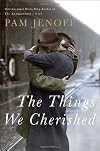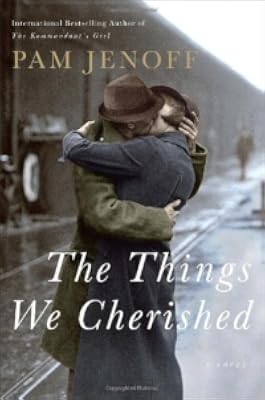
The Things We Cherished
by Pam Jenoff
On This Page
Description
An ambitious novel that spans decades and continents, The Things We Cherished tells the story of Charlotte Gold and Jack Harrington, two fiercely independent attor - neys who find themselves slowly falling for one another while working to defend the brother of a Holocaust hero against allegations of World War II-era war crimes. The defendant, wealthy financier Roger Dykmans, mysteriously refuses to help in his own defense, revealing only that proof of his innocence lies within an intricate show more timepiece last seen in Nazi Germany. As the narrative moves from Philadelphia to Germany, Poland, and Italy, we are given glimpses of the lives that the anniversary clock has touched over the past century and learn about the love affair that turned a brother into a traitor. Rich in historical detail, Pam Jenoff's astonishing new work is a testament to true love under the worst of circumstances. show lessTags
Recommendations




Member Recommendations
Member Reviews
This is one of those books that I could register many complaints about, and yet I still enjoyed reading it.
Philadelphia public defender Charlotte Gold takes leave from her job helping juveniles to take on the defense of Roger Dykmans, an octogenarian in Germany charged as a war criminal for collaborating with the Nazis. His alleged betrayal resulted in the death of his brother Hans as well as the many Jews Hans was trying to save. Charlotte is talked into the venture by her ex-boyfriend Brian, not realizing that, in Germany, she will be working with Brian’s estranged brother Jack.
As the story weaves back and forth in time, we learn what really happened with Roger and Hans, as we also watch the growing attraction between Charlotte and show more Jack. And tying together the two strands is the story of an old anniversary clock, passed down through the generations, and holding the key to critical events in the lives of the protagonists.
Discussion: I liked this book and sped right through it. But it’s not as polished as I hoped. The parallel love stories that take place in the past and the present, and the heirloom that passes along through the generations and draws the characters together are both overused plot devices. And neither one is developed in a way innovative enough to justify yet another rendition.
A lot of the background information given on the Holocaust is delivered didactically, and should have been more smoothly integrated into the story.
Some of the characters are improbably or irritatingly clueless in matters of the heart. Brian and Jack, both supposedly top-flight lawyers, often seem like amateurs, especially with respect to dealing with witnesses and evidence.
Last but not least, the outcome was as predictable as could be.
So why did I like it? Even a hackneyed plot is enough for me for a story that (a) deals with the moral complexities of war crimes; (b) features legal procedural elements; (c) includes a romance; and (d) has some nuance in at least some of the characters. But more than that: war adds poignancy and drama to stories; it provides swelling background music. It lends life or death urgency to the most mundane activities. The farther we are from the actual impact of fighting and death, the more we find war to be romantic. And even if it is close to us, we know that no other experience in life can match it for intensity. Thus the most hackneyed ideas can be immeasurably enhanced, and we may even superimpose our own knowledge of the setting to reinforce that which is provided by the author.
Do I recommend this book? Yes. I would actually compare it in a way with “The Postmistress.” I had a lot of complaints about that book as well, but it had similar elements that induced me to like it in any event. And if you don’t know a lot about what it was like to live in Germany during WWII, this story is very helpful in that regard. show less
Philadelphia public defender Charlotte Gold takes leave from her job helping juveniles to take on the defense of Roger Dykmans, an octogenarian in Germany charged as a war criminal for collaborating with the Nazis. His alleged betrayal resulted in the death of his brother Hans as well as the many Jews Hans was trying to save. Charlotte is talked into the venture by her ex-boyfriend Brian, not realizing that, in Germany, she will be working with Brian’s estranged brother Jack.
As the story weaves back and forth in time, we learn what really happened with Roger and Hans, as we also watch the growing attraction between Charlotte and show more Jack. And tying together the two strands is the story of an old anniversary clock, passed down through the generations, and holding the key to critical events in the lives of the protagonists.
Discussion: I liked this book and sped right through it. But it’s not as polished as I hoped. The parallel love stories that take place in the past and the present, and the heirloom that passes along through the generations and draws the characters together are both overused plot devices. And neither one is developed in a way innovative enough to justify yet another rendition.
A lot of the background information given on the Holocaust is delivered didactically, and should have been more smoothly integrated into the story.
Some of the characters are improbably or irritatingly clueless in matters of the heart. Brian and Jack, both supposedly top-flight lawyers, often seem like amateurs, especially with respect to dealing with witnesses and evidence.
Last but not least, the outcome was as predictable as could be.
So why did I like it? Even a hackneyed plot is enough for me for a story that (a) deals with the moral complexities of war crimes; (b) features legal procedural elements; (c) includes a romance; and (d) has some nuance in at least some of the characters. But more than that: war adds poignancy and drama to stories; it provides swelling background music. It lends life or death urgency to the most mundane activities. The farther we are from the actual impact of fighting and death, the more we find war to be romantic. And even if it is close to us, we know that no other experience in life can match it for intensity. Thus the most hackneyed ideas can be immeasurably enhanced, and we may even superimpose our own knowledge of the setting to reinforce that which is provided by the author.
Do I recommend this book? Yes. I would actually compare it in a way with “The Postmistress.” I had a lot of complaints about that book as well, but it had similar elements that induced me to like it in any event. And if you don’t know a lot about what it was like to live in Germany during WWII, this story is very helpful in that regard. show less
 This review was written for LibraryThing Early Reviewers.
Charlotte Gold is happy as an attorney in the public defender’s office working with challenging juvenile cases. A very different job than the one she had as an associate at a large New York firm. She thought those days were behind her now but out of nowhere Brian, a man from the past who had broken her heart, shows up in her office to ask a favor. A wealthy client of Brian’s firm, Roger Dykmans, has been accused of WWII era crimes and he needs her to assist with the defense. Charlotte has a background in these types of cases and her expertise would be invaluable.
Charlotte agrees to help with the case for one week. She arrives in Germany only to find that the client will not cooperate in his own defense other than to say the proof of show more his innocence lies in an antique clock. To further complicate matters the attorney that Charlotte is assisting in Germany is Brian’s brother, whom with she finds herself becoming romantically involved.
In alternating chapters we go back to the turn of the century Bavaria to learn the history of the clock and it’s significance in Roger’s defense. I like the use of this technique to interweave a story from the past to the present. I found the story of the clock and it’s various owners to be more interesting than Charlotte’s story in the present.
It’s not believable that Charlotte would drop everything and run off to help someone that she had not spoken to in years and when she last encountered him he was telling her to get lost and that he had replaced her with a new girlfriend. Within a short period of time he married that new girlfriend. No, that is not someone I would dash off to another continent to help. I also had trouble believing that Charlotte would fall for the brother so quickly, after all she was there to work not on a holiday.
If you’re looking for a fast, light read and a fantasy romance this book would be a good choice. The tale of the clock added a mystery and there was an interesting twist with the story lines neatly tied up in the end. I don’t read a lot of romances; I picked this one up because of the historical and mystery angle. As far as the romance, if you like Danielle Steele novels you will probably love this book. show less
Charlotte agrees to help with the case for one week. She arrives in Germany only to find that the client will not cooperate in his own defense other than to say the proof of show more his innocence lies in an antique clock. To further complicate matters the attorney that Charlotte is assisting in Germany is Brian’s brother, whom with she finds herself becoming romantically involved.
In alternating chapters we go back to the turn of the century Bavaria to learn the history of the clock and it’s significance in Roger’s defense. I like the use of this technique to interweave a story from the past to the present. I found the story of the clock and it’s various owners to be more interesting than Charlotte’s story in the present.
It’s not believable that Charlotte would drop everything and run off to help someone that she had not spoken to in years and when she last encountered him he was telling her to get lost and that he had replaced her with a new girlfriend. Within a short period of time he married that new girlfriend. No, that is not someone I would dash off to another continent to help. I also had trouble believing that Charlotte would fall for the brother so quickly, after all she was there to work not on a holiday.
If you’re looking for a fast, light read and a fantasy romance this book would be a good choice. The tale of the clock added a mystery and there was an interesting twist with the story lines neatly tied up in the end. I don’t read a lot of romances; I picked this one up because of the historical and mystery angle. As far as the romance, if you like Danielle Steele novels you will probably love this book. show less
I confess that I began The Things We Cherished fully predisposed to fall for the story and the characters. Historical fiction set during World War II, a Holocaust hero who loses his life while saving Jews in Germany, "fiercely independent attorneys who find themselves slowly falling for one another", and a heart-wrenching, life altering love story -- a recipe for a fascinating and engrossing read.
In fact, I started the book yesterday as I traveled from NYC to Boston. It was the perfect escape for the four and a half hour trip. I've convinced my mom to read the book on her 19 hour trip back to Manila next week.
Here's what I enjoyed about The Things We Cherished and why I recommend that you read it too:
Pam Jenoff has created complex, show more sympathetic, and engaging characters -- both those that lived during World War II and those lawyers living in the present -- and Jenoff forces each of the characters to face nuanced, big picture dilemmas while keeping the characters real. Jenoff has taken great care to make each of the people that you meet memorable. One of my favorites is a less central character, a clockmaker named Johann who lived in a small town in Bavaria in 1902. Johann advances the materials to create a one of a kind anniversary clock in the hope that the wealthiest man in their small town will make good on his order and that this will enable him to take his pregnant wife Rebecca to America. The clock is his chance to make a new start, just as the town's economy seems to be collapsing. When he's completed the clock, he dresses in his best clothes and brings his work to the merchant. When the wealthy Herr Hoffel refuses to pay the agreed 100 because business is slow, it takes courage and a sense of his own worth for Johann to refuse the offer. The scene comes early in the book and as I read it, Johann reminded me of the father in Marcus Zusak's The Book Thief, one of my favorite literary characters.
Jenoff takes seemingly unconnected story lines that are each interesting on their own and weaves them together to make this deeply engrossing and satisfying read.
ISBN-10: 0385534205 - Hardcover $27.95
Publisher: Doubleday (July 12, 2011), 304 pages.
Review copy provided by the publisher. show less
In fact, I started the book yesterday as I traveled from NYC to Boston. It was the perfect escape for the four and a half hour trip. I've convinced my mom to read the book on her 19 hour trip back to Manila next week.
Here's what I enjoyed about The Things We Cherished and why I recommend that you read it too:
Pam Jenoff has created complex, show more sympathetic, and engaging characters -- both those that lived during World War II and those lawyers living in the present -- and Jenoff forces each of the characters to face nuanced, big picture dilemmas while keeping the characters real. Jenoff has taken great care to make each of the people that you meet memorable. One of my favorites is a less central character, a clockmaker named Johann who lived in a small town in Bavaria in 1902. Johann advances the materials to create a one of a kind anniversary clock in the hope that the wealthiest man in their small town will make good on his order and that this will enable him to take his pregnant wife Rebecca to America. The clock is his chance to make a new start, just as the town's economy seems to be collapsing. When he's completed the clock, he dresses in his best clothes and brings his work to the merchant. When the wealthy Herr Hoffel refuses to pay the agreed 100 because business is slow, it takes courage and a sense of his own worth for Johann to refuse the offer. The scene comes early in the book and as I read it, Johann reminded me of the father in Marcus Zusak's The Book Thief, one of my favorite literary characters.
Jenoff takes seemingly unconnected story lines that are each interesting on their own and weaves them together to make this deeply engrossing and satisfying read.
ISBN-10: 0385534205 - Hardcover $27.95
Publisher: Doubleday (July 12, 2011), 304 pages.
Review copy provided by the publisher. show less
I have read a few books by Pam Jenoff and I have always been blown away by her beautiful, thoughtful writing style. That was no exception with The Things We Cherished - her writing gives the book an anchor and really underlines the high stakes that Charlotte is facing. Additionally, it highlights the importance and the tragedy of the Holocaust while softening its blow. It makes the book compulsively readable and ensures that the weighty subject matter of the book never drags the reader down.
Jenoff has created some great characters in The Things We Cherished. Charlotte is very sympathetic; she is conflicted by Brian’s reappearance and enraged that he takes her for granted, yet she can’t stay away from the case. Both Brian and his show more brother are a little flat, but Charlotte is fully realized. The magic of the book, though, is in its historical characters. The reader only sees some of them for a few pages, yet Jenoff really breathes life into them and makes them three dimensional and very relevant for the reader.
The mystery behind the war crimes was a bit of a let down and I’m not sure I could really sympathize with it, but moral ambiguity is an important part of the book. However, I could understand the overall sadness and uncertainty of the World War II time period, and thought Jenoff did an exceptional job evoking that time in history, especially with the uncertainty for Jews. The Things We Cherished deals with a very important subject matter in a manner perfect for those who choose to shy away from more difficult, depressing reads. While there is a sadness that permeates the book, it is not a gloomy read.
Overall, I enjoyed The Things We Cherished and am hopeful that this might be the start to a series. I would love to read more about Charlotte’s pursual of Nazi war criminals, while also finding justice for those falsely accused. While I’m not sure that this will happen, given the ending of the book, either way, I look forward to seeing what Pam Jenoff does next. show less
Jenoff has created some great characters in The Things We Cherished. Charlotte is very sympathetic; she is conflicted by Brian’s reappearance and enraged that he takes her for granted, yet she can’t stay away from the case. Both Brian and his show more brother are a little flat, but Charlotte is fully realized. The magic of the book, though, is in its historical characters. The reader only sees some of them for a few pages, yet Jenoff really breathes life into them and makes them three dimensional and very relevant for the reader.
The mystery behind the war crimes was a bit of a let down and I’m not sure I could really sympathize with it, but moral ambiguity is an important part of the book. However, I could understand the overall sadness and uncertainty of the World War II time period, and thought Jenoff did an exceptional job evoking that time in history, especially with the uncertainty for Jews. The Things We Cherished deals with a very important subject matter in a manner perfect for those who choose to shy away from more difficult, depressing reads. While there is a sadness that permeates the book, it is not a gloomy read.
Overall, I enjoyed The Things We Cherished and am hopeful that this might be the start to a series. I would love to read more about Charlotte’s pursual of Nazi war criminals, while also finding justice for those falsely accused. While I’m not sure that this will happen, given the ending of the book, either way, I look forward to seeing what Pam Jenoff does next. show less
This review was written for LibraryThing Early Reviewers.When Charlotte's ex, Brian, shows up in her office asking for help on a case, she wants to say no. She really does. Instead she finds herself in Germany working on Brian's case with Brian's brother Jack (Brian himself being unable to make it). Their client, Roger Dykmans, is accused of WWII-era war crimes, and though he refuses to cooperate with his own defense team, he insists that he is innocent. As Charlotte and Jack investigate Roger's past, they end up getting to know each other, and Charlotte begins to see Jack in ways she never expected to see an ex's sibling.
Chapters alternate between Roger's life in the 1930s and earlier and Charlotte and Jack in present day, with flashes of a turn of the century clockmaker mixed in. Jenoff show more really managed to create atmosphere in the past stories in a way that was lacking the the present day storyline. On the other hand, the past stories weren't nearly as fleshed out as that of Charlotte and Jack. The romance in each of the storylines was convincing, complicated, and (mostly) tragic, but they all lined up a little too nicely for my taste. Once something happened in Roger's life it was easy to see how it would be replicated in Charlotte and Jack's interactions. But while the plots of the past and present stories were connected, 1930s Roger seemed to have very little to do with 2000s Roger. In the present day he is just a reason for Charlotte and Jack to flit about Europe and do some digging; he never really became a character. I get it; his life was SUPER tragic and he deserves to spend his old age locked in a shell. Still. And (not to get to spoilery) Jenoff takes an easy out of the one situation that could make past-Roger and present-Roger collide.
Even so, this was a pretty enjoyable read. I just wish that when it came time for an ending, Charlotte and Jack weren't Jenoff's only concerns.
Book source: ARC provided by the publisher through LibraryThing's Early Reviewer program show less
Chapters alternate between Roger's life in the 1930s and earlier and Charlotte and Jack in present day, with flashes of a turn of the century clockmaker mixed in. Jenoff show more really managed to create atmosphere in the past stories in a way that was lacking the the present day storyline. On the other hand, the past stories weren't nearly as fleshed out as that of Charlotte and Jack. The romance in each of the storylines was convincing, complicated, and (mostly) tragic, but they all lined up a little too nicely for my taste. Once something happened in Roger's life it was easy to see how it would be replicated in Charlotte and Jack's interactions. But while the plots of the past and present stories were connected, 1930s Roger seemed to have very little to do with 2000s Roger. In the present day he is just a reason for Charlotte and Jack to flit about Europe and do some digging; he never really became a character. I get it; his life was SUPER tragic and he deserves to spend his old age locked in a shell. Still. And (not to get to spoilery) Jenoff takes an easy out of the one situation that could make past-Roger and present-Roger collide.
Even so, this was a pretty enjoyable read. I just wish that when it came time for an ending, Charlotte and Jack weren't Jenoff's only concerns.
Book source: ARC provided by the publisher through LibraryThing's Early Reviewer program show less
This review was written for LibraryThing Early Reviewers.This is a story about a handmade, heirloom clock, the plight of Jews in Europe during the 1800s and 1900s, and also parallel stories of two women who fall in love with two different men who happen to be brothers. Charlotte Gold is asked by her ex-boyfriend to defend a wealthy man charged with a Nazi war crime. His brother Jack also happens to be involved in defending the man, Roger Dykmans. Roger won't tell Charlotte and Jack his side of the story, so the two lawyers begin an investigation to find out the truth of what happened over 60 years earlier. In my opinion, the premise for this book was just too ambitious. It would have been nice if it were about 200 pages longer, adding more "meat" to all of the different stories going on in show more the book. I could see the potential here for a great book, but that potential fizzled out fairly quickly. The mystery was wrapped up neatly and a bit too conveniently at the end. Ditto the love story. Recommended for a fast, light read but not if you're looking for a book to lose yourself in. show less
This review was written for LibraryThing Early Reviewers.While helping to defend Roger Dykmans, for the possible betrayal of his brother Hans during WWII, resulting in the murder of Hans and the Jewish children he tried to save, Charlotte Gold, currently a Philadelphia defense lawyer, finds herself in an emotional quandary. Jack Warrington is the first lawyer on the case. Charlotte had dated and loved Brian, Jack's younger brother, who left her for Danielle, now his wife. Their investigation turns up information about Hans' Jewish wife, Magda, providing a key reason Roger will not defend himself.
Because Charlotte cares about people, she is motivated to connect the dots of Hans', Roger's and Magda's lives during such dreadful, dangerous times to learn the truth.
A major theme running show more throughout the novel is brothers. A man who saves his brother's life, another who hurts his brother profoundly, and brothers who simply are very different and don't get along. I understand that Jenoff was trying to show various fraternal relationships throughout time. But the squabbling, competitiveness, and argumentativeness between Brian and Jack is distracting, and only acts to detract from the flow and importance of the main story.
Also, the timing of the call Jack receives which puts the last puzzle piece in place, conveniently solving the "mystery" is tired and contrived. It should have come a year or years later.
I think this novel has much unrealized potential. show less
Because Charlotte cares about people, she is motivated to connect the dots of Hans', Roger's and Magda's lives during such dreadful, dangerous times to learn the truth.
A major theme running show more throughout the novel is brothers. A man who saves his brother's life, another who hurts his brother profoundly, and brothers who simply are very different and don't get along. I understand that Jenoff was trying to show various fraternal relationships throughout time. But the squabbling, competitiveness, and argumentativeness between Brian and Jack is distracting, and only acts to detract from the flow and importance of the main story.
Also, the timing of the call Jack receives which puts the last puzzle piece in place, conveniently solving the "mystery" is tired and contrived. It should have come a year or years later.
I think this novel has much unrealized potential. show less
This review was written for LibraryThing Early Reviewers.Members
- Recently Added By
Lists

Books Set in Germany
74 works; 12 members

Global Reads: Books Set in Eastern Europe
45 works; 10 members

Best books read in 2011
200 works; 51 members

Books Read in 2010
631 works; 11 members

Global Reads: Books Set in Western Europe
186 works; 10 members
Author Information

26+ Works 9,516 Members
Pam Jenoff was born in Maryland and raised outside Philadelphia. She attended George Washington University in Washington, D.C., and Cambridge University in England where she earned her master's degree in history. She then was appointed as Special Assistenat to the Secretary of the Army. She worked helping victim's families of Pan Am Flight 103 show more secure their memorial at Arlington National Cemetery and observing recovery efforts at the site of the Oklahoma City bombing. Following her work at the Pentagon, Pam moved to the State Department. In 1996 she was assigned to the U.S. Consulate in Krakow, Poland. It was during this time that Pam developed her expertise in Polish-Jewish relations and the Holocaust, working on matters such as preservation of Auschwitz and the restitution of Jewish property in Poland. Pam left the Foreign Service in 1998 for law school and graduated from the University of Pennsylvania. She worked for several years as a labor and employment attorney and now teaches law school at Rutgers. Pam is the author of The Kommandant's Girl, which was an international bestseller and nominated for a Quill award, as well as The Winter Guest, The Diplomat's Wife, The Ambassador¿s Daughter, Almost Home, A Hidden Affair and The Things We Cherished. (Bowker Author Biography) show less
Some Editions
Awards and Honors
Distinctions
Common Knowledge
- Canonical title
- The Things We Cherished
- Original publication date
- 2011-07-12 (HC edition) (HC edition)
- People/Characters
- Jack Warrington; Charlotte Gold; Roger Dykemans; Hans Dykemans; Brian Warrington; Johann (show all 13); Rebecca; Jake; Sol; Miriam; Leah; Magda Dykemans; Brunia
- Important places
- Philadelphia, Pennsylvania, USA; Poland; Manhattan, New York, New York, USA; Germany; Munich, Bavaria, Germany; Berlin, Germany (show all 8); East Berlin, Germany; Wadowice, Poland
- Important events
- World War II (1939 | 1945)
- First words
- You know don't you, that you are looking at twenty-five to life?
Classifications
Statistics
- Members
- 306
- Popularity
- 104,577
- Reviews
- 39
- Rating
- (3.50)
- Languages
- English, French, Italian, Spanish
- Media
- Paper, Audiobook, Ebook
- ISBNs
- 18
- ASINs
- 5