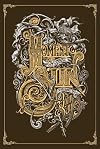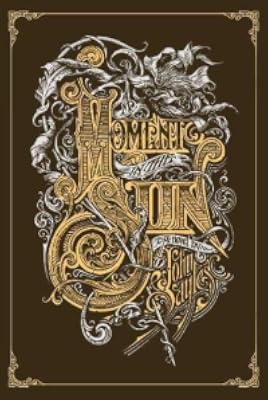
A Moment in the Sun
by John Sayles
On This Page
Description
"In 1897, gold has been discovered in the Yukon. New York is under the sway of Hearst and Pulitzer. And in a few months, an American battleship will explode in a Cuban harbor, plunging the U.S. into war. This is the story of that extraordinary moment: the turn of the twentieth century, as seen by one of our greatest storytellers of all time...'A Moment in the Sun' takes the whole era in its sights--from the white-racist coup in Wilmington, North Carolina to the bloody dawn of U.S. show more interventionism overseas. Beginning with Hod Brackenridge searching for his fortune in the North, and hurtling forward across five years and half a dozen countries...this is a story as big as its subject: history rediscovered through the lives of the people who made it happen."--P. [4] of cover. show lessTags
Recommendations



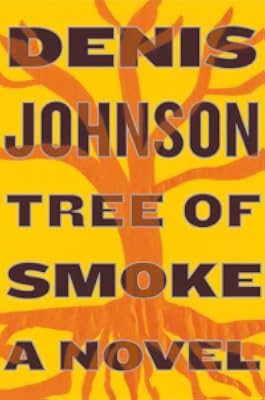
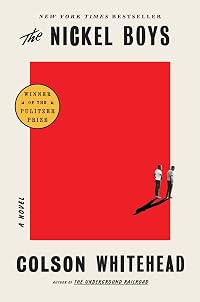


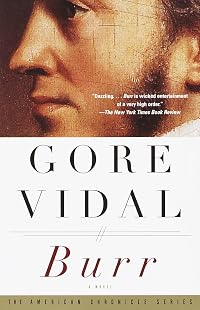
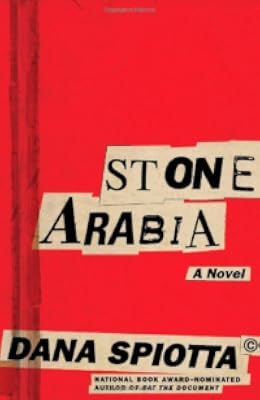









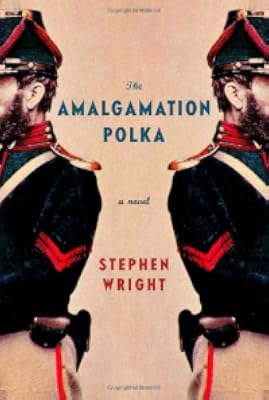
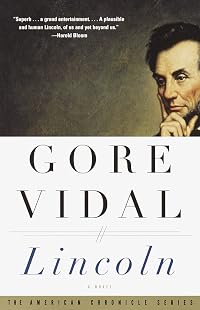
Member Recommendations
susanbooks Both books bring USA history alive.
Member Reviews
Truly one of the most breathtaking, epic, sprawling works of historical fiction you will ever read.
Sayles (best known as film director for such movies as "Eight Men Out" and "Lone Star") has clearly done extensive research into the most tumultuous events of turn-of-the-century America, and connected them into separate but eventually overlapping narratives of astonishing humanity.
There's the Hearst-led newspaper wars that used political cartooning to essentially force the U.S. into a war with Spain over the sinking of a US warship that may or may not even have been perpetrated by the Spaniards, resulting in the Spanish-American War and the subsequent U.S. take-over of the Philippines...a racist coup in Wilmington, North Carolina show more violently expels the city's black community to the northern cities, while we follow some of the men into the Army, enduring insane bouts of disease and more racism within the ranks to fight the rebels in the Philippines; You get the last days of the Alaska Gold Rush and the beginnings of the motion picture industry; We witness President McKinley's assassination in Buffalo, NY, and while all these events themselves are larger-than-life, the characters Sayles introduces to tell the story are fully drawn and seem heart-achingly real. You'll care deeply about their hardships, and perhaps that's the most overriding feature of the book: Just how hard--physically, mentally, spiritually-- everyday life was for people in these times...how tough they had to be (men and women alike) just to survive from one day to the next.
Don't be put off by the book's nearly 1,000-page length...the stories will grab you immediately and you'll be catapulted swiftly along. And even though the book starts in 1897 and finishes in 1903, the parallels and connectivity to our present day will make the tale more relevant than you expect. show less
Sayles (best known as film director for such movies as "Eight Men Out" and "Lone Star") has clearly done extensive research into the most tumultuous events of turn-of-the-century America, and connected them into separate but eventually overlapping narratives of astonishing humanity.
There's the Hearst-led newspaper wars that used political cartooning to essentially force the U.S. into a war with Spain over the sinking of a US warship that may or may not even have been perpetrated by the Spaniards, resulting in the Spanish-American War and the subsequent U.S. take-over of the Philippines...a racist coup in Wilmington, North Carolina show more violently expels the city's black community to the northern cities, while we follow some of the men into the Army, enduring insane bouts of disease and more racism within the ranks to fight the rebels in the Philippines; You get the last days of the Alaska Gold Rush and the beginnings of the motion picture industry; We witness President McKinley's assassination in Buffalo, NY, and while all these events themselves are larger-than-life, the characters Sayles introduces to tell the story are fully drawn and seem heart-achingly real. You'll care deeply about their hardships, and perhaps that's the most overriding feature of the book: Just how hard--physically, mentally, spiritually-- everyday life was for people in these times...how tough they had to be (men and women alike) just to survive from one day to the next.
Don't be put off by the book's nearly 1,000-page length...the stories will grab you immediately and you'll be catapulted swiftly along. And even though the book starts in 1897 and finishes in 1903, the parallels and connectivity to our present day will make the tale more relevant than you expect. show less
There was an element of Papa's dictum in my reading of John Sayles' doorstop qua cinder block of a narrative, it sat gradually until suddenly I devoured its 1000 pages. My cheekiest nod to the novel is that its as if the Chums of Chance (Pynchon's creations in Against The Day) chose to chronicle American Race and Imperium. That said, Sayles never appears overwrought nor resigned to types or constructs in establishing his dramatic web.
As many may know, I once considered African-American history to be a desired career path. The plausibility of that now strikes me as either ancient or a thumbnail sketch I was considering for a screenplay. My focus and affairs drifted quite far afield and I was thus caught unawares by how the description of show more the purge of Wilmington affected me. Not that I find such removed or distinct from any other pogrom, far from it, but as domestic political discourse appears as of late to be saturated with racial codes, I do wonder.
a postscript would simply nudge and nod. Glancing back at the work, I sense a lingering both above and within the influences of Vidal and Vollmann. We are prodded, we remember and thus imagine. show less
As many may know, I once considered African-American history to be a desired career path. The plausibility of that now strikes me as either ancient or a thumbnail sketch I was considering for a screenplay. My focus and affairs drifted quite far afield and I was thus caught unawares by how the description of show more the purge of Wilmington affected me. Not that I find such removed or distinct from any other pogrom, far from it, but as domestic political discourse appears as of late to be saturated with racial codes, I do wonder.
a postscript would simply nudge and nod. Glancing back at the work, I sense a lingering both above and within the influences of Vidal and Vollmann. We are prodded, we remember and thus imagine. show less
Why would anyone want to read this 950 page novel about dimly remembered events of a century ago -- the Yukon Gold Rush, the violent reassertion of White supremacy in Wilmington, North Carolina, the rise of mass culture in the urban North, and America’s rise to world power in the Spanish American war and the brutal occupation of the Philippines? First, because Sayles is a masterful storyteller. This hefty book may be hard to pick up, but once you do it will be even harder to put down. Second, because Sayles has a visionary grasp of the broad sweep of history. In this novel he imagines in rich detail the experiences of dozens of diverse characters at every strata of society struggling, sometimes to fulfill their highest aspirations and show more sometimes simply to survive, as they are swept up together in the monumental forces of modern society and America’s rise to imperial power. Sayles weaves their individual fates together into a cohesive whole that captures a cataclysmic moment in history that resonates deeply with our own struggles in the present. In short, you should read this book because it is a masterpiece. show less
If Howard Zinn's People's History of the United States were a novel, it might be the long version of Sayles's A Moment in the Sun. Not that the novel at hand is the short version. At 955 pages, A Moment in the Sun is capacious, to say the least. Set during the years that for half of my life we called The Turn of the Century (1896-1902)the novel begins with the gold rush in the Yukon & ends with the assassination of President McKinley & the U.S. takeover of the Philippines after the Spanish-American war (Manifest Destiny in action). A number of the main characters (Dr. Lunceford, his son Junior & daughter Jessie; Royal & Jubal Scott; Harry & Nils Manigault)come from Wilmington, North Carolina, where a coup d'etat in 1898 disenfranchises show more the majority black population of the city; some are murdered & thousands more are forced into exile. John Sayles is a gifted storyteller both as novelist & filmmaker. His characters are fully human, flawed & wonderful in equal measure. The most vile of the men here (& uncharacteristically for Sayles the filmmaker, almost all of the important characters in the novel are men)may be Nils Manigault, amoral, corrupt to the core & simply cruel. He doesn't deserve to remain standing at the end of the novel, but he does & we find it hard to hate even him unreservedly, bad actor that he is. All the characters are complex & if there is one criticism that I might have of the novel it is that there are perhaps too many of them, too many stories being told. Yes, the aim is to create a panorama & that is achieved, but the price is paid in giant steps, gaps in each story (it takes a long while to get back to someone)& the complete fall off from some more minor but equally fascinating subjects, such as the women Mei, Nilda & Miss Loretta or the Ojibwe Indian Big Ten. Sayles take on war in general here is similar to that of his movie Men With Guns. Pressured from all sides, the ordinary people are generally shit out of luck whichever side they end up on (here, that of the Spanish, the Americans or the Revolutionaries/ Filipino patriots). Issues of racism are everywhere pervasive, both at home in the U.S. & abroad in her imperial adventures. In fact, it becomes almost impossible to imagine an American society sans racism, so central to the making of this country has it been. Toward the very end of the novel, Sayles writes a scene, though rife with all the contradictions of American society, that shows a glimpse of what that non-racist world might hold. Dr. Lunceford, exiled to NYC after the Wilmington debacle & long delayed recognition of his medical license, finally is able to practice legally as a physician & move the remains of his family (his daughter Jessie & her daughter Minnie)to decent housing & out of abject poverty, is tagged on the arm by a street boy. His pal, known to us as the newsboy the Yellow Kid, is in dire straights down some insalubrious alley. Dr. Lunceford is wary but follows the boy to find the Kid in very bad shape, jaundiced & in great pain from a tumor that only surgery can remedy. The Doctor sends the boy's pal off to call the ambulance at the nearest hospital (the City being what it is, we have no assurance that that ambulance will ever arrive, or arrive on time). Meanwhile all the Doctor can do is comfort the boy, hold him in a human embrace. The boy comments (unnecessarily, I think) when he lays his hand upon the Doctor's that they are the same color, the doctor being a fair-skinned black man & the boy a yellow-brown jaundiced white boy. The Doctor in his former life (Wilmington before the coup d'etat)was African-American royalty so to speak. He lived in a white neighborhood; his son had a college education & his daughter was a piano prodigy destined for the conservatory. His family employed black servants & had a distinct sense of class. He believed in Dubois's Talented Tenth & placed his family among them. He rejected his daughter's love affair with a decent young man from the "other side of the tracks." But life has been the great leveler for Dr. Lunceford & so at the end of the novel he is in an embrace with a very sick, very declasse orphaned white newsboy while his daughter & granddaughter are greeting back home on the stoop the erstwhile rejected Royal Scott, "home" at last from his seemingly interminable engagement with the black regiment, the 25th, in Cuba, Arizona & the Philippines. show less
Wanted to like this one, there's a lot to appreciate about how exposes America's history of imperialism in Cuba and the Philippines around the turn of the 20th century, juxtaposed with the Wilmington white supremicist coup in North Carolina. Sayles is closely attuned to the terrible subjugation of the working class and Black people in these times, and the story takes in many colourful and important events. But that's the problem. The various characters are just vehicles to be ferried around between these events without ever developing as people in themselves. Sayles indulges his meticulous research by cramming in lengthy digressions on places, styles and happenings, but it all feels rather wooden and disjointed as the chapters alternate show more between the protagonists. And it goes on and on and on for near 1000 pages and alas there is little reason to continue. show less
Even with a huge cast of characters, every one of them is distinct. It's fat, but not bloated, unlike some other 700 page authors I can think of (GRRM).
Having watched several of Sayles' films, it didn't surprise me that his leftist leanings come through in this long, much too long, novel. Taking place roughly between 1898 and 1900, it's got all the excesses of greedy imperial America on view: appalling mining conditions, war to seize territory, whites killing blacks, con men, exploitation everywhere. That's cool; there certainly was all that in those years. But Sayles' take is relentlessly pessimistic about the average man -- make that white man, because pretty much all the women and black men are decent human beings in his tale. That's not to say that the historical details are inaccurate; there he is on firm ground. But there is really no arc to this story that would make it a show more compelling read; instead, I found it rather static. Action proceeds in little bursts for the multiple story lines, effectively killing any sort of drama from building. No doubt we're supposed to be impressed with the parallels with America today; I don't think Sayles is capable of subtlety.
And there is a non-character named Pynchon on page 567. What is that about? show less
And there is a non-character named Pynchon on page 567. What is that about? show less
Members
- Recently Added By
Lists

Top Five Books of 2013
1,562 works; 721 members

Juggernauts (fiction)
21 works; 3 members
Author Information

59+ Works 2,556 Members
John Thomas Sayles is a novelist, screenwriter, director, and actor. He was born in Schenectady, New York, on September 28, 1950. He earned a B.S. in psychology from Williams College in 1972. After graduating, Sayles earned a living as an orderly, a laborer, and a meat packer. Two novels and a collection of short stories were published in the show more 1970s. Sayles also wrote screenplays for B-movie king Roger Corman, contributing to such films as Piranha and Battle Beyond the Stars. In 1980 he wrote, directed, and acted in the film Return of the Secaucus Seven, which won the Best Screenplay award from the Los Angeles Film Critics and was nominated for an Academy Award. In 1983, Sayles received a MacArthur Foundation "genius grant," which provided him with $30,000 per year for five years. His work during this period included the films Baby it's You, Brother From Another Planet, and Matewan. Sayles also directed the Bruce Springsteen music videos, "Born in the U.S.A.," "I'm on Fire," and "Glory Days." He also created a television series in 1989 called Shannon's Deal. Sayles has received an O. Henry Award, a best director award from the Seattle Film Festival, a Taskforce Award, and Academy Award nominations for the screenplays for Passion Fish and Lone Star. He also wrote the screenplay for, directed, and performed in the critically acclaimed film, Eight Men Out. (Bowker Author Biography) show less
Awards and Honors
Common Knowledge
- Original publication date
- 2011
- Important events
- Spanish-American War (1898); Klondike Gold Rush (1896 | 1899); Assassination of William McKinley (1901-09)
- Dedication
- for Maggie
- First words
- Hod is the first on deck to see smoke.
- Last words
- (Click to show. Warning: May contain spoilers.)But it won't leave his head, the song the young men were singing incessantly on that first boat trip to Coney Island with Brigid McCool--
You absent-minded beggar
Be you city-sport or jay
If you want to see the Elephant
You must pay, pay, pay! - Original language
- English
Classifications
Statistics
- Members
- 406
- Popularity
- 76,609
- Reviews
- 12
- Rating
- (4.06)
- Languages
- English
- Media
- Paper, Ebook
- ISBNs
- 4
- ASINs
- 2