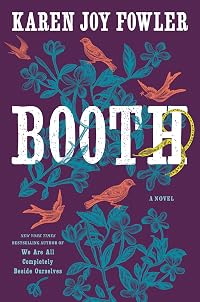
Booth
by Karen Joy Fowler
On This Page
Description
"From the Man Booker finalist and bestselling author of We Are All Completely Beside Ourselves comes an epic novel about the family behind one of the most infamous figures in American history: John Wilkes Booth"-- In 1822, a secret family moves into a secret cabin some thirty miles northeast of Baltimore, to farm, to hide, and to bear ten children over the course of the next sixteen years. Junius Booth--breadwinner, celebrated Shakespearean actor, and master of the house in more ways than show more one--is at once a mesmerizing talent and a man of terrifying instability. One by one the children arrive, as year by year, the country draws frighteningly closer to the boiling point of secession and civil war. As the tenor of the world shifts, the Booths emerge from their hidden lives to cement their place as one of the country's leading theatrical families. But behind the curtains of the many stages they have graced, multiple scandals, family triumphs, and criminal disasters begin to take their toll, and the solemn siblings of John Wilkes Booth are left to reckon with the truth behind the destructively specious promise of an early prophecy. show lessTags
Recommendations

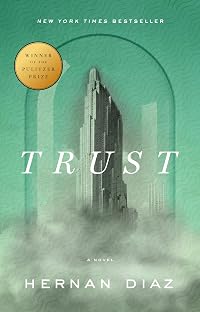
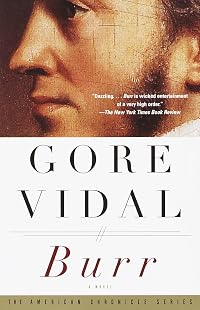
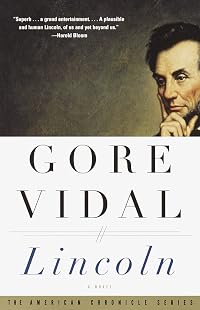

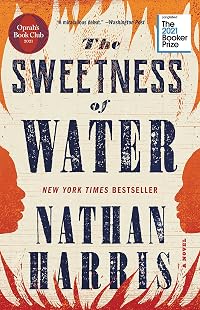


Member Recommendations
susanbooks Both books bring USA history alive.
Member Reviews
So refreshing! A well written and researched character driven novel, which was a pleasure to read (even at nearly 500 pages!) I, like the author and probably most people, knew nothing about the family of John Wilkes Booth, Abraham Lincoln's assassin, and was intrigued to learn that his father and brothers were famous in their own right as actors. Karen Joy Fowler also makes sure that his sisters Rosalie and Asia are included too.
I read a few reviews before starting this mammoth bio-fic (is that a word?) and noted a couple of remarks about the subject of the book. The title Booth refers to the family name, not JWB in particular, and Lincoln only features in brief chapters to establish the historical background. Anyone hoping for a study show more of the assassin himself - although he does unavoidably feature - or his presidential victim will be disappointed, but I wasn't. Who wants to read about another little man trying to make a name for himself by killing a greater personality? As the author writes, 'This is a man who craved attention and has gotten too much of it; I didn’t think he deserved mine.'
Instead, the focus is on his family, who were naturally destroyed by his actions in 1865. I loved Rosalie, whose representation here is mostly fictional as little is known about her: 'She’s never wanted to be at the center of a story, not even her own, but she likes very much being near the center'. Her sister Asia, far more suited to the limelight and keen to preserve the family's memory in her memoirs, wrote that Rosalie was an 'invalid' but never explained why. Brothers Edwin and June continue the family trade on stage, while never quite matching their father's national acclaim or personal ego, while the mother Mary Ann, who was technically living with another woman's husband for the first twenty years of their family life, claimed to 'love her children more than her [adopted] country' - especially the ever wayward John, who the author suggests was triggered by the death of a friend's father at the Christiana Riot.
Karen Joy Fowler brings to life a period of history and a cast of characters - even Lincoln - that I wasn't overly familiar with, employing a quirky free indirect narrative which is equal parts biography and family saga. I honestly learned so much while growing to love real life 'characters' like Rosalie and her larger than life father, Junius. An amazing read, if slightly overlong! show less
I read a few reviews before starting this mammoth bio-fic (is that a word?) and noted a couple of remarks about the subject of the book. The title Booth refers to the family name, not JWB in particular, and Lincoln only features in brief chapters to establish the historical background. Anyone hoping for a study show more of the assassin himself - although he does unavoidably feature - or his presidential victim will be disappointed, but I wasn't. Who wants to read about another little man trying to make a name for himself by killing a greater personality? As the author writes, 'This is a man who craved attention and has gotten too much of it; I didn’t think he deserved mine.'
Instead, the focus is on his family, who were naturally destroyed by his actions in 1865. I loved Rosalie, whose representation here is mostly fictional as little is known about her: 'She’s never wanted to be at the center of a story, not even her own, but she likes very much being near the center'. Her sister Asia, far more suited to the limelight and keen to preserve the family's memory in her memoirs, wrote that Rosalie was an 'invalid' but never explained why. Brothers Edwin and June continue the family trade on stage, while never quite matching their father's national acclaim or personal ego, while the mother Mary Ann, who was technically living with another woman's husband for the first twenty years of their family life, claimed to 'love her children more than her [adopted] country' - especially the ever wayward John, who the author suggests was triggered by the death of a friend's father at the Christiana Riot.
Karen Joy Fowler brings to life a period of history and a cast of characters - even Lincoln - that I wasn't overly familiar with, employing a quirky free indirect narrative which is equal parts biography and family saga. I honestly learned so much while growing to love real life 'characters' like Rosalie and her larger than life father, Junius. An amazing read, if slightly overlong! show less
Villains have families, too. That's not something we often think about. When villains die in movies, it doesn't occur to us that they must have had someone who loved them. And it is much the same way with real-life villains.
This thought led Karen Joy Fowler to write her excellent 2022 novel “Booth” about not John Wilkes Booth but rather his family.
Fowler tells her story through the eyes of various members of the Booth family, but never John Wilkes, the handsome, unpredictable younger brother. It is Edwin, an older son in a family of actors, who becomes the family's central figure. It is he, not Junius or John, who matches their father's greatness on the stage.
It turns out that their father and mother had never actually married. It's show more a shock to all when his actual wife arrives from England and begins making demands. Then there is his alcoholism, a trait passed down to his elder sons. The daughters — Rosalie, the plain one, and Asia, the beauty — also feature prominently in the novel.
Although the Booths have slaves — set free but still working for the family — their sympathies lie with the North when war breaks out. That is, except for John, who has lived in Richmond, and Joe, an even younger brother, who was notable for being a deserter from both armies.
The assassination of Abraham Lincoln comes as as much of a shock to the Booths as to anyone else, and they all pay the price of notoriety. Edwin's acting career tanks; Junius spends time in prison for the crime of being John's brother.
At times you don't know whether you are reading fiction or history, and this uncertainty seems to be deliberate on Fowler's part. Little is actually known about Rosalie, one of the best drawn characters, and so she is almost entirely fictional. Others left letters or are mentioned more in historical records, and so their stories read more like history. All in all, it makes for an impressive book, not as good as some of Fowler's other novels, yet better than many books written by historians about this tragedy. show less
This thought led Karen Joy Fowler to write her excellent 2022 novel “Booth” about not John Wilkes Booth but rather his family.
Fowler tells her story through the eyes of various members of the Booth family, but never John Wilkes, the handsome, unpredictable younger brother. It is Edwin, an older son in a family of actors, who becomes the family's central figure. It is he, not Junius or John, who matches their father's greatness on the stage.
It turns out that their father and mother had never actually married. It's show more a shock to all when his actual wife arrives from England and begins making demands. Then there is his alcoholism, a trait passed down to his elder sons. The daughters — Rosalie, the plain one, and Asia, the beauty — also feature prominently in the novel.
Although the Booths have slaves — set free but still working for the family — their sympathies lie with the North when war breaks out. That is, except for John, who has lived in Richmond, and Joe, an even younger brother, who was notable for being a deserter from both armies.
The assassination of Abraham Lincoln comes as as much of a shock to the Booths as to anyone else, and they all pay the price of notoriety. Edwin's acting career tanks; Junius spends time in prison for the crime of being John's brother.
At times you don't know whether you are reading fiction or history, and this uncertainty seems to be deliberate on Fowler's part. Little is actually known about Rosalie, one of the best drawn characters, and so she is almost entirely fictional. Others left letters or are mentioned more in historical records, and so their stories read more like history. All in all, it makes for an impressive book, not as good as some of Fowler's other novels, yet better than many books written by historians about this tragedy. show less
In an “Author’s Note” toward the end of Booth, Karen Joy Fowler notes that the germ of this book came from thinking about America’s mass shootings and the families of the shooters. “How,” she asked herself, “would such a family deal with their own culpability?”
This led her to the gifted, troubled family of the actor and bigamist Junius Brutus Booth and the ten children he had with the woman he ran off to America with in an act of Byronic madness.
The ninth of these children was John Wilkes, whose flair for the dramatic gesture led him to Ford’s Theater on April 14, 1865. There he crossed paths with Abraham Lincoln, whom he slays.
Throughout the book, as Fowler weaves her narrative, changing viewpoints from one sibling to show more another (but never taking that of John Wilkes), she includes insets of Lincoln’s unfolding life that suggest parallels in the trajectories of his life and that of the man who took it.
A recurring motif is Shakespeare, two plays in particular. One is “Richard III,” one of the elder Booth’s staples (“no role is so completely Father’s own as that of the murdering and murdered king”). The other is “Hamlet,” in which John Wilkes’ brother Edwin became the definitive interpreter of his time of the ghost-haunted prince of Denmark who avenged his father’s murder. Of course, no writings, except for the Bible, affected Lincoln as deeply as Shakespeare.
Fowler closes by noting that she was in final edits during the insurrection of January 6, 2021, when she saw “the flag of the Confederacy carried through the halls of the Capitol for the very first time.” She ends: “Let it be the last.”
This sense of the past as prologue gives the book much of its poignancy but also points to a flaw. This is not a biography but historical fiction. Yet, from time to time, Fowler breaks genre. A reader attuned to history immediately responds to the first mention of theatre owner John T. Ford, or Laura Keene’s overwhelming success with “Our American Cousin,” or John Wilkes’ attraction to the Virginia state flag with its motto “sic semper tyrannis,” and accepts these as a legitimate use of foreshadowing. But Fowler also intrusively brings the story up to date. For example, after Maryland—without seceding from the Union—blocks the route of conscripts from the North, leading Lincoln to impose countermeasures little short of military occupation, Maryland adopts a new state song exulting how the state “spurns the Northern scum!” Fowler notes the repeated failed attempts to replace it, most recently in 2020. These lapses resemble an actor on stage breaking the fourth wall, and they jar.
Aside from these, though, I found the book readable. It’s a particular achievement that, in relating a story whose conclusion is all-too-well known, Fowler can hold one’s attention. In fact, the closer the inevitable climax approached, the more difficulty I had in putting it down. show less
This led her to the gifted, troubled family of the actor and bigamist Junius Brutus Booth and the ten children he had with the woman he ran off to America with in an act of Byronic madness.
The ninth of these children was John Wilkes, whose flair for the dramatic gesture led him to Ford’s Theater on April 14, 1865. There he crossed paths with Abraham Lincoln, whom he slays.
Throughout the book, as Fowler weaves her narrative, changing viewpoints from one sibling to show more another (but never taking that of John Wilkes), she includes insets of Lincoln’s unfolding life that suggest parallels in the trajectories of his life and that of the man who took it.
A recurring motif is Shakespeare, two plays in particular. One is “Richard III,” one of the elder Booth’s staples (“no role is so completely Father’s own as that of the murdering and murdered king”). The other is “Hamlet,” in which John Wilkes’ brother Edwin became the definitive interpreter of his time of the ghost-haunted prince of Denmark who avenged his father’s murder. Of course, no writings, except for the Bible, affected Lincoln as deeply as Shakespeare.
Fowler closes by noting that she was in final edits during the insurrection of January 6, 2021, when she saw “the flag of the Confederacy carried through the halls of the Capitol for the very first time.” She ends: “Let it be the last.”
This sense of the past as prologue gives the book much of its poignancy but also points to a flaw. This is not a biography but historical fiction. Yet, from time to time, Fowler breaks genre. A reader attuned to history immediately responds to the first mention of theatre owner John T. Ford, or Laura Keene’s overwhelming success with “Our American Cousin,” or John Wilkes’ attraction to the Virginia state flag with its motto “sic semper tyrannis,” and accepts these as a legitimate use of foreshadowing. But Fowler also intrusively brings the story up to date. For example, after Maryland—without seceding from the Union—blocks the route of conscripts from the North, leading Lincoln to impose countermeasures little short of military occupation, Maryland adopts a new state song exulting how the state “spurns the Northern scum!” Fowler notes the repeated failed attempts to replace it, most recently in 2020. These lapses resemble an actor on stage breaking the fourth wall, and they jar.
Aside from these, though, I found the book readable. It’s a particular achievement that, in relating a story whose conclusion is all-too-well known, Fowler can hold one’s attention. In fact, the closer the inevitable climax approached, the more difficulty I had in putting it down. show less
4.5 near perfect, but long. I was so touched when I read the author's note at the end about where the idea for the book came from: after a recent mass shooting in the 20-teens and thinking about the family of the shooter: “What happens to love when the person you love is a monster?” From that contemporary concept, Fowler went back in time to look at one of the biggest monsters in American history: John Wilkes Booth. More than anything, this historical fiction puts him in the context of his kind-of crazy family, but never would they or (they thought) he resort to such mad violence. From 1838 when John was born into a family of 9 siblings, with an actor father, and a fragile mother, we see his place in that constellation (favorite) show more and get a detailed look at the family and the times. Junius, the father and Mary Ann came from England to further his acting career and to live in sin. He was married to another woman there and Mary Ann became his mistress and once in the US, they lived as husband and wife, with none the wiser. (though that bubble bursts). Each sibling gets in depth treatment, and the story is largely from their point of view which really humanizes everyone. The family was decidedly anti-slavery, and Junius went so far as to insist on vegetarianism so as not to kill another living creature. But he also drank away whatever he earned as an itinerant actor while the family squeaked by in various locations, often depending on the generosity of others. Older brothers June and Edwin also became actors - all the children were brought up on Shakespeare and quoting various plays became a parlor game - though they all had their struggles in the profession too. I was amazed at the amount of travel they did - mostly for work - given the challenges of the time. Fowler intersperses short chapters of Lincoln's rise to the Presidency, giving the formidable feeling of how their lives would intersect - like two trains on the same track from opposite directions. Booth's action not only destroyed the nation, but his family as well. Fascinating, well-written handling of thousand disparate pieces of information - it turns to compelling narrative in the author's capable hands. show less
Reacting to the headline of a mass shooting, Karen Joy Fowler wondered about the families of the shooters. Did they struggle under the burden of notoriety? Were they stigmatized, or able to navigate in society? She realized she knew little about the family of the most notorious American shooter–the man who killed President Lincoln, John Wilkes Booth.
As she researched extensively to understand the Booth family, she realized the relevance of this episode in American history, especially after the January 6 insurrection.
In her new novel Booth, Fowler brings to life the nine children and parents of the Booth family, beginning with Junius Brutus Booth, a famous actor. He was also a deeply flawed man, a bigamist and an alcoholic. Junius show more abandoned his English wife and child when he met the beautiful Mary. He settled their family on a farm, scrambling to survive as their patriarch was on tour most of the year. As the boys came of age, they are tasked with being their father’s guardian and caretaker, endeavoring to keep him sober. The eldest son, June becomes an actor with a career in the West. Edwin had hoped for college but was next tasked with his father’s care; he falls into the same bad habits as his father, going on to forge his own acting career. The youngest son to go into acting is John Wilkes, beloved and handsome but demonstrating disturbing traits since childhood. He had little academic interest, joined a gang, and was swayed by extremist politics.
The eldest daughter Rosalie experienced the death of younger siblings. She was plagued by physical handicaps, a limp and a curved spine, keeping her at home, a perpetual daughter and caretaker. Asia, strong willed and beautiful, settles for a comfortable marriage, but she remains devoted to her brother John Wilkes.
These deeply flawed characters share family trauma of loss and poverty and alcoholism, revering their absent, unreliable father and idolizing their long suffering, beautiful mother. They move from the hard life of the farm to city luxury as the family fortunes rise. The family is apolitical, but Republican, but for John Wilkes who comes to hate abolition and defends slavery.
Interspersed are chapters summarizing President Lincoln’s life, career, and speeches–which today seem prescient, referring to mobs and political division and populist leaders. Baltimore and Maryland’s political strife and division are central to the story. The political division in Maryland mirrors the entire country, then and now.
Fowler’s story is deep and rich. The Booths seem like a family meant for fiction, encompassing such a broad swath of human experience.
I received a free egalley from the publisher through NetGalley. My review is fair and unbiased. show less
As she researched extensively to understand the Booth family, she realized the relevance of this episode in American history, especially after the January 6 insurrection.
In her new novel Booth, Fowler brings to life the nine children and parents of the Booth family, beginning with Junius Brutus Booth, a famous actor. He was also a deeply flawed man, a bigamist and an alcoholic. Junius show more abandoned his English wife and child when he met the beautiful Mary. He settled their family on a farm, scrambling to survive as their patriarch was on tour most of the year. As the boys came of age, they are tasked with being their father’s guardian and caretaker, endeavoring to keep him sober. The eldest son, June becomes an actor with a career in the West. Edwin had hoped for college but was next tasked with his father’s care; he falls into the same bad habits as his father, going on to forge his own acting career. The youngest son to go into acting is John Wilkes, beloved and handsome but demonstrating disturbing traits since childhood. He had little academic interest, joined a gang, and was swayed by extremist politics.
The eldest daughter Rosalie experienced the death of younger siblings. She was plagued by physical handicaps, a limp and a curved spine, keeping her at home, a perpetual daughter and caretaker. Asia, strong willed and beautiful, settles for a comfortable marriage, but she remains devoted to her brother John Wilkes.
These deeply flawed characters share family trauma of loss and poverty and alcoholism, revering their absent, unreliable father and idolizing their long suffering, beautiful mother. They move from the hard life of the farm to city luxury as the family fortunes rise. The family is apolitical, but Republican, but for John Wilkes who comes to hate abolition and defends slavery.
Interspersed are chapters summarizing President Lincoln’s life, career, and speeches–which today seem prescient, referring to mobs and political division and populist leaders. Baltimore and Maryland’s political strife and division are central to the story. The political division in Maryland mirrors the entire country, then and now.
Fowler’s story is deep and rich. The Booths seem like a family meant for fiction, encompassing such a broad swath of human experience.
I received a free egalley from the publisher through NetGalley. My review is fair and unbiased. show less
Karen Joy Fowler's Booth has been garnering all sorts of critical acclaim, and it deserves every bit of that praise. Fowler is one of those reliable writers who can make any story a deeply rewarding read, whether or not it fits one's literary tastes, but in this case, Booth is very much my sort of read.
Booth is a fictionalized biography of the Booth family. It's written in third person, but different sections present the perspectives of different Booth siblings. John Wilkes' is never the controlling perspective, which was a brilliant decision on Fowler's part. Instead he's seen as one among many—difficult, but loved—who ends up tearing his family apart when he assassinates Abraham Lincoln.
All of the Booth children struggle under the show more shadow of their famous actor father, Junius Brutus Booth. Three of his four surviving sons (a number of Booth children died before reaching adulthood) become actors: Junius Jr., Edwin, and John Wilkes. His two daughters who live past childhood, Rosalie and Asia, live very different lives. Rosalie who becomes an invalid for uncertain reasons, cares for her mother and is generally expected to pick up all of the family's domestic needs. Asia seems more of a virago, fiercely assertive and temperamental. Joseph, the youngest and last of the surviving brothers studies medicine. Both Booth parents and all of the Booth children struggle with mental health challenges. Alcoholism also runs in the family.
The novel becomes particularly interesting following the death of Junius Sr., as the Booth children do (or don't) shoulder family responsibilities and as their relationships with one another wax and wane.
Fowler's introduction to and afterward for Booth are well worth reading. The introduction describes her original conceptualization of the novel early in the Trump presidency. This was a story that deserved telling, but Fowler did not want to make John Wilkes the central character—the U.S. already having more than enough present-day violent conservatives. We witness Fowler's version of John Wilkes' ethical development and the justifications that he offers his family for his choices, but these come via his siblings who are sometimes adoring and sometimes deeply uncomfortable.
Booth is a don't-miss title, whether or not you generally read historical fiction. Pick up a copy or request it from your local library sooner, rather than later.
I received a free electronic review copy of this title from the publisher via EdelweissPlus; the opinions are my own. show less
Booth is a fictionalized biography of the Booth family. It's written in third person, but different sections present the perspectives of different Booth siblings. John Wilkes' is never the controlling perspective, which was a brilliant decision on Fowler's part. Instead he's seen as one among many—difficult, but loved—who ends up tearing his family apart when he assassinates Abraham Lincoln.
All of the Booth children struggle under the show more shadow of their famous actor father, Junius Brutus Booth. Three of his four surviving sons (a number of Booth children died before reaching adulthood) become actors: Junius Jr., Edwin, and John Wilkes. His two daughters who live past childhood, Rosalie and Asia, live very different lives. Rosalie who becomes an invalid for uncertain reasons, cares for her mother and is generally expected to pick up all of the family's domestic needs. Asia seems more of a virago, fiercely assertive and temperamental. Joseph, the youngest and last of the surviving brothers studies medicine. Both Booth parents and all of the Booth children struggle with mental health challenges. Alcoholism also runs in the family.
The novel becomes particularly interesting following the death of Junius Sr., as the Booth children do (or don't) shoulder family responsibilities and as their relationships with one another wax and wane.
Fowler's introduction to and afterward for Booth are well worth reading. The introduction describes her original conceptualization of the novel early in the Trump presidency. This was a story that deserved telling, but Fowler did not want to make John Wilkes the central character—the U.S. already having more than enough present-day violent conservatives. We witness Fowler's version of John Wilkes' ethical development and the justifications that he offers his family for his choices, but these come via his siblings who are sometimes adoring and sometimes deeply uncomfortable.
Booth is a don't-miss title, whether or not you generally read historical fiction. Pick up a copy or request it from your local library sooner, rather than later.
I received a free electronic review copy of this title from the publisher via EdelweissPlus; the opinions are my own. show less
At the end of the book, in the author's note, Fowler cites the prevalence of mass shootings in our country, which led her to wonder how the families of these shooters could live with their own culpability. How do you love a person who is a monster, she asks. This fictionalized account of the Booth family is her attempt to address that question.
We learn about Junius Brutus Booth, celebrated (and often intoxicated) actor, who leaves his wife and young son in England and emigrates to America with another woman, Mary Ann, and they produce another family of children, 10 in all. The stain of illegitimacy and the early deaths of 4 of the children, along with the persistent presence of alcohol, casts a pall on the family. Still, 3 of the show more remaining boys become actors themselves, including John Wilkes. The family side with the Union in the years leading up to the Civil War, but John Wilkes, because of time spent living in the South, pulls for the Confederacy. The story takes us into the imagined lives of many of the siblings, including Rosalie and Asia, and culminates in a radicalized John Wilkes assassinating Lincoln.
For me, the most interesting parts of this story took place late, with each sibling reacting to their now infamous relative, and how his infamy impacted their lives. It's a tragedy of Shakespearean proportions.
The author includes, in her author's note, that the election of Donald Trump waylaid this project for a year. Eventually she understood how history was repeating itself, and it gave her the motivation to continue. Let me quote a remarkable paragraph:
"The Lost Cause (the Confederacy) may be temporarily mislaid, but it has never been lost. Whenever Black people exercise genuine political power in this country, the assassin appears, the crowd rises. This is the history of America and there is no escaping it. Abraham Lincoln told us so." show less
We learn about Junius Brutus Booth, celebrated (and often intoxicated) actor, who leaves his wife and young son in England and emigrates to America with another woman, Mary Ann, and they produce another family of children, 10 in all. The stain of illegitimacy and the early deaths of 4 of the children, along with the persistent presence of alcohol, casts a pall on the family. Still, 3 of the show more remaining boys become actors themselves, including John Wilkes. The family side with the Union in the years leading up to the Civil War, but John Wilkes, because of time spent living in the South, pulls for the Confederacy. The story takes us into the imagined lives of many of the siblings, including Rosalie and Asia, and culminates in a radicalized John Wilkes assassinating Lincoln.
For me, the most interesting parts of this story took place late, with each sibling reacting to their now infamous relative, and how his infamy impacted their lives. It's a tragedy of Shakespearean proportions.
The author includes, in her author's note, that the election of Donald Trump waylaid this project for a year. Eventually she understood how history was repeating itself, and it gave her the motivation to continue. Let me quote a remarkable paragraph:
"The Lost Cause (the Confederacy) may be temporarily mislaid, but it has never been lost. Whenever Black people exercise genuine political power in this country, the assassin appears, the crowd rises. This is the history of America and there is no escaping it. Abraham Lincoln told us so." show less
Members
- Recently Added By
Lists

Booker Prize
491 works; 62 members

Books Read in 2023
5,547 works; 145 members

Anticipated 2022 & Early 2023 Releases
209 works; 4 members

Book of the Month Selections 2016 to Present
130 works; 5 members
Author Information

62+ Works 15,150 Members
Karen Joy Fowler is the author of several novels and short story collections. Her works include Sarah Canary, The Sweetheart Season, Sister Noon, and The Jane Austen Book Club. She has received numerous awards including the World Fantasy Award in 1999 for Black Glass, the World Fantasy Award in 2011 for What I Didn't See, and the 2014 PEN/Faulkner show more Award for Fiction for We Are All Completely Beside Ourselves. This same title was nominated for The Man Booker Prize for Best Novel in 2014. (Bowker Author Biography) show less
Some Editions
Awards and Honors
Awards
Distinctions
The Guardian Book of the Day (2022-03-19)
Common Knowledge
- Canonical title
- Booth
- Original publication date
- 2022
- People/Characters
- Junius Booth; Mary Ann Holmes; Junius Booth, Jr.; Rosalie Booth; Edwin Booth; Asia Booth (show all 9); John Wilkes Booth; Joe Booth; Abraham Lincoln
- First words
- The people who live there call it the farm, though it's half-trees, woodland merging into dense forest.
- Quotations
- In his speech, he warns of two possible threats to the republic. The first is found in the lawless actions of the mob, the second in the inevitable rise someday of an aspiring dictator. The gravest peril will come if the mob ... (show all)and the dictator unite. (p. 6)
"Children can snatch happiness from even the darkest times," Ann said. "That's God's gift, that's how God loves children. You grow up, you can't do that no more. You don't have that gift. God's taken it back." (p. 43)
That is s good reminder that no one in the world is a reliable source for their own story. (p. 98)
He has them on the edge of their seats, wondering if he'll get through his next line, his next scene, his next thrust, his next parry. The play ends with Edwin's first ovation. He won it merely by surviving. (p. 139)
He thinks about Father's playbills and about time passing and how the things you can keep really only serve to remind you of all that you've lost. (p. 309)
Still younger: He remembers fireflies and tadpoles, clouds of pigeons, trees to climb and streams to cross, and John begging to come, tagging along behind, running to keep up. "He was my brother," Edwin reminds an intrusive r... (show all)eporter who seems to have forgotten this. (p. 458)
That pause is the last place she can find her brother. All she has to do now is begin again from there, begin the rest of her life at that pause, when John is still John, Rosalie still Rosalie, and the world has better things... (show all) to do than notice either one. (p. 461) - Last words
- (Click to show. Warning: May contain spoilers.)Are there ghosts?
How could there not be? - Canonical DDC/MDS
- 813.54
- Canonical LCC
- PS3556.O844
Classifications
Statistics
- Members
- 807
- Popularity
- 34,313
- Reviews
- 39
- Rating
- (3.90)
- Languages
- Dutch, English
- Media
- Paper, Audiobook, Ebook
- ISBNs
- 13
- ASINs
- 4