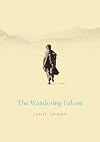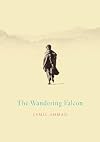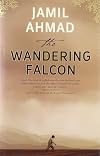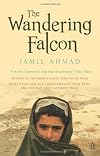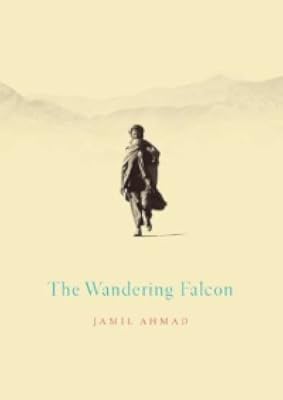
The Wandering Falcon
by Jamil Ahmad
On This Page
Description
A haunting literary debut set in the forbidding remote tribal areas of Pakistan and Afghanistan. Traditions that have lasted for centuries, both brutal and beautiful, create a rigid structure for life in the wild, astonishing place where Iran, Pakistan, and Afghanistan meet-the Federally Administered Tribal Areas (FATA). It is a formidable world, and the people who live there are constantly subjected to extremes-of place and of culture.The Wandering Falcon begins with a young couple, show more refugees from their tribe, who have traveled to the middle of nowhere to escape the cruel punishments meted out upon those who transgress the boundaries of marriage and family. Their son, Tor Baz, descended from both chiefs and outlaws, becomes "The Wandering Falcon," a character who travels among the tribes, over the mountains and the plains, into the towns and the tents that constitute the homes of the tribal people. The media today speak about this unimaginably remote region, a geopolitical hotbed of conspiracies, drone attacks, and conflict, but in the rich, dramatic tones of a master storyteller, this stunning, honor-bound culture is revealed from the inside.
Jamil Ahmad has written an unforgettable portrait of a world of custom and compassion, of love and cruelty, of hardship and survival, a place fragile, unknown, and unforgiving.
. show less
Tags
Recommendations











Member Recommendations
Member Reviews
The Wandering Falcon by Pakistani author Jamil Ahmad is a collection of inter-linked stories that are set in the remote tribal lands along the Pakistan-Afghan border. The stories all concern the life of these tribal people and are linked by one character who weaves in and out of most of the stories.
We first meet Tor Baz, the black falcon, when as a young child his parents are killed by his mother’s relatives. She had run away from an impotent husband with one of her father’s servants. They had avoided being caught for many years, but were eventually discovered. From there the child is shuffled around, always wandering and never the main character of the story but instead appearing on the fringes. He is a guide, an informer, a show more smuggler and a slave trader. This is an unforgiving corner of the world and conditions are harsh. Through these stories the traditions and culture of these tribal people are revealed.
The author writes with great respect and empathy toward these people. Their lives are filled with harshness and cruelty as they wander with their herds. Eventually the political borders are called into play and their wandering lifestyle is curtailed. In one story, “The Death of Camels|”, the refusal of Pakistan to allow them to take their herds to fresh pasture across the border, means not only the death of their herds but brings their own lives into jeopardy as well.
Jamil Ahmad is a gifted storyteller and The Wandering Falcon is a moving account of a disappearing lifestyle. show less
We first meet Tor Baz, the black falcon, when as a young child his parents are killed by his mother’s relatives. She had run away from an impotent husband with one of her father’s servants. They had avoided being caught for many years, but were eventually discovered. From there the child is shuffled around, always wandering and never the main character of the story but instead appearing on the fringes. He is a guide, an informer, a show more smuggler and a slave trader. This is an unforgiving corner of the world and conditions are harsh. Through these stories the traditions and culture of these tribal people are revealed.
The author writes with great respect and empathy toward these people. Their lives are filled with harshness and cruelty as they wander with their herds. Eventually the political borders are called into play and their wandering lifestyle is curtailed. In one story, “The Death of Camels|”, the refusal of Pakistan to allow them to take their herds to fresh pasture across the border, means not only the death of their herds but brings their own lives into jeopardy as well.
Jamil Ahmad is a gifted storyteller and The Wandering Falcon is a moving account of a disappearing lifestyle. show less
This is a short collection of somewhat-interconnected stories set in the remote tribal regions bordering Afghanistan and Pakistan. They are a mix of local lore and history, held together by the character of Tor Baz. Tor Baz is a rather inscrutable character, and what makes this book worth reading is the spare but evocative prose.
This is a difficult book to review, although I must say from the start that I truly enjoyed it. If you read it, I have a suggestion. Pretend that you are at a library or an outdoor event, in a group gathered around to listen to a great storyteller. There is tea for everyone and perhaps some dates, nuts, and other little snacks. Then the 80 year old Jamil Ahmad begins to tell strange and wonderful stories about the people of the tribal areas of Afghanistan and Pakistan.
He gives some idea of the harsh landscape and living conditions, but for the most part his stories are about the people he has worked among and understands. Tribal leaders who make their point in meetings through parables, men who treat their animals better than their show more women, women who nevertheless manage to exert influence on decisions for the tribe, children who know instinctively who to trust.
In short, this isn't a novel as you normally think of it. A child, the Falcon, who is 5 years old in the first story is the thread upon which Ahmad weaves his fictional tales. In another story he is 7, then 13, then a young man. He appears in each tale but sometimes only in a cameo appearance. The stories tell about the customs and unwritten laws by which the tribal people of this wild country govern their entire lives.
I've read a little about the city people of these countries but wanted to know more about the mysterious tribal people. This is Ahmad's first book, but I hope that even at his advanced age he will continue to tell these stories. I highly recommend this book. show less
He gives some idea of the harsh landscape and living conditions, but for the most part his stories are about the people he has worked among and understands. Tribal leaders who make their point in meetings through parables, men who treat their animals better than their show more women, women who nevertheless manage to exert influence on decisions for the tribe, children who know instinctively who to trust.
In short, this isn't a novel as you normally think of it. A child, the Falcon, who is 5 years old in the first story is the thread upon which Ahmad weaves his fictional tales. In another story he is 7, then 13, then a young man. He appears in each tale but sometimes only in a cameo appearance. The stories tell about the customs and unwritten laws by which the tribal people of this wild country govern their entire lives.
I've read a little about the city people of these countries but wanted to know more about the mysterious tribal people. This is Ahmad's first book, but I hope that even at his advanced age he will continue to tell these stories. I highly recommend this book. show less
The remote corner of the world where Iran, Pakistan, and Afghanistan meet has played a role in world affairs since the time of the British Empire, and yet it remains a mysterious place, a land of tribal loyalties and customs that are seemingly contradictory, aggressive, and disloyal. Current news reports struggle to give motivations to the tribal leaders whose actions sometimes help and sometimes hinder the Taliban and terrorists. In The Wandering Falcon, Jamil Ahmad gives us a window into this inaccessible land and its complicated history, tribal relationships, and belief systems.
Ahmad knows this region well, having worked and lived in the area for decades. He attempts to distill his impressions in a series of vignettes, each show more depicting a particular tribe and/or social issue. Connecting the stories is a character known as Tor Baz, who is orphaned in the first chapter and moves amongst the tribes throughout the book. He is not, as I first thought, the protagonist of the novel. Rather he, as the perpetual outsider, is the means through which we are allowed access to the tribes.
The role of the chief, or Sardar, is explored in several stories: how they are chosen, the relationship they have with their tribesmen, and the various ways in which the Pakistani government has tried, over the years, to work with or abolish them. At times there is a disconnect between the government and the tribes, at other times there is an almost ritualized arrangement of actions and counteractions that are expected and performed as a means of maintaining the status quo. For some tribes, simply the existence of a nation state is enough to end their nomadic way of life forever. But most heart-wrenching of all is the treatment of women. From the first story to the last, the majority of women suffer. Simple survival is hard, requiring enormous effort in order to sustain a family, often while their husbands are away for years at a time. And harder still is the subjugation of women to the word of their fathers and husbands. Daughters can be sold for a pound of opium, unattached women are prey for slavers, and adultery, under any circumstances, is unforgivable. Yet there is also love and sacrifice, making even the treatment of women in the tribes a contradictory story.
A first-time novelist at the age of eighty, Jamil Ahmad has been trying to get this book published for years. Finally, its time has come, and how fortunate for us. His writing is clean and direct, and his characters seem to me to be the archetypes of people he may have actually known. He has the experience to write authentic fiction, and the distance needed to avoid prejudice. Without preaching or falling back on tired Western assumptions, Ahmad lets us see the complexity of the geopolitical area and its tribal relationships. I sincerely hope that Mr. Ahmad continues to write and be published, and that his present book achieves the readership it deserves. show less
Ahmad knows this region well, having worked and lived in the area for decades. He attempts to distill his impressions in a series of vignettes, each show more depicting a particular tribe and/or social issue. Connecting the stories is a character known as Tor Baz, who is orphaned in the first chapter and moves amongst the tribes throughout the book. He is not, as I first thought, the protagonist of the novel. Rather he, as the perpetual outsider, is the means through which we are allowed access to the tribes.
The role of the chief, or Sardar, is explored in several stories: how they are chosen, the relationship they have with their tribesmen, and the various ways in which the Pakistani government has tried, over the years, to work with or abolish them. At times there is a disconnect between the government and the tribes, at other times there is an almost ritualized arrangement of actions and counteractions that are expected and performed as a means of maintaining the status quo. For some tribes, simply the existence of a nation state is enough to end their nomadic way of life forever. But most heart-wrenching of all is the treatment of women. From the first story to the last, the majority of women suffer. Simple survival is hard, requiring enormous effort in order to sustain a family, often while their husbands are away for years at a time. And harder still is the subjugation of women to the word of their fathers and husbands. Daughters can be sold for a pound of opium, unattached women are prey for slavers, and adultery, under any circumstances, is unforgivable. Yet there is also love and sacrifice, making even the treatment of women in the tribes a contradictory story.
A first-time novelist at the age of eighty, Jamil Ahmad has been trying to get this book published for years. Finally, its time has come, and how fortunate for us. His writing is clean and direct, and his characters seem to me to be the archetypes of people he may have actually known. He has the experience to write authentic fiction, and the distance needed to avoid prejudice. Without preaching or falling back on tired Western assumptions, Ahmad lets us see the complexity of the geopolitical area and its tribal relationships. I sincerely hope that Mr. Ahmad continues to write and be published, and that his present book achieves the readership it deserves. show less
 This review was written for LibraryThing Early Reviewers.
In the cracks and interstices of modern states (Pakistan, Afghanistan, Iran) live people who do and do not belong; nomads and other tribal peoples who negotiate a life with several governments.
This short work is a tribute to them, an account of them in concise stories and anecdotes. The slow courtesies of speech; a tribes’ immense tactfulness towards an old chief who has lost most of his eyesight but leads them out in action nevertheless, when obligation calls; this same chief with his antiquated ethic of an uttered word being a pledge, in a court of law that treats his party as bandits and in their eyes, in turn, is rude, inhumane and uncivilized.
In an interview the author says, “…it appears this type of collectivity is less show more tyrannical, more just, and has very simple rules of right and wrong, compared to other society. In fact, if you think about it, the amount of brutality committed in the cities and what we know as civilised society is far more than has ever been committed in tribal areas.” He is then asked about what makes them ‘harsh’, and he answers, “I don’t think I would call them harsh. They are, of course, hard – the land makes them hard, their fight for survival makes them hard. But they also have enormous tenderness, and love, and civilised behaviour. That is there too. So, it’s not all brutality and harshness, no, no.”
I am sad to see professional reviews reach for the word ‘brutal’, one after the other, and the worst of them fail to see past the ideas they have brought to this book on ‘tribal Afghanistan’ – fail to see these elegant turns of mind and speech that he painstakingly portrays. The author wrote in the 70s, in a world innocent of Osama bin Laden or the Taliban; so that if I see another newspaper review telling us these are implicit in the setting or the narrative, I’ll scream. (Because history happens to these people, on the whole; history invades them. This is not a contemporary story, the author says in the interview; haven’t nomads been fettered by states for 2000 years?) Even so, in the 70s, this tribal world was on the brink of extinction; he almost claims so for the Baluch, with an exquisitely-written epitaph; and then there is the story of the nomad people whose ways are shut off one year by the government; it ends with a massacre, and after the massacre, starvation.
A few of these tribes live in poverty, either humbly or with an adversarial attitude; a few live well on the milk and fat of their flocks, until the state intervenes. They have relationships with governments home and foreign that go back to the Great Game and WWI, that are as various as the tribes themselves, their lifestyle, their ethics, the behaviour of women. Women play a large part in these stories, from the one who leads that disastrous crossing of an international line, under threat of guns, to those who abandon husbands, for better or worse fates. One important thing – he says this too in the interview – is that he wants to write how different the tribes are from one another. Those unfamiliar lump them together as an age-old cultural world.
The stories are not even in quality. Neither is the writing. I felt the three early stories were head and shoulders above the later. Once, just once, I thought he defected from his task, when he made a judgemental, outsider’s statement about the ‘character’ or ‘morals’ of a tribe entire – which is what this lovely book avoids. People have bad stories. A deeply ethical mullah ends violently insane. A girl scores a husband with the asset of a performing bear – wealth and status to her poor family’s eyes; but he is more concerned about his single asset than about her. The author’s aim is not that we universalise these stories (they have cruel husbands – mullahs were odd fish). He took these stories from life, from his experience as an administrator for decades around the tribal areas. He writes of them with respect and lament. Although his ethnographic fiction from the 70s was published to acclaim at the end of his life, he has the sorrow – as he alludes to in the interview I read – of knowing that the tribes, whose near-eradication he complained of then, have not won their battles for existence since. show less
This short work is a tribute to them, an account of them in concise stories and anecdotes. The slow courtesies of speech; a tribes’ immense tactfulness towards an old chief who has lost most of his eyesight but leads them out in action nevertheless, when obligation calls; this same chief with his antiquated ethic of an uttered word being a pledge, in a court of law that treats his party as bandits and in their eyes, in turn, is rude, inhumane and uncivilized.
In an interview the author says, “…it appears this type of collectivity is less show more tyrannical, more just, and has very simple rules of right and wrong, compared to other society. In fact, if you think about it, the amount of brutality committed in the cities and what we know as civilised society is far more than has ever been committed in tribal areas.” He is then asked about what makes them ‘harsh’, and he answers, “I don’t think I would call them harsh. They are, of course, hard – the land makes them hard, their fight for survival makes them hard. But they also have enormous tenderness, and love, and civilised behaviour. That is there too. So, it’s not all brutality and harshness, no, no.”
I am sad to see professional reviews reach for the word ‘brutal’, one after the other, and the worst of them fail to see past the ideas they have brought to this book on ‘tribal Afghanistan’ – fail to see these elegant turns of mind and speech that he painstakingly portrays. The author wrote in the 70s, in a world innocent of Osama bin Laden or the Taliban; so that if I see another newspaper review telling us these are implicit in the setting or the narrative, I’ll scream. (Because history happens to these people, on the whole; history invades them. This is not a contemporary story, the author says in the interview; haven’t nomads been fettered by states for 2000 years?) Even so, in the 70s, this tribal world was on the brink of extinction; he almost claims so for the Baluch, with an exquisitely-written epitaph; and then there is the story of the nomad people whose ways are shut off one year by the government; it ends with a massacre, and after the massacre, starvation.
A few of these tribes live in poverty, either humbly or with an adversarial attitude; a few live well on the milk and fat of their flocks, until the state intervenes. They have relationships with governments home and foreign that go back to the Great Game and WWI, that are as various as the tribes themselves, their lifestyle, their ethics, the behaviour of women. Women play a large part in these stories, from the one who leads that disastrous crossing of an international line, under threat of guns, to those who abandon husbands, for better or worse fates. One important thing – he says this too in the interview – is that he wants to write how different the tribes are from one another. Those unfamiliar lump them together as an age-old cultural world.
The stories are not even in quality. Neither is the writing. I felt the three early stories were head and shoulders above the later. Once, just once, I thought he defected from his task, when he made a judgemental, outsider’s statement about the ‘character’ or ‘morals’ of a tribe entire – which is what this lovely book avoids. People have bad stories. A deeply ethical mullah ends violently insane. A girl scores a husband with the asset of a performing bear – wealth and status to her poor family’s eyes; but he is more concerned about his single asset than about her. The author’s aim is not that we universalise these stories (they have cruel husbands – mullahs were odd fish). He took these stories from life, from his experience as an administrator for decades around the tribal areas. He writes of them with respect and lament. Although his ethnographic fiction from the 70s was published to acclaim at the end of his life, he has the sorrow – as he alludes to in the interview I read – of knowing that the tribes, whose near-eradication he complained of then, have not won their battles for existence since. show less
In his first work of fiction, "The Wandering Falcon", Jamil Ahmad depicts a world caught between timeless paths of migration and geo-political modernity. Ahmad knits together a series of short stories that cover the life arc of one young man, Tor Baz - the wandering falcon of the title, as he journeys from infancy to manhood.
Inspired by his time as a civil service worker in the tribal areas of Pakistan, Ahmad writes of a world governed by clan and custom. During his time as a powerful emissary of the Pakistani government under the tribal region's frontier governing system, Jamil Ahmad simultaneously served as politician, police chief, judge, jury and executioner. Bits of this personal history are woven within the stories, including show more hints of Jamil's wife's German heritage. Environmentalist and activist Helga Ahmad was instrumental in encouraging her husband Jamil to move from halting first attempts at poetry to richly crafted stories of people, place and borders.
The bleak landscapes in the book evoke a world of nomadic treks where human contact is brief and often violent, and where far western desert winds blow clouds of sand so thick that breath is priceless. The environment is unforgiving as is the justice doled out by tribe and government.
Jamil Ahmad finished "The Wandering Falcon" in 1973-74, but the stories did not find a publisher until this year. Penguin Books' decision to at last publish Jamil's stories is timely. Ahmad believes that his stories evoke a vanishing world of tribes that the modern world must resonate and harmonize with: "Because frankly speaking, I still think that each one of us has a tribal gene inside, embedded inside. I really think that way."
Jamil Ahmad hopes that deeper understanding of the tribes that once roamed freely between the far borders of Pakistan, Afghanistan and Iran could help end the wars that stain their mountains and valleys with blood. Reading "The Wandering Falcon" can help begin a process of understanding between the timeless nomadic life and the fragmenting borders of our post-modern society.
Our contemporary world has much to learn from the rhythms of the nomadic trail. I highly recommend Jamil Ahmad's magnificent book "The Wandering Falcon". show less
Inspired by his time as a civil service worker in the tribal areas of Pakistan, Ahmad writes of a world governed by clan and custom. During his time as a powerful emissary of the Pakistani government under the tribal region's frontier governing system, Jamil Ahmad simultaneously served as politician, police chief, judge, jury and executioner. Bits of this personal history are woven within the stories, including show more hints of Jamil's wife's German heritage. Environmentalist and activist Helga Ahmad was instrumental in encouraging her husband Jamil to move from halting first attempts at poetry to richly crafted stories of people, place and borders.
The bleak landscapes in the book evoke a world of nomadic treks where human contact is brief and often violent, and where far western desert winds blow clouds of sand so thick that breath is priceless. The environment is unforgiving as is the justice doled out by tribe and government.
Jamil Ahmad finished "The Wandering Falcon" in 1973-74, but the stories did not find a publisher until this year. Penguin Books' decision to at last publish Jamil's stories is timely. Ahmad believes that his stories evoke a vanishing world of tribes that the modern world must resonate and harmonize with: "Because frankly speaking, I still think that each one of us has a tribal gene inside, embedded inside. I really think that way."
Jamil Ahmad hopes that deeper understanding of the tribes that once roamed freely between the far borders of Pakistan, Afghanistan and Iran could help end the wars that stain their mountains and valleys with blood. Reading "The Wandering Falcon" can help begin a process of understanding between the timeless nomadic life and the fragmenting borders of our post-modern society.
Our contemporary world has much to learn from the rhythms of the nomadic trail. I highly recommend Jamil Ahmad's magnificent book "The Wandering Falcon". show less
This review was written for LibraryThing Early Reviewers.Raw, hyper-real stuff. The Wandering Falcon by Jamil Ahmad mesmerizes you with its spare, elegant prose. In this collection of interconnected stories, we get an unflinching glimpse at the lives of the people who live along the border between Afghanistan and Pakistan: the Kuchi, the Pashtun, the Waziri, and others. It's a world rarely seen in books.
There is a hard-edged beauty in the desolation of the landscapes described and the lives we see, but nothing is exoticized. Our Western sensibilities are also never spared. While there is violence, the carnage isn't depicted voyeuristically. When we see a daughter get sold for a pound of opium, or when a man kills his lover to protect her from her vengeful family who chases them across the show more high desert, or when a woman chooses to be sold to a brothel rather than face humiliation at home—it's never depicted in a sensational way. Ahmad avoids romanticizing tribal life or condemning it. This lack of judgment mirrors the tribes themselves, in the unblinking way they face life and reality—and it's a harsh reality, one of migrations, raids, encroaching modernity.
The quality of the writing alone in The Wandering Falcon is worth the read, a throwback to classic storytelling done right. There is a rhythm to the writing that mimics the way the caravans in the stories meander across the hills and mountain passes.
Some people might be frustrated by the fact that there isn't a distinct central character to root for in the book. We first see the protagonist as a child born in the first story, but in succeeding ones we see him move from one group to another without him being the focus. He eventually gets a name, Tor Baz or Black Falcon. Tor drifts in and out of other people's stories obliquely, which is a remarkably postmodern move in an otherwise straightforward, classic story. Ahmad doesn't spend any time developing Tor's character. As Tor drifts around, the role he plays changes—from orphan to informer to trader. He's a protagonist who doesn't want us to follow him. Nor does Ahmad want to reveal anything about him as an individual really. Probably because in the withholding, Ahmad reveals so much more. show less
There is a hard-edged beauty in the desolation of the landscapes described and the lives we see, but nothing is exoticized. Our Western sensibilities are also never spared. While there is violence, the carnage isn't depicted voyeuristically. When we see a daughter get sold for a pound of opium, or when a man kills his lover to protect her from her vengeful family who chases them across the show more high desert, or when a woman chooses to be sold to a brothel rather than face humiliation at home—it's never depicted in a sensational way. Ahmad avoids romanticizing tribal life or condemning it. This lack of judgment mirrors the tribes themselves, in the unblinking way they face life and reality—and it's a harsh reality, one of migrations, raids, encroaching modernity.
The quality of the writing alone in The Wandering Falcon is worth the read, a throwback to classic storytelling done right. There is a rhythm to the writing that mimics the way the caravans in the stories meander across the hills and mountain passes.
Some people might be frustrated by the fact that there isn't a distinct central character to root for in the book. We first see the protagonist as a child born in the first story, but in succeeding ones we see him move from one group to another without him being the focus. He eventually gets a name, Tor Baz or Black Falcon. Tor drifts in and out of other people's stories obliquely, which is a remarkably postmodern move in an otherwise straightforward, classic story. Ahmad doesn't spend any time developing Tor's character. As Tor drifts around, the role he plays changes—from orphan to informer to trader. He's a protagonist who doesn't want us to follow him. Nor does Ahmad want to reveal anything about him as an individual really. Probably because in the withholding, Ahmad reveals so much more. show less
Members
- Recently Added By
Published Reviews
ThingScore 88
Jamil Ahmad takes us to the high desert and mountains of a region crisscrossed by hundreds of nomadic tribes for thousands of years. We read of lovers fleeing the deadly punishment of their tribal group, of women desperate for affection, buried under customs and habits millenniums old, of men of honor living lives of crime, of tribal members returning from exile who must carefully navigate show more each clan and sub-clan in order to stay honorable and sometimes to stay alive.
Most of the nine roughly connected chapters of this narrative - one can't really call it a carefully shaped novel - partake of the power of myth and give back to the reader the ambiguities of antique culture alive and well in the world of contemporary national borders... show less
Most of the nine roughly connected chapters of this narrative - one can't really call it a carefully shaped novel - partake of the power of myth and give back to the reader the ambiguities of antique culture alive and well in the world of contemporary national borders... show less
added by Jcambridge
After a lifetime of service as a bureaucrat in the wild terrains between Pakistan and Afghanistan, 78-year-old Jamil Ahmad has the perfect understanding and insight into a place that vexes many a strategist around the world today. The Wandering Falcon, his debut novel, is a product gleaned from that experience, a record of individual tales of honour and desire among the tribes inhabiting show more Balochistan, Waziristan or the Swat Valley, people for whom “the terrible struggle for life makes it impossible for too much time to be wasted over thoughts for the dead”.
Tor Baz is the eponymous falcon, who is born and grows into adulthood during the course of the novel. In a region of fierce tribal identities, his origins remain amorphous. Nor is he useful in lending narrative cohesion but ends up loosely linking the stories of his parents who defied the tribal code of honour and eloped, the nomadic Kharot tribe trying to come to terms with the limitations of political boundaries or the way of life of the Wazirs, Mahsuds or Afridis.
Set in the mid-20th century, it is the changing life and mores of the nomadic tribes that Ahmad captures in clear, haunting prose: “One set of values, one way of life had to die … The new way of life triumphed over the old.” His keen observation is not lacking in humour either: a peek inside the Mahsud jirga reveals not just a dour assembly of bearded men but also intense discussions about “the safest smuggling routes, the most profitable items of contraband …and all the current social gossip and scandals in the area.” For the sheer humanising of a much-misunderstood people, the book is worth a read. show less
Tor Baz is the eponymous falcon, who is born and grows into adulthood during the course of the novel. In a region of fierce tribal identities, his origins remain amorphous. Nor is he useful in lending narrative cohesion but ends up loosely linking the stories of his parents who defied the tribal code of honour and eloped, the nomadic Kharot tribe trying to come to terms with the limitations of political boundaries or the way of life of the Wazirs, Mahsuds or Afridis.
Set in the mid-20th century, it is the changing life and mores of the nomadic tribes that Ahmad captures in clear, haunting prose: “One set of values, one way of life had to die … The new way of life triumphed over the old.” His keen observation is not lacking in humour either: a peek inside the Mahsud jirga reveals not just a dour assembly of bearded men but also intense discussions about “the safest smuggling routes, the most profitable items of contraband …and all the current social gossip and scandals in the area.” For the sheer humanising of a much-misunderstood people, the book is worth a read. show less
added by kidzdoc
Jamil Ahmad, a Pakistani civil servant, began his career in Baluchistan in the 1950s. Most civil servants posted to such a remote area as Baluchistan, North Western Frontier Province, or the tribal areas along the Pakistan-Afghan border would lobby hard for a posting in the bigger cities of Pakistan, but Ahmad stayed on, spending several decades working as an administrator. Unlike most show more officials from the plains, Ahmad learned Pashto, the language most tribes along the dreaded frontier speak. Along the way, he took notes, and by 1974 had turned his impressions into a collection of inter-linked stories.
Ahmad stashed away his first draft, leaving it untouched for three decades. In 2008, he was 75, retired from the civil service, and living in the Pakistani capital, Islamabad. Two young Pakistani women, a Lahore-based bookseller, Aysha Raja, and a Karachi-based columnist and editor, Faiza Sultan Khan, called on Pakistani authors to submit stories for a competition. Ahmad's younger brother insisted that he must show them his work. After reworking the 35-year-old manuscript, Ahmad sent it to Khan, who championed it, and showed it to an editor at Penguin.
Two years later, Jamil Ahmad made his debut as the 78-year-old writer of The Wandering Falcon, one of the finest collections of short stories to come out of south Asia in decades. show less
Ahmad stashed away his first draft, leaving it untouched for three decades. In 2008, he was 75, retired from the civil service, and living in the Pakistani capital, Islamabad. Two young Pakistani women, a Lahore-based bookseller, Aysha Raja, and a Karachi-based columnist and editor, Faiza Sultan Khan, called on Pakistani authors to submit stories for a competition. Ahmad's younger brother insisted that he must show them his work. After reworking the 35-year-old manuscript, Ahmad sent it to Khan, who championed it, and showed it to an editor at Penguin.
Two years later, Jamil Ahmad made his debut as the 78-year-old writer of The Wandering Falcon, one of the finest collections of short stories to come out of south Asia in decades. show less
added by kidzdoc
Lists

Books Read in 2016
4,666 works; 199 members

Titoli bestiali
67 works; 1 member

Afghanistan
42 works; 2 members

Not the NYT list of top 100 21st century books
100 works; 6 members
Author Information

5+ Works 491 Members
Jamil Ahmad was born in Pakistan in 1932. He joined the civil service in 1954 and later became commissioner of Swat and commissioner of Waziristan. He only book, The Wandering Falcon, which was published while he was in his 80s, was a collection of short stories about life in the border region of Pakistan, Afghanistan, and Iran. It was shortlisted show more for the Man Asian Literary Prize in 2011 and was also a finalist for the DSC Prize for South Asian Literature. He died after a long illness in July 2014 at the age of 83. (Bowker Author Biography) show less
Awards and Honors
Awards
Distinctions
Common Knowledge
- Original publication date
- 2011
- People/Characters
- Tor Baz
- Important places
- Afghanistan
Classifications
Statistics
- Members
- 484
- Popularity
- 62,944
- Reviews
- 48
- Rating
- (3.74)
- Languages
- 7 — English, French, German, Italian, Norwegian (Bokmål), Polish, Spanish
- Media
- Paper, Audiobook, Ebook
- ISBNs
- 22
- UPCs
- 1
- ASINs
- 6