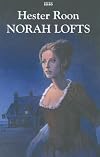
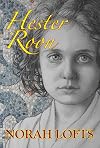
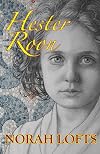
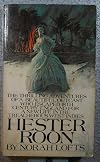
Hester Roon
by Norah Lofts
On This Page
Description
The Fleece Inn stood where the three roads joined - the roads to London, to Norwich and to the sea. Its trade was prosperous, its hospitality famous and the host was jolly and generous. To his servants he was cruel and menacing, and to Ellie Roon, the most menial servant at the Fleece, he was a figure of terror. Ellie was used to being bullied, but when her illegitimate daughter was born - in a rat-ridden attic of the Fleece - she decided that Hester must have a different kind of life. And show more so, Hester Roon began her eventful progress in the harsh world of 18th century England. After fleeing from the inn, and the attentions of the owner, she became involved in the London underworld. From there she found herself in a world far beyond her imaginings... show lessTags
Recommendations















Member Reviews
‘Hester Roon’ is set over the first eighteen years of the title character’s life. It opens when she’s newly born, though for the opening chapters she’s left in the background, with the emphasis being on her mother.
Ellie Roon is a single mother who works for a despicable pub landlord. She also lives in the pub.
Through Ellie’s daily life, the author brings to life the toil and misery of the lowest members of the working class. It’s an endless grind for small pay with little or no social life.
Much of the novel is set at the pub, with occasional wanderings off into the local area. I like this setting the best and miss it when, about halfway through the novel, the teenage Hester is compelled to leave. We see her go from place show more to place in England until she eventually ends up in the West Indies.
The story is set from the 1750s through to the 1770s, and while the characters are fictional, some of the events in the latter part of the book are based on real events.
The narrative is a bit slow to get going, owing to too much description and explanations instead of drama and action. I wondered for a while if I wasn’t going to enjoy it, but at length we get some character interaction, and I soon became engaged. So, don’t stop reading if you find the first few pages a bit slow – it’s well worth sticking with.
Hester is most interesting. She’s not perfect, not evil, but human with flaws and attributes, and therefore believable. She has a vengeful streak but is good at heart. She has a hard life but manages to survive many situations that would make some people emotionally crumble.
Norah Lofts was particularly good at creating believable characters. She expertly brings them all to life in this entertaining novel.
I can only fault her on two things, one of which is using too much explanation or reporting on events. She’s superb at drama and dialogue, so I can’t understand why she didn’t rely on these attributes consistently.
The other thing I didn’t like was – on three occasions, if I recall correctly – inserting historical notes in brackets, of which the fictitious ones should’ve been added at the end in an epilogue (or cut altogether), and the factual one should’ve been included at the end in an author’s note. Including this sort of thing takes the reader out of the story, destroying all feelings of escapism. When reading a chapter set around 1770, I don’t want an aside telling me that ‘In 1936, etc., etc.’
Don’t be put off by these criticisms, though, if you’re thinking of reading ‘Hester Roon’. About 90 per cent or more of this novel is brilliant.
This is the seventh novel I’ve read by Norah Lofts. After the first one, she became an author whose works I wanted to read more of. After the second, she entered my Top Ten favourite authors. By the time I’d read six, she was in my Top Three. After reading ‘Hester Roon’, she’s become my favourite author. She has a style like no one else I’ve read.
She has a way of drawing you into her stories and, at times, the writing is so absorbing, it leaves certain scenes imprinted in my mind like memories; as though I was there witnessing what her larger-than-life characters were doing. show less
Ellie Roon is a single mother who works for a despicable pub landlord. She also lives in the pub.
Through Ellie’s daily life, the author brings to life the toil and misery of the lowest members of the working class. It’s an endless grind for small pay with little or no social life.
Much of the novel is set at the pub, with occasional wanderings off into the local area. I like this setting the best and miss it when, about halfway through the novel, the teenage Hester is compelled to leave. We see her go from place show more to place in England until she eventually ends up in the West Indies.
The story is set from the 1750s through to the 1770s, and while the characters are fictional, some of the events in the latter part of the book are based on real events.
The narrative is a bit slow to get going, owing to too much description and explanations instead of drama and action. I wondered for a while if I wasn’t going to enjoy it, but at length we get some character interaction, and I soon became engaged. So, don’t stop reading if you find the first few pages a bit slow – it’s well worth sticking with.
Hester is most interesting. She’s not perfect, not evil, but human with flaws and attributes, and therefore believable. She has a vengeful streak but is good at heart. She has a hard life but manages to survive many situations that would make some people emotionally crumble.
Norah Lofts was particularly good at creating believable characters. She expertly brings them all to life in this entertaining novel.
I can only fault her on two things, one of which is using too much explanation or reporting on events. She’s superb at drama and dialogue, so I can’t understand why she didn’t rely on these attributes consistently.
The other thing I didn’t like was – on three occasions, if I recall correctly – inserting historical notes in brackets, of which the fictitious ones should’ve been added at the end in an epilogue (or cut altogether), and the factual one should’ve been included at the end in an author’s note. Including this sort of thing takes the reader out of the story, destroying all feelings of escapism. When reading a chapter set around 1770, I don’t want an aside telling me that ‘In 1936, etc., etc.’
Don’t be put off by these criticisms, though, if you’re thinking of reading ‘Hester Roon’. About 90 per cent or more of this novel is brilliant.
This is the seventh novel I’ve read by Norah Lofts. After the first one, she became an author whose works I wanted to read more of. After the second, she entered my Top Ten favourite authors. By the time I’d read six, she was in my Top Three. After reading ‘Hester Roon’, she’s become my favourite author. She has a style like no one else I’ve read.
She has a way of drawing you into her stories and, at times, the writing is so absorbing, it leaves certain scenes imprinted in my mind like memories; as though I was there witnessing what her larger-than-life characters were doing. show less
Ratings
Members
- Recently Added By
Author Information

85+ Works 6,095 Members
Celebrated novelist Norah Lofts perfected the art of bringing the past alive in her works of historical fiction. She remains one of England's most distinguished and best loved women of letters, selling more than a million books and captivating generations of readers. Lofts' first novel, "I Met a Gypsy", won the American Booksellers' Award for show more 1935. In her long and prolific career, she wrote more than 60 books of nonfiction, biography and historical fiction, animating history and yet preserving historical accuracy. In works such as "Scent of Cloves" (1940), "Bless This House" (1954), and "Crown of Aloes" (1979), period detail and language are blended with a masterful storytelling technique. Lofts is also well known for biographical novels about great and fascinating women of history such as Anne Boleyn and Catherine of Aragon. In addition, Lofts has written thrillers under the pseudonym Peter Curtis and novels as Juliet Astley. Norah (Robinson) Lofts was born in Norfolk, England on August 27, 1904. She credited her history-teaching years, 1925 to 1936, for developing a sense of history which became the foundation for her writings. Married and the mother of two sons, she lived in an ancient English city, among medieval ruins, in a 250-year-old house. She died there on September 10, 1983. (Bowker Author Biography) show less
Common Knowledge
- Original publication date
- 1940
Classifications
- Genres
- Fiction and Literature, General Fiction, Historical Fiction, Romance
- DDC/MDS
- 823.9 — Literature & rhetoric English & Old English literatures English fiction 1900-
- LCC
- PZ3 .L825 — Language and Literature Fiction and juvenile belles lettres Fiction and juvenile belles lettres Fiction in English
- BISAC
Statistics
- Members
- 37
- Popularity
- 782,342
- Reviews
- 1
- Rating
- (3.80)
- Languages
- English
- Media
- Paper, Ebook
- ISBNs
- 8
- ASINs
- 5