On This Page
Description
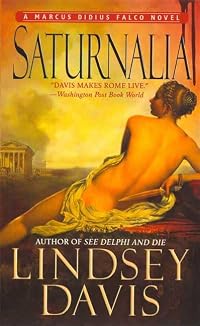
It is the Roman holiday of Saturnalia. The days are short, the nights are for wild parties. A general has captured a famous enemy of Rome, and brings her home to adorn his Triumph as a ritual sacrifice. The logistics go wrong; she acquires a mystery illness--then a young man is horrendously murdered and she escapes from house arrest. Marcus Didius Falco is pitted against his old rival, the Chief Spy Anacrites, in a race to find the fugitive before her presence angers the public and makes the show more government look stupid. Falco has other priorities, for Helena's brother Justinus has also vanished, perhaps fatally involved once more with the great lost love of his youth. Against the riotous backdrop of the season of misrule, the search seems impossible and only Falco seems to notice that some dark agency is bringing death to the city streets.... show less
Tags
Recommendations






Member Reviews
It's come around to that time of year again, Saturnalia, Falco's least favorite (does he care for any of them?) holiday. Of course there's more than the usual seasonal mischief afoot. Veleda, the German priestess has been captured and is going to be ritually murdered as part of a celebration of roman power, and Justinus, Helena's brother who was in love with her back in the day, is distraught. Veleda escapes, Justinus disappears, and at the same time a severed head is found in a fountain in the house of the wealthy patrician who was housing Veleda in secret. Everyone wants to blame her so they can feel better about doing her in. Falco has to find Veleda and is determined to find whoever killed the patrician's brother-in-law. He finds show more himself wandering a cemetery being haunted by an annoying ghost and having to go to the endless Saturnalia parties hosted by his family -- and Helena's, oh, and the drunken revels of the Vigiles. It is all too much! Anacrites, of course is skulking around making more trouble. Nice and complex and Falco is enjoyably frazzled. **** show less
Spoiler alert...
This was a real return to form and one the best of the series, the writing was much more lively, if a bit sentimental. However, in crime fiction, it is nice if there is a crime! A couple of times now in this series, what has seemed to be a chilling murder has turned out to be an accident, or can be explained away. There is almost nothing worse than finding out a guy who has had his head cut off actually died from blood loss in a botched medical procedure, having his head cut off later to frame someone else. It almost felt like the author had run out of good reasons for characters to be killed. If so, there shouldn't be any more books! I will, of course, read the 21st and final book in this series, but it is getting a bit show more tired. show less
This was a real return to form and one the best of the series, the writing was much more lively, if a bit sentimental. However, in crime fiction, it is nice if there is a crime! A couple of times now in this series, what has seemed to be a chilling murder has turned out to be an accident, or can be explained away. There is almost nothing worse than finding out a guy who has had his head cut off actually died from blood loss in a botched medical procedure, having his head cut off later to frame someone else. It almost felt like the author had run out of good reasons for characters to be killed. If so, there shouldn't be any more books! I will, of course, read the 21st and final book in this series, but it is getting a bit show more tired. show less
Saturnalia is the 18th in Davis' series featuring Marcus Didius Falco, a Roman private investigator during the reign of Vespasian.
The story takes place during the Roman festival of Saturnalia, originally a feast to celebrate the dedication of the Temple of Saturn on December 17 but later expanded to an entire week. It was a pretty riotous affair, with slaves exchanging places with masters (within carefully presribed limits), the giving of presents, public and private feasts, wild parties, and generally rowdy behavior.
Davis uses the 7 days of the feat to organize her story. The main plot centers around the escape, in Rome, of the captured German high priestess Veleda and the fear at the highest levels that Veleda might organize a show more rebellion in Rome itself. Falco is given the mission to find Veleda; he has until the end of Saturnalia to do so.
We've met Veleda before in the 4th book of the series, The Iron Hand of Mars. At that time, Falco, accompanied by Justinus, brother of Falco's lover Helena, to Germana Libera, east of the Rhine River, on an imperial mission to dsicover the fate of a Roman general presumed missing in the area. They are captured and sent as gifts to Veleda; they escape with Veleda's help after Justinus, a handsome young man, spends a night alone with Veleda.
But 5 years later, Justinus is married with a young son. The marriage is not an easy one, and Justinus and Claudia Rufina have had yet the latest in a series of arguments. Veleda's presence in Rome is not conducive to a reconciliation; in fact, Justinus disappears and all concerned are quite certain that he has decamped to find his former lover. Falco promises Helena's Senatorial family that he will find Justinus.
Veleda escaped from being held, as was customary at that time, in the house of a noble family. Her escape coincides with the murder of the son of the family in a particularly brutal fashion--he has been decapitated and his head placed in the pool in the atrium. Veleda is the prime suspect for this murder.
But other murders are occurring around Rome during this time, and the victims are far from noble--ex-slaves, runaways, homeless and vagrants. The question: are these murders in some way related to Veleda and her escape?
During the course of the investigation, we meet various representatives of Rome's medical establishment. We also participate in the raucous celebration of Saturnalia; Davis' description left me wistful--I was definitely born too late!
In this book, Davis departs from her usual approach in several ways: 1) the existence of a subplot and 2) Falco may be growing up! While Falco is as irreverent and cynical as ever, he is far more subdued--after all, he has a wife and family to consider. The quips are still there, his interactions with Petronius, his best friend and chief of the local vigiles, are still somewhat acerbic but the snappiness that characterized the earliest novels in particular is gone. However, that doesn't seem forced. Falco is still Falco and his family is still fascinating--but all have matured in one way or another, which seems natural. Any number of recurring characters reappear in addition to Falco's dysfunctional family; Anacrites, the Chief Spy, contributes his usual oily nastiness to the goings-on. The plot is still very good and the writing carries the reader along to a surprise ending.
A very entertaining read. Highly recommended. show less
The story takes place during the Roman festival of Saturnalia, originally a feast to celebrate the dedication of the Temple of Saturn on December 17 but later expanded to an entire week. It was a pretty riotous affair, with slaves exchanging places with masters (within carefully presribed limits), the giving of presents, public and private feasts, wild parties, and generally rowdy behavior.
Davis uses the 7 days of the feat to organize her story. The main plot centers around the escape, in Rome, of the captured German high priestess Veleda and the fear at the highest levels that Veleda might organize a show more rebellion in Rome itself. Falco is given the mission to find Veleda; he has until the end of Saturnalia to do so.
We've met Veleda before in the 4th book of the series, The Iron Hand of Mars. At that time, Falco, accompanied by Justinus, brother of Falco's lover Helena, to Germana Libera, east of the Rhine River, on an imperial mission to dsicover the fate of a Roman general presumed missing in the area. They are captured and sent as gifts to Veleda; they escape with Veleda's help after Justinus, a handsome young man, spends a night alone with Veleda.
But 5 years later, Justinus is married with a young son. The marriage is not an easy one, and Justinus and Claudia Rufina have had yet the latest in a series of arguments. Veleda's presence in Rome is not conducive to a reconciliation; in fact, Justinus disappears and all concerned are quite certain that he has decamped to find his former lover. Falco promises Helena's Senatorial family that he will find Justinus.
Veleda escaped from being held, as was customary at that time, in the house of a noble family. Her escape coincides with the murder of the son of the family in a particularly brutal fashion--he has been decapitated and his head placed in the pool in the atrium. Veleda is the prime suspect for this murder.
But other murders are occurring around Rome during this time, and the victims are far from noble--ex-slaves, runaways, homeless and vagrants. The question: are these murders in some way related to Veleda and her escape?
During the course of the investigation, we meet various representatives of Rome's medical establishment. We also participate in the raucous celebration of Saturnalia; Davis' description left me wistful--I was definitely born too late!
In this book, Davis departs from her usual approach in several ways: 1) the existence of a subplot and 2) Falco may be growing up! While Falco is as irreverent and cynical as ever, he is far more subdued--after all, he has a wife and family to consider. The quips are still there, his interactions with Petronius, his best friend and chief of the local vigiles, are still somewhat acerbic but the snappiness that characterized the earliest novels in particular is gone. However, that doesn't seem forced. Falco is still Falco and his family is still fascinating--but all have matured in one way or another, which seems natural. Any number of recurring characters reappear in addition to Falco's dysfunctional family; Anacrites, the Chief Spy, contributes his usual oily nastiness to the goings-on. The plot is still very good and the writing carries the reader along to a surprise ending.
A very entertaining read. Highly recommended. show less
This is the 18th of Davis’ ‘Falco’ series, a set of books which follow the activities and ‘investigations’ of Marcus Didius Falco, a private investigator in Rome during Vespasian’s reign. I have never read any of these books previously so I am unable to comment on how this compares to her earlier or later books. I should also note that this is not a book I would usually select for myself; it was a book group pick and I eyed the choice with reluctance. I like reading about history, but in a factual form, not fictionalised. (It seems to me that many writers find it hard to tread the line between slipping in appropriate historical detail and simply flinging historical facts and settings at your reader to convince them that you show more have done a suitable amount of research.) Could this fictional romp through Rome impress me?
The premise…and reality
Set during the rowdy festival of Saturnalia, a time when (carefully selected) slaves could act as master for a day or a feast, Falco’s mission is to locate Veleda, a German captive who seems to have escaped from her ‘captivity’ in a noble household. The apprehension is even more essential since her departure coincided with the discovery of a severed head in the house’s swimming pool. Locating the escapee and establishing the truth about the head is complicated by several facts, not least of which is the authority’s reluctance to admit publicly that the Barbarian Veleda has escaped, or indeed was even in Rome in the first place. Furthermore, Falco’s brother-in-law, Justinus has disappeared after a(nother) row with his young wife and the general suspicion is that he is also looking for Veleda, who may be the love of his life. Oh, and Veleda is ill and may even be dying, which must be prevented…so that she can be killed publicly during a parade (or ‘triumph’) for the general who captured her. Can Falco capture Veleda without revealing she is on the loose and save his brother-in-law’s marriage? Meanwhile, homeless people are dying at a rather worrying rate around the local area. Could someone be on a mission to destroy them? Or have they been murdered in order to carry out prohibited post-mortem examinations?
So Falco is a daring detective who fights to rid Rome of crime…except that he’s not. Instead, he’s a wisecracking family man whose main idea of investigative work seems to be to sit in a bar and wait for a lead to arrive. There is an awful lot going on in the book and most of it is family related or to do with job politics (as in, making sure you keep it). Sometimes Falco’s wife, Helena, seems to be more of a PI than he is, although in fairness her gender allows her entry to places Falco can’t access. The first chapter sets the scene by showing the detective with his father. The father declares a shocking piece of family news which Falco patiently listens to, they discuss family matters, then there is a kind of punch line at the end of the chapter which did make me giggle. Clearly, Pa likes to stir up trouble. This is really the focus of the book, with a bit of crime thrown in for extra flavour. This is not intended as a criticism, more an observation that although this was ‘sold’ to me as crime fiction, it is really more of a family/historical saga.
As I read the book I often giggled out loud at the Marcus’ comments. As the narrator, he presents his own personal view of the world throughout. This means that the reader is treated to advice like “You’ll never persuade the guild treasurer to admit he defrauded the funeral club so he could take three girlfriends to Lake Trasimene, if you are absolutely bursting to relieve yourself.” During one drunken party our hero sees “a tightly knotted group that included the man dressed as a turnip, whose friends were holding him down and pouring cups of wine into him (through his topknot of leaves) as if it was some kind of dangerous dare”. I think it was the level of detail that made me giggle: I could really imagine the turnip dressed man wriggling about while his friends attempted to hold him sufficiently still to achieve their objective.
So it’s humorous and the political negotiations are convincingly Machiavellian and, well, political. The family tensions are convincing and well portrayed. The weak spot really is the crime element. Falco’s half hearted investigating is one thing, but the actual answer was a bit odd and everything seemed rather downbeat, despite the constant cliff-hangers at the end of chapters. As a PI with opinions, Falco does not seem particularly keen to capture Veleda, which may account for the sense of sloth that hangs around his work. Perhaps other books in the series have better central crimes and detective work? I don’t know, but I wasn’t interested in the crime element at all. It seemed too un-urgent and politicised. Fortunately, the comic elements kept me relatively entertained, but it was slow going and I stopped reading this book for weeks at a time to read others that captured my interest better. I did finish it eventually, but I could have easily not if I didn’t have this ridiculous compulsion to finish ALL books I start reading.
Other minor irritations were the dialogue, the geography and the chapter endings. The dialogue seemed too modern; although obviously it needs to be written in a tone that will engage modern readers and that doesn’t necessitate constant referencing of a glossary, I didn’t really get the feel of ancient Rome (this is set in AD 76). Instead, Davis tried to create Rome through her constant, detailed geographical accounts of journeys. Falco cannot travel anywhere without naming streets, routes and places. It didn’t feel particularly convincing since this was a first person narrator speaking and I didn’t find it interesting. I can imagine that readers might do if they are genuinely interested in and knowledgeable about ancient Roman geography, but it left me cold. There are several maps, family trees and a list of characters at the beginning of the book which are designed to help you along the way, but I really don’t want to read a book that requires this kind of material. (Surely a two page list of characters just tells you that your story has too many characters?) I felt that the author was trying too hard to show off her knowledge and create Rome through plain geography rather than through sensory description. (Give me Dickens any day!)
This also creates an awkward awareness of the reader as audience as Falco carefully explains about festivals and roads. This brought me out of the story and reminded me that it was Historical Fiction. Personally, I would want the detail to be better integrated so that I felt swept along by the story, but maybe that’s too big an ask when dealing with an era so far removed from our own. I would rather have read a brief appendix outlining the traditional festival practices and then clocked them as I read through the rest of the book. In fact, I would have found that far more useful than the maps, which I admit that I ignored.
Finally, at the end of each chapter, there is a comment that is designed to lead you on in great suspense to the next chapter. I don’t mind that happening occasionally, especially if there is a genuine cliff-hanger, but it felt overly staged since it happened at the end of every chapter and it did grate on my nerves somewhat.
Conclusions
It is a mildly entertaining read if you enjoy gentle family sagas featuring the much-put-upon man and his practical minded wife (the children barely feature and at one point are actually forgotten and left by their parents at someone’s house!) If you like detailed geographical references and real historical characters from Roman history then this will probably be a great read for you. Personally, I found that it didn’t hold my attention (even when I actually picked it up to read it I often drifted off and had to consciously focus my attention and re-read passages). If you are looking for historical crime fiction then I’m sure there are better books out there (although, helpfully, I am unable to think of any to recommend!) If you’re a fan of Lindsey Davis’ Falco series already then I imagine this book is fairly similar in style and content and that you’ll still enjoy it. Personally, I won’t be reading another in this vein when there are so many more interesting books available. show less
The premise…and reality
Set during the rowdy festival of Saturnalia, a time when (carefully selected) slaves could act as master for a day or a feast, Falco’s mission is to locate Veleda, a German captive who seems to have escaped from her ‘captivity’ in a noble household. The apprehension is even more essential since her departure coincided with the discovery of a severed head in the house’s swimming pool. Locating the escapee and establishing the truth about the head is complicated by several facts, not least of which is the authority’s reluctance to admit publicly that the Barbarian Veleda has escaped, or indeed was even in Rome in the first place. Furthermore, Falco’s brother-in-law, Justinus has disappeared after a(nother) row with his young wife and the general suspicion is that he is also looking for Veleda, who may be the love of his life. Oh, and Veleda is ill and may even be dying, which must be prevented…so that she can be killed publicly during a parade (or ‘triumph’) for the general who captured her. Can Falco capture Veleda without revealing she is on the loose and save his brother-in-law’s marriage? Meanwhile, homeless people are dying at a rather worrying rate around the local area. Could someone be on a mission to destroy them? Or have they been murdered in order to carry out prohibited post-mortem examinations?
So Falco is a daring detective who fights to rid Rome of crime…except that he’s not. Instead, he’s a wisecracking family man whose main idea of investigative work seems to be to sit in a bar and wait for a lead to arrive. There is an awful lot going on in the book and most of it is family related or to do with job politics (as in, making sure you keep it). Sometimes Falco’s wife, Helena, seems to be more of a PI than he is, although in fairness her gender allows her entry to places Falco can’t access. The first chapter sets the scene by showing the detective with his father. The father declares a shocking piece of family news which Falco patiently listens to, they discuss family matters, then there is a kind of punch line at the end of the chapter which did make me giggle. Clearly, Pa likes to stir up trouble. This is really the focus of the book, with a bit of crime thrown in for extra flavour. This is not intended as a criticism, more an observation that although this was ‘sold’ to me as crime fiction, it is really more of a family/historical saga.
As I read the book I often giggled out loud at the Marcus’ comments. As the narrator, he presents his own personal view of the world throughout. This means that the reader is treated to advice like “You’ll never persuade the guild treasurer to admit he defrauded the funeral club so he could take three girlfriends to Lake Trasimene, if you are absolutely bursting to relieve yourself.” During one drunken party our hero sees “a tightly knotted group that included the man dressed as a turnip, whose friends were holding him down and pouring cups of wine into him (through his topknot of leaves) as if it was some kind of dangerous dare”. I think it was the level of detail that made me giggle: I could really imagine the turnip dressed man wriggling about while his friends attempted to hold him sufficiently still to achieve their objective.
So it’s humorous and the political negotiations are convincingly Machiavellian and, well, political. The family tensions are convincing and well portrayed. The weak spot really is the crime element. Falco’s half hearted investigating is one thing, but the actual answer was a bit odd and everything seemed rather downbeat, despite the constant cliff-hangers at the end of chapters. As a PI with opinions, Falco does not seem particularly keen to capture Veleda, which may account for the sense of sloth that hangs around his work. Perhaps other books in the series have better central crimes and detective work? I don’t know, but I wasn’t interested in the crime element at all. It seemed too un-urgent and politicised. Fortunately, the comic elements kept me relatively entertained, but it was slow going and I stopped reading this book for weeks at a time to read others that captured my interest better. I did finish it eventually, but I could have easily not if I didn’t have this ridiculous compulsion to finish ALL books I start reading.
Other minor irritations were the dialogue, the geography and the chapter endings. The dialogue seemed too modern; although obviously it needs to be written in a tone that will engage modern readers and that doesn’t necessitate constant referencing of a glossary, I didn’t really get the feel of ancient Rome (this is set in AD 76). Instead, Davis tried to create Rome through her constant, detailed geographical accounts of journeys. Falco cannot travel anywhere without naming streets, routes and places. It didn’t feel particularly convincing since this was a first person narrator speaking and I didn’t find it interesting. I can imagine that readers might do if they are genuinely interested in and knowledgeable about ancient Roman geography, but it left me cold. There are several maps, family trees and a list of characters at the beginning of the book which are designed to help you along the way, but I really don’t want to read a book that requires this kind of material. (Surely a two page list of characters just tells you that your story has too many characters?) I felt that the author was trying too hard to show off her knowledge and create Rome through plain geography rather than through sensory description. (Give me Dickens any day!)
This also creates an awkward awareness of the reader as audience as Falco carefully explains about festivals and roads. This brought me out of the story and reminded me that it was Historical Fiction. Personally, I would want the detail to be better integrated so that I felt swept along by the story, but maybe that’s too big an ask when dealing with an era so far removed from our own. I would rather have read a brief appendix outlining the traditional festival practices and then clocked them as I read through the rest of the book. In fact, I would have found that far more useful than the maps, which I admit that I ignored.
Finally, at the end of each chapter, there is a comment that is designed to lead you on in great suspense to the next chapter. I don’t mind that happening occasionally, especially if there is a genuine cliff-hanger, but it felt overly staged since it happened at the end of every chapter and it did grate on my nerves somewhat.
Conclusions
It is a mildly entertaining read if you enjoy gentle family sagas featuring the much-put-upon man and his practical minded wife (the children barely feature and at one point are actually forgotten and left by their parents at someone’s house!) If you like detailed geographical references and real historical characters from Roman history then this will probably be a great read for you. Personally, I found that it didn’t hold my attention (even when I actually picked it up to read it I often drifted off and had to consciously focus my attention and re-read passages). If you are looking for historical crime fiction then I’m sure there are better books out there (although, helpfully, I am unable to think of any to recommend!) If you’re a fan of Lindsey Davis’ Falco series already then I imagine this book is fairly similar in style and content and that you’ll still enjoy it. Personally, I won’t be reading another in this vein when there are so many more interesting books available. show less
This is one of Falco's better excursions in crime solving. He's at home with his growing little family and his irascible extended family during the feast days of Saturnalia. He's finally beginning to grow somewhat prosperous with his salad days behind him. There's murders to be solved, runaway priestesses to be found and marriages to be saved. The incorporation of Saturnalia traditions in the narrative was fun. Anacrites is up to his old tricks again as are Petro and the usual crew. Merry mischief to all for Saturnalia.
Against the background of Saturnalia, the biggest holiday of the year in ancient Rome and later co-opted to become Christmas, private informer Marcus Didius Falco is hired to find a blond German female leader who escapes after being secretly brought to Rome. Lindsey Davis again delivers the goods as Falco describes what happens in his wry, humorous way, under pressure from his arch enemy, the barely competent imperial spy Anacrites. Great book as always in this long-running series. Great, believable presentation of street-level life in the ancient Roman capital. Good mystery too. Highly recommended.
I really enjoyed listening to this. A strange combination of hard boiled detective/historical novel, set in Imperial Rome, it is part of a long running series. I have no idea how accurate the Roman part was, but it felt believable to me, with a lot of detail and research.
I often find the readers of audio books grating and intrusive, but this one did a great job giving us the character of Marcus Didius Falco. He also did respectable female voices - I'm giving this audio book an extra star just for that!
I often find the readers of audio books grating and intrusive, but this one did a great job giving us the character of Marcus Didius Falco. He also did respectable female voices - I'm giving this audio book an extra star just for that!
Members
- Recently Added By
Author Information

57+ Works 26,471 Members
Lindsey Davis lives in London, England. (Publisher Provided) Lindsey Davis was born in Birmingham, England in 1949. She earned her English degree at Oxford. Her published works include The Course of Honour and The Silver Pigs, the first in the Falco series which won the Authors' Club Best First Novel award in 1989. In 1999 she received the show more Sherlock Award for Best Comic Detective for her creation, Marcus Didius Falco. (Publisher Provided) show less
Some Editions
Series

Common Knowledge
- Canonical title
- Saturnalia
- Original title
- Saturnalia
- Original publication date
- 2007-05-15
- People/Characters
- Anacrites (spy); Marcus Didius Falco; Helena Justina; Quintus Camillus Justinus (Helena Justina's brother); Claudia Rufina (Justinus' wife); Julia Junilla Laeitana (Helena Justina & Falco's daughter)
- Important places
- Rome, Italy
- Important events
- Reign of Vespasian (69 AD | 79 AD)
- Epigraph
- Extracts from the Hippocratic Oath
I swear by Apollo the healer...I will use my power to help the sick to the best of my ability and judgement; I will abstain from harming or wronging any man by it.
I will not cut, eve... (show all)n for the stone, but I will leave such procedures to the practitioners of that craft.
Whenever I go into a house, I will go to help the sick and never with the intention of doing harm or injury... - Dedication
- To Andrew Wallace-Hadrill with thanks for help and support over many years from the British School in Rome.
- First words
- If there was one thing you could say for my father, he never beat his wife.
Classifications
Statistics
- Members
- 897
- Popularity
- 29,856
- Reviews
- 29
- Rating
- (3.74)
- Languages
- English, German, Spanish
- Media
- Paper, Audiobook, Ebook
- ISBNs
- 27
- UPCs
- 1
- ASINs
- 6