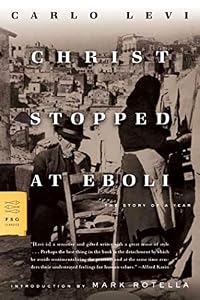
Christ Stopped at Eboli
by Carlo Levi
On This Page
Description
It was to Lucania, a desolate land in southern Italy, that Carlo Levi, a doctor, painter, philosopher, and man of letters, was confined as a political prisoner because of his opposition to Italy's Fascist government at the start of the Ethiopian war in 1935. While there, Levi reflected on the harsh landscape and its inhabitants, peasants who lived the same lives their ancestors had, constantly fearing black magic and the near presence of death. In so doing, Levi offered a starkly beautiful show more and moving account of a place and a people living outside the boundaries of progress and time. show lessTags
Recommendations


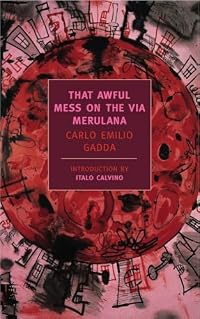

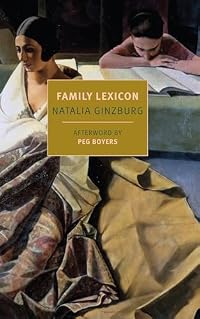


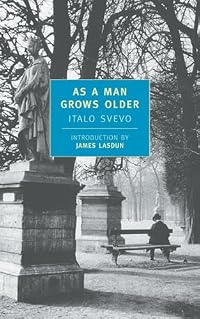
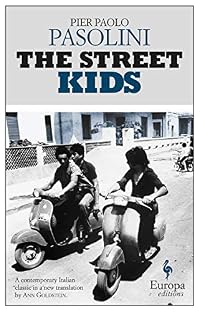
















Member Recommendations

Member Reviews
Christ Stopped at Eboli is a slightish, but high-quality work. Levi is a consummate writer, equally deft at capturing a scene, or analysing what produced it. The book provides an excellent protrait - not just intentionally of pre-war rural Italy, but also unintentionally of the intellectual and cultural underpinnings colouring said portrait. It's nice finding a cultural artefact so pleasant to digest.
Idealistic painter and one-time medical student, Carlo Levi, is packed off to exile in the barrens of Southern Italy for his anti-fascist leanings. The year he spends in Gagliano (in actuality the village Aliano) gives the somewhat privileged northerner a view into the teeming south he would otherwise not have had.
This is not a novel - show more there is no narrative as such and even Levi himself does not grow and change overmuch through the book's course. Chapters take place chronologically, but could mostly stand-alone as sharply-observed vignettes, detailing the foibles, hopes, superstitions and happenings in the small village. This languid pace and the effort Levi goes to show the changeless ritual of life in the village was a little bit of a struggle for me at times (caveat: I have a four month old baby; my tolerances are not what they usually are!), however the writing is so fine it's not really a chore.
Levi writes - mostly - with a kind of detached, gentle and affectionate tone. His characterisations seem torn almost from the pages of a commedia del arte, or The Decameron. The scheming spinster, doddering doctor, wanton housekeeper etc. But Levi largely refrains from judging his cast too harshly, and their own stories, rendered quickly and with a marksman's accuracy, add a pleasant variety to doings.
This is juxtaposed with his sharp social critique and analysis. The gentle tone quickly evaporates when confronted with the grinding poverty and pervasive malaria of the region. With a sociologist's eye, Levi quickly teases out the individual threads that make up the tapestry of the south, and his analysis is often impassioned, angry, also political, ambitious and emotional. This contrast provides the book with some much needed light and shade, and also its most intriguing aspects.
For all his solidarity with his comrades in the South, Levi cannot escape his essential "northern-ness", and it informs his opinions and impressions much more than he's aware. Students of Italian history will recognise this fundamental dichotomy in the nation's character and demographics, but it was very interesting for me to see it play out in a primary source.
Levi's characterisations of the peasants, though compassionate, are frequently well-rendered Northern stereotypes. The peasants - far more so than the gentry he largely despises - are most often a plurality or mass. They are superstitious, venal, atavistic, naive, despairing and - it's somewhat implied - incapable of better. They have adopted the characteristics of their environment: fierce, hot, harsh, barren, short-lived etc.
Levi cannot escape this, but at the same time, he also recognises peasants as individuals, and maintains that they're incapable of better in the current Italy, because they exist outside and beyond it - or beyond its conception and rule by the country's Northerners. These twinning strands give the book a fascinating undercurrent of tension and anyone interested in Italy will probably feel the same.
So whilst in some respect, Christ Stopped At Eboli is a simple book that offers simple pleasures, there's more to be had in its limpid prose and dry, almost-jovial anecdotes. show less
Idealistic painter and one-time medical student, Carlo Levi, is packed off to exile in the barrens of Southern Italy for his anti-fascist leanings. The year he spends in Gagliano (in actuality the village Aliano) gives the somewhat privileged northerner a view into the teeming south he would otherwise not have had.
This is not a novel - show more there is no narrative as such and even Levi himself does not grow and change overmuch through the book's course. Chapters take place chronologically, but could mostly stand-alone as sharply-observed vignettes, detailing the foibles, hopes, superstitions and happenings in the small village. This languid pace and the effort Levi goes to show the changeless ritual of life in the village was a little bit of a struggle for me at times (caveat: I have a four month old baby; my tolerances are not what they usually are!), however the writing is so fine it's not really a chore.
Levi writes - mostly - with a kind of detached, gentle and affectionate tone. His characterisations seem torn almost from the pages of a commedia del arte, or The Decameron. The scheming spinster, doddering doctor, wanton housekeeper etc. But Levi largely refrains from judging his cast too harshly, and their own stories, rendered quickly and with a marksman's accuracy, add a pleasant variety to doings.
This is juxtaposed with his sharp social critique and analysis. The gentle tone quickly evaporates when confronted with the grinding poverty and pervasive malaria of the region. With a sociologist's eye, Levi quickly teases out the individual threads that make up the tapestry of the south, and his analysis is often impassioned, angry, also political, ambitious and emotional. This contrast provides the book with some much needed light and shade, and also its most intriguing aspects.
For all his solidarity with his comrades in the South, Levi cannot escape his essential "northern-ness", and it informs his opinions and impressions much more than he's aware. Students of Italian history will recognise this fundamental dichotomy in the nation's character and demographics, but it was very interesting for me to see it play out in a primary source.
Levi's characterisations of the peasants, though compassionate, are frequently well-rendered Northern stereotypes. The peasants - far more so than the gentry he largely despises - are most often a plurality or mass. They are superstitious, venal, atavistic, naive, despairing and - it's somewhat implied - incapable of better. They have adopted the characteristics of their environment: fierce, hot, harsh, barren, short-lived etc.
Levi cannot escape this, but at the same time, he also recognises peasants as individuals, and maintains that they're incapable of better in the current Italy, because they exist outside and beyond it - or beyond its conception and rule by the country's Northerners. These twinning strands give the book a fascinating undercurrent of tension and anyone interested in Italy will probably feel the same.
So whilst in some respect, Christ Stopped At Eboli is a simple book that offers simple pleasures, there's more to be had in its limpid prose and dry, almost-jovial anecdotes. show less
The painter Carlo Levi was one of the thousands of anti-fascists subjected to a period of confino — a kind of preventive internal exile in a remote village or island — under Mussolini. He was sent to the barren southern region of Lucania (Basilicata) early in 1935 and spent a year living in the villages of Grassano and Aliano (disguised as "Gagliano" in the book) before being released in a general amnesty in summer 1936. Later on, during the war, he wrote this account of his experiences in the south, and it was published to huge acclaim shortly after the liberation in 1945.
The slightly puzzling title turns out to be a characteristic local saying, implying that civilisation never reached their region, and Levi sets out to show us show more the truth behind that hyperbole. The peasants he meets live in appallingly bad conditions: there's nowhere near enough good land to feed them, deforestation and malaria make working the land difficult and unproductive, and the economy runs largely on the savings of those American emigrants who return home and buy a piece of barren desert. The peasants have no interest in the State, and the State seems to have no interest in them except when collecting taxes; everything is run by and for the "signori", the rump of dim-witted self-serving priests, teachers, lawyers, doctors, shopkeepers and public officials who were not bright and ambitious enough to get away to America or to the cities. Fascism is largely irrelevant: in that part of Italy the people who took it up are mostly the ones who were already running things anyway.
Levi writes with love, humour and affection about the peasants and their traditions and the things they have to put up with; he doesn't do much to hide his contempt for people like the schoolteacher and Fascist mayor Don Luigino, who spends his days smoking and gossiping on the school balcony and lets the children leave the school as illiterate as they came into it. He tells us very clearly that in his view the "problem of the south" is not one to be solved from Rome, or even from Naples, but by giving the people at the rough end of that problem a proper voice in saying what they need.
The villagers are excited about Levi's arrival, not because he's a well-known painter, but because he's a doctor, and the two doctors practicing in the village are both considered incompetent, one of them clearly senile. This is embarrassing for Levi, as he's never practiced since leaving medical school, and he doesn't want to make trouble in the village, but the need is evidently so pressing that he can't avoid the queue of sick people outside his door. Fortunately, he's able to get permission for his sister (also a doctor) to bring down a trunk full of medical gear and books on malaria.
As with George Orwell's books about England in the thirties, I had to keep stopping and reminding myself that this is someone of the same generation as my grandparents, writing about Europe in a time that's still just about within living memory. And that he's addressing people living a short train-ride away from the places he's talking about who clearly haven't got a clue how "the other half lives" in their own country.
A painful book, but also a very beautifully observed one. show less
The slightly puzzling title turns out to be a characteristic local saying, implying that civilisation never reached their region, and Levi sets out to show us show more the truth behind that hyperbole. The peasants he meets live in appallingly bad conditions: there's nowhere near enough good land to feed them, deforestation and malaria make working the land difficult and unproductive, and the economy runs largely on the savings of those American emigrants who return home and buy a piece of barren desert. The peasants have no interest in the State, and the State seems to have no interest in them except when collecting taxes; everything is run by and for the "signori", the rump of dim-witted self-serving priests, teachers, lawyers, doctors, shopkeepers and public officials who were not bright and ambitious enough to get away to America or to the cities. Fascism is largely irrelevant: in that part of Italy the people who took it up are mostly the ones who were already running things anyway.
Levi writes with love, humour and affection about the peasants and their traditions and the things they have to put up with; he doesn't do much to hide his contempt for people like the schoolteacher and Fascist mayor Don Luigino, who spends his days smoking and gossiping on the school balcony and lets the children leave the school as illiterate as they came into it. He tells us very clearly that in his view the "problem of the south" is not one to be solved from Rome, or even from Naples, but by giving the people at the rough end of that problem a proper voice in saying what they need.
The villagers are excited about Levi's arrival, not because he's a well-known painter, but because he's a doctor, and the two doctors practicing in the village are both considered incompetent, one of them clearly senile. This is embarrassing for Levi, as he's never practiced since leaving medical school, and he doesn't want to make trouble in the village, but the need is evidently so pressing that he can't avoid the queue of sick people outside his door. Fortunately, he's able to get permission for his sister (also a doctor) to bring down a trunk full of medical gear and books on malaria.
As with George Orwell's books about England in the thirties, I had to keep stopping and reminding myself that this is someone of the same generation as my grandparents, writing about Europe in a time that's still just about within living memory. And that he's addressing people living a short train-ride away from the places he's talking about who clearly haven't got a clue how "the other half lives" in their own country.
A painful book, but also a very beautifully observed one. show less
Painter Carlo Levi spent a year in internal exile in Gagliano, Southern Italy, in 1935/6 and this is an account of his time there. Gagliano’s real name is Aliano.
Carlo Levi was born in 1902, a native of Turin, highly educated, sophisticated and with a medical degree. By 1935 he was already a talented painter and had lived for several years in Paris, continuing medical research there. But he was also political and in 1931 he joined the anti-fascist movement. These were dangerous times for outspoken critics of Mussolini and Levi was arrested in 1934, and subsequently exiled to Grassano and then Gagliano.
Carlo Levi himself felt completely foreign in this remote corner of the country, and he was writing about an area and a people with show more whom he had nothing in common. He describes the simplest things with amazing clarity and richness of language.
Families in Gagliano lived in one room which served as kitchen and bedroom. There was one large bed for everyone and underneath were the barnyard animals including pigs and chickens. No running water, no electricity and little food. Malaria was rife and the tax collector took whatever he could from them.
However, their plight wasn't helped by the local officials and middle-classes who regarded the peasants as little more than animals either. It’s hard to tell who was worse between the petty and vindictive local officials or the priests, with their piousness untroubled by their squalid affairs and numerous illegitimate children while, just like the taxman, always complaining about the missing tithes from the peasants. Neither God nor man did anything for these people. In 1935 Gagliano had only 1,200 residents but there were a further 2,000 men from the town in America. The town was largely populated by abandoned women, along with their illegitimate children that they had with the few men that remained behind. By 1935 it had been 64 years since the unification of Italy was completed and if anything life had gone backwards for Gagliano.
In a burst of fascist jubilation on the back of the capture of Addis Ababa during Mussolini's attempted empire building in Ethiopia, Carlo Levi was pardoned but in 1943 was imprisoned in Florence. He wrote this book whilst in that city.
In spite of the subject matter, this is not a depressing book at all. For someone like me who enjoys reading about social history, it’s a fascinating study of people in difficult circumstances and how they adapt and manage. There are moments of gentle humour dotted throughout the book. There are certain similarities with the writing style to Thomas Hardy, whose novels were mostly about the peasantry of rural 'Wessex' here. This book isn't comfortable reading by any stretch of the imagination but I found it a powerfully evocative read, all the more so because it was Levi's first book, and as such deserves to be on the 1001 list. show less
Carlo Levi was born in 1902, a native of Turin, highly educated, sophisticated and with a medical degree. By 1935 he was already a talented painter and had lived for several years in Paris, continuing medical research there. But he was also political and in 1931 he joined the anti-fascist movement. These were dangerous times for outspoken critics of Mussolini and Levi was arrested in 1934, and subsequently exiled to Grassano and then Gagliano.
Carlo Levi himself felt completely foreign in this remote corner of the country, and he was writing about an area and a people with show more whom he had nothing in common. He describes the simplest things with amazing clarity and richness of language.
Families in Gagliano lived in one room which served as kitchen and bedroom. There was one large bed for everyone and underneath were the barnyard animals including pigs and chickens. No running water, no electricity and little food. Malaria was rife and the tax collector took whatever he could from them.
However, their plight wasn't helped by the local officials and middle-classes who regarded the peasants as little more than animals either. It’s hard to tell who was worse between the petty and vindictive local officials or the priests, with their piousness untroubled by their squalid affairs and numerous illegitimate children while, just like the taxman, always complaining about the missing tithes from the peasants. Neither God nor man did anything for these people. In 1935 Gagliano had only 1,200 residents but there were a further 2,000 men from the town in America. The town was largely populated by abandoned women, along with their illegitimate children that they had with the few men that remained behind. By 1935 it had been 64 years since the unification of Italy was completed and if anything life had gone backwards for Gagliano.
In a burst of fascist jubilation on the back of the capture of Addis Ababa during Mussolini's attempted empire building in Ethiopia, Carlo Levi was pardoned but in 1943 was imprisoned in Florence. He wrote this book whilst in that city.
In spite of the subject matter, this is not a depressing book at all. For someone like me who enjoys reading about social history, it’s a fascinating study of people in difficult circumstances and how they adapt and manage. There are moments of gentle humour dotted throughout the book. There are certain similarities with the writing style to Thomas Hardy, whose novels were mostly about the peasantry of rural 'Wessex' here. This book isn't comfortable reading by any stretch of the imagination but I found it a powerfully evocative read, all the more so because it was Levi's first book, and as such deserves to be on the 1001 list. show less
While on a recent trip to Matera, in the 'heel' of Italy, this book was mentioned, so got it on my return.
This is the memoir of artist, writer and doctor Carlo Levi: an opponent of Facism, he was sent in 1935 from Turin to the impoverished south as a political prisoner.
Beautiful and evocative writing, as Levi describes the scenery and people in the village of 'Gagliano' ( Agliano). The peasants are preyed upon by the State, the Church and the incompetent and self-seeking 'professionals'. Levi is soon called upon to use his rusty medical training (much to the disgruntlement of the local medics.) He- and his trusty dog- range as far as permitted within the enforced boundaries. There is death, humour, superstition all relayed in fabulous show more writing.
"Before me, like a great wave on the surface of the earth, rose the solid bare mountain of Grassano, and, poised upon its peak like a mirage, was the village. It seemed even more airy and unreal than when I had last seen it, for during my absence all the houses had been whitewashed and now they looked like a herd of timorous sheep huddled together on the yellowish-grey crest of the mountain."
While Matera, with its cave dwellings, was once "the shame of Italy", it is perhaps difficult to grasp for the 2019 visitor to what is now a Heritage Site. Now, the caves are rendered into charming houses. While Levi himself has little to do with it, his sister describes a visit en route to pay her brother a visit:
"I have never in all my life seen such a picture of poverty....children sitting on the doorsteps, in the dirt, while the sun beat down on them, their eyes half-closed and their eyelids red and swollen; flies crawled across the lids...and they seemed not even to feel them. They had trachoma." Lice, starvation, malaria and dysentery abound..."as if I were in a city stricken with the plague". Children shout out to her, not for sweets but quinine.
The title of the book comes from the peasants' belief that they are beyond the pales of Christianity... Christ stopped short at the more favoured town of Eboli. "We're not Christians, we're not human beings; we're not thought of as men but simply as beasts, beasts of burden, or even less than beasts, mere creatures of the wild."
Glad I read it. show less
This is the memoir of artist, writer and doctor Carlo Levi: an opponent of Facism, he was sent in 1935 from Turin to the impoverished south as a political prisoner.
Beautiful and evocative writing, as Levi describes the scenery and people in the village of 'Gagliano' ( Agliano). The peasants are preyed upon by the State, the Church and the incompetent and self-seeking 'professionals'. Levi is soon called upon to use his rusty medical training (much to the disgruntlement of the local medics.) He- and his trusty dog- range as far as permitted within the enforced boundaries. There is death, humour, superstition all relayed in fabulous show more writing.
"Before me, like a great wave on the surface of the earth, rose the solid bare mountain of Grassano, and, poised upon its peak like a mirage, was the village. It seemed even more airy and unreal than when I had last seen it, for during my absence all the houses had been whitewashed and now they looked like a herd of timorous sheep huddled together on the yellowish-grey crest of the mountain."
While Matera, with its cave dwellings, was once "the shame of Italy", it is perhaps difficult to grasp for the 2019 visitor to what is now a Heritage Site. Now, the caves are rendered into charming houses. While Levi himself has little to do with it, his sister describes a visit en route to pay her brother a visit:
"I have never in all my life seen such a picture of poverty....children sitting on the doorsteps, in the dirt, while the sun beat down on them, their eyes half-closed and their eyelids red and swollen; flies crawled across the lids...and they seemed not even to feel them. They had trachoma." Lice, starvation, malaria and dysentery abound..."as if I were in a city stricken with the plague". Children shout out to her, not for sweets but quinine.
The title of the book comes from the peasants' belief that they are beyond the pales of Christianity... Christ stopped short at the more favoured town of Eboli. "We're not Christians, we're not human beings; we're not thought of as men but simply as beasts, beasts of burden, or even less than beasts, mere creatures of the wild."
Glad I read it. show less
You know how once in a while you run into a book that's so good you don't want it to end, so you draw read it very slowly, drawing it out? For me, this was one of those books.
Christ Stopped at Eboli is the story of Levi's year living in Basilicata, in the south of Italy, where Mussolini exiled him for anti-Fascist activities. Levi, who was a doctor by training but a painter by trade, lived among a population mostly composed of peasants, along with a few run-of-the-mill bureaucrats. The book is a bit hard to classify -- it's part memoir, part political tract, part character study, but it's exquisitely written, especially when Levi is describing the peasants among whose company he spent a year. One passage, describing his housekeeper, show more Giulia:
"Giulia was a tall and shapely woman with a waist as slender as that of an amphora between her well-developed chest and hips. In her youth she must have had a solemn and barbaric beauty. Her face was wrinkled with age and yellowed by malaria, but there were traces of former charm in its sharp, straight lines, like those of a classical temple which has lost the marbles that adorned it but kept its shape and proportions. A small head, in the shape of a lengthened oval, covered with a veil, rose above her impressively large and erect body, which breathed an animal vigor . . . . Her face as a whole had a strongly archaic character, not classical in the Greek or Roman sense, but stemming from an antiquity more mysterious and more cruel which had sprung always from the same ground, and which was unrelated to man, but linked with the soil and its everlasting animal deities. There were mingled in it cold sensuality, hidden irony, natural cruelty, impenetrable ill-humor and an immense passive power, all these bound together in a stern, intelligent and malicious expression."
(Tip of the hat, of course, to the translator, Frances Frenaye.)
The book has been criticized by some for portraying the peasants as ignorant, pitiable simpletons. I don't agree with the characterization at all. Levi doesn't romanticize or patronize them, certainly, but I saw nothing arrogant or condescending in his portrayal.
I usually avoid books in translation -- a friend of mine once likened reading translations to having sex with a condom -- but I'm going out to buy this one tomorrow so I can read it again (mine was a library copy). show less
Christ Stopped at Eboli is the story of Levi's year living in Basilicata, in the south of Italy, where Mussolini exiled him for anti-Fascist activities. Levi, who was a doctor by training but a painter by trade, lived among a population mostly composed of peasants, along with a few run-of-the-mill bureaucrats. The book is a bit hard to classify -- it's part memoir, part political tract, part character study, but it's exquisitely written, especially when Levi is describing the peasants among whose company he spent a year. One passage, describing his housekeeper, show more Giulia:
"Giulia was a tall and shapely woman with a waist as slender as that of an amphora between her well-developed chest and hips. In her youth she must have had a solemn and barbaric beauty. Her face was wrinkled with age and yellowed by malaria, but there were traces of former charm in its sharp, straight lines, like those of a classical temple which has lost the marbles that adorned it but kept its shape and proportions. A small head, in the shape of a lengthened oval, covered with a veil, rose above her impressively large and erect body, which breathed an animal vigor . . . . Her face as a whole had a strongly archaic character, not classical in the Greek or Roman sense, but stemming from an antiquity more mysterious and more cruel which had sprung always from the same ground, and which was unrelated to man, but linked with the soil and its everlasting animal deities. There were mingled in it cold sensuality, hidden irony, natural cruelty, impenetrable ill-humor and an immense passive power, all these bound together in a stern, intelligent and malicious expression."
(Tip of the hat, of course, to the translator, Frances Frenaye.)
The book has been criticized by some for portraying the peasants as ignorant, pitiable simpletons. I don't agree with the characterization at all. Levi doesn't romanticize or patronize them, certainly, but I saw nothing arrogant or condescending in his portrayal.
I usually avoid books in translation -- a friend of mine once likened reading translations to having sex with a condom -- but I'm going out to buy this one tomorrow so I can read it again (mine was a library copy). show less
I came across [b:Christ Stopped at Eboli|1190394|Christ Stopped at Eboli|Carlo Levi|https://i.gr-assets.com/images/S/compressed.photo.goodreads.com/books/1617119726l/1190394._SY75_.jpg|2868409] via a TV programme that showed the caves in Matera where destitute families lived less than a hundred years ago. The book itself only mentions Matera briefly, as this is not where the author was exiled to. For opposition to Mussolini's regime and its invasion of Ethiopia, Carlo Levi was forced to live under surveillance in the tiny village of Gagliano. He wrote this lyrical, passionate book about the wretched poverty he found there. Rural life was almost entirely unchanged for hundreds of years; the 20th century interventions of the state had show more only made the poor poorer via arbitrary taxes. Levi draws vivid pen-portraits of the squabbling gentry and long-suffering peasants. These have a touch of [a:Gerald Durrell|26957|Gerald Durrell|https://images.gr-assets.com/authors/1344479172p2/26957.jpg]'s droll humour in his Corfu books, but Levi also includes a lot of social and historical commentary:
[b:Christ Stopped at Eboli|1190394|Christ Stopped at Eboli|Carlo Levi|https://i.gr-assets.com/images/S/compressed.photo.goodreads.com/books/1617119726l/1190394._SY75_.jpg|2868409] offers a beautifully written insight into rural poverty in Southern Italy before the Second World War. Levi is a thoughtful and sympathetic observer who transports the reader to another time and place. Although I enjoyed his social analysis, for me the book's highlight was his wonderful descriptions and metaphors:
They have led exactly the same life since the beginning of time, and History has swept over them without effect. Of the two Italys that share the land between them, the peasant Italy is by far the older; so old that no-one knows whence it came, and it may have been here forever. Humilemque videmus Italiam; this was the low-lying, humble Italy that first met the eyes of the Asiastic conquerors as the ships of Aeneas rounded the promontory of Calabria.
There should be a history of this Italy, a history outside the framework of time, confining itself to that which is changeless and eternal, in other words, a mythology. This Italy has gone its way in darkness and silence, like the earth, in a sequence of recurrent seasons and recurrent misadventures. Every outside influence has broken over it like a wave, without leaving a trace. Rarely has it risen to defend itself from mortal danger and only on those few occasions has it fought, in vain, a truly national war. The first of these was resistance to Aeneas.
[b:Christ Stopped at Eboli|1190394|Christ Stopped at Eboli|Carlo Levi|https://i.gr-assets.com/images/S/compressed.photo.goodreads.com/books/1617119726l/1190394._SY75_.jpg|2868409] offers a beautifully written insight into rural poverty in Southern Italy before the Second World War. Levi is a thoughtful and sympathetic observer who transports the reader to another time and place. Although I enjoyed his social analysis, for me the book's highlight was his wonderful descriptions and metaphors:
The eternal idleness of the Bourbons lay upon the village that was built on the bones of the dead. I could make out every voice, every whisper, every sound, as if I had known it always, and had heard it endlessly repeated, just as it would be endlessly in the future. I worked at my painting and the care of the sick, but my mood was one of complete indifference; I felt like a worm enclosed in a nutshell. Far away from those I loved, hemmed in by an almost religious monotony, I waited for the years to pass. My life had no base but was hung ridiculously in the air, and the sound of my own voice startled me.show less
Carlo Levi's Christ Stopped at Eboli: The Story of a Year documents Levi's exile to the Calabria region of Southern Italy during Mussolini's Fascist rule. The title references a saying among the peasant people that Christ, and most of history, has visited other towns while passing them by, leaving their land much the same as it has always been. Levi's portrait of the town is one of a man who comes to love a foreign land with the effect that Christ Stopped at Eboli reads like a travelogue.
The people of the town believe in a combination of all the religions that have visited their corner of Italy, from pagan magic to Christianity to Fascism and the power of the State. Remarking on what he's learned from the people and how it's shaped his show more view of the State, Levi wrote, "This reversal of the concept of political life, which is gradually and unconsciously ripening among us, is implicit in the peasant civilization. And it is the only path which will lead us out of the vicious circle of Fascism and anti-Fascism. The name of this way out is autonomy. The State can only be a group of autonomies, an organic federation. The unit or cell through which the peasants can take part in the complex life of the nation must be the autonomous or self-governing rural community" (p. 253-254).
Though he wrote years after his exile, Levi's views show a great deal of compassion for his fellow Italians, either from the countryside or the Fascist officers assigned to him when he traveled to other towns. The war itself feels like a distant conflict with the true struggle being for the soul of Italy and a people who want to preserve their way of life. show less
The people of the town believe in a combination of all the religions that have visited their corner of Italy, from pagan magic to Christianity to Fascism and the power of the State. Remarking on what he's learned from the people and how it's shaped his show more view of the State, Levi wrote, "This reversal of the concept of political life, which is gradually and unconsciously ripening among us, is implicit in the peasant civilization. And it is the only path which will lead us out of the vicious circle of Fascism and anti-Fascism. The name of this way out is autonomy. The State can only be a group of autonomies, an organic federation. The unit or cell through which the peasants can take part in the complex life of the nation must be the autonomous or self-governing rural community" (p. 253-254).
Though he wrote years after his exile, Levi's views show a great deal of compassion for his fellow Italians, either from the countryside or the Fascist officers assigned to him when he traveled to other towns. The war itself feels like a distant conflict with the true struggle being for the soul of Italy and a people who want to preserve their way of life. show less
Members
- Recently Added By
Lists

1001 Books You Must Read Before You Die
1,448 works; 1,132 members

Best of Travel Narratives
142 works; 26 members

Books Set in Italy
167 works; 19 members

Top Five Books of 2017
757 works; 231 members

Books We Want To Read Again For The First Time
384 works; 160 members

The Luca Guadagnino Universe
62 works; 1 member

Lista dei 100 migliori libri italiani degli ultimi 200 anni
100 works; 1 member

Mustich's 1000 Books to Read Before You Die: A Life Changing List
1,001 works; 18 members

Books Read in 2021
5,361 works; 113 members

1,001 BYMRBYD Concensus
723 works; 27 members

Macmillan Publishers
129 works; 3 members

Writers at Risk
106 works; 17 members

Hidden Classics
73 works; 15 members

1940s
221 works; 25 members

Favourite Books
1,817 works; 316 members
20th Century Literature
1,161 works; 54 members
Italian Literature
556 works; 41 members

Novels with a city or town in the title
61 works; 1 member
Author Information

52+ Works 2,772 Members
Carlo Levi was born in Turin, Italy, on November 29, 1902, one of the children of Ercole and Annetta (Treves) Levi. Levi's father was a merchant who also enjoyed painting, and Carlo Levi himself became well-known for his landscapes, still lifes, and portraits. Levi valued his artistry at least as much as his writing, and his paintings have show more retained their value. Levi originally pursued a career in medicine, receiving an M.D. degree in 1924 from the University of Turin. He painted and performed medical research, but he also became involved in anti-Fascist activities in opposition to Benito Mussolini's government, and he was jailed repeatedly during the 1930s and 1940s. His imprisonment in the malaria-stricken southern Italian town of Gagliano greatly influenced Levi's later life. While treating the impoverished and ill citizens, he felt extreme pity, and the time spent in Gagliano led to his most famous work, Christ Stopped at Eboli (1945). This literary work won the Arianna Mondadori del Corniere Lombardo Prize. Levi also published the political/philosophical Of Fear and Freedom (1948), along with the novel The Watch (1948); and several authentic travel books on the cultures of the Soviet Union, Germany, Sardinia, and Sicily. Carlo Levi's frequent depiction of owls would become his artistic symbol. He died in Rome on Jan. 4, 1975. (Bowker Author Biography) show less
Some Editions
Awards and Honors
Distinctions
Notable Lists
Torchlight List (#167)
Series
Belongs to Publisher Series
Saggi [Einaudi] (55)
Work Relationships
Is contained in
Has the adaptation
Common Knowledge
- Canonical title
- Christ Stopped at Eboli
- Original title
- Cristo si è fermato a Eboli
- Alternate titles*
- Cristo se paró en Éboli
- Original publication date
- 1945
- People/Characters
- Carlo Levi; Luisa Levi; Don Luigi Magalone; Donna Caterina Magalone; Don Giuseppe Trajella; Don Cosimino (show all 7); Giulia la Santarcangelese
- Important places
- Eboli, Italy; Basilicata, Italy
- Related movies
- Cristo si è fermato a Eboli (1979 | IMDb)
- First words
- Many, many years have gone by, years of war and of what men call History.
- Last words
- (Click to show. Warning: May contain spoilers.)Already the train was carrying me far away, through the checkerboard fields of Romagna, toward the vineyards of Piedmont and the mysterious future of exile of war and death, which I could then but barely perceive, like an uncertain cloud in the boundless sky.
- Original language
- Italian
*Some information comes from Common Knowledge in other languages. Click "Edit" for more information.
Classifications
Statistics
- Members
- 2,251
- Popularity
- 8,876
- Reviews
- 54
- Rating
- (4.01)
- Languages
- 17 — Albanian, Catalan, Danish, Dutch, English, Estonian, Finnish, French, German, Hungarian, Italian, Norwegian (Bokmål), Portuguese, Russian, Spanish, Swedish, Turkish
- Media
- Paper, Audiobook, Ebook
- ISBNs
- 62
- ASINs
- 53