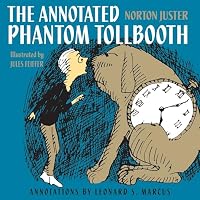
The Annotated Phantom Tollbooth
by Norton Juster, Leonard S. Marcus (Annotations)
On This Page
Description
Presents an annotated edition of Norton Juster's story about ten-year-old Milo, who is the owner of a magic tollbooth, and his experiences in the "Lands Beyond," and includes interviews with the author and illustrator, excerpts from Juster's notes and drafts, commentary, and more.Tags
Recommendations









Member Reviews
http://tinyurl.com/pacwnog
After having the good luck to see Norton Juster recently, I picked up a copy of the annotated version of one of my childhood favorites. It still is one of the best books I've ever read (of any genre).
It isn't only that Juster did his homework on the framework for this story - as evidenced by many of the annotations by Leonard Marcus - it's that he could put himself in the head of a child so well. That he could remember his own struggles and triumphs as a child. And that he could roll those experiences into a book designed quite clearly to gently teach a child the benefit of learning. It probably helps that he was avoiding writing some other book (which he'd been funded for) to write this one!
So, word plays and show more math puns aside, it's astounding to me that he was able to write something now considered one of the dozen or so best children's classics of all time, without having written anything for children before that. That's talent. As is Feiffer's - those illustrations are so perfectly perfect (and the annotations do an excellent job describing Feiffer's genius as well as his deficiencies, and how those deficiencies ended up being genius for this book).
The annotations themselves are sometimes, oh, a bit too erudite or off the mark. In most cases, however, they were illuminating (I particularly like the explanation of why you clink glasses with people when making a toast). Not as good as the Annotated Alice (what could be?), but fine enough. show less
After having the good luck to see Norton Juster recently, I picked up a copy of the annotated version of one of my childhood favorites. It still is one of the best books I've ever read (of any genre).
It isn't only that Juster did his homework on the framework for this story - as evidenced by many of the annotations by Leonard Marcus - it's that he could put himself in the head of a child so well. That he could remember his own struggles and triumphs as a child. And that he could roll those experiences into a book designed quite clearly to gently teach a child the benefit of learning. It probably helps that he was avoiding writing some other book (which he'd been funded for) to write this one!
So, word plays and show more math puns aside, it's astounding to me that he was able to write something now considered one of the dozen or so best children's classics of all time, without having written anything for children before that. That's talent. As is Feiffer's - those illustrations are so perfectly perfect (and the annotations do an excellent job describing Feiffer's genius as well as his deficiencies, and how those deficiencies ended up being genius for this book).
The annotations themselves are sometimes, oh, a bit too erudite or off the mark. In most cases, however, they were illuminating (I particularly like the explanation of why you clink glasses with people when making a toast). Not as good as the Annotated Alice (what could be?), but fine enough. show less
I grew up adoring this book. A bored young boy finds a tollbooth in his bedroom when he gets home from school. He then proceeds to travel to a faraway land and go on adventures that teach him lessons and challenge him to grow and mature. It’s a parable about the value of imagination and exploring the world around you. It’s also wonderfully funny and clever.
It taught me to appreciate words and the myriad of meanings that they can have, but also not to use them just to impress people. It taught me the value of a world with that holds math, science, English and art in equal measures. There is no balance without all of those things. The book provided constant reminders about the value of friendship and the importance of surrounding show more yourself with people who will improve you and not drag you down. It showed me that the true villains in life are self-doubt, idleness and things like that, not the monsters we normally picture. And on top of all of that, the book, so full of life lessons, is accessible to 10-year-olds. Somehow Juster slyly slide those things into the midst of a great story.
Reading my beautiful new Annotated edition was such a treat. Although I’d read and reread the book over the years, I knew very little about the story behind it. Juster was an architect, not an author, but he had a view of where children were headed and it wasn’t pretty. His message, encouraging kids to journey outside the walls of their home, both physically and mentally, is more important than ever in the age of video games and You Tube.
Leonard S. Marcus (a children’s literature scholar) compiled the annotated edition and it’s filled with fascinating trivia and behind-the-scenes tidbits. Jules Feiffer's illustrations, which are such an integral part of the story, are explained in detail, as is the books evolution. I particularly loved seeing all of the lists of possible characters and obstacles that Juster kept.
If you’ve never read the book, start with a regular copy, but if you’re already a devoted fan, the annotated copy is a delight!
"My goodness," thought Milo, "everybody is so terribly sensitive about the things they know best."
"You must never feel badly about making mistakes, as long as you take the trouble to learn from them. For you often learn more by being wrong than you do by being right for the wrong reasons." show less
It taught me to appreciate words and the myriad of meanings that they can have, but also not to use them just to impress people. It taught me the value of a world with that holds math, science, English and art in equal measures. There is no balance without all of those things. The book provided constant reminders about the value of friendship and the importance of surrounding show more yourself with people who will improve you and not drag you down. It showed me that the true villains in life are self-doubt, idleness and things like that, not the monsters we normally picture. And on top of all of that, the book, so full of life lessons, is accessible to 10-year-olds. Somehow Juster slyly slide those things into the midst of a great story.
Reading my beautiful new Annotated edition was such a treat. Although I’d read and reread the book over the years, I knew very little about the story behind it. Juster was an architect, not an author, but he had a view of where children were headed and it wasn’t pretty. His message, encouraging kids to journey outside the walls of their home, both physically and mentally, is more important than ever in the age of video games and You Tube.
Leonard S. Marcus (a children’s literature scholar) compiled the annotated edition and it’s filled with fascinating trivia and behind-the-scenes tidbits. Jules Feiffer's illustrations, which are such an integral part of the story, are explained in detail, as is the books evolution. I particularly loved seeing all of the lists of possible characters and obstacles that Juster kept.
If you’ve never read the book, start with a regular copy, but if you’re already a devoted fan, the annotated copy is a delight!
"My goodness," thought Milo, "everybody is so terribly sensitive about the things they know best."
"You must never feel badly about making mistakes, as long as you take the trouble to learn from them. For you often learn more by being wrong than you do by being right for the wrong reasons." show less
Juster, N. (2011). The annotated phantom tollbooth. (Ill. by J. Feiffer). New York: Random House/Knopf. 284 pp. ISBN: 978-0-375-85715-7. (Hardcover); $29.99.
To this day, one of the wittiest, most engaging, and thoroughly delightful books I have ever had the good fortune to read is Norton Juster’s Phantom Tollbooth. While some may assume that this book is for elementary school students, I have always held that this is a book for all ages. Certainly Milo, a boy who doesn’t know what to do with himself (“not just sometimes, but always” p.9), will resonate with younger readers. However, I still have that same problem today. Adults certainly will relate to that persistent child/student who continually asks questions that cannot be show more answered, at least not easily. And all of us have that subject, like math, that baffles us repeatedly. On just about every page of the Phantom Tollbooth there is a quote worth sharing: “Well, since you got here by not thinking, it seems reasonable to expect that, in order to get out, you must start thinking.” (p. 31) Now we have this delicious annotated edition by the noted children’s literature scholar, Leonard S. Marcus. We learn that this book owes its existence to a Ford Foundation grant to write a book about urban planning and design! We still have Feiffer’s iconic illustrations (with annotations about sources or other influences). Marcus shares manuscript pages, critic reactions, science theories, and much, much more in this beautifully bound homage to one of the very best works of literature for children of all ages. Those that like to know an author’s/illustrator’s inspiration will delight in the copious annotations. Buy this book wherever you may be! Not interested in annotations? Random House also has available a deluxe fiftieth anniversary edition out this year. Whether or not you buy this book, please treat yourself and read or reread this enduring treasure. show less
To this day, one of the wittiest, most engaging, and thoroughly delightful books I have ever had the good fortune to read is Norton Juster’s Phantom Tollbooth. While some may assume that this book is for elementary school students, I have always held that this is a book for all ages. Certainly Milo, a boy who doesn’t know what to do with himself (“not just sometimes, but always” p.9), will resonate with younger readers. However, I still have that same problem today. Adults certainly will relate to that persistent child/student who continually asks questions that cannot be show more answered, at least not easily. And all of us have that subject, like math, that baffles us repeatedly. On just about every page of the Phantom Tollbooth there is a quote worth sharing: “Well, since you got here by not thinking, it seems reasonable to expect that, in order to get out, you must start thinking.” (p. 31) Now we have this delicious annotated edition by the noted children’s literature scholar, Leonard S. Marcus. We learn that this book owes its existence to a Ford Foundation grant to write a book about urban planning and design! We still have Feiffer’s iconic illustrations (with annotations about sources or other influences). Marcus shares manuscript pages, critic reactions, science theories, and much, much more in this beautifully bound homage to one of the very best works of literature for children of all ages. Those that like to know an author’s/illustrator’s inspiration will delight in the copious annotations. Buy this book wherever you may be! Not interested in annotations? Random House also has available a deluxe fiftieth anniversary edition out this year. Whether or not you buy this book, please treat yourself and read or reread this enduring treasure. show less
Norton Juster's The Phantom Tollbooth (apparently) was an "instant childhood classic" in 1961, but I completely missed it the first time around. Our Scholastic Press copy was my wife's -- it has her and her (fifth-grade? sixth-grade?) teacher's names inked inside the front cover. By the time our kids were old enough to read it, I did too and enjoyed it, particularly the sly humor, wordplay, and overall, imaginative silliness. Trying to take note of one allusion, reference, etc. after another is like a game or puzzle, like unpacking Mary Poppins' valise. And Juster's having compressed them all in a single novel is quite an accomplishment!
I find it hard to believe that Juster originally wrote The Phantom Tollbooth to "justify" a grant he show more received. Jules Feiffer's illustrations are fun too, and I'm amused that Feiffer's collaboration with Juster was incidental (accidental?) to their living in the same apartment building. I can't imagine The Phantom Tollbooth without Feiffer's illustrations, although I understand such editions are out there. Then again, I was always a purist about John Tenniel's illustrations for Alice's Adventures in Wonderland and Through the Looking Glass -- until I found a set illustrated by Mervyn Peake!
My wife and son met Juster at an appearance near Atlanta for both the 50th anniversary of The Phantom Tollbooth and the release this Fall (2011) of an annotated edition. At first, I was put off by the annotations, but they're growing on me; now I'm wondering what -- if anything -- the annotator, Leonard Marcus, may have missed! In any case, our "collective works of Norton Juster" have come to the fore, cataloged out-of-turn. I just wish we'd also had Juster and Feiffer's follow-up collaboration from 2010, The Odious Ogre, to get it signed also.
There's always something more to look forward to! show less
I find it hard to believe that Juster originally wrote The Phantom Tollbooth to "justify" a grant he show more received. Jules Feiffer's illustrations are fun too, and I'm amused that Feiffer's collaboration with Juster was incidental (accidental?) to their living in the same apartment building. I can't imagine The Phantom Tollbooth without Feiffer's illustrations, although I understand such editions are out there. Then again, I was always a purist about John Tenniel's illustrations for Alice's Adventures in Wonderland and Through the Looking Glass -- until I found a set illustrated by Mervyn Peake!
My wife and son met Juster at an appearance near Atlanta for both the 50th anniversary of The Phantom Tollbooth and the release this Fall (2011) of an annotated edition. At first, I was put off by the annotations, but they're growing on me; now I'm wondering what -- if anything -- the annotator, Leonard Marcus, may have missed! In any case, our "collective works of Norton Juster" have come to the fore, cataloged out-of-turn. I just wish we'd also had Juster and Feiffer's follow-up collaboration from 2010, The Odious Ogre, to get it signed also.
There's always something more to look forward to! show less
Norton Juster's 1960's classic, The Phantom Tollbooth is an all-time favorite of mine. It is a gem -- a book for the ages, all of them. It is chock full of wisdom. Every time you read it, you find something meaningful. Sadly, I think the annotated version detracted from the magic of the book, which is an allegory. I had to read each chapter in full, and then go back to read the annotations so as to follow Milo's adventures.
The few annotations I liked by Leonard Marcus were those regarding synesthesia and how Norton Juster himself was able to get over his own troubles with numbers by association with colors, how the wonderful chapter entitled Colorful Symphony was almost deleted by the editor, how colors were an important element of show more psychedelic rock in the late 1960s, Juster's decision not to include the Chocolate Mouse, and how many readers were upset that the Mathemagician's letter to his brother, King Azaz, all in numbers was not written in code. Hopefully, I have spoiled this version so all of you can read the original version, which is a fantastic 5 star read, which I recommend without reservation. Jules Feiffer's classic illustrations have withstood the test of time too.
Here are my two favorite quotes in this reading:
"For always remember, that while it is wrong to use too few [words], it is often far worse to use too many."
"For you often learn more by being wrong for the right reason than you do for being right for the wrong reason."
I was also amused again by the cure for jumping to conclusions was a swim back through the sea of knowledge. show less
The few annotations I liked by Leonard Marcus were those regarding synesthesia and how Norton Juster himself was able to get over his own troubles with numbers by association with colors, how the wonderful chapter entitled Colorful Symphony was almost deleted by the editor, how colors were an important element of show more psychedelic rock in the late 1960s, Juster's decision not to include the Chocolate Mouse, and how many readers were upset that the Mathemagician's letter to his brother, King Azaz, all in numbers was not written in code. Hopefully, I have spoiled this version so all of you can read the original version, which is a fantastic 5 star read, which I recommend without reservation. Jules Feiffer's classic illustrations have withstood the test of time too.
Here are my two favorite quotes in this reading:
"For always remember, that while it is wrong to use too few [words], it is often far worse to use too many."
"For you often learn more by being wrong for the right reason than you do for being right for the wrong reason."
I was also amused again by the cure for jumping to conclusions was a swim back through the sea of knowledge. show less
5 for the Phantom Tollbooth, 3 for the Annotations. Unlike Martin Gardner's seminal The Annotated Alice (which was my first exposure to Alice in Wonderland--I read it when I was 8 and loved it), much of the annotations seem superfluous. I'm just making up an example, but a statement like "Miles picked the dandelion" might warrant an annotation about dandelions, where they're from, the origin of the name dan-de-lion, or some such thing. That's not really what anyone wants to know. There were very few notes that made me perk up and see something in a new light.
I appreciated the introduction a lot more. Basically, this would be an interesting library rental, but I wouldn't rush out to purchase it (as I had done!)
I appreciated the introduction a lot more. Basically, this would be an interesting library rental, but I wouldn't rush out to purchase it (as I had done!)
Although I love the Phantom Tollbooth, I was very disappointed in the annotated version. I thought that the Introduction which contained biographical information about Juster and Feiffer and the story of how the book came to be was an interesting and fun essay. However, the annotations themselves were, in most part, not really relevant to the book itself or how it was written. A good deal of them were just definitions and etymologies of words and idiomatic phrases used in the book, or how people in the 50s would have had this or that television or radio set, or that Juster would surely have known about this philosophy and so forth. There were sprinklings of relevant notes, which I did appreciate. But for the most part they really didn't show more enhance my re-reading of the book, and after a few chapters I tended to skim them very briefly before skipping the irrelevant notes and just reading the book, which was a treat after several years. show less
Members
- Recently Added By
Author Information

18+ Works 25,580 Members

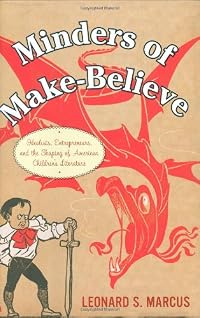
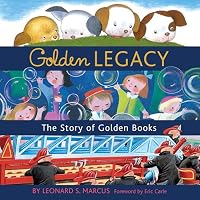
Leonard S. Marcus is one of the world's most respected writers about children's literature. His essays, interviews, and reviews appear in the New York Times Book Review and numerous other publications, and he has a regular column in Parenting magazine. His books include Minders of Make-Believe: Idealists, Entrepreneurs, and the Shaping of American show more Children's Literature; Golden Legacy: How Golden Books Won Children's Hearts, Changed Publishing Forever, and Became an American Icon Along the Way; A Caldecott Celebration: Seven Artists and Their Paths to the Caldecott Medal; Dear Genius: The Letters of Ursula Nordstrom; and The Wand in the Word: Conversations with Writers of Fantasy. Leonard S. Marcus lives in Brooklyn, New York, with his wife and son. show less
All Editions
Work Relationships
Contains
Common Knowledge
- Original publication date
- 2011-10-25
- Disambiguation notice
- Please distinguish this LT Work, an edition annotated by Leonard Marcus (2011), from Norton Juster's original Work, The Phantom Tollbooth (1961). Thank you.
Classifications
Statistics
- Members
- 266
- Popularity
- 121,170
- Reviews
- 12
- Rating
- (4.21)
- Languages
- English
- Media
- Paper
- ISBNs
- 3
- ASINs
- 1