
Leonard S. Marcus
Author of Dear Genius: The Letters of Ursula Nordstrom
About the Author
Leonard S. Marcus is one of the world's most respected writers about children's literature. His essays, interviews, and reviews appear in the New York Times Book Review and numerous other publications, and he has a regular column in Parenting magazine. His books include Minders of Make-Believe: show more Idealists, Entrepreneurs, and the Shaping of American Children's Literature; Golden Legacy: How Golden Books Won Children's Hearts, Changed Publishing Forever, and Became an American Icon Along the Way; A Caldecott Celebration: Seven Artists and Their Paths to the Caldecott Medal; Dear Genius: The Letters of Ursula Nordstrom; and The Wand in the Word: Conversations with Writers of Fantasy. Leonard S. Marcus lives in Brooklyn, New York, with his wife and son. show less
Works by Leonard S. Marcus
Minders of Make-Believe: Idealists, Entrepreneurs, and the Shaping of American Children's Literature (2008) 188 copies, 2 reviews
Show Me a Story!: Why Picture Books Matter: Conversations with 21 of the World's Most Celebrated Illustrators (2012) 167 copies, 2 reviews
Golden Legacy: How Golden Books Won Children's Hearts, Changed Publishing Forever, and Became An American Icon Along the Way (2007) 166 copies, 6 reviews
A Caldecott Celebration: Six Artists Share Their Paths to the Caldecott Medal (1998) 150 copies, 6 reviews
75 Years of Children's Book Week Posters: Celebrating Great Illustrators of American Children's Books (1994) 114 copies, 1 review
You Can't Say That! Writers for Young People Talk About Censorship, Free Expression, and the Stories They Have to Tell (2021) — Editor — 85 copies, 21 reviews
Comics Confidential: Thirteen Graphic Novelists Talk Story, Craft, and Life Outside the Box (2016) — Editor — 62 copies, 4 reviews
Author Talk: Conversations With Judy Blume, Bruce Brooks, Karen Cushman, Russell Freedman, Lee Bennett Hopkins, James Howe, Johanna Hurwitz, E.l. Konigsburg, Lois Lowry, Ann M.… (2000) — Editor — 52 copies, 2 reviews
Pictured Worlds: Masterpieces of Children’s Book Art by 101 Essential Illustrators from Around the World (2023) 40 copies
Mr. Lincoln Sits for His Portrait: The Story of a Photograph That Became an American Icon (2023) 12 copies, 1 review
The Wand in the World 1 copy
Associated Works
The Art of Reading: Forty Illustrators Celebrate RIF's 40th Anniversary (2005) — Foreword — 273 copies, 3 reviews
Nursery Rhyme Comics: 50 Timeless Rhymes from 50 Celebrated Cartoonists (2011) — Introduction — 227 copies, 27 reviews
The Polly O'Keefe Quartet: The Arm of the Starfish / Dragons in the Waters / A House Like a Lotus / An Acceptable Time (2018) — Editor — 128 copies, 1 review
Story Time: Essays on the Betsy Beinecke Shirley Collection of American Children's Literature (2016) — Contributor — 6 copies
Tagged
Common Knowledge
- Birthdate
- 1950-12-11
- Gender
- male
- Education
- Yale College
Iowa Writers' Workshop - Occupations
- critic
public speaker
non-fiction author - Organizations
- School of Visual Arts
New School for Social Research - Relationships
- Schwartz, Amy (wife)
- Short biography
- Leonard S. Marcus is one of the world's leading writers about children's books and the people who create them. He lives in Brooklyn, New York. [from Randolph Caldecott (2013)]
- Nationality
- USA
- Birthplace
- Mount Vernon, New York, USA
- Places of residence
- Brooklyn, New York, USA
- Associated Place (for map)
- New York, USA
Members
Discussions
William Dugan, Illustrator in Book talk (December 2015)
Reviews
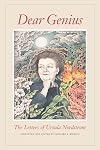
Fascinating collection of this prominent editor's letters, mostly to her authors and colleagues about their writing/illustrating/publishing projects. Funny, supportive, acerbic, delightful, and offering a lot of insight into the publishing world of the time.
You Can't Say That!: Writers for Young People Talk About Censorship, Free Expression, and the Stories They Have to Tell by Leonard S. Marcus
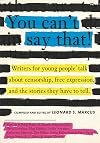
I was a volunteer in a school library for many years, and the very concept of this book, encapsulated in the title You Can't Say That is quite scary. I will never be in favour of banned OR compelled speech.
How do we, as a society, decide where the boundary is between on the one hand free expression and history and on the other contemporary ideals governing those concepts, with an eye to improving the state of disadvantaged individuals? And how does this play out in what is available for show more young to people to learn from? Is it best to only young people to read "approved" ideas? Pretty much all these authors would disagree, but a few of them are part of a movement which is just substituting new "approved" ideas for previous ones.
Altho I felt that the interview format brought the author forward a bit too much, some pretty important kids' and young adult authors contributed their thoughts. And unfortunately the vast majority of the writers were 50 or 60 years old or more, only one young-ish writer was included at all. I particularly enjoyed Dad Pilkey's contribution - I used Captain Underpants to read my little girls in French and Italian so they would get some current colloquial vocabulary in those languages. I actually sought the potentially offensive as that is where kids live in language. Additionally interesting is that he used making comic books as a way to help himself thru ADHD, an actual therapeutic goal that might that should bring his work forward rather than lead to its banning.
This is an interesting book for those interested in this idea, and to hear from the actual creators of works challenged for their content.
show less
Altho I felt that the interview format brought the author forward a bit too much, some pretty important kids' and young adult authors contributed their thoughts. And unfortunately the vast majority of the writers were 50 or 60 years old or more, only one young-ish writer was included at all. I particularly enjoyed Dad Pilkey's contribution - I used Captain Underpants to read my little girls in French and Italian so they would get some current colloquial vocabulary in those languages. I actually sought the potentially offensive as that is where kids live in language. Additionally interesting is that he used making comic books as a way to help himself thru ADHD, an actual therapeutic goal that might that should bring his work forward rather than lead to its banning.
This is an interesting book for those interested in this idea, and to hear from the actual creators of works challenged for their content.
show less
 This review was written for LibraryThing Early Reviewers.
You Can't Say That!: Writers for Young People Talk About Censorship, Free Expression, and the Stories They Have to Tell by Leonard S. Marcus
"You Can't Say That!: Writers for Young People Talk about Censorship, Free Expression, and the Stories They Have to Tell" offers an insider's look at the author's craft and how they respond to challenges to their work. These interviews, conducted by author Leonard S. Marcus, offer insight into each author's approach to their writing but focus mainly on the push back they have received for their work. The end result is an engaging if somewhat meandering look at censorship and what it means to show more be on the receiving end of it.
The interviews are with authors ranging from R.L Stine (known for his "Fear Street" series and other works of kid and teen-friendly horror) to Susan Kuklin (young adult nonfiction looking at topics such as transgender teens and young undocumented immigrants) to Justin Richardson and Peter Parnell (writers of "And Tango Makes Three"). I particularly appreciated Marcus's decision to focus on children's and young adult authors, since this provides an additional sense of unity throughout the interviews and since these are the books that often draw the most ire and face the most direct and indirect censorship.
Overall, the book is enjoyable and enlightening, though it isn't a book that I would read through again and again. Instead, I see it as more of a reference book, particularly if I wanted to learn more about how particular authors handle censorship. Other reviews have noted that it isn't clear who this book is for, and I tend to agree with that summation. That said, I can definitely see it being a useful text for teachers, librarians or anyone interested in issues related to censorship and for teens who want to know more about the writing process and how authors navigate challenging topics. show less
The interviews are with authors ranging from R.L Stine (known for his "Fear Street" series and other works of kid and teen-friendly horror) to Susan Kuklin (young adult nonfiction looking at topics such as transgender teens and young undocumented immigrants) to Justin Richardson and Peter Parnell (writers of "And Tango Makes Three"). I particularly appreciated Marcus's decision to focus on children's and young adult authors, since this provides an additional sense of unity throughout the interviews and since these are the books that often draw the most ire and face the most direct and indirect censorship.
Overall, the book is enjoyable and enlightening, though it isn't a book that I would read through again and again. Instead, I see it as more of a reference book, particularly if I wanted to learn more about how particular authors handle censorship. Other reviews have noted that it isn't clear who this book is for, and I tend to agree with that summation. That said, I can definitely see it being a useful text for teachers, librarians or anyone interested in issues related to censorship and for teens who want to know more about the writing process and how authors navigate challenging topics. show less
This review was written for LibraryThing Early Reviewers.You Can't Say That!: Writers for Young People Talk About Censorship, Free Expression, and the Stories They Have to Tell by Leonard S. Marcus
Censorship is a contentious issue. Leonard Marcus’s new book, YOU CAN’T SAY THAT!, helps tween and teen readers understand some of the nuance that makes the censorship of books — including restricted access and unfounded challenges — so problematic.
I have been working with the topic of censorship academically for more than a decade, so I am grateful to have the chance to review this book. Leonard S. Marcus is one of North America’s top experts on writing for children and teens; show more with his deep and broad knowledge of the field, he is the perfect author for this title, and the book delivers.
YOU CAN’T SAY THAT! is a collection of interviews between Marcus and thirteen diverse authors whose books have been challenged, restricted, or banned outright in the United States and Canada. The conversations are much bigger than censorship alone, of course. The authors talk about their backgrounds and influences, writing process, voice, and artistic goals. Any reader with an interest in what inspires writers, how writers work out ideas, or how writers work with editors and publishers will likely enjoy the broader discussion of this volume.
Although this volume is intended primarily for middle-grade and teen readers, the accessible presentation could make it a useful primer for anyone who works with young people, words, and books. It is a sensible choice for school libraries — although, ironically, it may not be purchased by librarians who have been involved in challenges — and for public libraries that serve middle-grade and teen readers. It provides an excellent and up-to-date supplement to broader texts on the topic of censorship and book banning, and may introduce readers to new authors and titles. A solid package all around.
Is YOU CAN’T SAY THAT! going to the change minds of would-be censors? Probably not. But it is going to raise awareness of how censors work, and introduce these authors and their books to a large audience of young readers, inviting them to engage in critical thinking and independent decision making — and this is certainly the knowledge the upcoming generation ahead needs. show less
I have been working with the topic of censorship academically for more than a decade, so I am grateful to have the chance to review this book. Leonard S. Marcus is one of North America’s top experts on writing for children and teens; show more with his deep and broad knowledge of the field, he is the perfect author for this title, and the book delivers.
YOU CAN’T SAY THAT! is a collection of interviews between Marcus and thirteen diverse authors whose books have been challenged, restricted, or banned outright in the United States and Canada. The conversations are much bigger than censorship alone, of course. The authors talk about their backgrounds and influences, writing process, voice, and artistic goals. Any reader with an interest in what inspires writers, how writers work out ideas, or how writers work with editors and publishers will likely enjoy the broader discussion of this volume.
Although this volume is intended primarily for middle-grade and teen readers, the accessible presentation could make it a useful primer for anyone who works with young people, words, and books. It is a sensible choice for school libraries — although, ironically, it may not be purchased by librarians who have been involved in challenges — and for public libraries that serve middle-grade and teen readers. It provides an excellent and up-to-date supplement to broader texts on the topic of censorship and book banning, and may introduce readers to new authors and titles. A solid package all around.
Is YOU CAN’T SAY THAT! going to the change minds of would-be censors? Probably not. But it is going to raise awareness of how censors work, and introduce these authors and their books to a large audience of young readers, inviting them to engage in critical thinking and independent decision making — and this is certainly the knowledge the upcoming generation ahead needs. show less
This review was written for LibraryThing Early Reviewers.Lists
Awards


You May Also Like


Associated Authors
Statistics
- Works
- 43
- Also by
- 9
- Members
- 2,861
- Popularity
- #8,968
- Rating
- 4.1
- Reviews
- 92
- ISBNs
- 72
