
Betsy Hearne
Author of Wishes, Kisses, and Pigs
About the Author
Works by Betsy Hearne
Associated Works
Tagged
Common Knowledge
- Birthdate
- 1942-11-06
- Gender
- female
- Education
- College of Wooster (BA|History|1964)
University of Chicago (MA|1968)
University of Chicago (PhD|1985) - Occupations
- professor
editor
librarian - Organizations
- University of Illinois, Urbana-Champaign
- Nationality
- USA
- Birthplace
- Wilsonville, Alabama, USA
- Places of residence
- Alabama, USA
Tennessee, USA
Illinois, USA
Kilcroshane, County Cork, Ireland - Associated Place (for map)
- USA
Members
Reviews

Part of The Oryx Multicultural Folktale Series - which also includes Cinderella, Tom Thumb and A Knock At The Door - this collection of folklore from around the world contains twenty-seven tales, divided into three thematic sections: Rescued Beasts, Questing Beauties and Homely Women and Homemade Men. Although the title is taken from the famous French fairy-tale, La Belle et la Bête (which does indeed appear in the collection), the stories here are not so much variants of Beauty and the show more Beast, as they are Enchanted Spouse tales, of which Beauty and the Beast is but one (albeit famous) example.
A noted folklore and children's literature scholar, Betsy Hearne has also written a more academic history of this tale-type - Beauty and the Beast: Visions and Revisions of an Old Tale - so it should come as no surprise to the reader that she has included a brief preface, in which she sets out and explains the connections between some of her selections. Fans of the Aarne-Thompson system for classifying folktales - originally dreamt up by Finnish folklorist Antti Aarne, and modified by his American translator, Stith Thompson - will be interested to know that the vast majority of tales in Beauties and Beasts fall into types 425 ("The Search for a Lost Husband"), 425A ("The Monster or Animal as Bridegroom"), 425C ("The Beauty and the Beast"), and 402A ("The Quest for a Lost Bride").
The first section of tales, Rescued Beasts, opens with the titular French fairy-tale, Beauty and the Beast, taken from the best-known and most influential version of the story - that written by Mme. le Prince de Beaumont in 1756. There is, of course, an earlier (and considerably longer) La Belle et la Bête, written in 1740 by Mme. de Villeneuve. English translations of both can be found in Jack Zipes' Beauties, Beasts and Enchantments: Classic French Fairy Tales.
Other selections in this first grouping include the Russian story of The Enchanted Tsarevitch, in which a merchant's daughter finds herself wed to a snake; the Turkish tale of The Princess and the Pig, in which a young girl's desire for "Grapes that speak, Apples that smile, and apricots that tinkle in the breeze" leads to a most unexpected bridegroom; and the Appalachian A Bunch of Laurel Blooms for a Present, which sees its heroine living with a toad. Other beastly bridegrooms include dogs ([book:The Small-Tooth Dog|1819478], from England), serpents (The Fairy Serpent, from China), and lizards (The Lizard Husband, from Indonesia). Finally, as a means of contrast, the Japanese tale, Monkey Son-In-Law, is included, with its atypical unhappy ending, in which no transformation is effected.
The second, and by far longest section, Questing Beauties, opens with the famed Greco-Roman tale of Cupid and Psyche, originally found in Apuleius' second-century novel, The Golden Ass. The French tale of The Serpent and the Grape-Grower's Daughter follows, combining elements of Cupid and Psyche and Beauty and the Beast; while the German story of The Singing, Soaring Lark (from the Brothers Grimm), has closer ties to Cupid and Psyche. The classic Norwegian folktale, East of the Sun and West of the Moon, with its ursine husband, and heroine's quest for her lost love, is also included. The Appalachian Whitebear Whittington, with its bear spouse, and desperate quest to win back the husband, is clearly a variant of East of the Sun and West of the Moon; while the Irish tale of The Three Daughters of King O'Hara, with its incorporation of the fairy-world of Tir-na-Nog, seems quite unique.
The Black Bull of Norroway, from Scotland, reminded me of a number of Norwegian tales, also involving magical or enchanted bulls, and includes a lovely sing-song refrain towards the end. Other selections include: Bull-of-All-the-Land, a Jamaican variant of The Black Bull of Norroway; the rather gruesome Prince White Hog, from the Missouri French tradition, in which the enchanted groom eats his first two brides; and The Enchanted Prince, a Spanish-American tale involving an avian husband, and a bride from a family with nine daughters, each with a different number of eyes. This distinctive tale can also be found in the bilingual Pajaro Verde / The Green Bird. The final three selections, in this middle portion of the book, include The Story of Five Heads, from South Africa; The Ten Serpents, from Israel (which can be found in Dov Noy's Folktales of Israel), and the Lithuanian Egle, Queen of Serpents.
The third and final section, Homely Women and Homemade Men, contains some of the less common examples of this tale-type, featuring wives as enchanted monsters, or husbands created by women. It opens with the Arthurian selection, Sir Gawain and the Loathly Lady, in which the noble Sir Gawain must wed the hideously ugly Dame Ragnell, in order to save his king's life; and continues with the eighteenth-century Scots ballad, The Laidley Worm of Spindleston Heughs, in which a princess is freed from the enchantment laid on her by a hostile stepmother, when her brother returns to Bambrough Castle. This last is itself an adaptation of the earlier ballad, also included, of Kemp Owyne. The Italian tale of Pinto Smalto, from Giambattista Basile's Pentamerone; the West Virginian story of The Dough Prince, in which a husband is fashioned from dough; and the Native American (Crow) Old Man Coyote, the Young Man and Two Otter Sisters, round out the selections.
With its brief scholarly preface, its wealth of tales from around the world, and its extensive source notes and bibliography, Beauties and Beasts is a fantastic resource for anyone interested in this tale type! Comparative folklore enthusiasts will be in heaven! I myself feel inspired, not only to track down the other titles in this series, but to begin a Beauty and the Beast project. Simply outstanding! show less
A noted folklore and children's literature scholar, Betsy Hearne has also written a more academic history of this tale-type - Beauty and the Beast: Visions and Revisions of an Old Tale - so it should come as no surprise to the reader that she has included a brief preface, in which she sets out and explains the connections between some of her selections. Fans of the Aarne-Thompson system for classifying folktales - originally dreamt up by Finnish folklorist Antti Aarne, and modified by his American translator, Stith Thompson - will be interested to know that the vast majority of tales in Beauties and Beasts fall into types 425 ("The Search for a Lost Husband"), 425A ("The Monster or Animal as Bridegroom"), 425C ("The Beauty and the Beast"), and 402A ("The Quest for a Lost Bride").
The first section of tales, Rescued Beasts, opens with the titular French fairy-tale, Beauty and the Beast, taken from the best-known and most influential version of the story - that written by Mme. le Prince de Beaumont in 1756. There is, of course, an earlier (and considerably longer) La Belle et la Bête, written in 1740 by Mme. de Villeneuve. English translations of both can be found in Jack Zipes' Beauties, Beasts and Enchantments: Classic French Fairy Tales.
Other selections in this first grouping include the Russian story of The Enchanted Tsarevitch, in which a merchant's daughter finds herself wed to a snake; the Turkish tale of The Princess and the Pig, in which a young girl's desire for "Grapes that speak, Apples that smile, and apricots that tinkle in the breeze" leads to a most unexpected bridegroom; and the Appalachian A Bunch of Laurel Blooms for a Present, which sees its heroine living with a toad. Other beastly bridegrooms include dogs ([book:The Small-Tooth Dog|1819478], from England), serpents (The Fairy Serpent, from China), and lizards (The Lizard Husband, from Indonesia). Finally, as a means of contrast, the Japanese tale, Monkey Son-In-Law, is included, with its atypical unhappy ending, in which no transformation is effected.
The second, and by far longest section, Questing Beauties, opens with the famed Greco-Roman tale of Cupid and Psyche, originally found in Apuleius' second-century novel, The Golden Ass. The French tale of The Serpent and the Grape-Grower's Daughter follows, combining elements of Cupid and Psyche and Beauty and the Beast; while the German story of The Singing, Soaring Lark (from the Brothers Grimm), has closer ties to Cupid and Psyche. The classic Norwegian folktale, East of the Sun and West of the Moon, with its ursine husband, and heroine's quest for her lost love, is also included. The Appalachian Whitebear Whittington, with its bear spouse, and desperate quest to win back the husband, is clearly a variant of East of the Sun and West of the Moon; while the Irish tale of The Three Daughters of King O'Hara, with its incorporation of the fairy-world of Tir-na-Nog, seems quite unique.
The Black Bull of Norroway, from Scotland, reminded me of a number of Norwegian tales, also involving magical or enchanted bulls, and includes a lovely sing-song refrain towards the end. Other selections include: Bull-of-All-the-Land, a Jamaican variant of The Black Bull of Norroway; the rather gruesome Prince White Hog, from the Missouri French tradition, in which the enchanted groom eats his first two brides; and The Enchanted Prince, a Spanish-American tale involving an avian husband, and a bride from a family with nine daughters, each with a different number of eyes. This distinctive tale can also be found in the bilingual Pajaro Verde / The Green Bird. The final three selections, in this middle portion of the book, include The Story of Five Heads, from South Africa; The Ten Serpents, from Israel (which can be found in Dov Noy's Folktales of Israel), and the Lithuanian Egle, Queen of Serpents.
The third and final section, Homely Women and Homemade Men, contains some of the less common examples of this tale-type, featuring wives as enchanted monsters, or husbands created by women. It opens with the Arthurian selection, Sir Gawain and the Loathly Lady, in which the noble Sir Gawain must wed the hideously ugly Dame Ragnell, in order to save his king's life; and continues with the eighteenth-century Scots ballad, The Laidley Worm of Spindleston Heughs, in which a princess is freed from the enchantment laid on her by a hostile stepmother, when her brother returns to Bambrough Castle. This last is itself an adaptation of the earlier ballad, also included, of Kemp Owyne. The Italian tale of Pinto Smalto, from Giambattista Basile's Pentamerone; the West Virginian story of The Dough Prince, in which a husband is fashioned from dough; and the Native American (Crow) Old Man Coyote, the Young Man and Two Otter Sisters, round out the selections.
With its brief scholarly preface, its wealth of tales from around the world, and its extensive source notes and bibliography, Beauties and Beasts is a fantastic resource for anyone interested in this tale type! Comparative folklore enthusiasts will be in heaven! I myself feel inspired, not only to track down the other titles in this series, but to begin a Beauty and the Beast project. Simply outstanding! show less
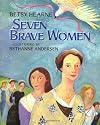
A young girl tells the story of her female ancestors. They did not fight in wars like the men did, but they all had some achievement of which she could be proud. The stories are told in a manner in which a child would enjoy. The biggest problem that I have is with the timeline for the ancestors. For a young girl reading this book in 1997, it is more likely that a female ancestor living in the Revolutionary War era would have been a 5 or 6 great grandmother rather than a 3 great grandmother. show more It is more likely that the female ancestor living during the War of 1812 would have been a 4 or 5 great grandmother rather than a 2 great grandmother. The 20th century generations are closer to reality in terms of their relationship to the child. Some of the illustrations were better than others in the story. My favorite illustration is probably the one of the Mennonite ancestor crossing the Atlantic with her children. It is perhaps not a very realistic illustration and glamorized the trip, but it was a beautiful one. This is a book that could be used with children to show that although there are fewer records for female ancestors, they still played important roles in the family. If the child is old enough to understand the problems with the timeline, I would discuss that problem with the child. It might be a useful book for discussing how some published trees sometimes leave out a generation or two. show less
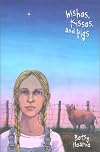
A light, quick read that I might have liked more when I was a kid. I did like seeing Louise deconstruct fairy tales, as I, too, have always wondered, for example, why it was ok for Jack to steal the gold, hen, and harp from the Giant.
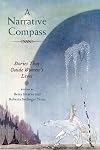
I loved this book.
I bought this at a time when I felt sad and unguided, and hoped this book could give me some nudges in the right direction. I am a feminist, I love reading, and I used to want to be a scholar, so this seemed a fitting choice. Also, it was called "A narrative compass", so it should be able to give me some guidence, right?
I am not sure if it succeeded in this, except for the fact that it made me realise (not for the first time) that I have amazing strong women in my family. show more My mother, who actively decided she wanted kids, without a man (and there I was). She later started a more traditional looking family with a man and a new kid (my awesome brother), but is able to look at that with some humor of her "traditional" life. She always continued to study and learn during her job, and made several career-moves within the same company.
My maternal grandmother, who raised her two daughters by herself. First because her husband was at sea, and later because they divorced. And I would almost forget she also worked a fulltime job. Which, in that time, was a rarity for a mother.
My aunt, who has the biggest personal library of all people I know. She has been the director of several schools, and decided to retire early, so she could do all the volenteer work she felt passionate about. So now she pours coffee for the homeless, helps in her church, and does many more things for her community.
My paternal grandmother, whose first love was killed in WWII. She went on living, married my grandfather, and managed to create a good life for herself.
The wife of my father, who has endured quite some hardships in her life, but who always picks herself up, and continues her life. She also decided at a later age to study the things she was interested in, next to her job and her family.
What I wrote here, I'd love to expand. I want to add the stories of my maternal greatgrandmother, who passed away when I was 9, and who continued to live by herself into her 90's. The women in my family are readers, and they have their own stories. show less
I bought this at a time when I felt sad and unguided, and hoped this book could give me some nudges in the right direction. I am a feminist, I love reading, and I used to want to be a scholar, so this seemed a fitting choice. Also, it was called "A narrative compass", so it should be able to give me some guidence, right?
I am not sure if it succeeded in this, except for the fact that it made me realise (not for the first time) that I have amazing strong women in my family. show more My mother, who actively decided she wanted kids, without a man (and there I was). She later started a more traditional looking family with a man and a new kid (my awesome brother), but is able to look at that with some humor of her "traditional" life. She always continued to study and learn during her job, and made several career-moves within the same company.
My maternal grandmother, who raised her two daughters by herself. First because her husband was at sea, and later because they divorced. And I would almost forget she also worked a fulltime job. Which, in that time, was a rarity for a mother.
My aunt, who has the biggest personal library of all people I know. She has been the director of several schools, and decided to retire early, so she could do all the volenteer work she felt passionate about. So now she pours coffee for the homeless, helps in her church, and does many more things for her community.
My paternal grandmother, whose first love was killed in WWII. She went on living, married my grandfather, and managed to create a good life for herself.
The wife of my father, who has endured quite some hardships in her life, but who always picks herself up, and continues her life. She also decided at a later age to study the things she was interested in, next to her job and her family.
What I wrote here, I'd love to expand. I want to add the stories of my maternal greatgrandmother, who passed away when I was 9, and who continued to live by herself into her 90's. The women in my family are readers, and they have their own stories. show less
Lists
Awards


You May Also Like


Associated Authors
Statistics
- Works
- 19
- Also by
- 1
- Members
- 1,326
- Popularity
- #19,389
- Rating
- 3.8
- Reviews
- 26
- ISBNs
- 51
- Languages
- 2