
Dilys Evans (1936–2024)
Author of Show and Tell: Exploring the Fine Art of Children's Book Illustration
Works by Dilys Evans
Associated Works
Cricket Magazine, Vol. 2, No. 11, July 1975 — Illustrator — 2 copies
Tagged
Common Knowledge
- Birthdate
- 1936-03-04
- Date of death
- 2024-07-23
- Gender
- female
- Occupations
- painter
art director
literary agent
curator
writer - Organizations
- Cricket magazine (art director)
Dilys Evans Fine Illustration
The Original Art {exhibit} (founder)
Lucas-Evans Books (cofounder) - Awards and honors
- Arthur William Brown Achievement Award, Society of Illustrators
- Relationships
- Blaine, Nell (employer)
- Nationality
- England
UK - Places of residence
- Teignmouth, South Devon, England, UK (birth)
Santa Fe, New Mexico, USA - Place of death
- Santa Fe, New Mexico, USA
- Associated Place (for map)
- Teignmouth, South Devon, England, UK
Members
Reviews
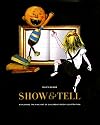
This won't be going on my 365 Kids shelf, although it has a meaning relevance. I love picture books, always have. But I don't think about them much. Nor do I have much knowledge of the making or history of art. Because of the aphantasia I don't ever see what I'm reading inside of my head. Hell, until recently I thought that was a purely metaphorical idea. So for there to me an image in my head, someone else must create an image and share it. Over the years I've added quite a few books about show more creating and using picture books to my list, but getting my hands on them is often difficult.
Here, then, is one I'm delighted to have read. Evans picked twelve US illustrators all of whom started publishing in the 20th century. There's a page or two of biography covering where the artists grew up, what kind of training they had, what sorts of influences they credit in their youth and who really impressed them. Then it's how they got started in the business, examples of their representative work, and what their process is.
There's a lot about how to convey movement, to keep action moving through the book, the moods evoked by palettes, just all kinds of stuff. The process tends not to be too detailed except in the case of Denise Fleming, who makes her images as paper, which is unusual and fascinating. There are a number of similarities: lots of these folks were identified as children who had talented, lots of families with other artists.
It's neat stuff and I'm eager to see what, if any, influence it has in my reaction to the giant freaking stack of books I have awaiting my attention.
Three issues I have with the book:
1. The twelve artists profiled, while being broadly recognized and awarded, aren't a very broad swathe of illustrators. Of these, eight are men, and there is only one person of color, all of whose depicted art is of Black people. No shade to him, because without his inclusion there would only be one full-sized illustration in the book showing a non-white human face. This is why we need diverse books and diverse editorial staff.
2. I don't like the work equally. Two of these illustrators have styles that I actively put me off. Since I can only think of three altogether that put me off, that is unfortunate.
3. Writing of an illustration from [b:Rosa|39106|Rosa|Nikki Giovanni|https://i.gr-assets.com/images/S/compressed.photo.goodreads.com/books/1317791168l/39106._SX50_.jpg|38816]
Whether the error is Evans' or Collier's, I don't know. In her autobiography Parks wrote “people always say that I didn’t give up my seat because I was tired, but that isn’t true. I was not tired physically… No, the only tired I was, was tired of giving in.” Months before Parks was removed from the bus seat a 15-year-old girl was arrested when she declined to move from her seat on the bus. Claudette Colvin, however, wasn't the image of non-threatening respectability that the local NAACP wanted to create a movement around. Colvin was several months pregnant at her arrest, a victim of statutory rape. Someone else was selected to take her place: the Secretary of the Montgomery NAACP chapter. Planning an action to raise awareness and outrage is a laudatory act, as well as a lesson in how to fight the power, and is a brave act for someone who well understood the possible danger. But I will not compound the disrespect shown to Ms. Colvin by disregarding her contribution to the fight. Nor will I ignore that the NAACP had a bad record in the 20th century for practicing sexism even as it relied so heavily upon the work of Black women to fight racism. Intersectionalism is real. And it brings me back to my first point. There are a hundreds of artists who could have been featured and Evans made her choices in favor of white men. Not well done.
Library copy show less
Here, then, is one I'm delighted to have read. Evans picked twelve US illustrators all of whom started publishing in the 20th century. There's a page or two of biography covering where the artists grew up, what kind of training they had, what sorts of influences they credit in their youth and who really impressed them. Then it's how they got started in the business, examples of their representative work, and what their process is.
There's a lot about how to convey movement, to keep action moving through the book, the moods evoked by palettes, just all kinds of stuff. The process tends not to be too detailed except in the case of Denise Fleming, who makes her images as paper, which is unusual and fascinating. There are a number of similarities: lots of these folks were identified as children who had talented, lots of families with other artists.
It's neat stuff and I'm eager to see what, if any, influence it has in my reaction to the giant freaking stack of books I have awaiting my attention.
Three issues I have with the book:
1. The twelve artists profiled, while being broadly recognized and awarded, aren't a very broad swathe of illustrators. Of these, eight are men, and there is only one person of color, all of whose depicted art is of Black people. No shade to him, because without his inclusion there would only be one full-sized illustration in the book showing a non-white human face. This is why we need diverse books and diverse editorial staff.
2. I don't like the work equally. Two of these illustrators have styles that I actively put me off. Since I can only think of three altogether that put me off, that is unfortunate.
3. Writing of an illustration from [b:Rosa|39106|Rosa|Nikki Giovanni|https://i.gr-assets.com/images/S/compressed.photo.goodreads.com/books/1317791168l/39106._SX50_.jpg|38816]
"By treating this moment the way he has, Collier has set the tone for what happens as Rosa Parks decides not to give up her seat. It was not some grand scheme planned ahead of time. She was just suddenly tired, very tired of the many things she had to do in her life because she happened to be black. That's precisely what makes her a truly heroic figure. A hardworking middle-class woman, she symbolized her whole race with quiet dignity and power. All of that comes across in this remarkable illustration."
Whether the error is Evans' or Collier's, I don't know. In her autobiography Parks wrote “people always say that I didn’t give up my seat because I was tired, but that isn’t true. I was not tired physically… No, the only tired I was, was tired of giving in.” Months before Parks was removed from the bus seat a 15-year-old girl was arrested when she declined to move from her seat on the bus. Claudette Colvin, however, wasn't the image of non-threatening respectability that the local NAACP wanted to create a movement around. Colvin was several months pregnant at her arrest, a victim of statutory rape. Someone else was selected to take her place: the Secretary of the Montgomery NAACP chapter. Planning an action to raise awareness and outrage is a laudatory act, as well as a lesson in how to fight the power, and is a brave act for someone who well understood the possible danger. But I will not compound the disrespect shown to Ms. Colvin by disregarding her contribution to the fight. Nor will I ignore that the NAACP had a bad record in the 20th century for practicing sexism even as it relied so heavily upon the work of Black women to fight racism. Intersectionalism is real. And it brings me back to my first point. There are a hundreds of artists who could have been featured and Evans made her choices in favor of white men. Not well done.
Library copy show less
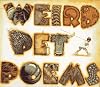
This book has very catchy and fun illustrations, and the book itself is very engaging, for example on page 8, the author says "turn the next page... we'll look in this book," the author is talking to the audience at the end of this page. The book is also a fun read aloud to children, because the whole book is written in short poems. I love the illustrations, because there is so much going on in the pictures that the author doesn't mention so it is important to have the readers examine the show more illustrations. For example, on page 8 and 9, you see his little sister hiding under his bed, but no where does the author say she is there, the illustrations also show what he is interested in because there is a display of toys and posters all over the room. On the next page, 10 and 11, the illustrations are very funny and they show dogs being dressed up like a bride, a tourist, and an old woman with a bonnet. The children is perfect for children due to the fun rhythm in every poem and the illustrations that are detailed and humorous. The book is also informative, and teaches children about different animals. The author and illustrator also work together to make some of the animals act as humans. For example, on page 16 there is a yak getting his hair done at a barber shop. The book also shows the boy visiting different environments, such as swamps, lakes, and forests. Finally the boy gets a dog, which is a normal pet, because the whole book he is looking at animals that are not typical pets. This book is a fun book to show students and I would highly recommend the book to teachers and parents to read to their kid. show less
In her very imformative book, Dilys Evans, an author, editor, public speaker and advisor to Caldecott award committees, focuses on the lives and talents of 12 artists who have made their living by illustrating children's books. Some of the more well-known are Brian Selznick, David Shannon, Hilary Knight and Harry Bliss. Others who are featured are Bryan Collier, David Wiesner, Trina Hyman, Paul Zelinsky, Betsy Lewin, Petra Mathers, Denise Fleming and Lane Smith. Each illustrator recalls who show more were the most influential artists in their lives as well as their uses of different media to create their work. I find it fascinating, probably because I have absolutely zero talent when it comes to artistic endeavors, to learn how the ideas are first formulated, the reasons why certain colors are chosen or even why images are placed a certain way on a page. Although he is not mentioned in this book I was fortunate to attend a speaking engagement by John Rocco (illustrator of the "Percy Jackson" series) at our library and I could have listened to him for hours. The step by step process of illustration is amazingly complex and Dilys Evans gives just a small sampling of this world of fine art. show less
Summary:
A boy wants to get a pet for his birthday. His parent's let him think of all sorts of animals that he could have. Each poem is about each animal that he thinks of. There are several. There is a Hippo, a bear I do believe and several others. Finally he finds a kitten and that is his pet.
Personal reaction:
I found this book to be quite cute actually. The poems were not too babyish. Simple enough so that all kids could get them and the pictures were great. Good use of color and line. show more It was wild enough that kids could enjoy it but not so wild as to they couldn't identify. What kids doesn't want some exotic animal like a hippo for a pet at one point in time? I'd still like a hippo for a pet!
Classroom Extension Ideas.
1. Use to talk about animals and the kinds of ones they would like to have.
2. Have them write their own poems about animals wither it's one they have or want. show less
A boy wants to get a pet for his birthday. His parent's let him think of all sorts of animals that he could have. Each poem is about each animal that he thinks of. There are several. There is a Hippo, a bear I do believe and several others. Finally he finds a kitten and that is his pet.
Personal reaction:
I found this book to be quite cute actually. The poems were not too babyish. Simple enough so that all kids could get them and the pictures were great. Good use of color and line. show more It was wild enough that kids could enjoy it but not so wild as to they couldn't identify. What kids doesn't want some exotic animal like a hippo for a pet at one point in time? I'd still like a hippo for a pet!
Classroom Extension Ideas.
1. Use to talk about animals and the kinds of ones they would like to have.
2. Have them write their own poems about animals wither it's one they have or want. show less
Awards

You May Also Like


Associated Authors
Statistics
- Works
- 4
- Also by
- 4
- Members
- 403
- Popularity
- #60,269
- Rating
- 4.1
- Reviews
- 15
- ISBNs
- 7