

Joanne Oppenheim
Author of Have You Seen Birds?
About the Author
Joanne F. Oppenheim is an education and child development expert. She is the author of more than 50 books for and about children including The Christmas Witch; Kids and Play; Buy Me, Buy Me; and Dear Miss Breed: True Stories of the Japanese American Incarceration During World War II and a Librarian show more Who Made a Difference. She won the National Picture Book of the Year award in Canada for Have You Seen Birds?. With other members of her family, she co-founded Oppenheim Toy Portfolio, Inc. that publishes books on the most successful toys for children, called the Oppenheim Toy Portfolio. (Bowker Author Biography) show less
Series
Works by Joanne Oppenheim
Dear Miss Breed: True Stories of the Japanese American Incarceration During World War II and a Librarian Who Made a Difference (2006) 279 copies, 17 reviews
The Elementary School Handbook: Making the Most of Your Child's Education (Bank Street's Complete Parent Guide to K-6) (1989) 8 copies
Oppenheim Toy Portfolio Baby & Toddler Play Book: Baby & Toddler Play Book (Oppenheim Toy Portfolio. Baby & Toddler Play (1999) 4 copies
A Flicker in Eternity 2 copies
Oppenheim Toy Portfolio Baby & Toddler Play Book (Second Edition) (Oppenheim Toy Portfolio Baby & Toddler Play B (2001) 1 copy
Have You Ever Seen Birds? 1 copy
LE GATEAU DISPARU 1 copy
Tagged
Common Knowledge
Members
Reviews
Dear Miss Breed: True Stories of the Japanese American Incarceration During World War II and a Librarian Who Made a Difference by Joanne Oppenheim
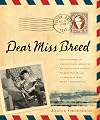
Clara Breed was a children's librarian in San Diego who, during the Japanese internment, kept in touch with several of her young Japanese patrons. The book discusses the vitriolic attitudes of the country against the Japanese Americans after Pearl Harbor and the "justification" for their evacuation and internment. Miss Breed exchanged many letters with her young friends and also sent along packages of books, small toys, and items requested by the children and their families. The reprinted show more letters are all by the kids; no letters from Miss Breed have been found, although the author cites a couple of library journal articles by Miss Breed in support of the Japanese. A compelling aspect of history, seen through the eyes of the younger internees and their trustworthy friend the librarian. show less

Juanita must confront the difference that her father's recent unemployment makes in her family's Posadas, or Christmas celebration, in this lovely retelling of a Mexican legend. Unable to buy the special foods eaten at this time of year, or get gifts for her younger brothers and friends, Juanita is desperately unhappy, even going so far as to avoid the Christmas Eve church service, because she has no offering for the Baby Jesus. It is as she lingers outside the church, longing to go in but show more feeling unworthy, that a miracle occurs, and a beautiful gift for the Christ Child is given to her...
A pourquoi tale explaining how poinsettias - indigenous to Mexico and Central America, this flowering plant is known as La flor de Noche Buena, or "the flower of Christmas Eve" - came to be, this story has also been retold by Tomie dePaola in his picture-book, The Legend of the Poinsettia. This retelling by Joanne F. Oppenheim, who credits the Christmases she spent in Mexico with her parents as an inspiration in her brief afterword, is appealing, although the real star is the artwork by Fabian Negrin. With a deep and vivid color palette, expressively painted human figures, and lovely decorative details - the poinsettia endpapers were a particularly nice touch! - the illustrations here are immensely appealing. The sense of beauty and mystery in these paintings, which can also be found in other titles illustrated by Negrin, such as Julia Alvarez' The Secret Footprints, is just enchanting. Highly recommended, both to those young readers looking for Christmas stories with a Mexican cultural setting, and to fans of the artist's work. show less
A pourquoi tale explaining how poinsettias - indigenous to Mexico and Central America, this flowering plant is known as La flor de Noche Buena, or "the flower of Christmas Eve" - came to be, this story has also been retold by Tomie dePaola in his picture-book, The Legend of the Poinsettia. This retelling by Joanne F. Oppenheim, who credits the Christmases she spent in Mexico with her parents as an inspiration in her brief afterword, is appealing, although the real star is the artwork by Fabian Negrin. With a deep and vivid color palette, expressively painted human figures, and lovely decorative details - the poinsettia endpapers were a particularly nice touch! - the illustrations here are immensely appealing. The sense of beauty and mystery in these paintings, which can also be found in other titles illustrated by Negrin, such as Julia Alvarez' The Secret Footprints, is just enchanting. Highly recommended, both to those young readers looking for Christmas stories with a Mexican cultural setting, and to fans of the artist's work. show less
Dear Miss Breed: True Stories of the Japanese American Incarceration During World War II and a Librarian Who Made a Difference by Joanne Oppenheim
Very insightful book covers a dark chapter in American history with a detailed primary source-laden account of the daily life in Japanese-American concentration camps from the 1940s. It drives you mad to imagine the United States allowing such an institutional racist act to fester for as long as it did and with so little regard for the Japanese Americans who were imprisoned there. The book is written with a slight bent toward the young readers (many of the last sentences of a chapter end show more with exclamation points). The book is offers many surprising facts in its text and its rich library of images. An anti-Japanese cartoon by Dr. Seuss, descriptions of the horrible bathroom facilities accorded to the Japanese-Americans, and the fact that Eisenhower's older brother was placed in charge of the military organization charged with relocating the Asian-American population are just a few examples of the level of detail this amazing book holds on its subject. The primary sources that offer glimpses into the venomous hatred many held toward the Japanese is striking; ranging from state governors to regular people writing letters into their local newspapers. The presentation of the book is top-notch, filled with many fascinating pictures and clear layouts for the various first person accounts. One comes away with a better understanding of the racism directed against the Japanese during this time as well as measure of respect for both librarian Clara Breed and First Lady Eleonore Roosevelt. show less
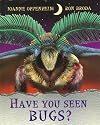
I'm a bit of a science geek and slightly obsessive about proper scientific terminology, and so I taught my children the fact that the term BUGS properly refers to the order Hemiptera. My daughter is now grown and even more annoyed than I by the fact that this book refers to not only the entire class Insecta but also class Arachnida and class Diplopoda as BUGS. Multiple times on every page. Not just the title. It diminishes the educational value of the book. She chose not to read this book to show more her children. Too bad - the illustrations are absolutely beautiful and the verse would not be less catchy for using the proper terms to refer to the insects occasionally. show less
Lists
Awards


You May Also Like


Associated Authors
Statistics
- Works
- 70
- Members
- 5,182
- Popularity
- #4,799
- Rating
- 3.8
- Reviews
- 67
- ISBNs
- 234
- Languages
- 6
- Favorited
- 1