

William H. Hooks (1921–2008)
Author of Pioneer Cat
About the Author
Image credit: northcarolinaliteraryfestival1998
Works by William H. Hooks
When Small is Tall and Other Read-Together Tales (Pictureback) (1985) — Contributor — 40 copies, 1 review
Read-a-Rebus 2 copies
[(Stepping Stone Pioneer Cat #)] [By (author) William Hooks] published on (February, 2005) (2005) 1 copy
Mr. Baseball 1 copy
Peach Boy 1 copy
Lo-Jack and the Pirates 1 copy
Tagged
Common Knowledge
- Canonical name
- Hooks, William H.
- Birthdate
- 1921-11-14
- Date of death
- 2008-03-03
- Gender
- male
- Education
- University of North Carolina (MA, History)
- Occupations
- dancer
choreographer
teacher - Organizations
- ABC television
- Awards and honors
- Distinguished Alumnus Award from UNC-Chapel Hill
Irma Simonton and James Black Award for Lifetime Achievement in Children's Literature
American Association of University Women's award for best books for children
Phi Beta Kappa - Short biography
- He was born in Whiteville, NC and graduated Phi Beta Kappa from UNC with a master’s in history. He was a veteran of World War II. He was both a dancer and choreographer with his own dance company and was involved in a variety of theatrical productions, including “Unto These Hills,” “Horn of the West” and other historical outdoor dramas.
He was director of the Bank Street College Publications Group and was managing editor for the Bank Street Readers and Child Development Series. He was educational consultant to CBS for the “Captain Kangaroo Show,” for NBC weekend specials, and for the Peabody award-winning ABC “Afternoon Specials.” For 15 years he was a consultant to all of the ABC children’s TV programs. - Nationality
- USA
- Birthplace
- Whiteville, North Carolina, USA
- Places of residence
- Chapel Hill, North Carolina, USA
- Associated Place (for map)
- North Carolina, USA
Members
Reviews

Beauty and the Beast meets East o' the Sun and West o' the Moon in this immensely engaging, gorgeously illustrated fairy-tale from the Appalachians. When a poor father of three plucks a forbidden Winter Rose, intending to give it as a gift to his beloved youngest daughter, Nell, he finds himself pursued by a terrible white bear, who demands a high price in return. Terrified, but determined to aid her father, Nell sets out with the creature, eventually finding herself at his mountaintop show more palace, where it is revealed that he is Snowbear Whittington, cursed by a witch to spend half of his time in bear form. As time passes, Nell eventually comes to care for her new mate, who assumes the shape of a man by night, but her careless words, when visiting her ill father, could separate them forever. When Snowbear Whittington disappears, can she find him and win him back...?
I have encountered this Appalachian variant of the Beauty and the Beast tale type before, in Betsy Hearne's Beauties and Beasts, a collection of twenty-seven tales from around the world, as well as Richard Chase's Grandfather Tales: American-English Folk Tales (it appears as "Whitebear Whittington" in both of those collections), but William H. Hooks' title is the first picture-book retelling I have encountered. How glad I am that it was one of our August selections, over in The Picture-Book Club to which I belong, as it has been on my "to-read" shelf for a while now, and I finally found the impetus to pick it up. The tale itself is well-told and involving, and Victoria Lisi's illustrations are simply beautiful. I think I need to own a copy of this gem! show less
I have encountered this Appalachian variant of the Beauty and the Beast tale type before, in Betsy Hearne's Beauties and Beasts, a collection of twenty-seven tales from around the world, as well as Richard Chase's Grandfather Tales: American-English Folk Tales (it appears as "Whitebear Whittington" in both of those collections), but William H. Hooks' title is the first picture-book retelling I have encountered. How glad I am that it was one of our August selections, over in The Picture-Book Club to which I belong, as it has been on my "to-read" shelf for a while now, and I finally found the impetus to pick it up. The tale itself is well-told and involving, and Victoria Lisi's illustrations are simply beautiful. I think I need to own a copy of this gem! show less
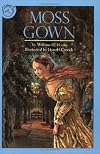
Oh my gosh, I love this! I’ve been reading lots of children’s Cinderella books, and some of them tend to be a little too similar to each other, but not this! No, this retelling was unique and it was so refreshing to read it. The illustrations were beautiful, the characters were lovely and the story was very enjoyable. Such a cute story.

As noted on the dust-jacket blurb, elements of King Lear and Cinderella meet in this Southern folktale, which was told to William H. Hooks as a child in North Carolina. When Candace's elderly and infirm father asks each of his daughters to describe how she loves him, her answer - that she loves him "as meat loves salt" - displeases him, and he disinherits her. Forced to leave her home, Candace is aided by a green-eyed, black gris-gris woman (a witch), who gives her a moss gown that appears show more to be ragged and torn, during the day, and enchantingly beautiful at night. Taking work in the kitchen of a nearby plantation, Candace eventually uses the gown to attend a three-day ball, where she wins the heart of the Young Master. Moss Gown finds love, but will Candace ever find rapprochement with her father...?
The author's note at the rear mentions the Appalachian variant of this story (Rush Cape), and discusses its English origin. The tale Cap O'Rushes - an example of tale type 510B in the Aarne-Thompson folklore classfication system, the "Unnatural Love" type - can be found in Joseph Jacobs' English Fairy Tales, and is clearly the forerunner of this American version. It's interesting to see how the story has been adapted for a southern American setting: the heroine's gown is made of Spanish Moss, there is a gris-gris woman, and so on. The story itself is engrossing - highly entertaining, with a very satisfactory ending - and the illustrations are lovely. Beautiful, but with a "mossy" feeling to them (perhaps because of the muted color scheme?). Highly recommended to all readers who enjoy beautifully illustrated fairy-tales! show less
The author's note at the rear mentions the Appalachian variant of this story (Rush Cape), and discusses its English origin. The tale Cap O'Rushes - an example of tale type 510B in the Aarne-Thompson folklore classfication system, the "Unnatural Love" type - can be found in Joseph Jacobs' English Fairy Tales, and is clearly the forerunner of this American version. It's interesting to see how the story has been adapted for a southern American setting: the heroine's gown is made of Spanish Moss, there is a gris-gris woman, and so on. The story itself is engrossing - highly entertaining, with a very satisfactory ending - and the illustrations are lovely. Beautiful, but with a "mossy" feeling to them (perhaps because of the muted color scheme?). Highly recommended to all readers who enjoy beautifully illustrated fairy-tales! show less
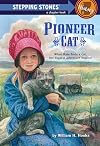
Kate Purdy smuggles a cat on a wagon train heading to Oregon. She's pretty sure she would not be allowed to keep it if her parents knew, so she tells the cat it must be quiet. She enlists the aid of a girl in a neighboring wagon to help keep her secret. This is a cute story for early readers. It's a great introduction to historical fiction and would make a great discussion book about what travelers faced on the Oregon Trail. The author kept those adventures somewhat tame, but readers still show more understand dangers were there. I purchased this book at the Oregon Trail Interpretive Center this summer, but I'm just getting around to reading and reviewing it because it somehow got lost in a zippered compartment of my suitcase. I'm glad I found it so 2016 can go out with a fun book for children! show less
Lists
Awards


You May Also Like


Associated Authors
Statistics
- Works
- 56
- Members
- 2,701
- Popularity
- #9,508
- Rating
- 3.8
- Reviews
- 27
- ISBNs
- 186
- Languages
- 2
- Favorited
- 1
