

Barbara Brenner
Author of Wagon Wheels
About the Author
Barbara Brenner was born on June 26, 1925, in Brooklyn, New York. Brenner attended Seton Hall College and Rutgers University from 1942-46, while also working as a copy editor at Prudential Insurance Company. Her freelance work as an artist's agent prepared her for a literary life. In 1957 she show more published her first book, Somebody's Slippers, Somebody's Shoes. She followed this book with an educational picture book entitled Barto Takes the Subway, designed to improve reading comprehension and sight vocabulary. Her artistic development continued when she began to collaborate with her husband, illustrator Fred Brenner, on The Flying Patchwork Quilt. Her next book, On the Frontier with Mr. Audubon, was selected by School Library Journal as The Best of the Best among children's books published over 26 seasons. One of her bestselling titles was Wagon Wheels (published in 1978), which deals with the trials and tribulations of a close-knit African American family. In 1986, Brenner was honored with the Pennsylvania School Librarians' Association's Outstanding Pennsylvania Author Award. Brenner's most celebrated book is a collection entitled Voices: Poetry and Art from around the World, for which she was chief editor. This book received an ALA Notable Book for Children mention and an ALA Best Book for Young Adults award. (Bowker Author Biography) show less
Series
Works by Barbara Brenner
Choosing Books for Kids: Choosing the Right Book for the Right (1986) — Author — 55 copies, 1 review
Los tres cerditos 2 copies
One Small Space by the Sea 1 copy
Baltimore Orioles 1 copy
Associated Works
Tagged
Common Knowledge
- Legal name
- Brenner, Barbara Johnes
- Birthdate
- 1925-06-26
- Gender
- female
- Occupations
- children's book author
- Relationships
- Brenner, Fred (husband)
- Nationality
- USA
- Birthplace
- Brooklyn, New York, USA
- Places of residence
- Brooklyn, New York, USA (birth)
Hawley, Pennsylvania, USA - Associated Place (for map)
- USA
Members
Reviews
Collections
Chapter book
Grade: 2-5
Historical fiction
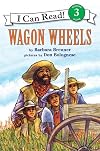
Wagon Wheels by Barbra Brenner is a very engaging and emotional children's chapter book. I think the book did a great job of depicting how difficult life really was for pioneers settling in the west. Brenner begins the book by writing, "We had come a long way to get to Kansas. All the way from Kentucky. It had been a hard trip, and a sad one. Mama died on the way. Now there were just the four of us- Daddy, Willie, Little Brother, and me" ( show more Brenner, 8). I knew from this point that this was going to be an emotional story, and it was. The author did an excellent job of depicting the emotions of the characters. Another aspect that I enjoyed about this book were the illustrations. Many chapter books do not use illustrations, but this one did, and it really added to the story. Most of the illustrations were small and at the bottom of the page, but they were colorful and gave me a better sense of what it looked like out west. During one part of the book, the small family was weathering the harsh Kansas winter in their underground dugout. They ran out of food and firewood, "Then one day there was no more cornmeal. There was not a lick of food in the whole town of Nicodemus. And nothing left to burn for firewood. Little Brother cried all the time- he was so cold and hungry. Daddy wrapped blankets around him. "Hush, baby son," he said to him. "Try to sleep. Supply train will be coming soon. But the supply train did not come. Not that day or the next" (Brenner, 21). The picture on that page was dreary and desperate looking. It helped me as a reader to understand the seriousness of the family's situation. I really enjoyed reading this book and feel that it taught me a quite bit about life as a pioneer. show less
Chapter book
Grade: 2-5
Historical fiction
Wagon Wheels by Barbra Brenner is a very engaging and emotional children's chapter book. I think the book did a great job of depicting how difficult life really was for pioneers settling in the west. Brenner begins the book by writing, "We had come a long way to get to Kansas. All the way from Kentucky. It had been a hard trip, and a sad one. Mama died on the way. Now there were just the four of us- Daddy, Willie, Little Brother, and me" ( show more Brenner, 8). I knew from this point that this was going to be an emotional story, and it was. The author did an excellent job of depicting the emotions of the characters. Another aspect that I enjoyed about this book were the illustrations. Many chapter books do not use illustrations, but this one did, and it really added to the story. Most of the illustrations were small and at the bottom of the page, but they were colorful and gave me a better sense of what it looked like out west. During one part of the book, the small family was weathering the harsh Kansas winter in their underground dugout. They ran out of food and firewood, "Then one day there was no more cornmeal. There was not a lick of food in the whole town of Nicodemus. And nothing left to burn for firewood. Little Brother cried all the time- he was so cold and hungry. Daddy wrapped blankets around him. "Hush, baby son," he said to him. "Try to sleep. Supply train will be coming soon. But the supply train did not come. Not that day or the next" (Brenner, 21). The picture on that page was dreary and desperate looking. It helped me as a reader to understand the seriousness of the family's situation. I really enjoyed reading this book and feel that it taught me a quite bit about life as a pioneer. show less
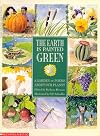
I sure wish I had access to this book, aimed at tweens & families, in print. But I'm glad that I can at least read the archived copy on openlibrary.org. The art is amazing, and the poems are wonderful, and there will be a lot of them.
Already I have to interrupt my reading to come here to say that I esp. love the music of [a:Lillian Morrison|264560|Lillian Morrison|https://s.gr-assets.com/assets/nophoto/user/u_50x66-632230dc9882b4352d753eedf9396530.png]'s *Green Song* with alliteration, show more rhyme, rhythm, all just dancing.
For another poem, it helps to know that 'wake robin' is another name for trillium (an early flower of the temperate woodlands).
---
Wonderful for all ages, including me, a 'senior citizen.' The art is terrific, the sections are themed, and all three indexes are included. Highly recommended, yes... especially if your library actually has it for you in paper. show less
Already I have to interrupt my reading to come here to say that I esp. love the music of [a:Lillian Morrison|264560|Lillian Morrison|https://s.gr-assets.com/assets/nophoto/user/u_50x66-632230dc9882b4352d753eedf9396530.png]'s *Green Song* with alliteration, show more rhyme, rhythm, all just dancing.
For another poem, it helps to know that 'wake robin' is another name for trillium (an early flower of the temperate woodlands).
---
Wonderful for all ages, including me, a 'senior citizen.' The art is terrific, the sections are themed, and all three indexes are included. Highly recommended, yes... especially if your library actually has it for you in paper. show less
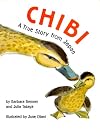
This story is quite cute and endearing. It is a true story so a class project might be to look up articles about this for older students. I think what makes this a great story is the way that the people of Tokyo reacted to the ducks. Not only the fact that their presence became a news-worthy phenomenon but the seemingly instinctual way in which the people felt a need to protect the ducks and even mourn for one of the ducks. Incorporates Japanese vocabulary with a glossary, so could be great show more for unit on Japan. Might also be a good book for a lesson on altruism. That being said, I didn't find that the author helped me connect with the ducks or care about their outcome in a personal way. I felt I was merely observing, thus the two-star rating. show less

Based on a true story.
Formerly enslaved Ed Muldie and his family travel to Kansas in 1878 to claim land under the Homestead Act. Mother dies on the journey from Kentucky. The family joins a free Black community in Nicodemus, Kansas. They survive a difficult winter thanks to help from the Osage Native community. But in spring Daddy must leave the boys to find better land for farming.
The two older boys, eleven and eight, take care of their three-year-old brother in these difficult times. Then show more a letter arrives via Pony Express. Daddy has settled and gives the boys a map to follow. The three boys must begin their own journey. They must care for one another as they travel 150 miles on foot to join him in their new home. show less
Formerly enslaved Ed Muldie and his family travel to Kansas in 1878 to claim land under the Homestead Act. Mother dies on the journey from Kentucky. The family joins a free Black community in Nicodemus, Kansas. They survive a difficult winter thanks to help from the Osage Native community. But in spring Daddy must leave the boys to find better land for farming.
The two older boys, eleven and eight, take care of their three-year-old brother in these difficult times. Then show more a letter arrives via Pony Express. Daddy has settled and gives the boys a map to follow. The three boys must begin their own journey. They must care for one another as they travel 150 miles on foot to join him in their new home. show less
Lists
Awards


You May Also Like


Associated Authors
Statistics
- Works
- 100
- Also by
- 1
- Members
- 10,015
- Popularity
- #2,377
- Rating
- 3.8
- Reviews
- 89
- ISBNs
- 321
- Languages
- 7
- Favorited
- 1