
Robert D. San Souci (1946–2014)
Author of The Talking Eggs: A Folktale from the American South
About the Author
Robert D. San Souci was born on October 10, 1946 in San Francisco, California. He attended college at St. Mary's College in Moraga. After holding jobs in book stores and in publishing, he became a full-time author in 1974. He was best known for his adaptations of folklore for children. During his show more lifetime, he wrote more than 100 books for young readers including Song of Sedna, Kate Shelley: Bound for Legend, The Talking Eggs, Two Bear Cubs, Cendrillon: A Caribbean Cinderella, Brave Margaret: An Irish Tale, Robin Hood and the Golden Arrow, and Cinderella Skeleton. He wrote 12 books which were illustrated by his younger brother Daniel San Souci including The Legend of Scarface, Sister Tricksters: Rollicking Tales of Clever Females, and As Luck Would Have It: From The Brothers Grimm. He also wrote nonfiction works for children, several novels for adults, and the film story for Disney's Mulan. The Legend of Scarface won the Notable Children's Trade Book in the Social Studies, National Council for the Social Studies, and was a Horn Book honor list citation. Sukey and the Mermaid won the American Library Association's Notable Book citation in 1992 and Cut from the Same Cloth won an Aesop Award from the Children's Folklore Section of the American Folklore Society. He died on December 19, 2014 at the age of 68. (Bowker Author Biography) show less
Image credit: randomhouse.com
Series
Works by Robert D. San Souci
Världens bästa spökhistorier. 3, [tjugofem gastkramande historier från hela världen!] (1991) 3 copies
Thirty Terrifying Tales 1 copy
Los Huevos Parlantes 1 copy
The Little Ghost 1 copy
Emergence 1 copy
Associated Works
Tagged
Common Knowledge
- Canonical name
- San Souci, Robert D.
- Legal name
- San Souci, Robert Daniel
- Birthdate
- 1946-10-10
- Date of death
- 2014-12-19
- Gender
- male
- Education
- St. Mary's College (BA|1968|Creative Writing)
California State University, Hayward - Occupations
- children's book author
copy editor
screenwriter
book editor
bookstore manager - Organizations
- Society of Children's Book Writers and Illustrators
- Awards and honors
- Caldecott Honor Book (1990, 1995, 1996)
Aesop Award (1993, 1997)
Irma Simonton Black Book Award (1989)
Texas Bluebonnet Award (1999)
Marcus Foster Memorial Reading Award (2005)
Coretta Scott King Honor Book (1990, 1992, 1995) (show all 9)
Commonwealth Club of California Silver Medal (1996, 1998)
Storytelling World Award (1999)
Jefferson Cup Award (1997) - Agent
- Barbara S. Kouts
- Relationships
- San Souci, Daniel (brother)
San Souci, Michael (brother) - Short biography
- Robert Daniel San Souci (October 10, 1946 – December 19, 2014) was a multiple award-winning children's book author, who resided in San Francisco, California. He often worked with his brother, Daniel San Souci, a children's book illustrator. He was a consultant to Disney Studios and was instrumental in the production of the film Mulan, for which he wrote the story. He studied folklore in graduate school. He died after suffering a head injury due to a fall in San Francisco in December 2014. [from Wikipedia]
- Cause of death
- a fall
head injury - Nationality
- USA
- Birthplace
- San Francisco, California, USA
- Places of residence
- San Francisco, California, USA
- Place of death
- San Francisco, California, USA
- Associated Place (for map)
- San Francisco, California, USA
Members
Discussions
Scary Stories book from the Elementary school library, Taily-po + others in Name that Book (May 2016)
Clever Princess, Lazy Prince, Russian Feel Fairy Tale in Name that Book (January 2012)
Reviews
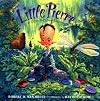
Of Pierre and Pierrette's five boys, only Little Pierre, the youngest, is the smartest, cleverest and hardest-working. When Marie-Louise, daughter of the richest man in town, is kidnapped by the swamp ogre, a big reward and her hand in marriage is offered to anyone who can rescue her. The older Pierres decide they could rescue Marie-Louise despite the work involved. "Seem a lotta trouble not to get what we already don't got." When Little Pierre hears of their plan he knows he'll end up show more helping them out of any hole they'd dig for themselves so he tags along despite their protests. Of course, Little Pierre is the one who outsmarts the ogre, saves his brothers' lives and gets the girl. Fun humor, great dialogue (wish I could do the accent), and characters. Outsized illustrations emphasize the outrageousness of the tale. "That's rit-ma-tick. And that's all." show less

Fifteen-year-old Iowa farm girl Kate Shelley becomes a national heroine in this engrossing picture book biography, risking her own life during a terrible storm to warn the nearby train station that the trestle bridge beneath her home had gone down in a flood, taking a steam engine with it. Determined to get help for the engine men trapped in the waters, and to prevent the next train, carrying hundreds of passengers, from meeting a similar fate, she crawled across the seven-hundred-foot-long show more Des Moines River Bridge in the howling wind and lashing rain, moving from cross-tie to cross-tie just above the raging river water, in order to bring word of the disaster to Moingona. Her efforts proved successful, and soon her name was known state and nation-wide. The book closes with an author's note giving more information about Kate...
I'm quite familiar with author Robert D. San Souci's many folktale retellings, which I have enjoyed greatly, but Kate Shelley: Bound for Legend is only the second work of nonfiction I have read from his pen, following upon his N.C. Wyeth's Pilgrims, and the first biography. It is also the first time I have encountered illustrator Max Ginsburg's artwork. I am very glad I tracked it down, as I found the story it relates immensely gripping, its heroine inspiring, and the accompanying visuals beautiful. I had never heard of Kate Shelley before encountering this book, and that's a shame, as I think I would have found her story very interesting, as a child. I certainly do, as an adult. I'm glad to have had this deficiency in my knowledge rectified, and to learn about the actions of such a brave young woman. She certainly deserved her plaudits! San Souci's telling of the story captures the excitement and terror of that night-time trip, while the oil paintings from Ginsburg are beautifully expressive, depicting the emotional register of each scene, and the intense atmosphere of that stormy night. Recommended to picture book readers who enjoy biography and/or stories about brave young people making a difference. show less
I'm quite familiar with author Robert D. San Souci's many folktale retellings, which I have enjoyed greatly, but Kate Shelley: Bound for Legend is only the second work of nonfiction I have read from his pen, following upon his N.C. Wyeth's Pilgrims, and the first biography. It is also the first time I have encountered illustrator Max Ginsburg's artwork. I am very glad I tracked it down, as I found the story it relates immensely gripping, its heroine inspiring, and the accompanying visuals beautiful. I had never heard of Kate Shelley before encountering this book, and that's a shame, as I think I would have found her story very interesting, as a child. I certainly do, as an adult. I'm glad to have had this deficiency in my knowledge rectified, and to learn about the actions of such a brave young woman. She certainly deserved her plaudits! San Souci's telling of the story captures the excitement and terror of that night-time trip, while the oil paintings from Ginsburg are beautifully expressive, depicting the emotional register of each scene, and the intense atmosphere of that stormy night. Recommended to picture book readers who enjoy biography and/or stories about brave young people making a difference. show less

Taken from the Armenian tradition, Robert D. San Souci's A Weave of Words follows the story of Prince Varchagan, a hunting-mad young man with no time for book-learning, until he meets and falls in love with Anait, a scholarly weaver's daughter who informs him that she will not consent to marry him until he learns to read and write, and masters a craft. After all, fortunes can change, and even a prince can fall on hard times! Spurred on by his love, Varchagan accomplishes all that Anait asks, show more becoming a poet and a master carpet-weaver, and winning his desired bride. Anait, in her turn, teaches herself horsemanship and swordplay, in order to better help in leading the country, should circumstances demand it. When rumors reach Varchagan and Anait, now king and queen, of travelers disappearing in the east, and Varchagan goes to investigate, both of these sets of skills prove essential, in defeating one of the monstrous devs...
This outstanding picture-book is a winner on so many levels, it's difficult to know where to begin! I understand that, in the original Armenian versions, it is simply called Anait, and that seems appropriate to me, as the heroine of this story not only determines and sets in motion the hero's "quest" (Varchagan's efforts to become literate, and to learn a skill), but she also rides out to rescue him, when he falls into the hands of a monster, slaying said monster in the process. I simply loved the fact that in this story, unlike many fairy-tales I have read, it is the royal partner who must change and grow, rather than the "common" one. I loved that Anait was free to refuse Varchagan, even though he was the prince, and I loved the nature of the tasks she sets him, if he will have her as a bride: after all, what book-loving woman wants an illiterate as a mate, even if he is royal? I also loved that Anait herself needed to gain new skills, in taking up her new responsibilities as a ruler (and I loved that she was a ruler, at least in part, rather than some kind of decoration). Finally, I loved the way in which these newly acquired skills, on both of their parts, are what allow them to triumph in the end, with Varchagan working a clever message into his carpet, and Anait leading the troops to rescue him.
That's a lot of loving, obviously! This story was wonderful, and I will be tracking down every title listed in San Souci's introductory note. The artwork by Raul Colón was also outstanding, with a lovely expressive quality that lends itself both to the thoughtful scenes, and to the more action-driven ones. All in all, a fabulous book, one I recommend to anyone who enjoys folktales, particularly those with strong female characters. show less
This outstanding picture-book is a winner on so many levels, it's difficult to know where to begin! I understand that, in the original Armenian versions, it is simply called Anait, and that seems appropriate to me, as the heroine of this story not only determines and sets in motion the hero's "quest" (Varchagan's efforts to become literate, and to learn a skill), but she also rides out to rescue him, when he falls into the hands of a monster, slaying said monster in the process. I simply loved the fact that in this story, unlike many fairy-tales I have read, it is the royal partner who must change and grow, rather than the "common" one. I loved that Anait was free to refuse Varchagan, even though he was the prince, and I loved the nature of the tasks she sets him, if he will have her as a bride: after all, what book-loving woman wants an illiterate as a mate, even if he is royal? I also loved that Anait herself needed to gain new skills, in taking up her new responsibilities as a ruler (and I loved that she was a ruler, at least in part, rather than some kind of decoration). Finally, I loved the way in which these newly acquired skills, on both of their parts, are what allow them to triumph in the end, with Varchagan working a clever message into his carpet, and Anait leading the troops to rescue him.
That's a lot of loving, obviously! This story was wonderful, and I will be tracking down every title listed in San Souci's introductory note. The artwork by Raul Colón was also outstanding, with a lovely expressive quality that lends itself both to the thoughtful scenes, and to the more action-driven ones. All in all, a fabulous book, one I recommend to anyone who enjoys folktales, particularly those with strong female characters. show less

When a widowed New Mexican sheepherder named Tomás remarries, his new wife and stepdaughters treat his own daughter, Teresa, with unkindness. A kind and obedient girl, Teresa encounters the Virgin Mary while washing a sheepskin at the local stream, and after a miraculous visit in which she cares for Saint Joseph and the infant Jesus, she is given a blessing - a blessing which manifests itself as a little gold star on her forehead. Her stepsisters do not fare so well, and after they treat show more the Holy Family with scorn, are given horns and donkey ears. When Teresa catches the eye of the handsome Don Miguel, and dances with him at his feast, he is determined to find and wed her. Teresa's stepmother stands in the way of the marriage, until the Virgin Mary once again interceded...
Taken from a variety of sources, this folktale from the American Southwest - New Mexico is the setting - is a lovely variant of the Cinderella tale-type. It is quite interesting to note that in Little Gold Star: A Spanish American Cinderella Tale the magical elements provided by the fairy godmother in the more well-known French variant of this story, are instead provided by a religious figure. There seem to be a wealth of stories in the American Southwest concerning the Virgin Mary - see Eric A. Kimmel's The Lady in the Blue Cloak: Legends from the Texas Missions for one example - so it isn't really surprising that she would surface in regional retellings of widespread tales. I appreciated the different outlook that the inclusion of religious elements provided, and I liked the fact that the wicked stepmother and stepsisters were reformed in the end. This latter feels more appropriate, given the inclusion of Christian elements, and the fact that that religion emphasizes redemption and forgiveness. The accompanying artwork here, from Mexican illustrator Sergio Martinez, is absolutely lovely, and added to my reading pleasure. Recommended to young folk and fairy-tale lovers, and to anyone interesting in the Cinderella tale-type. show less
Taken from a variety of sources, this folktale from the American Southwest - New Mexico is the setting - is a lovely variant of the Cinderella tale-type. It is quite interesting to note that in Little Gold Star: A Spanish American Cinderella Tale the magical elements provided by the fairy godmother in the more well-known French variant of this story, are instead provided by a religious figure. There seem to be a wealth of stories in the American Southwest concerning the Virgin Mary - see Eric A. Kimmel's The Lady in the Blue Cloak: Legends from the Texas Missions for one example - so it isn't really surprising that she would surface in regional retellings of widespread tales. I appreciated the different outlook that the inclusion of religious elements provided, and I liked the fact that the wicked stepmother and stepsisters were reformed in the end. This latter feels more appropriate, given the inclusion of Christian elements, and the fact that that religion emphasizes redemption and forgiveness. The accompanying artwork here, from Mexican illustrator Sergio Martinez, is absolutely lovely, and added to my reading pleasure. Recommended to young folk and fairy-tale lovers, and to anyone interesting in the Cinderella tale-type. show less
Lists
Witchy Fiction (1)
Midwestern Books (1)
Awards


You May Also Like


Associated Authors
Statistics
- Works
- 81
- Also by
- 1
- Members
- 12,360
- Popularity
- #1,893
- Rating
- 4.0
- Reviews
- 486
- ISBNs
- 335
- Languages
- 4
- Favorited
- 3