
Marianna Mayer
Author of The Twelve Dancing Princesses
About the Author
Marianna Mayer published her first book, Beauty and the Beast, at the age of nineteen. After college, she studied painting at the Art Students League in New York City. She eventually transitioned to writing. Her works include The Unicorn Alphabet, Marcel the Pastry Chef, Baba Yaga and Vasilisa the show more Brave, and The Adventures of Tom Thumb. (Bowker Author Biography) show less
Image credit: Marianna Mayer
Series
Works by Marianna Mayer
Associated Works
Tagged
Common Knowledge
- Birthdate
- 1945-11-08
- Gender
- female
- Occupations
- freelance writer
illustrator - Relationships
- Mayer, Mercer (former husband)
- Nationality
- USA
- Places of residence
- Roxbury, Connecticut, USA
New York, New York, USA - Associated Place (for map)
- USA
Members
Reviews

Author Marianna Mayer and illustrator Michael Hague revisit the subject of unicorns in this second picture book devoted to those magical creatures, following upon their earlier collaboration, The Unicorn and the Lake. Here there is no real story, as such. Rather, Mayer describes a series of plants, animals and legendary figures—one for each letter of the alphabet—that have some relation to or significance for the unicorn. Her brief descriptions, which often highlight folk beliefs around show more each subject being discussed, are paired with breathtakingly beautiful full-page illustrations. Decorative borders on each page surround both the panel with the text, and the paintings, created using pen and ink, watercolor, and gouache. A brief author's note at the front discusses the figure of the unicorn, while the significance of the border flowers used in each illustration are explained in a two-page note at the rear.
I have known Michael Hague's work since early childhood, having grown up with and loved his version of L. Frank Baum's The Wizard of Oz, but while I always enjoy his artwork, I wouldn't generally list him as one of my all-time favorite illustrators. That being said, I think the visuals in The Unicorn Alphabet are simply outstanding, perhaps the best I have ever seen from Hague, and I would definitely include this book in any list of personal favorites, when it comes to illustrated picture book fantasy, fairytale and folklore. My only critique of the book would be that it was sometimes difficult for me to see a direct connection between some of the plants and animals depicted and the lore of the unicorn, but I suppose an argument could be made that they are all also a part of the general medieval European lore that was concurrent with and intermingled with specific unicorn lore. Perhaps some of them were used in the beautiful tapestries featuring unicorns, or mentioned in ballads or folktales about these marvelous horned creatures. However that may be, so beautiful was the artwork here, and so much did I appreciate the wealth of folk references and botanical lore, that I wasn't too bothered about whether each plant, animal or person was directly connected to unicorns. Highly recommended to all unicorn lovers, and to anyone who appreciated beautiful picture book art. For my own part, I definitely want to own my own copy of this book! show less
I have known Michael Hague's work since early childhood, having grown up with and loved his version of L. Frank Baum's The Wizard of Oz, but while I always enjoy his artwork, I wouldn't generally list him as one of my all-time favorite illustrators. That being said, I think the visuals in The Unicorn Alphabet are simply outstanding, perhaps the best I have ever seen from Hague, and I would definitely include this book in any list of personal favorites, when it comes to illustrated picture book fantasy, fairytale and folklore. My only critique of the book would be that it was sometimes difficult for me to see a direct connection between some of the plants and animals depicted and the lore of the unicorn, but I suppose an argument could be made that they are all also a part of the general medieval European lore that was concurrent with and intermingled with specific unicorn lore. Perhaps some of them were used in the beautiful tapestries featuring unicorns, or mentioned in ballads or folktales about these marvelous horned creatures. However that may be, so beautiful was the artwork here, and so much did I appreciate the wealth of folk references and botanical lore, that I wasn't too bothered about whether each plant, animal or person was directly connected to unicorns. Highly recommended to all unicorn lovers, and to anyone who appreciated beautiful picture book art. For my own part, I definitely want to own my own copy of this book! show less
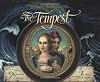
There are a lot of things that I love about the Tempest (the magic, the island setting, the revenge of a wronged ruler, finding unexpected love), yet this retelling of the story left me very much wanting. The illustrations were artfully done (the colour tones, characterizations, and setting choices were all well made), but what made this book a failure for me is that the writer didn’t seem to take very much care with the story aspects. Attempting to adapt Shakespeare’s plays for a child show more audience and in a much-shortened storybook format is an almost impossible feat, since there is so much character development, clever language, and subtle plot designs that are integral to the success of the play as a whole. The author did not manage to include any of these aspects in her treatment due to her over-simplification of the language and story, which led to a tale without any of Shakespeare’s depth and an overall underwhelmed feeling of disappointment from this reader. show less

Author Marianna Mayer and illustrator Michael Hague join forces in this original fairy-tale about the unicorn, and his role in preserving all of the animals of the world during a dangerous drought. Driven into the high mountains by human hunters, the unicorn is forgotten by all the animals, who also lose their ability to speak to one another. More vulnerable than ever to the depredations of the serpent, the animals become truly desperate when the rain ceases and the world slowly dries. show more Crying to the heavens for relief, they are saved by the unicorn, who pierces the clouds with his horn and brings the rain. But the serpent, determined to cause trouble, poisons the lake, leading the unicorn to intervene again...
In her brief forward, Mayer discusses her three main sources for this tale—the ancient Greek text of the Physiologus; Johannes Witte de Hese's medieval travelogue, the Itinerarius; and the Unicorn Tapestries at the Cloisters Museum in New York City. Being quite familiar with the last of these (the Cloisters is a museum I have visited many times, since childhood), I was already quite familiar with the idea of the unicorn's horn having magical qualities, including the ability to purify water, so that element of the story here felt very familiar. In any case, I found the story in The Unicorn and the Lake quite engaging, and the artwork lovely. I was particularly struck by the fact that the unicorn spares the serpent, after their battle, and that the latter feels a sense of shame, as I don't think I've ever seen another story in which the snake is a villain, but isn't irredeemably bad. In any case, this is one I would recommend to young unicorn fans and fairy-tale lovers. Mayer and Hague would go on to collaborate on another unicorn picture book a few years after this one, The Unicorn Alphabet, which I now plan to track down. show less
In her brief forward, Mayer discusses her three main sources for this tale—the ancient Greek text of the Physiologus; Johannes Witte de Hese's medieval travelogue, the Itinerarius; and the Unicorn Tapestries at the Cloisters Museum in New York City. Being quite familiar with the last of these (the Cloisters is a museum I have visited many times, since childhood), I was already quite familiar with the idea of the unicorn's horn having magical qualities, including the ability to purify water, so that element of the story here felt very familiar. In any case, I found the story in The Unicorn and the Lake quite engaging, and the artwork lovely. I was particularly struck by the fact that the unicorn spares the serpent, after their battle, and that the latter feels a sense of shame, as I don't think I've ever seen another story in which the snake is a villain, but isn't irredeemably bad. In any case, this is one I would recommend to young unicorn fans and fairy-tale lovers. Mayer and Hague would go on to collaborate on another unicorn picture book a few years after this one, The Unicorn Alphabet, which I now plan to track down. show less

Talented picture book author Marianna Mayer turns to the story of Nicholas of Myra, the Greek bishop and saint who lived in the third and forth centuries, and who eventually transformed into Santa Claus in modern Christmas mythology, in this beautiful volume. Opening with Clement C. Moore's classic poem, A Visit from St. Nicholas, which did so much to usher in our present-day Santa, Mayer then turns to her historical subject, covering his great generosity and gift-giving (including the show more famous incident in which he saved three young girls from slavery by providing them with dowries), and the many miracles associated with him, both in his life and long afterward. Her text is accompanied by reproductions of many works of fine art from across the centuries which have depicted St. Nicholas. The back matter, which includes a further note about the saint, also provides a comprehensive list identifying these works of art...
Being a great admirer of Marianna Mayer's work, particularly her retellings of various folk and fairy-tales, and being interested in the story of the real St. Nicholas, since first encountering it in Mildred Corell Luckhardt's fictionalized biography, The Story of Saint Nicholas, I approached The Real Santa Claus: Legends of Saint Nicholas with anticipation. On the whole, I was not disappointed, finding the narrative engaging and the artwork beautiful. Most of the paintings Mayer chose to accompany her text were medieval, and as I have a great fondness for medieval art—it always strikes me as flatter than subsequent Renaissance art, but somehow also more mesmerizing, more mysterious—I was naturally engrossed. I don't think that the quality of the art reproductions here is that high, although I did read the book online, which made perusing the images somewhat difficult, so take that as you will. Leaving that issue aside, this was a wonderful book, and is one I would recommend to picture book audiences seeking stories about the real St. Nicholas. Parents and adult caregivers should note that Mayer is frank about Santa Claus not being real, so they might want to amend their reading as necessary, depending upon their own child listeners' beliefs and needs. show less
Being a great admirer of Marianna Mayer's work, particularly her retellings of various folk and fairy-tales, and being interested in the story of the real St. Nicholas, since first encountering it in Mildred Corell Luckhardt's fictionalized biography, The Story of Saint Nicholas, I approached The Real Santa Claus: Legends of Saint Nicholas with anticipation. On the whole, I was not disappointed, finding the narrative engaging and the artwork beautiful. Most of the paintings Mayer chose to accompany her text were medieval, and as I have a great fondness for medieval art—it always strikes me as flatter than subsequent Renaissance art, but somehow also more mesmerizing, more mysterious—I was naturally engrossed. I don't think that the quality of the art reproductions here is that high, although I did read the book online, which made perusing the images somewhat difficult, so take that as you will. Leaving that issue aside, this was a wonderful book, and is one I would recommend to picture book audiences seeking stories about the real St. Nicholas. Parents and adult caregivers should note that Mayer is frank about Santa Claus not being real, so they might want to amend their reading as necessary, depending upon their own child listeners' beliefs and needs. show less
Lists
Princess Tales (1)
Awards


You May Also Like


Associated Authors
Statistics
- Works
- 51
- Also by
- 2
- Members
- 4,596
- Popularity
- #5,477
- Rating
- 4.1
- Reviews
- 137
- ISBNs
- 123
- Languages
- 5
- Favorited
- 4