
Paul Goble (1933–2017)
Author of The Girl Who Loved Wild Horses
About the Author
Paul Goble was born in Haslemere, Surrey, England on September 27, 1933. He was a sharpshooter in the British military from 1951 to 1953. In 1959, he received a National Diploma in Design, with honors, from the Central School of Arts and Crafts in London. While working in freelance industrial show more design and teaching at Ravensbourne College of Art and Design, he and his first wife Dorothy Lee wrote four picture books. In 1977, he decided to become a full-time author and illustrator and accepted a position as the artist-in-residence at Mount Rushmore National Memorial. He and Lee divorced in 1978. He was best known for his picture books inspired by Native American culture and lore including Buffalo Woman, Iktomi and the Boulder: A Plains Indian Story, and Crow Chief: A Plains Indian Story. He received the Caldecott Medal in 1979 for The Girl Who Loved Wild Horses. He died from Parkinson's disease on January 5, 2017 at the age of 83. (Bowker Author Biography) show less
Image credit: Photo by user Temp07 / Wikimedia Commons
Series
Works by Paul Goble
Custer's Last Battle: Red Hawk's Account of the Battle of the Little Bighorn (1969) 86 copies, 1 review
Jr̃nhs̃tens dd̲ 84 copies
Remaking The Earth: A Creation Story from the Great Plains of North America (1996) 63 copies, 2 reviews
The Man Who Dreamed of Elk Dogs: & Other Stories from Tipi (Wisdom Tales) (2012) 27 copies, 3 reviews
Red Cloud's War: Brave Eagle's Account of the Fetterman Fight {Revised & Updated} (2015) 17 copies, 1 review
Associated Works
Tagged
Common Knowledge
- Birthdate
- 1933-09-27
- Date of death
- 2017-01-05
- Gender
- male
- Education
- Central Saint Martins College of Art and Design (Dipl. 1959)
- Occupations
- illustrator
writer - Organizations
- British Army
- Awards and honors
- Regina Medal (2006)
Caldecott Medal (1979) - Cause of death
- Parkinson's disease
- Nationality
- UK
USA (naturalized 1984) - Birthplace
- Haslemere, Surrey, England, UK
- Places of residence
- Haslemere, Surrey, England, UK
Rapid City, South Dakota, USA - Place of death
- Rapid City, South Dakota, USA
- Map Location
- England, UK
Members
Reviews
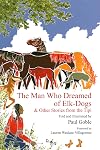
I received a free copy of this e-book from the publisher.
I have nostalgic associations with Paul Goble's work from my childhood; I was horse obsessed and loved his stories and illustrations. The Girl Who Loved Wild Horses was a particular favorite of mine.
In this collection of short stories for middle-graders, he again captures the mood of sitting by a fire and listening to a master storyteller at work. This book is not long. Indeed, some of the stories are about a page in length. However, show more there is an immense depth to these tales. As Goble notes, unlike in Aesop's fables, many Plains tribes' stories for children did not state the moral outright. They were intended to make the child think and come up with their own interpretation.
Of course, his illustrations are always a joy. I couldn't help but smile at his horse artwork in particular. I especially liked the inclusion of original native art that he used for inspiration. The foreword notes how Goble respects Native Americans and isn't simply appropriating their stories, but actively striving for accuracy to the oral tradition.
I can appreciate that as an adult, but my inner child enjoyed these creation stories and illustrations as an enlightening sort of escapism. My only regret is that the book was so short. show less
I have nostalgic associations with Paul Goble's work from my childhood; I was horse obsessed and loved his stories and illustrations. The Girl Who Loved Wild Horses was a particular favorite of mine.
In this collection of short stories for middle-graders, he again captures the mood of sitting by a fire and listening to a master storyteller at work. This book is not long. Indeed, some of the stories are about a page in length. However, show more there is an immense depth to these tales. As Goble notes, unlike in Aesop's fables, many Plains tribes' stories for children did not state the moral outright. They were intended to make the child think and come up with their own interpretation.
Of course, his illustrations are always a joy. I couldn't help but smile at his horse artwork in particular. I especially liked the inclusion of original native art that he used for inspiration. The foreword notes how Goble respects Native Americans and isn't simply appropriating their stories, but actively striving for accuracy to the oral tradition.
I can appreciate that as an adult, but my inner child enjoyed these creation stories and illustrations as an enlightening sort of escapism. My only regret is that the book was so short. show less
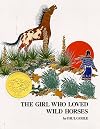
One look at these lovely earth-tone illustrations reveals why Paul Goble’s slender book won the Caldecott Medal in 1979. Readers will be moved by Goble’s story of a girl who loved adventure and freedom, but never forgot her Navajo tribe. The tale is on one level, an old Navajo legend, but on another it’s the tale of Everywoman, caught between obligations to others and her own needs. Children and adults will love this book for very different reasons.
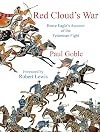
In 1866, the Civil War was over and the gold rush was in full swing. Prospectors headed West and demanded protection from their government on the trail. But the trail to Montana’s gold rush territory went straight through lands belonging to the Oglala Lakota. And Red Cloud had no desire to see his people further hounded from the lands first given to them. The nation sought peace, but not peace at any price. Paul Goble’s simply told story offers insight into the price that would be show more paid.
Told through the eyes of the fictional nineteen-year-old Brave Eagle, Red Cloud’s War invites young readers and listeners into the heart of a camp filled with talking and arguing, into the lives of chiefs and warriors who might desire peace and the white man’s gifts, but will not sell their heritage, and into the darkness of mistrust and war on ancient hunting grounds. Complex ideas are simply told and brought to life. Nicely drawn maps reveal what’s promised and denied. And the fighting that ensues is vividly described, frightening, cruel and implacable as white man’s boast meets a warrior’s determination.
There’s no reveling in death and destruction in this tale, and no heavily weighted scorn for past mistakes. Rather it’s a nicely nuanced, well-told account, offered with convincing voice, and beautifully illustrated with images to capture the smallest and largest child’s attention. The author’s attention to detail is just as pure and convincing in his invitation to the Sun Dance as in the uniting of tribes for battle. Likewise, sorrow for the past is pleasingly balanced with genuine humanity and hope.
A lovely book to read and share with children, this is a treasure for adults as well, revealing a past too often obscured or turned to myth and TV excitement. I really enjoyed reading it.
Disclosure: I was given a free copy by the publisher and read it straight away with eager delight. show less
Told through the eyes of the fictional nineteen-year-old Brave Eagle, Red Cloud’s War invites young readers and listeners into the heart of a camp filled with talking and arguing, into the lives of chiefs and warriors who might desire peace and the white man’s gifts, but will not sell their heritage, and into the darkness of mistrust and war on ancient hunting grounds. Complex ideas are simply told and brought to life. Nicely drawn maps reveal what’s promised and denied. And the fighting that ensues is vividly described, frightening, cruel and implacable as white man’s boast meets a warrior’s determination.
There’s no reveling in death and destruction in this tale, and no heavily weighted scorn for past mistakes. Rather it’s a nicely nuanced, well-told account, offered with convincing voice, and beautifully illustrated with images to capture the smallest and largest child’s attention. The author’s attention to detail is just as pure and convincing in his invitation to the Sun Dance as in the uniting of tribes for battle. Likewise, sorrow for the past is pleasingly balanced with genuine humanity and hope.
A lovely book to read and share with children, this is a treasure for adults as well, revealing a past too often obscured or turned to myth and TV excitement. I really enjoyed reading it.
Disclosure: I was given a free copy by the publisher and read it straight away with eager delight. show less

Some picture books are just so beautiful they’re hard to put down. Paul Goble’s Horse Raid falls into this category. The story, though told to young readers, is by no means simple. It’s a well-researched depiction of life in the Plains, when buffalo still ran wild, and horses were the measure of a man. The youthful protagonist wants to prove himself a man, and his grandfather helps him sneak out after his father’s raiding party. But father knows more than he lets on, and older show more readers will quickly see how plans have come together to give this boy his chance at adulthood.
Responsibility, respect, and recognition of cultural mores underpin this tale. Neither war nor theft are glorified, but a world is brought to life, and the reader, young or old, is given a chance to share something of that world’s experience. Beautiful pictures adorn the pages, darkness bringing the secrecy of night, horses flying like the wind, riders wearing their eagle feathers, inviting questions to work out what they mean. Fighting, feeling, mourning and rejoicing, all are gorgeously depicted on pages filled with intricate details, complex pattern, and deceptive simplicity.
Horse Raid is quite simply a gorgeous book—a well told tale, beautifully illustrated, honest, evocative, captivating, and true.
Disclosure: I received a free copy of this book from the publisher and I offer my honest review. show less
Responsibility, respect, and recognition of cultural mores underpin this tale. Neither war nor theft are glorified, but a world is brought to life, and the reader, young or old, is given a chance to share something of that world’s experience. Beautiful pictures adorn the pages, darkness bringing the secrecy of night, horses flying like the wind, riders wearing their eagle feathers, inviting questions to work out what they mean. Fighting, feeling, mourning and rejoicing, all are gorgeously depicted on pages filled with intricate details, complex pattern, and deceptive simplicity.
Horse Raid is quite simply a gorgeous book—a well told tale, beautifully illustrated, honest, evocative, captivating, and true.
Disclosure: I received a free copy of this book from the publisher and I offer my honest review. show less
Lists
Youth: DEI (1)
Reading Rainbow (1)
Awards


You May Also Like


Associated Authors
Statistics
- Works
- 52
- Also by
- 1
- Members
- 9,376
- Popularity
- #2,566
- Rating
- 4.0
- Reviews
- 259
- ISBNs
- 239
- Languages
- 4
- Favorited
- 5
