
Ed Young (1) (1931–2023)
Author of Lon Po Po: A Red-Riding Hood Story from China
For other authors named Ed Young, see the disambiguation page.
About the Author
Caldecott Medalist Ed Young is the illustrator of over eighty books for children, seventeen of which he has also written. Born in Tientsin, China in 1931, Ed Young grew up in Shanghai and later moved to Hong Kong. As a young man, he came to the United States on a student visa to study architecture show more but turned instead to art. Young began his career as a commercial artist but found himself looking for something more expansive, expressive, and timeless. He discovered all this, and more, in children's books. Young's quest for challenge and growth are central in his role as illustrator. A graduate of the Art Center College of Design in Pasadena, Young has since taught at the Pratt Institute, Yale University, Naropa Institute, and the University of California at Santa Cruz. In 1990, his book Lon Po Po was awarded the Caldecott Medal. He has also received two Caldecott Honors - for The Emperor and the Kite and Seven Blind Mice - and was twice nominated for the Hans Christian Andersen Medal, the highest international recognition given to children's book authors and illustrators who have made a lasting contribution to children's literature. In addition to Ed Young's writing and illustration career, he is also a respected master of t'ai chi and has been teaching students for over 30 years. (Bowker Author Biography) show less
Works by Ed Young
The Rooster's Horns: A Chinese Puppet Play to Make and Perform (UNICEF Storycraft Book) (1978) 54 copies, 1 review
Junior Great Books Teacher's Edition Series 4 - Second Semester (Series 4 - Second Semester) (1992) 1 copy
Un ami rien qu a moi 1 copy
By Ed Young Siete ratones ciegos / Seven Blind Mice (Spanish Edition) (Tra) [Paperback] (2010) 1 copy
Seven Blind Mice 1 copy
Associated Works
From Sea to Shining Sea: A Treasury of American Folklore and Folk Songs (1993) — Illustrator — 812 copies, 2 reviews
Smile: How Young Charlie Chaplin Taught the World to Laugh (and Cry) (2019) — Illustrator — 51 copies, 19 reviews
Tagged
Common Knowledge
- Other names
- Young, Ed (Tse-chun)
- Birthdate
- 1931-11-28
- Date of death
- 2023-09-30
- Gender
- male
- Education
- Pratt Institute (1958-59)
- Occupations
- illustrator
author - Nationality
- China (birth)
USA - Birthplace
- Tientsin, China
- Place of death
- Hastings-on-Hudson, New York, USA
Members
Reviews
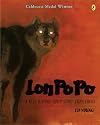
This is an incredibly well illustrated book with an even more interesting plot twist. Three children are left alone, and without hesitation a wolf comes calling. The children recognize this, to the readers surprise, and they trick the wolf into a vulnerable position where they make the wolf the victim. This seems like a twist of sorts on the Three Little Pigs, where the predator winds up being the victim, in this case, the wolf. I think that this that this book with its very beautiful show more illustrations would be a good way to introduce the concept of the oppressor becoming the oppressed, and how being the oppressor is kind of like being the monster of the story. We can also discuss alternative outcomes where the children do not kill the wolf. For example, instead, maybe trick him in a way where no one gets hurt. show less

When Shang, Tao and Paotze's mother leaves to visit their Po Po, or grandmother, she warns the three girls not to let anyone into the house. But a crafty wolf, observing her departure, soon presents himself at the door, masquerading as Po Po. When the sisters find themselves literally in bed with the wolf, they soon realize that they aren't snuggling up to Granny! But what can they do...?
This Chinese variant of Little Red Riding Hood sees the wolf coming to the girl(s), rather than the other show more way around, and features a much less passive heroine than can be found in the Grimms. Oldest sister Shang can't afford to wait for a woodcutter to happen by, and rescue her - she knows that she must act, in order to protect Tao and Paotze! Ed Young's illustrations - which won him a Caldecott Medal - perfectly capture the eerie quality of this tale, and its rather gruesome conclusion.
This is a real folktale, ably presented by Young, and readers both young and old should be aware that it has teeth! Very sensitive children may find it too frightening. But for those who relish a scary story, Lon Po Po fits the bill, while also providing an excellent example of comparative folklore, and the connections between cultures. Highly, highly recommended! Even the dedication - "To all the wolves of the world for lending their good name as tangible symbol for our darkness" - (which my goodreads friend Chandra also mentioned) is fabulous! show less
This Chinese variant of Little Red Riding Hood sees the wolf coming to the girl(s), rather than the other show more way around, and features a much less passive heroine than can be found in the Grimms. Oldest sister Shang can't afford to wait for a woodcutter to happen by, and rescue her - she knows that she must act, in order to protect Tao and Paotze! Ed Young's illustrations - which won him a Caldecott Medal - perfectly capture the eerie quality of this tale, and its rather gruesome conclusion.
This is a real folktale, ably presented by Young, and readers both young and old should be aware that it has teeth! Very sensitive children may find it too frightening. But for those who relish a scary story, Lon Po Po fits the bill, while also providing an excellent example of comparative folklore, and the connections between cultures. Highly, highly recommended! Even the dedication - "To all the wolves of the world for lending their good name as tangible symbol for our darkness" - (which my goodreads friend Chandra also mentioned) is fabulous! show less
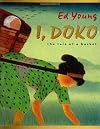
The epigraph from Kung Fu Tze—“What one wishes not upon oneself, one burdens not upon another”—aptly summarizes this simple parable set in Nepal. Doko, the teller, is a large basket that has carried a baby, kindling wood, a dowry, and a body to a grave, but grieves when the feeble grandfather is to be carried away to be abandoned on the temple steps. Perhaps inspired by the stories his grandfather has told him, the young grandson stops his father by reminding him to bring back the show more basket, so he won’t have to buy another, “when you are old and it is time to leave you on the temple steps.” The father’s weeping eyes, his son reflected in his pupils, is manga-like in intensity. The dynamic, jewel-toned pastel, collage and gouache illustrations, bordered and flecked with gold give dignity, richness and power to a traditional Asian tale that embodies both the Golden Rule and respect for the elderly. (Picture book. 5-8)
-Kirkus Review show less
-Kirkus Review show less

I had the misfortune to lose my father, roughly one month ago, after a protracted illness - a reality that I am still struggling to assimilate - and stories about the role that fathers play, in a child's life, about the houses they build, whether real or figurative, for their families, are especially poignant for me right now. So it is that The House Baba Built, a picture-book memoir about the youth of celebrated children's artist and author Ed Young - whose Lon Po Po was a Caldecott show more Medal-winner, in 1990 - and a tribute to his beloved father, moved me to tears this morning, and it was only by the strongest efforts at self-control that I avoided breaking down altogether on the train. I am, as it happens, having trouble writing this review without tears.
Leaving aside this coincidence of timing, and the fact that my visceral emotional reaction to the book has as much to do with the events of my own life, as with the ones depicted here, I believe I can truthfully say that this is an outstanding title, one with immense visual and narrative appeal. Young, assisted by Libby Koponen, sets out the tale of his boyhood in Shanghai, and of the extraordinary house that his architect father constructed for the family, which initially included Young himself, his parents, and his four siblings, but eventually grew, during the years of World War II, to include extended family, fled from Japanese-occupied Nanking, and a refugee family (the Luedeckes), fled all the way from Germany. The artwork, done in mixed-media that includes photographs of all the people depicted, is incredibly engrossing, suiting each passage to a tee, while the book's design itself - the occasional fold-out page, the arrangement of the type on different parts of the page - is creative, and adds to the reader's sense of being drawn in, and enfolded by the story - enfolded by the house that Ed Young's Baba built.
Most moving of all, however, is the sense that Baba's house, as depicted here, is more than just a structure, built of double-tiered brick walls and eighteen-inch thick concrete slabs (in order to withstand bombing), but also a feeling of family, a sense of security, and a way of living. Baba's house, as exemplified in the letter he wrote to his children, after they had spread to the far corners of the world, was something they took with them:
"Dear Children, ... You may put down as rule No. 1 that life is not rich not real unless your partake life with your fellow man. A successful life and a happy life is one measured by how much you have accomplished for others and not one as measured by how much you've done for yourself. love Dad"
Clearly, Baba's House is one worth living in, and I finished this book with a renewed appreciation, not just for Ed Young, and his family's story, but for the reality that we all of us, in some sense, live in the houses built by our parents. show less
Leaving aside this coincidence of timing, and the fact that my visceral emotional reaction to the book has as much to do with the events of my own life, as with the ones depicted here, I believe I can truthfully say that this is an outstanding title, one with immense visual and narrative appeal. Young, assisted by Libby Koponen, sets out the tale of his boyhood in Shanghai, and of the extraordinary house that his architect father constructed for the family, which initially included Young himself, his parents, and his four siblings, but eventually grew, during the years of World War II, to include extended family, fled from Japanese-occupied Nanking, and a refugee family (the Luedeckes), fled all the way from Germany. The artwork, done in mixed-media that includes photographs of all the people depicted, is incredibly engrossing, suiting each passage to a tee, while the book's design itself - the occasional fold-out page, the arrangement of the type on different parts of the page - is creative, and adds to the reader's sense of being drawn in, and enfolded by the story - enfolded by the house that Ed Young's Baba built.
Most moving of all, however, is the sense that Baba's house, as depicted here, is more than just a structure, built of double-tiered brick walls and eighteen-inch thick concrete slabs (in order to withstand bombing), but also a feeling of family, a sense of security, and a way of living. Baba's house, as exemplified in the letter he wrote to his children, after they had spread to the far corners of the world, was something they took with them:
"Dear Children, ... You may put down as rule No. 1 that life is not rich not real unless your partake life with your fellow man. A successful life and a happy life is one measured by how much you have accomplished for others and not one as measured by how much you've done for yourself. love Dad"
Clearly, Baba's House is one worth living in, and I finished this book with a renewed appreciation, not just for Ed Young, and his family's story, but for the reality that we all of us, in some sense, live in the houses built by our parents. show less
Lists
Precious People (1)
Storytime (1)
Awards


You May Also Like


Associated Authors
Statistics
- Works
- 41
- Also by
- 29
- Members
- 10,621
- Popularity
- #2,238
- Rating
- 3.9
- Reviews
- 509
- ISBNs
- 271
- Languages
- 9
- Favorited
- 2
