

Arlene Mosel (1921–1996)
Author of Tikki Tikki Tembo
About the Author
Works by Arlene Mosel
Tagged
Common Knowledge
- Birthdate
- 1921-08-27
- Date of death
- 1996-05
- Gender
- female
- Occupations
- librarian
- Organizations
- Case Western Reserve University
- Nationality
- USA
- Birthplace
- Cleveland, Ohio, USA
- Place of death
- Indianapolis, Indiana, USA
- Associated Place (for map)
- USA
Members
Reviews

This book is a relic of a time when it was okay for white people to say anything about other cultures, regardless of accuracy, because foreigners weren't important. If Tikki Tembo isn't racist because it's just for fun, then neither is Black Sambo. It exposes Asian children in the classroom where the book is read to ridicule -- for a supposed custom that never existed. Chinese people never have had long names, and never have had different naming customs for first-born children. Nor has this show more story ever been a Chinese folktale.
Here's a real Chinese custom: Chang should have called his brother "Ge Ge" meaning Older Brother. There's a very strong, and as far as I know very ancient, taboo in China that forbids use of the personal name of an individual who is older or higher in rank, and while it's okay to use the name of a younger person, it's not as common as in other cultures. People call each other by titles, mostly. Mother. Father. Older Son. Younger Sister. If this were an actual Chinese folktale, the length of Tikki's name would not matter, because once the mother realized that Chang was using his honorable older brother's name, she'd punish him while Tikki was drowning (being the oblivious, cold-hearted, and protocol-obsessed person that she was).
The thing is YES, Tikki Tembo is a funny story. But when you tell a funny story about an identified group of people, and it makes assertions that are not true about those people, it's an ethnic joke, and it is not okay. There's a song we sang at camp in the 60s, with the exact same story ("Eddie Cootchee Catchakama Tosamara Tosamara Sammakama Wacky Brown / Fell into the well, fell into the well, fell into the deep dark well") and it doesn't single out one particular ethnic group for being stupid, and it's funny. That's how to do it. show less
Here's a real Chinese custom: Chang should have called his brother "Ge Ge" meaning Older Brother. There's a very strong, and as far as I know very ancient, taboo in China that forbids use of the personal name of an individual who is older or higher in rank, and while it's okay to use the name of a younger person, it's not as common as in other cultures. People call each other by titles, mostly. Mother. Father. Older Son. Younger Sister. If this were an actual Chinese folktale, the length of Tikki's name would not matter, because once the mother realized that Chang was using his honorable older brother's name, she'd punish him while Tikki was drowning (being the oblivious, cold-hearted, and protocol-obsessed person that she was).
The thing is YES, Tikki Tembo is a funny story. But when you tell a funny story about an identified group of people, and it makes assertions that are not true about those people, it's an ethnic joke, and it is not okay. There's a song we sang at camp in the 60s, with the exact same story ("Eddie Cootchee Catchakama Tosamara Tosamara Sammakama Wacky Brown / Fell into the well, fell into the well, fell into the deep dark well") and it doesn't single out one particular ethnic group for being stupid, and it's funny. That's how to do it. show less
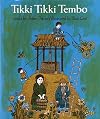
It's insane how long this book has stayed as a well-known story given how much of a hodge podge of nonsense it is. I can see where a base story premise could be entertaining with a long name that isn't easily repeated. The problem is in all the caricaturing, faux folklore presentation, and culturally incorrect absurdity.
A story of characters with a short and a long name contrasted when in peril isn't a bad concept at the core - but when it's centered around naming conventions that aren't show more real and thereby associated falsely with other cultures, it becomes a horrible racist thing that needs to be allowed to die off by the greater population of readers. show less
A story of characters with a short and a long name contrasted when in peril isn't a bad concept at the core - but when it's centered around naming conventions that aren't show more real and thereby associated falsely with other cultures, it becomes a horrible racist thing that needs to be allowed to die off by the greater population of readers. show less
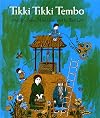
I think this book stays in print due to the nostalgia factor - that's why I picked it up in the first place. The illustrations are really lovely - beautiful line and wash illustrations with a limited color palette (but not as annoying as most other older limited color palette titles are). The illustrations contain apparently a mishmash of Japanese and Chinese cultural signifiers - uh, oh. The story is ostensibly based on a Chinese folktale, but it teaches incorrectly that the name Chang show more means 'little, or nothing.' Also, I don't think Tikki Tikki Tembo etc. etc. is an actual Chinese name, lolol. Children today are far better served by more authentic Chinese folktale retellings; this book has its place in the annals of picture book history, however. And saying the name out loud is never not fun! show less
I really enjoyed this book as a child, though reading it again and reading several other reviews, it is actually rather racist. The author says it is a retelling of a Chinese folktale, but Tikki Tikki Tembo's exhaustively long name doesn't actually mean anything in Chinese and instead plays off of how funny the Chinese language sounds to Westerners. It is a very cute story, but seeing as the setting is Ancient China yet the language is inaccurate, the setting puts children off and gives them show more an inaccurate idea of China and its people. Arlene Mosel is an inauthentic author as well, as she is from Ohio and is of no Asian descent. It would be much more beneficial to students to use actual Chinese folktales that celebrate Chinese culture. show less
Lists
1970s (1)
Awards


You May Also Like


Associated Authors
Statistics
- Works
- 7
- Members
- 7,433
- Popularity
- #3,291
- Rating
- 4.0
- Reviews
- 209
- ISBNs
- 100
- Languages
- 6
- Favorited
- 1