
Shirley Climo (1928–2012)
Author of The Egyptian Cinderella
About the Author
Shirley Climo was born in Cleveland, Ohio in 1928. She attended DePauw University until her mother died unexpectedly in 1949. She dropped out of college and took up her mother's work writing scripts for the weekly WGAR-Radio children's program Fairytale Theatre. During her lifetime, she wrote 24 show more books including The Korean Cinderella; Magic and Mischief: Tales from Cornwall; A Treasury of Princesses: Princess Tales from Around the World; A Treasury of Mermaids: Mermaid Tales from Around the World; and Someone Saw a Spider: Spider Facts and Folktales. She died on August 25, 2012 at the age of 83. (Bowker Author Biography) show less
Image credit: via Goodreads
Works by Shirley Climo
Piskies, Spriggans, and Other Magical Beings: Tales from the Droll-Teller (1981) 14 copies, 1 review
Associated Works
Tagged
Common Knowledge
- Birthdate
- 1928-11-25
- Date of death
- 2012-08-25
- Gender
- female
- Education
- DePauw University
- Nationality
- USA
- Birthplace
- Cleveland, Ohio, USA
- Places of residence
- Cleveland, Ohio, USA
Los Altos, California, USA - Place of death
- Los Altos, California, USA
- Associated Place (for map)
- California, USA
Members
Reviews

The bellowing West Wind - bored, and determined to stir up some mischief - pays a visit to his quiet cousin, the East Wind, in this folktale from Borneo, challenging him to a contest of strength. The East Wind, longing only for a nap, and far wiser than his tempestuous relative, suggests that they each attempt to get Kodok - the tiny tree frog - out of his tree. This seemingly easy task proves more troublesome than West Wind first envisioned, as Kodok withstands everything from a hearty gust show more to a full-scale typhoon. It is only when East Wind steps in, with his gentle breeze, that Kodok is lulled to sleep, and falls off his palm leaf...
I do not think I have ever met with this specific tale before - for that matter, I don't know that I've read much Bornean folklore in general - but the tale-type is one I know very well, having often encountered it. Just last week, for instance, I happened upon a similar selection in Filipino Children's Favorite Stories (The Battle of the Wind and Rain), in which strength and persuasion are similarly contrasted, in a contest to dislodge a monkey from a tree. That feeling of familiarity lent extra charm to The Match Between the Winds, which appears to be one of Climo's less well-known folkloric adaptations. The accompanying watercolor and gouache illustrations by Roni Shepard capture the sense of motion - chaos, even - in the story, as well as a sweet calm of its conclusion. All in all, an engaging picture-book, one I would recommend to young folktale lovers. show less
I do not think I have ever met with this specific tale before - for that matter, I don't know that I've read much Bornean folklore in general - but the tale-type is one I know very well, having often encountered it. Just last week, for instance, I happened upon a similar selection in Filipino Children's Favorite Stories (The Battle of the Wind and Rain), in which strength and persuasion are similarly contrasted, in a contest to dislodge a monkey from a tree. That feeling of familiarity lent extra charm to The Match Between the Winds, which appears to be one of Climo's less well-known folkloric adaptations. The accompanying watercolor and gouache illustrations by Roni Shepard capture the sense of motion - chaos, even - in the story, as well as a sweet calm of its conclusion. All in all, an engaging picture-book, one I would recommend to young folktale lovers. show less

The story of Rhodopis - a young Greek girl captured by pirates and sold into slavery in Egypt, only to go on to become Pharaoh Amasis' queen - is the earliest known example of the "Cinderella," or persecuted-heroine-type tale (type #510A in the Aarne-Thompson Folklore Classification system), having first been recorded in the work of the Greek geographer Strabo some time in the late first century BC, or early first century AD. Another retelling can be found in the work of Roman author Aelian show more (ca. 175–235 AD). The fairy-tale itself is (of course) fictional, although the story is based upon the life of an actual historical figure.
In addition to offering an interesting counterpart to the more well-known (and more contemporary) French version, which has given its name to the tale-type - like Cinderella, this story too includes a lost slipper, used by the pharaoh to find his ideal mate, as well as some magical intervention on the part of the god Horus and his falcon (as opposed to a fairy god-mother) - The Egyptian Cinderella also provides a fascinating snapshot of the world of classical antiquity, and highlights some of the differences between that world and our own. To wit: it demonstrates how the institution of slavery, in the ancient world, was far different from its modern counterpart; and points to the relatively recent origin of our own concerns with, and ideas of, race.
The idea that some peoples were innately more fit for servitude and enslavement goes back, not to the ancient world, but to the beginnings of the trans-Atlantic slave-trade - it was a philosophy dreamt up to justify that most unjustifiable and barbaric of practices. In the world of the ancient Mediterranean, by contrast, slavery was largely situational - one could become a slave through defeat in warfare, through capture by pirates, and (in some cultures) through debt - and was not necessarily a permanent, multi-generational condition. In the ancient world, a slave could and did marry the Pharaoh. In the same vein, while prejudice was just as present amongst the ancients, as amongst ourselves - witness the way in which Rhodopis is ridiculed by the Egyptian servant-girls with whom she works, simply because her appearance is different from their own - it did not have the same directed quality as our own prejudice, as it did not draw from the same kind of specifically racial animus.
I would imagine that these and other differences would make The Egyptian Cinderella - in addition to being an entertaining tale - an excellent book for study with younger readers, affording thoughtful teachers an excellent vehicle for exploring the world of antiquity, and contrasting it to our own. Given that this is so, I am particularly bemused to note the accusations of racism against the book on various sites online. Some reviewers, appearing not to have read the book at all, wonder why an "Egyptian" Cinderella would be light-skinned and green-eyed (perhaps because she isn't Egyptian...?); while others object to the idea that the villains of the piece (such as they are) are darker-skinned than the heroine.
These negative reviews tend to point out two rather disturbing realities: first, that there is a great deal of ignorance about the ancient world abroad in our culture; and second, that it is apparently taboo to depict a darker-skinned person as a villain, even if this may reflect reality. I can't say I find either of these things particularly admirable (quite the reverse, actually), although the icing on the cake comes with the knowledge that an explicitly Afrocentric retelling of this tale (presumably including an Egyptian Rhodopis?), was published a number of years after Climo's telling. I can only assume that the author of The Egyptian Cinderella and Other Egyptian Tales does not see the absurdity of taking a tale in which the heroine's outsider status is central to any understanding of meaning, and making her an "insider" instead. It's as if a group of far-right, modern-day Israelis, believing that the Moabites were the ancestors of their present-day enemies, the Arabs, decided "To hell with the Book of Ruth! We don't want a Moabitess in our sacred stories - we'll make her an Israelite instead!" It would be laughable, if it weren't so sad.
Leaving aside these issues of identity politics, and the racism of extreme (read: essentialist) Afrocentrism, The Egyptian Cinderella is just an engaging story, one I would recommend to readers interested in the Cinderella tale-type specifically, to general fairy-tale fans, and to anyone - teachers, librarians, parents - interested in sparking a truly thoughtful discussion of the ancient world with the children in their care. show less
In addition to offering an interesting counterpart to the more well-known (and more contemporary) French version, which has given its name to the tale-type - like Cinderella, this story too includes a lost slipper, used by the pharaoh to find his ideal mate, as well as some magical intervention on the part of the god Horus and his falcon (as opposed to a fairy god-mother) - The Egyptian Cinderella also provides a fascinating snapshot of the world of classical antiquity, and highlights some of the differences between that world and our own. To wit: it demonstrates how the institution of slavery, in the ancient world, was far different from its modern counterpart; and points to the relatively recent origin of our own concerns with, and ideas of, race.
The idea that some peoples were innately more fit for servitude and enslavement goes back, not to the ancient world, but to the beginnings of the trans-Atlantic slave-trade - it was a philosophy dreamt up to justify that most unjustifiable and barbaric of practices. In the world of the ancient Mediterranean, by contrast, slavery was largely situational - one could become a slave through defeat in warfare, through capture by pirates, and (in some cultures) through debt - and was not necessarily a permanent, multi-generational condition. In the ancient world, a slave could and did marry the Pharaoh. In the same vein, while prejudice was just as present amongst the ancients, as amongst ourselves - witness the way in which Rhodopis is ridiculed by the Egyptian servant-girls with whom she works, simply because her appearance is different from their own - it did not have the same directed quality as our own prejudice, as it did not draw from the same kind of specifically racial animus.
I would imagine that these and other differences would make The Egyptian Cinderella - in addition to being an entertaining tale - an excellent book for study with younger readers, affording thoughtful teachers an excellent vehicle for exploring the world of antiquity, and contrasting it to our own. Given that this is so, I am particularly bemused to note the accusations of racism against the book on various sites online. Some reviewers, appearing not to have read the book at all, wonder why an "Egyptian" Cinderella would be light-skinned and green-eyed (perhaps because she isn't Egyptian...?); while others object to the idea that the villains of the piece (such as they are) are darker-skinned than the heroine.
These negative reviews tend to point out two rather disturbing realities: first, that there is a great deal of ignorance about the ancient world abroad in our culture; and second, that it is apparently taboo to depict a darker-skinned person as a villain, even if this may reflect reality. I can't say I find either of these things particularly admirable (quite the reverse, actually), although the icing on the cake comes with the knowledge that an explicitly Afrocentric retelling of this tale (presumably including an Egyptian Rhodopis?), was published a number of years after Climo's telling. I can only assume that the author of The Egyptian Cinderella and Other Egyptian Tales does not see the absurdity of taking a tale in which the heroine's outsider status is central to any understanding of meaning, and making her an "insider" instead. It's as if a group of far-right, modern-day Israelis, believing that the Moabites were the ancestors of their present-day enemies, the Arabs, decided "To hell with the Book of Ruth! We don't want a Moabitess in our sacred stories - we'll make her an Israelite instead!" It would be laughable, if it weren't so sad.
Leaving aside these issues of identity politics, and the racism of extreme (read: essentialist) Afrocentrism, The Egyptian Cinderella is just an engaging story, one I would recommend to readers interested in the Cinderella tale-type specifically, to general fairy-tale fans, and to anyone - teachers, librarians, parents - interested in sparking a truly thoughtful discussion of the ancient world with the children in their care. show less
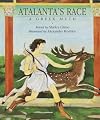
The Greek myth of Atalanta often appears in elementary-school readers and literary anthologies for older children. Since it has a strong, athletic, and defiant young girl as the main character, it seems to be regarded as some sort of proto-feminist piece.
In most versions of the story, a female child is born to King Iasus of Arcadia. Disappointed—even enraged—that his wife didn’t produce a son, he orders that the baby be abandoned on the side of a mountain. A she-bear finds and suckles show more the infant, who is later discovered by a group of hunters. They take her into their care and teach her how to track, trap, and spear animals.
Atalanta quickly demonstrates extraordinary athletic ability, particularly as a runner. When she gains wide renown for winning races, she’s called to the king’s court and discovers her true identity. She’s soon pressured to marry, for now her father (whose queen is dead) wants a grandson. Atalanta has no interest in love or marriage and only agrees if she can set the terms of a union: any suitor worth his salt must be able to beat her in a running race. Losing competitors are to be put to death.
Athletes and warriors willing to take the risk come from near and far. None succeeds, until Melanion (sometimes called Hippomenes) is aided in doing so by the goddess Aphrodite, who is angered by the proud girl’s spurning of love. The goddess supplies Melanion with three golden apples, which the young man tosses at various points in the race, distracting Atalanta, and allowing him to claim victory.
This being a Greek myth, the happily-ever-after part cannot be relied on (though some modern tellers prefer to leave out what actually happens after the wedding.) Because Atalanta and Melanion never offer thanks to Aphrodite for her role in their union, the goddess vindictively turns them into lioness and lion. “Let them race and hunt forevermore!” she bitterly pronounces.
Hmm . . . Now for an assessment of Climo’s picture-book version.
Climo is a masterful storyteller who writes well. She provides valuable descriptive detail without irritating and distracting lyrical excess. She fills in the gaps of the original story and humanizes the characters, particularly King Iasus who’s rendered considerably more sympathetic. Most significantly perhaps, she provides Atalanta with a mother, who begs and pleads with the king to spare her beloved daughter.
In Climo’s version, a merciful guard is charged with taking the baby to the slopes of Mount Cyllene. He finds a cave that might protect the child—the very one inhabited by a she-bear and her cubs. In this interpretation of the myth, Atalanta is later found not by a group of hunters but by a single one, the kindly Ciron, who recalls hearing about this baby and the manner in which she’d been abandoned. (Although Ciron uses her given name, he tells her nothing of her royal lineage.) The hunter raises her in his woodman’s hut and cultivates her natural talents, observing: “She was steady of hand and so nimble that she could slip the honey from a hive without disturbing the bees.” She can also “run as fast as a stag” and “speed an arrow to a target almost as well as Artemis, the goddess of the hunt.”
As she approaches young adulthood, Atlanta becomes restless. She leaves Ciron’s side, travelling to Athens, Sparta, Corinth, and Olympia, where she engages in and wins many athletic competitions. Climo emphasizes that although the girl is an exceptional sportswoman, she’s barred from the Olympics due to her sex.
Summoned to Iasus’s court after she gains wide renown, Atalanta is told of her parentage. This is where Climo makes her greatest deviation from her source material: the author has Iasus apologize to his daughter, admit how very wrong he was, and beg her forgiveness. Hmm . . . I wonder if it isn’t better for young readers to understand how unlikely this would have been in deeply misogynistic Ancient Greece.
To her credit, Climo does not succumb to the temptation of omitting or softening Atalanta’s marriage terms. In her telling, the suitors must compete in a race where defeat means something more than humiliation—namely, the loss of one’s head. However, the author can’t resist the desire to fashion a love story. Her Atalanta is attracted to the handsome young warrior, Melanion, and repeatedly tries to discourage him from running against her (knowing he’ll surely end up dead). And when the heroine is not victorious, she takes it well in stride. “Losing the race was a small price to pay for finding love,” she muses.
Climo’s story’s conclusion is faithful to the source material. After Atalanta delivers a son, Parthenopaeus, an heir for King Iasus, it is ultimately Aphrodite who wins the day. Since the ungrateful couple never offered the goddess thanks for her significant role in their union—providing the apples— and since the two only care about the hunt, games, and races, then that is all they will have. . . . But is it really so bad to be allowed to run free in the wild as lions if those are the things the pair really value? This reader thinks not!
Before concluding, a few words about the art: Alexander Koshkin’s colourful, framed, Greek-style frieze-like illustrations wonderfully complement the text. All in all, I think this is a very fine retelling of the myth. The author humanizes the characters, fills in some of the narrative gaps, and highlights the talents of a gifted female athlete and her exclusion from the Olympics. (No wonder our heroine creates her own very high-stakes competition!) And Climo does all of this without deviating too much from the original fascinating myth.
Recommended. show less
In most versions of the story, a female child is born to King Iasus of Arcadia. Disappointed—even enraged—that his wife didn’t produce a son, he orders that the baby be abandoned on the side of a mountain. A she-bear finds and suckles show more the infant, who is later discovered by a group of hunters. They take her into their care and teach her how to track, trap, and spear animals.
Atalanta quickly demonstrates extraordinary athletic ability, particularly as a runner. When she gains wide renown for winning races, she’s called to the king’s court and discovers her true identity. She’s soon pressured to marry, for now her father (whose queen is dead) wants a grandson. Atalanta has no interest in love or marriage and only agrees if she can set the terms of a union: any suitor worth his salt must be able to beat her in a running race. Losing competitors are to be put to death.
Athletes and warriors willing to take the risk come from near and far. None succeeds, until Melanion (sometimes called Hippomenes) is aided in doing so by the goddess Aphrodite, who is angered by the proud girl’s spurning of love. The goddess supplies Melanion with three golden apples, which the young man tosses at various points in the race, distracting Atalanta, and allowing him to claim victory.
This being a Greek myth, the happily-ever-after part cannot be relied on (though some modern tellers prefer to leave out what actually happens after the wedding.) Because Atalanta and Melanion never offer thanks to Aphrodite for her role in their union, the goddess vindictively turns them into lioness and lion. “Let them race and hunt forevermore!” she bitterly pronounces.
Hmm . . . Now for an assessment of Climo’s picture-book version.
Climo is a masterful storyteller who writes well. She provides valuable descriptive detail without irritating and distracting lyrical excess. She fills in the gaps of the original story and humanizes the characters, particularly King Iasus who’s rendered considerably more sympathetic. Most significantly perhaps, she provides Atalanta with a mother, who begs and pleads with the king to spare her beloved daughter.
In Climo’s version, a merciful guard is charged with taking the baby to the slopes of Mount Cyllene. He finds a cave that might protect the child—the very one inhabited by a she-bear and her cubs. In this interpretation of the myth, Atalanta is later found not by a group of hunters but by a single one, the kindly Ciron, who recalls hearing about this baby and the manner in which she’d been abandoned. (Although Ciron uses her given name, he tells her nothing of her royal lineage.) The hunter raises her in his woodman’s hut and cultivates her natural talents, observing: “She was steady of hand and so nimble that she could slip the honey from a hive without disturbing the bees.” She can also “run as fast as a stag” and “speed an arrow to a target almost as well as Artemis, the goddess of the hunt.”
As she approaches young adulthood, Atlanta becomes restless. She leaves Ciron’s side, travelling to Athens, Sparta, Corinth, and Olympia, where she engages in and wins many athletic competitions. Climo emphasizes that although the girl is an exceptional sportswoman, she’s barred from the Olympics due to her sex.
Summoned to Iasus’s court after she gains wide renown, Atalanta is told of her parentage. This is where Climo makes her greatest deviation from her source material: the author has Iasus apologize to his daughter, admit how very wrong he was, and beg her forgiveness. Hmm . . . I wonder if it isn’t better for young readers to understand how unlikely this would have been in deeply misogynistic Ancient Greece.
To her credit, Climo does not succumb to the temptation of omitting or softening Atalanta’s marriage terms. In her telling, the suitors must compete in a race where defeat means something more than humiliation—namely, the loss of one’s head. However, the author can’t resist the desire to fashion a love story. Her Atalanta is attracted to the handsome young warrior, Melanion, and repeatedly tries to discourage him from running against her (knowing he’ll surely end up dead). And when the heroine is not victorious, she takes it well in stride. “Losing the race was a small price to pay for finding love,” she muses.
Climo’s story’s conclusion is faithful to the source material. After Atalanta delivers a son, Parthenopaeus, an heir for King Iasus, it is ultimately Aphrodite who wins the day. Since the ungrateful couple never offered the goddess thanks for her significant role in their union—providing the apples— and since the two only care about the hunt, games, and races, then that is all they will have. . . . But is it really so bad to be allowed to run free in the wild as lions if those are the things the pair really value? This reader thinks not!
Before concluding, a few words about the art: Alexander Koshkin’s colourful, framed, Greek-style frieze-like illustrations wonderfully complement the text. All in all, I think this is a very fine retelling of the myth. The author humanizes the characters, fills in some of the narrative gaps, and highlights the talents of a gifted female athlete and her exclusion from the Olympics. (No wonder our heroine creates her own very high-stakes competition!) And Climo does all of this without deviating too much from the original fascinating myth.
Recommended. show less

Motherless Settareh, so named because of the star-shaped birthmark on her cheek ("Settareh" meaning "star" in Persian), grows up in the women's quarters of her father's house, alternately ignored or harassed by her stepmother, stepsisters, aunts, and female cousins. Given a gold coin by her father, in order to buy new clothes for Prince Mehrdad's upcoming No Ruz (New Year) celebration, Settareh instead gives most of her holiday money to a beggar, using what little is left to buy an cracked show more old bottle. Her kinswomen are convinced that, contrary to her father's instruction, she has not chosen wisely. But the pari - a magical fairy - residing in her bottle proves differently, producing gorgeous clothing that allows Settareh to attend the No Ruz celebration after all...
As mentioned in my review of Shirley Climo's The Korean Cinderella, another of her four Cinderella retellings (see also: The Egyptian Cinderella and The Irish Cinderlad), I find the titles used for these books, including The Persian Cinderella, rather problematic. This tale, after all, is no more "the Persian Cinderella" than Cinderella is "the French Settareh," and while I understand the need for marketing, and for reader appeal (what better way to draw in fairytale lovers young and old, than to describe this as a "Cinderella" story?), I wish that a culturally specific name had been used, with any parallel to other traditions confined either to the description, or to a subtitle. Something after the fashion of Petrosinella: A Neopolitan Rapunzel, which happens to be my favorite variant of the "Rapunzel" tale-type.
That said, I did find the actual story here, taken from that classic collection, Tales from the Thousand and One Nights, where it is known as The Anklet, very engaging. I also appreciated that, this time around, Climo actually named her textual source material! The cultural details - Settareh lives in the women's quarters; Prince Mehrdad is unable to search for the mysterious anklet-owner, because he cannot visit women in their homes - offer a fascinating glimpse of another place and time. The illustrations by Robert Florczak, which a friend has astutely compared to the work of Maxfield Parrish, are appealing. All in all, despite my critique of the title, this is a book I would recommend to young fairytale lovers, and to readers interested in international variants of the "persecuted heroine" tale-type. show less
As mentioned in my review of Shirley Climo's The Korean Cinderella, another of her four Cinderella retellings (see also: The Egyptian Cinderella and The Irish Cinderlad), I find the titles used for these books, including The Persian Cinderella, rather problematic. This tale, after all, is no more "the Persian Cinderella" than Cinderella is "the French Settareh," and while I understand the need for marketing, and for reader appeal (what better way to draw in fairytale lovers young and old, than to describe this as a "Cinderella" story?), I wish that a culturally specific name had been used, with any parallel to other traditions confined either to the description, or to a subtitle. Something after the fashion of Petrosinella: A Neopolitan Rapunzel, which happens to be my favorite variant of the "Rapunzel" tale-type.
That said, I did find the actual story here, taken from that classic collection, Tales from the Thousand and One Nights, where it is known as The Anklet, very engaging. I also appreciated that, this time around, Climo actually named her textual source material! The cultural details - Settareh lives in the women's quarters; Prince Mehrdad is unable to search for the mysterious anklet-owner, because he cannot visit women in their homes - offer a fascinating glimpse of another place and time. The illustrations by Robert Florczak, which a friend has astutely compared to the work of Maxfield Parrish, are appealing. All in all, despite my critique of the title, this is a book I would recommend to young fairytale lovers, and to readers interested in international variants of the "persecuted heroine" tale-type. show less
Lists
Precious People (1)
Awards


You May Also Like


Associated Authors
Statistics
- Works
- 23
- Also by
- 1
- Members
- 4,860
- Popularity
- #5,168
- Rating
- 3.8
- Reviews
- 218
- ISBNs
- 93
- Favorited
- 1