
Ludmila Zeman
Author of Gilgamesh the King
About the Author
Image credit: Linda Spaleny
Series
Works by Ludmila Zeman
Associated Works
Tagged
Common Knowledge
- Other names
- ZEMAN, Ludmila
- Birthdate
- 1947
- Gender
- female
- Occupations
- film maker
illustrator
writer - Relationships
- Zeman, Karel (Father)
- Nationality
- Canada (naturalized)
- Birthplace
- Gottwaldov, Czechoslovakia
- Places of residence
- Gottwaldov, Czechoslovakia
Canada - Associated Place (for map)
- Gottwaldov, Czechoslovakia
Members
Reviews

Czech-Canadian artist and author Ludmila Zeman here concludes her Sindbad Trilogy, begun in Sindbad: From the Tales of the Thousand and One Nights and continued in Sindbad in the Land of Giants. Sindbad the Sailor continues to relate his adventures to his guest, Sindbad the porter, explaining how he took his final voyage, accompanying a ship that sailed to China. Shipwrecked upon his return journey, he found himself enslaved by a crew of elephant hunters, but eventually won both his freedom show more and his heart's desire, in reward for his kind act in sparing a baby elephant...
Like its predecessors, Sindbad's Secret pairs an exciting adventure story with absolutely gorgeous illustrations. Although Zeman does not name China or India in her narrative, it is clear that these are the locations of Sindbad's final adventures, before he eventually returned to Baghdad and settled down. The ending here is heartwarming, emphasizing that, while adventure may beckon, and may provide excitement and wealth, home and family eventually represent a safe haven and true joy. The accompanying artwork is intensely detailed and ornate, with beautiful decorative borders and a rich color palette. I've long been an admirer of Zeman's trilogy of picture-books retelling the epic of Gilgamesh, so I am happy to have finally tracked down these three Sindbad retellings. Recommended to readers who enjoyed the first two of Zeman's books about Sindbad, as well as to anyone seeking children's adaptations of stories from The Arabian Nights. show less
Like its predecessors, Sindbad's Secret pairs an exciting adventure story with absolutely gorgeous illustrations. Although Zeman does not name China or India in her narrative, it is clear that these are the locations of Sindbad's final adventures, before he eventually returned to Baghdad and settled down. The ending here is heartwarming, emphasizing that, while adventure may beckon, and may provide excitement and wealth, home and family eventually represent a safe haven and true joy. The accompanying artwork is intensely detailed and ornate, with beautiful decorative borders and a rich color palette. I've long been an admirer of Zeman's trilogy of picture-books retelling the epic of Gilgamesh, so I am happy to have finally tracked down these three Sindbad retellings. Recommended to readers who enjoyed the first two of Zeman's books about Sindbad, as well as to anyone seeking children's adaptations of stories from The Arabian Nights. show less

Czech-Canadian artist and animator Ludmila Zeman presents some of the Sindbad stories found in that celebrated collection known as The Arabian Nights in this gorgeous picture-book. She begins with the framing story of Shahrazad, who uses her storytelling to keep herself alive, and then moves on to a recitation of some of Sindbad's adventures, related by him as an older man. These include his time as a sailor, when his ship arrived at an island that was really a sleeping whale; his show more experiences as a castaway on an island where a legendary Roc kept its nest; and his descent into (and ascent out of) the Valley of Diamonds, guarded by countless snakes...
Although the story collection from which the tales of Sindbad come is often called The Arabian Nights - alternatively, it has also been called The 1001 Nights - it has Persian as well as Arab origins. Zeman chose to honor that in her lovely artwork, which features beautiful decorative borders meant to suggest Persian rugs, and which is gorgeously ornate in style. The stories themselves are engrossing, and young folk and fairy-tale enthusiasts who enjoy adventure stories will find much here to please them. For my part, I was fascinated to learn from Zeman's afterword that some scholars believe the Sindbad stories were inspired by actual sailing voyages made by Arabs to China, many centuries before Columbus sailed west. Recommended to anyone who enjoys beautifully-illustrated folktales and myths, and to readers looking for children's retellings of the Sindbad stories. show less
Although the story collection from which the tales of Sindbad come is often called The Arabian Nights - alternatively, it has also been called The 1001 Nights - it has Persian as well as Arab origins. Zeman chose to honor that in her lovely artwork, which features beautiful decorative borders meant to suggest Persian rugs, and which is gorgeously ornate in style. The stories themselves are engrossing, and young folk and fairy-tale enthusiasts who enjoy adventure stories will find much here to please them. For my part, I was fascinated to learn from Zeman's afterword that some scholars believe the Sindbad stories were inspired by actual sailing voyages made by Arabs to China, many centuries before Columbus sailed west. Recommended to anyone who enjoys beautifully-illustrated folktales and myths, and to readers looking for children's retellings of the Sindbad stories. show less
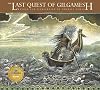
For all its critical aclaim, this book seems to have been one which slipped through the cracks with the general population, since very few people I know ran into it as a kid and I don't see it often in book stores or libraries. Myths and legends from cultures around the world are always a popular topic, but the focus still tends to be on the Greco-Roman traditions, with dashs of Egyptian, Chinese, and Eastern-European thrown in, and few go back far enough to touch on the stories of show more Gilgamesh. Maybe these stories are more difficult to romanticize or the plots are just a bit too unfamiliar for most people to delve into. We got this story (and still have it) because we read anything and everything available in the myths and legends section, and its one that has struck strongly in my memories. I may have forgotten about much of the plot until this re-read, but the artwork was instantly recognizable and enigmatic. Zeman could have chosen a multitude of styles for her artwork for this book, but it works so well to utilize the stylistic motifs from ancient Assyrian sculptures and friezes in this instance. If anything, she could have gone even further into the style, breaking up the story into even more panels to emphasize the style of some carvings that were used to decorate temples and public buildings at the time when the Gilgamesh story was contemporary. I'm sure this wouldn't have gone over that well with truely young readers though, so I applaud her overall application of elements like repetitive graphics, flat line reliefs, and a stark (yet colourful) palette to convey this classic legend. show less
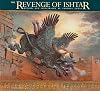
In Ludmila Zeman’s The Revenge of Ishtar, she continues with her retelling of the famed Epic of Gilgamesh. This is the second of three books in which she recounts the main points of the original story, in a way that is appropriate for children and also gets to the essence of the story. Once again, the illustrations add a tremendous amount to the work. The endpapers and the borders at the top and bottom of most pages are motifs from ancient Mesopotamia, and she once again employs soft show more colors in shades of brown, gold, blue, green, and orange. Zeman opens the story with a brief overview of sorts, stating that Gilgamesh, “once the cruelest and loneliest of kings, had changed. He had learned through friendship with Enkidu, the wild man of the forest, how to be human and care for others”. With a scene from his court, similar to the closing pages of the first work by Zeman, Gilgamesh the King, she sets up the story. The next few pages bring us Humbaba, a great monster, and much destruction that he brings to Gilgamesh, Enkidu, and their loved ones. Gilgamesh and Enkidu resolve to go and fight him. Zeman show the two friends crossing through mountains, desert, and forest, with each region depicted in a different color palette. She describes “a thick forest of cedars” blocking their way, showing us another detail from this area of the world. Against the odds, Gilgamesh and Enkidu kill Humbaba, and suddenly Ishtar appears from the heavens, imploring Gilgamesh to become her husband. After refusing her offer, he states, “You do not tempt me with your riches or power. I have built a great city and I will not leave it. My people love me and I honor them”. But this enrages Ishtar and she seeks revenge on Gilgamesh, sending the Bull of Heaven to Uruk to destroy it. Gilgamesh and Enkidu instead kill the Bull of Heaven, and as a result, Ishtar sends a great sickness to weaken Enkidu, for Gilgamesh could not be harmed. In the scene showing Gilgamesh at Enkidu’s tomb, Zeman uses many images from the Mesopotamians, with a royal procession, winged figures, and inscriptions. The book ends with Gilgamesh vowing to find immortality, stating, “That will be my last quest”. Zeman has done an amazing job with The Revenge of Ishtar, in my opinion, making a complex historical work accessible to younger readers. Her vivid imagery adds to the work and makes you want to read the next installment immediately. I highly recommend this for younger readers but also to anyone studying early civilizations, and to history teachers of students both young and old. show less
Lists
Awards


You May Also Like


Associated Authors
Statistics
- Works
- 8
- Also by
- 1
- Members
- 2,507
- Popularity
- #10,239
- Rating
- 4.2
- Reviews
- 25
- ISBNs
- 44
- Languages
- 4
- Favorited
- 1