

Robert Sabuda
Author of Alice's Adventures in Wonderland: A Pop-Up Adaptation of Lewis Carroll's Original Tale
About the Author
Sabuda was born in Pinckney, Michigan on March 8, 1965. He was skilled as an artist from a very young age, and he attended the Pratt Institute in New York City. His specific interest in 3-D paper engineering---pop-up books---was sparked by a book he received as a gift. Since 1994 Sabuda has show more published at least one pop-up book annually. These books are typically childrens' classics like The Twelve Days of Christmas, Mother Goose, The Wizard of Oz, Alice's Adventures in Wonderland, The Night Before Christmas and, most recently, Beauty and the Beast. Sabuda works from his studio in New York City. His 2010 title Beauty and The Beast made The New York Times BestSeller List for 2010. (Bowker Author Biography) show less
Image credit: Robertsabuda.com
Series
Works by Robert Sabuda
Alice's Adventures in Wonderland: A Pop-Up Adaptation of Lewis Carroll's Original Tale (2003) 1,159 copies, 28 reviews
The Wonderful Wizard of Oz: A Commemorative Pop-up (2001) — Paper engineer — 1,006 copies, 21 reviews
Encyclopedia Mythologica: Fairies and Magical Creatures Pop-Up (2008) — Author — 159 copies, 3 reviews
Helicopter 2 copies
Les Monstres marins 1 copy
Tug Boat 1 copy
Japan Seibu Gallery Opening 1 copy
הרפתקאות עליסה בארץ הפלאות 1 copy
12 Days of Christmas, The 1 copy
Associated Works
Castle: Medieval Days and Knights (A Sabuda & Reinhart Pop-up Book) (2006) — Paper Engineer — 347 copies, 4 reviews
The Art of Reading: Forty Illustrators Celebrate RIF's 40th Anniversary (2005) — Contributor — 273 copies, 3 reviews
The Movable Book Society: A Celebration of Pop-Up and Movable Books (2004) — Contributor — 26 copies, 2 reviews
Tagged
Common Knowledge
- Other names
- Beach, Thomas
- Birthdate
- 1965-03-08
- Gender
- male
- Education
- Pratt Institute, Brooklyn, New York, USA
- Occupations
- pop-up book engineer
- Awards and honors
- Meggendorfer Award, Movable Book Society
- Relationships
- Reinhart, Matthew (partner)
- Nationality
- USA
- Birthplace
- Wyandotte, Michigan, USA
- Places of residence
- New York, New York, USA
Pinckney, Michigan, USA - Associated Place (for map)
- Michigan, USA
Members
Reviews
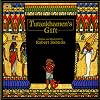
Tutankhamen is perhaps the best known of the pharaohs of Ancient Egypt, largely because of the discovery of his intact tomb by Howard Carter in 1922. In this beautiful picture book, writer and illustrator Robert Sabuda attempts to reconstruct the boyhood of the frail boy king who came to power at the age of nine in the mid 1300s BC, ruled for ten years, and then died at age nineteen.
Sabuda’s book provides some information about how the young prince may have been schooled. The author also show more imagines the sights young Tut may have seen, including the building and then destruction of temples. The previous pharaoh, Akhenaten (also known as Amenhotep IV) turned Egypt away from the traditional pantheon to monotheism, the worship of a single god, Aten (the sun disk).
There’s a huge problem with Sabuda’s book, however. I consulted multiple sources—The British Museum, National Geographic, and PBS, to name a few—and all of them make clear that Tutankhamen was the son of the iconoclastic pharaoh Akhenaten (Amenhotep IV), who systematically destroyed traditional religious institutions, art, and imagery. Tut’s parentage was apparently known in 1994 when Sabuda’s book was first published, yet the author-illustrator incorrectly identifies him as the son of Amenhotep III (who was, in fact, his grandfather) and the brother of Akhenaten. He also represents the young ruler as a heroic figure whose gift to the Egyptians was the return to them of their traditional religion.
Based on my reading, Tut is considered a relatively minor pharaoh. There is speculation that he may have been under the control of powerful figures in the kingdom. Additionally, while the book does highlight Tut’s physical vulnerability, he had more significant health issues than Sabuda intimates. The boy king had an inherited bone disease, along with other genetic disorders. His contracting malaria certainly didn’t help matters. Tut’s parents were almost certainly siblings. (The purity of the royal line had to be preserved, thought the Egyptians.)
To be clear: one would not expect a children’s picture book to venture into the territory of inbreeding. At the same time, it is regrettable that Sabuda’s beautiful book is factually unreliable. I can’t imagine using it in a classroom.
The only real positive here is the artwork. It’s unfortunate that Sabuda didn’t leave the writing to someone more knowledgeable. show less
Sabuda’s book provides some information about how the young prince may have been schooled. The author also show more imagines the sights young Tut may have seen, including the building and then destruction of temples. The previous pharaoh, Akhenaten (also known as Amenhotep IV) turned Egypt away from the traditional pantheon to monotheism, the worship of a single god, Aten (the sun disk).
There’s a huge problem with Sabuda’s book, however. I consulted multiple sources—The British Museum, National Geographic, and PBS, to name a few—and all of them make clear that Tutankhamen was the son of the iconoclastic pharaoh Akhenaten (Amenhotep IV), who systematically destroyed traditional religious institutions, art, and imagery. Tut’s parentage was apparently known in 1994 when Sabuda’s book was first published, yet the author-illustrator incorrectly identifies him as the son of Amenhotep III (who was, in fact, his grandfather) and the brother of Akhenaten. He also represents the young ruler as a heroic figure whose gift to the Egyptians was the return to them of their traditional religion.
Based on my reading, Tut is considered a relatively minor pharaoh. There is speculation that he may have been under the control of powerful figures in the kingdom. Additionally, while the book does highlight Tut’s physical vulnerability, he had more significant health issues than Sabuda intimates. The boy king had an inherited bone disease, along with other genetic disorders. His contracting malaria certainly didn’t help matters. Tut’s parents were almost certainly siblings. (The purity of the royal line had to be preserved, thought the Egyptians.)
To be clear: one would not expect a children’s picture book to venture into the territory of inbreeding. At the same time, it is regrettable that Sabuda’s beautiful book is factually unreliable. I can’t imagine using it in a classroom.
The only real positive here is the artwork. It’s unfortunate that Sabuda didn’t leave the writing to someone more knowledgeable. show less
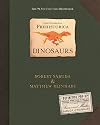
I've only just come out of the pop-up book closet, but I'm going to go out on a limb and say I've found the best pop-up books out there. The first one being Encyclopedia Prehistorica: Dinosaurs.
This pop up book is extravagant; there's no other word for it. Most pop up books save the best for last, a grand finale on the last page to leave you with a "wow" at the end. Every page of this book is a grand finale page. If the center image doesn't impress (although I can't imagine why it show more wouldn't), each page spread has small inset pages, and these contain pop up images too; of of these inset pages have more pages with more pop ups in them.
The intricate and sometimes delicate construction of these pages, as well as the writing, seems geared towards an older child, say 10-12 years old. The writing is informative, and there are pronunciation guides for each of the dinosaurs. Best of all, at the end, the authors devote an inset mini-book to why the dinosaurs disappeared; they offer several of the prevailing theories without giving weight to one over the other, ending with we don't know why they disappeared for certain. Responsible writing - I love it.
My only complaint is that each of those mini pages are held down with a photo-corner type thing. They do need to be held down, and I can't think of a better way to do it, but the corners require the reader to slightly bend the pages to get them in and out; over time and use, that's going to weaken the paper.
Saying that though, I can't recommend this book too much; it's fabulous. Kids and adults alike will find something to ooh and ahh over. MT has already asked if he could take it to work to show the guys; admittedly he is in the printing business but I don't think there's anyone out there that won't find much here to be impressed with. show less
This pop up book is extravagant; there's no other word for it. Most pop up books save the best for last, a grand finale on the last page to leave you with a "wow" at the end. Every page of this book is a grand finale page. If the center image doesn't impress (although I can't imagine why it show more wouldn't), each page spread has small inset pages, and these contain pop up images too; of of these inset pages have more pages with more pop ups in them.
The intricate and sometimes delicate construction of these pages, as well as the writing, seems geared towards an older child, say 10-12 years old. The writing is informative, and there are pronunciation guides for each of the dinosaurs. Best of all, at the end, the authors devote an inset mini-book to why the dinosaurs disappeared; they offer several of the prevailing theories without giving weight to one over the other, ending with we don't know why they disappeared for certain. Responsible writing - I love it.
My only complaint is that each of those mini pages are held down with a photo-corner type thing. They do need to be held down, and I can't think of a better way to do it, but the corners require the reader to slightly bend the pages to get them in and out; over time and use, that's going to weaken the paper.
Saying that though, I can't recommend this book too much; it's fabulous. Kids and adults alike will find something to ooh and ahh over. MT has already asked if he could take it to work to show the guys; admittedly he is in the printing business but I don't think there's anyone out there that won't find much here to be impressed with. show less
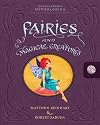
You know those magical pop-up books you see in movies sometimes? The ones that are so elaborate and complex that they couldn’t possibly exist in real life? Yeah, well, so much for that. Matthew Reinhart and Robert Sabuda have created nothing short of magic with this three-book mythology-themed set. Each page has one large, impressive, center-piece pop-up that often extends far beyond the boundaries of the book. In addition to that there are little flaps on every page that lead to their own show more mini-pop-ups as well as some different stuff, such as a story that flips through the pages when you pull a tab (Gods & Heroes).
If you plan on getting one of these for your kid, maybe you should think twice if he/she is very young. The pop-ups are large and elaborate and, as it goes, more delicate than you may be used to. A rambunctious child could easily bend the paper which could possibly cause some of the pop-ups to fail to fold back in properly, causing even more damage. For example, there’s a mansion pop-up in the Fairies volume that will fail to fold back in if a paper tab is resting on the wrong side of another tab (they are not glued or attached in any way and it’s easy to bump it and move it to the wrong side). This happened when my girlfriend and I were looking at the book for the first time and, upon noticing that the pop-up wasn’t folding back in properly, we started examining it. It took probably five minutes to figure out what was wrong. That’s how intricate the designs of these things are. You have been warned. show less
If you plan on getting one of these for your kid, maybe you should think twice if he/she is very young. The pop-ups are large and elaborate and, as it goes, more delicate than you may be used to. A rambunctious child could easily bend the paper which could possibly cause some of the pop-ups to fail to fold back in properly, causing even more damage. For example, there’s a mansion pop-up in the Fairies volume that will fail to fold back in if a paper tab is resting on the wrong side of another tab (they are not glued or attached in any way and it’s easy to bump it and move it to the wrong side). This happened when my girlfriend and I were looking at the book for the first time and, upon noticing that the pop-up wasn’t folding back in properly, we started examining it. It took probably five minutes to figure out what was wrong. That’s how intricate the designs of these things are. You have been warned. show less

Acclaimed pop-up artist Robert Sabuda, creator of such titles as Alice's Adventures in Wonderland: A Pop-up Adaptation, and (with Matthew Reinhart) the Encyclopedia Prehistorica series, presents an original story about how the Northern Lights came to be in this lovely picture-book. The People Who Fear the Winter Night live "far to the north by the great Arctic Sea," and tremble, during the long winter months, at the coming of Blizzard, with his icy gusts and bitter cold. When Teune, the best show more robe-maker in the tribe, accidentally destroys Blizzard's icy raiment, her people are delighted, but she herself is dismayed. Determined to make amends, she creates a new robe, despite the protests of the village leader - a generous action that is rewarded, when Blizzard gives the people a gift that will lighten the darkness of the long nights...
Like the friend who recommended this one to me (thanks, Lisa!), I really loved the artwork here, created using a batik medium. Both color and composition are gorgeous, making The Blizzard's Robe a solid four-star title, from a visual perspective. Sadly, I was a little less enamored with the story, which seemed to be modeled on some kind of (unspecified) folklore. I suspect that Sabuda's inspiration was Siberian, since he calls the dwellings of the people here "yarangas" (a yurt-like structure used by the Chukchi people), and because his heroine is named "Teune." I see that there is an Nenets folktale, published during the Soviet era, entitled The Tale of Brave Yatto and His Sister Teune, which James Riordan's collection, The Sun Maiden and the Crescent Moon: Siberian Folk Tales, also includes, under the name Bold Yatto and his Sister Tayune.
If there was a Siberian influence on this story, I would have preferred Sabuda to have mentioned that, even if his story was entirely original. It doesn't bother me, as it does Beverly Slapin, in A Broken Flute: The Native Experience in Books for Children - she calls this "a crass ripoff of the Arctic peoples" - that Sabuda did create an original tale with Arctic overtones, but I think a tip of the hat, to his source material (if he had any), would have been in order, and made the reading experience that much richer. Either that, or a retelling of an actual folktale with this theme, given the paucity of native Siberian material available, in English. show less
Like the friend who recommended this one to me (thanks, Lisa!), I really loved the artwork here, created using a batik medium. Both color and composition are gorgeous, making The Blizzard's Robe a solid four-star title, from a visual perspective. Sadly, I was a little less enamored with the story, which seemed to be modeled on some kind of (unspecified) folklore. I suspect that Sabuda's inspiration was Siberian, since he calls the dwellings of the people here "yarangas" (a yurt-like structure used by the Chukchi people), and because his heroine is named "Teune." I see that there is an Nenets folktale, published during the Soviet era, entitled The Tale of Brave Yatto and His Sister Teune, which James Riordan's collection, The Sun Maiden and the Crescent Moon: Siberian Folk Tales, also includes, under the name Bold Yatto and his Sister Tayune.
If there was a Siberian influence on this story, I would have preferred Sabuda to have mentioned that, even if his story was entirely original. It doesn't bother me, as it does Beverly Slapin, in A Broken Flute: The Native Experience in Books for Children - she calls this "a crass ripoff of the Arctic peoples" - that Sabuda did create an original tale with Arctic overtones, but I think a tip of the hat, to his source material (if he had any), would have been in order, and made the reading experience that much richer. Either that, or a retelling of an actual folktale with this theme, given the paucity of native Siberian material available, in English. show less
Lists
Carole's List (1)
Awards


You May Also Like


Associated Authors
Statistics
- Works
- 70
- Also by
- 8
- Members
- 10,817
- Popularity
- #2,197
- Rating
- 4.3
- Reviews
- 208
- ISBNs
- 210
- Languages
- 10
- Favorited
- 15