
David A. Carter (1) (1957–)
Author of How Many Bugs in a Box?: A Pop-Up Counting Book
For other authors named David A. Carter, see the disambiguation page.
About the Author
David A. Carter was born March 4, 1957 in Salt Lake City. Utah. He attended Utah State University where he studied art and illustration. David worked several years as graphic designer and a paste up artist. While working at one job he learned the fine art of Paper-Engineering and Pop-Up bookmaking. show more He created his first book How Many Bugs in a Box? and has created more than 50 pop-up books since. David lives in California with his wife and daughters where he grows vegetables and native plants and does volunteer work. (Bowker Author Biography) show less
Image credit: Photo by Keith Sutter
Series
Works by David A. Carter
One Red Dot: A Pop-Up Book for Children of All Ages (Classic Collectible Pop-Up) (2004) 274 copies, 9 reviews
The 12 Bugs of Christmas: A Pop-up Christmas Counting Book by David A. Carter (David Carter's Bugs) (1999) 159 copies
Who Took the Cookie from the Cookie Jar? (with Fun-Flaps & Pop-Up Surprises) (2002) 53 copies, 1 review
Tibetan Buddhist Altars: A Pop-Up Gallery of Traditional Art and Wisdom (2004) — Paper pop-up technique — 48 copies
Associated Works
Over in the Meadow: An Old Counting Rhyme (1985) — Illustrator, some editions — 2,961 copies, 21 reviews
Merry Christmas, Little Mouse (A Scratch-the-Scent and Lift-the-Flap Book) (1986) — Illustrator — 27 copies
Tagged
Common Knowledge
- Birthdate
- 1957-03-04
- Gender
- male
- Education
- Utah State University
- Nationality
- USA
- Places of residence
- Bountiful, Utah, USA
Auburn, California, USA - Associated Place (for map)
- USA
Members
Reviews
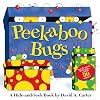
Most of the lift-the-flap books we bought for our toddler show some major wear and tear twenty years later, but this one is practically pristine, evidence of how few times we returned to it.
It's pretty dull for adults, with no story and a tenuous color theme. The images on the flaps all match the page color, though they are not things that are always that color -- like blue boots or a pink teapot -- but the images under the flaps do not match the color. There is no association between the show more image on the flap and the one below, especially since there are little wheels to rotate the hidden images. Ostensibly the rotation keeps the book interesting as a hidden bug won't necessarily be in the same place each time as you search for that peekaboo moment with it.
I just don't know why I'd want to find the dumb bug. I mean is this just baby's first introduction to Russian Roulette? "Oops! You found a bug. You lose. Now we have to put the book away. Sorryyyyy."
How did the author manage to turn this into a series with over two dozen books? show less
It's pretty dull for adults, with no story and a tenuous color theme. The images on the flaps all match the page color, though they are not things that are always that color -- like blue boots or a pink teapot -- but the images under the flaps do not match the color. There is no association between the show more image on the flap and the one below, especially since there are little wheels to rotate the hidden images. Ostensibly the rotation keeps the book interesting as a hidden bug won't necessarily be in the same place each time as you search for that peekaboo moment with it.
I just don't know why I'd want to find the dumb bug. I mean is this just baby's first introduction to Russian Roulette? "Oops! You found a bug. You lose. Now we have to put the book away. Sorryyyyy."
How did the author manage to turn this into a series with over two dozen books? show less

Selected by The New York Times as one of the "Best Illustrated Children’s Books of 2009," David A. Carter's White Noise is a pop-up book with a purpose. Described by its creator as "an experiment with color and structure," it is meant to make noise, as each pop-up unfolds.
Bold colors and shapes explode from every page, in abstract designs that puzzle and fascinate, and while I wouldn't describe the noise produced as particularly impressive, certain spreads (like the ones approximating show more musical instruments) do indeed produce some interesting sounds. But although Carter's idea is innovative, and his paper engineering accomplished, I'm not really sure that this succeeds as a children's book, nor would I have selected it for any "best of" lists.
I acknowledge that I'm no pop-up aficionado, although I do try to stay abreast of the latest Sabuda developments, but it has struck me, of late, that the majority of pop-up creations, while ostensibly aimed at children, are really being produced for adults. Which isn't necessarily a negative thing - I've no objection to adult pop-ups. But so many of the hot new titles in the genre are of such a complicated and delicate construction, that it's difficult to imagine young children being allowed to play with them, the way I did with the more simplistic lift-the-flap books of my youth. show less
Bold colors and shapes explode from every page, in abstract designs that puzzle and fascinate, and while I wouldn't describe the noise produced as particularly impressive, certain spreads (like the ones approximating show more musical instruments) do indeed produce some interesting sounds. But although Carter's idea is innovative, and his paper engineering accomplished, I'm not really sure that this succeeds as a children's book, nor would I have selected it for any "best of" lists.
I acknowledge that I'm no pop-up aficionado, although I do try to stay abreast of the latest Sabuda developments, but it has struck me, of late, that the majority of pop-up creations, while ostensibly aimed at children, are really being produced for adults. Which isn't necessarily a negative thing - I've no objection to adult pop-ups. But so many of the hot new titles in the genre are of such a complicated and delicate construction, that it's difficult to imagine young children being allowed to play with them, the way I did with the more simplistic lift-the-flap books of my youth. show less

This is a fun hands on sample book of the forms for creating the structures used to make paper pop up. I would have appreciated an envelope of pieces and a few glue strips, but they do offer the dies for the shapes online.Also the more complicated mechanical aspects are left unexampled - how to join parts that rotate around a center point, how to anchor and assemble with string.
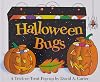
David Carter's "Bug" books are so stinkin' cute, is there anyone who doesn't love them? Halloween Bugs are wonderful, each hiding behind a flap "door" just waiting to trick or treat with you. At the end, a host of graveyard bugs pop-up and invite you to "smell our feet, give us something good to eat"! My favorite pop-up is the "Gotcha" spider popping out of the rusty iron door. Even the smallest kids love this book.
Lists
FAB Pilot Books (1)
Awards


You May Also Like


Associated Authors
Statistics
- Works
- 93
- Also by
- 12
- Members
- 5,193
- Popularity
- #4,795
- Rating
- 4.1
- Reviews
- 86
- ISBNs
- 298
- Languages
- 8

