
Diane Stanley
Author of Bard of Avon: The Story of William Shakespeare
About the Author
Diane Stanley was born in 1943 and was raised in Abilene, Texas. She later attended both Trinity University and Johns Hopkins University. Her portfolio of children's book illustrations was creative enough for her to begin publication in 1978. She became an art director for G.P. Putnam & Sons and show more later began retelling and illustrating classic children's books. Stanley has revamped the fairy tale, Rumpelstiltskin's Daughter and has also researched the children's biographies Cleopatra and Leonardo Da Vinci. She also illustrated her mother's book, The Last Princess. (Bowker Author Biography) show less
Disambiguation Notice:
Diane Stanley and Diana Stanley are not the same person. Please don't combine them. Thanks.
Image credit: MDCarchives
Series
Works by Diane Stanley
Bard of Avon: The Story of William Shakespeare (1992) — Author; Illustrator — 1,721 copies, 15 reviews
The High-Flying, Deep-Diving Adventures of Kathy Sullivan: Astronaut and Oceanographer (2025) 8 copies
The Yale Shakespeare 1 copy
Rumpelstilts Daugher 1 copy
Associated Works
Tagged
Common Knowledge
- Canonical name
- Stanley, Diane
- Other names
- Stanley, Diane Zuromskis
- Birthdate
- 1943-12-27
- Gender
- female
- Education
- Trinity University (BA|1965)
Johns Hopkins University (MA|1970)
Edinburgh College of Art - Occupations
- children's book author
children's book illustrator
medical illustrator
art director
graphic designer - Organizations
- Dell Publishing
G. P. Putnam's Sons
Coward, McCann & Geoghegan - Awards and honors
- Orbis Pictus Award (1992)
Children's Choice Award (1979) - Agent
- Sheldon Fogelman Agency
- Relationships
- Stanley, Fay (mother)
Vennema, Peter (husband) - Short biography
- Diane Stanley is an American children's author and illustrator, a former medical illustrator, and a former art director for the publisher G.P. Putnam's Sons. Born in 1943 in Abilene, Texas, she was educated at Trinity University (in San Antonio, TX) and at Johns Hopkins University. She is perhaps best known for her many picture-book biographies, some of which were co-authored by her husband, Peter Vennema. (source: Wikipedia)
- Nationality
- USA
- Birthplace
- Abilene, Texas, USA
- Places of residence
- Abilene, Texas, USA
New York, New York, USA
Santa Fe, New Mexico, USA - Disambiguation notice
- Diane Stanley and Diana Stanley are not the same person. Please don't combine them. Thanks.
- Associated Place (for map)
- USA
Members
Reviews
Summary:
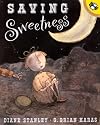
Saving Sweetness is the story about a little girl who feels trapped in an orphanage with the meanest lady ever, Mrs. Sump. Sweetness hates it there and hates that Mrs. Sump makes her scrub the floor with toothbrushes, so one day she escapes. Once Mrs. Sump finds out that Sweetness is missing, she goes to the local saloon to find the sheriff. Mrs. Sump sends the sheriff out to look for Sweetness. Afraid that Sweetness will run into Coyote Pete, a local bandit, the sheriff goes looking show more for her in the desert. Although he is supposed to be rescuing Sweetness, the sheriff is the one who runs into a bunch of problems and actually gets saved multiple times by Sweetness herself. She saves him from thirst, from freezing and from Coyote Pete, but every time Sweetness still runs away. The sheriff finally figures out that Sweetness has no intention of being saved unless someone is willing to adopt her. All Sweetness wants is for someone to love and care for her and she has no intention of going back to the orphanage or Mrs. Sump. Finally the sheriff thinks about adopting her and Sweetness is ecstatic. She even convinces the sheriff to adopt the other seven orphans. So while Sweetness, her new dad and siblings live happily ever after, Mrs. Sump watches over Coyote Pete while he scrubs her floors.
Comments (opinions/arguments):
This short picture book is really quite a cute story! Taking place in Texas, the author does a great job at adding a southern dialect/accent to the dialogue, by using words such as, “somethin’, accounta’, seein’, costin’, havin’, lessen, gots, ain’t and etc. It really reflects the different culture that the author is trying to convey in the story. The illustrations are really unique as well. It’s a funky mix of cute cartoon drawings and actually pictures of old homes and buildings used almost like clipart. But more than the dialect and the illustrations, the message of the story is the cutest. The author did such a wonderful job at portraying a story about orphanage into something lighthearted, fun and humorous. I just love how the sheriff, whose been sent to rescue and bring little Sweetness back to the orphanage, actually ends up getting rescued by her instead. The entire story is a role reversal because the child ends up rescuing the adult when it’s actually the child who really needs rescuing from being an orphan. This story is meant to be humorous as to tread lightly on the lifestyle of being an orphan. Although being an orphan isn’t exactly how any child wants to grow up, sometimes it takes the child to teach adults to grow up. This story is really touching because in the end the sheriff adopts Sweetness and all the other children at the orphanage. In the end all of the children end up together in one big happy family and I hope it sends the message to other orphans out there that one day there day will come. show less
Saving Sweetness is the story about a little girl who feels trapped in an orphanage with the meanest lady ever, Mrs. Sump. Sweetness hates it there and hates that Mrs. Sump makes her scrub the floor with toothbrushes, so one day she escapes. Once Mrs. Sump finds out that Sweetness is missing, she goes to the local saloon to find the sheriff. Mrs. Sump sends the sheriff out to look for Sweetness. Afraid that Sweetness will run into Coyote Pete, a local bandit, the sheriff goes looking show more for her in the desert. Although he is supposed to be rescuing Sweetness, the sheriff is the one who runs into a bunch of problems and actually gets saved multiple times by Sweetness herself. She saves him from thirst, from freezing and from Coyote Pete, but every time Sweetness still runs away. The sheriff finally figures out that Sweetness has no intention of being saved unless someone is willing to adopt her. All Sweetness wants is for someone to love and care for her and she has no intention of going back to the orphanage or Mrs. Sump. Finally the sheriff thinks about adopting her and Sweetness is ecstatic. She even convinces the sheriff to adopt the other seven orphans. So while Sweetness, her new dad and siblings live happily ever after, Mrs. Sump watches over Coyote Pete while he scrubs her floors.
Comments (opinions/arguments):
This short picture book is really quite a cute story! Taking place in Texas, the author does a great job at adding a southern dialect/accent to the dialogue, by using words such as, “somethin’, accounta’, seein’, costin’, havin’, lessen, gots, ain’t and etc. It really reflects the different culture that the author is trying to convey in the story. The illustrations are really unique as well. It’s a funky mix of cute cartoon drawings and actually pictures of old homes and buildings used almost like clipart. But more than the dialect and the illustrations, the message of the story is the cutest. The author did such a wonderful job at portraying a story about orphanage into something lighthearted, fun and humorous. I just love how the sheriff, whose been sent to rescue and bring little Sweetness back to the orphanage, actually ends up getting rescued by her instead. The entire story is a role reversal because the child ends up rescuing the adult when it’s actually the child who really needs rescuing from being an orphan. This story is meant to be humorous as to tread lightly on the lifestyle of being an orphan. Although being an orphan isn’t exactly how any child wants to grow up, sometimes it takes the child to teach adults to grow up. This story is really touching because in the end the sheriff adopts Sweetness and all the other children at the orphanage. In the end all of the children end up together in one big happy family and I hope it sends the message to other orphans out there that one day there day will come. show less
This review is also available on my blog, Read Till Dawn.
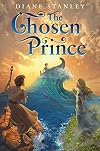
I . . . really don't know if I liked this book. I suppose if I have to think so hard the answer is "no," but it just isn't that simple. On one hand, I loved it. It was deep, moving, and meaningful, with a lovable main character and an emotionally manipulative plot. On the other hand, I spent most of the book semi-loathing said main character, because I didn't know if I could bring myself to love someone who had done what he did. I both show more empathized with and despised Alexos, and my stomach twisted (and still twists right now, actually) at the horrible event that happens a third of the way into the book.
On the other hand, I loved Alexos for how much his father and the gods put him through. He never really gets a childhood, loses his ability to walk correctly to a summer sickness that sounds a lot like polio, and is practically cast aside by his ruthless father after becoming crippled. Despite all this (and perhaps even because of some of it), he is strong, good, and kind, wishing for nothing more than to make his kingdom a better place. I only wish a certain event had not happened, or at least not happened the way it did, because I could have really, really, loved Alexos for everything he went through. As it was, I couldn't help feeling (horrible as it sounds) like perhaps he deserved everything that happened to him. If I read the book again now I would probably like it a lot better, but I still hate The Chosen Prince for the way it utterly horrified me just far enough in that I couldn't stop reading, but early enough that I spent the majority of the book miserable.
A lot of the other reviews I've read of this book complain about the narration, which is third person present, calling it clumsy and distracting. The only times I had any trouble with it were when something was being talked about in past tense. I'm so used to reading third person in past tense that I had a hard time remembering that when say, the narration talks about what Alexos did, it's talking about something that happened before the scene I'm currently reading. This was a relatively minor issue, though, and overall it worked fine for me. Props to Stanley for trying something new!
I absolutely love Diane Stanley's Silver Bowl trilogy, and her standalone Bella at Midnight is a fun fairy tale retelling that isn't wonderful, but isn't horrible. This, however, almost feels like a different author wrote it altogether, and I don't think I'm as big a fan of this author as I am of the other. I do love The Chosen Prince, but I also hate it. And I don't think I'll be recommending it to anyone any time soon, just because I don't want to be the one to recommend something so horrifying, but I can't really give a very good warning about it without spoiling the whole story. So if you're deciding whether or not to read it, I can't really help you. I'm sorry! show less
I . . . really don't know if I liked this book. I suppose if I have to think so hard the answer is "no," but it just isn't that simple. On one hand, I loved it. It was deep, moving, and meaningful, with a lovable main character and an emotionally manipulative plot. On the other hand, I spent most of the book semi-loathing said main character, because I didn't know if I could bring myself to love someone who had done what he did. I both show more empathized with and despised Alexos, and my stomach twisted (and still twists right now, actually) at the horrible event that happens a third of the way into the book.
On the other hand, I loved Alexos for how much his father and the gods put him through. He never really gets a childhood, loses his ability to walk correctly to a summer sickness that sounds a lot like polio, and is practically cast aside by his ruthless father after becoming crippled. Despite all this (and perhaps even because of some of it), he is strong, good, and kind, wishing for nothing more than to make his kingdom a better place. I only wish a certain event had not happened, or at least not happened the way it did, because I could have really, really, loved Alexos for everything he went through. As it was, I couldn't help feeling (horrible as it sounds) like perhaps he deserved everything that happened to him. If I read the book again now I would probably like it a lot better, but I still hate The Chosen Prince for the way it utterly horrified me just far enough in that I couldn't stop reading, but early enough that I spent the majority of the book miserable.
A lot of the other reviews I've read of this book complain about the narration, which is third person present, calling it clumsy and distracting. The only times I had any trouble with it were when something was being talked about in past tense. I'm so used to reading third person in past tense that I had a hard time remembering that when say, the narration talks about what Alexos did, it's talking about something that happened before the scene I'm currently reading. This was a relatively minor issue, though, and overall it worked fine for me. Props to Stanley for trying something new!
I absolutely love Diane Stanley's Silver Bowl trilogy, and her standalone Bella at Midnight is a fun fairy tale retelling that isn't wonderful, but isn't horrible. This, however, almost feels like a different author wrote it altogether, and I don't think I'm as big a fan of this author as I am of the other. I do love The Chosen Prince, but I also hate it. And I don't think I'll be recommending it to anyone any time soon, just because I don't want to be the one to recommend something so horrifying, but I can't really give a very good warning about it without spoiling the whole story. So if you're deciding whether or not to read it, I can't really help you. I'm sorry! show less
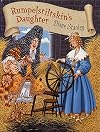
Rumpelstiltskin and the miller’s daughter eloped, live on a farm, and have a beautiful daughter. All is well until the same greedy king who had charged the miller’s daughter with the impossible task of spinning straw into gold gets his hands on Rumpelstiltskin’s daughter. But she’s got a solid head on her shoulders and shows the king--and the kingdom-- a little magic of her own.
Perhaps her characters can’t spin straw into gold, but Diane Stanley sure can! In Rumplestiltskin’s show more Daughter, her revisionist sequel to “Rumpelstiltskin”, Stanley gives a magical makeover to a tale that once relied on chattel sexism, exploitation, and dishonesty so it comes out shiny, smart, and fresh. Readers will relish the detailed illustrations of late Baroque France’s royal grandeur and natural beauty, characters whose expressions shine through the pages, and, of course, witty, wonderful storytelling. Rumpelstiltskin’s Daughter shows a strong, independent, smart woman taking on a cruel tyrant and teaching him what it means to be responsible--and how to reap the rewards. But don’t worry--the book isn’t preachy for even a second, and the illustrations will carry you safely into the world of the characters, where change can happen overnight. Long sentences and layered dialogue might be a little out of reach for younger readers to grasp. show less
Perhaps her characters can’t spin straw into gold, but Diane Stanley sure can! In Rumplestiltskin’s show more Daughter, her revisionist sequel to “Rumpelstiltskin”, Stanley gives a magical makeover to a tale that once relied on chattel sexism, exploitation, and dishonesty so it comes out shiny, smart, and fresh. Readers will relish the detailed illustrations of late Baroque France’s royal grandeur and natural beauty, characters whose expressions shine through the pages, and, of course, witty, wonderful storytelling. Rumpelstiltskin’s Daughter shows a strong, independent, smart woman taking on a cruel tyrant and teaching him what it means to be responsible--and how to reap the rewards. But don’t worry--the book isn’t preachy for even a second, and the illustrations will carry you safely into the world of the characters, where change can happen overnight. Long sentences and layered dialogue might be a little out of reach for younger readers to grasp. show less

When cute-as-a-button Sweetness - the youngest orphan at slave-driving Mrs. Sump's home for unwanted children - runs away, the local sheriff sets out to track her down, concerned that she might come to harm. With outlaws like Coyote Peter roaming around, you never know what might happen! Unfortunately, the sheriff (who is also the narrator) isn't quite as prepared as he thinks he is, and Sweetness has to rescue him a number of times, coming to his aid with water, food, and a timely show more intervention in his confrontation with Coyote Pete.
Told in a highly colloquial style, Saving Sweetness is an amusing tale whose humor rests on its role reversal - it is the child who must rescue the adult, and who must shepherd him to an understanding of how he could really rescue her - and on its narrator's generally clueless misreading of his role in the story. The sheriff remains convinced, throughout, that he is indeed saving Sweetness, something that young readers will undoubtedly find funny, as they witness the way that the actions of the two protagonists, as well as the illustrations, belie this. The artwork itself is very interesting, combining painted elements with old photographs. All in all, Saving Sweetness is an engaging tale, one I would recommend to young readers who enjoy silly stories, and/or orphan tales with happy endings. I'll have to see if I can track down the sequel, Raising Sweetness, to see what happens next with this spunky young heroine! show less
Told in a highly colloquial style, Saving Sweetness is an amusing tale whose humor rests on its role reversal - it is the child who must rescue the adult, and who must shepherd him to an understanding of how he could really rescue her - and on its narrator's generally clueless misreading of his role in the story. The sheriff remains convinced, throughout, that he is indeed saving Sweetness, something that young readers will undoubtedly find funny, as they witness the way that the actions of the two protagonists, as well as the illustrations, belie this. The artwork itself is very interesting, combining painted elements with old photographs. All in all, Saving Sweetness is an engaging tale, one I would recommend to young readers who enjoy silly stories, and/or orphan tales with happy endings. I'll have to see if I can track down the sequel, Raising Sweetness, to see what happens next with this spunky young heroine! show less
Lists
Ambleside Books (1)
Ambleside Y2 (1)
Medieval History (1)
Ambleside Y3 (3)
Ambleside Year 3 (3)
Sonlight Books (5)
Princess Tales (1)
Awards


You May Also Like


Associated Authors
Statistics
- Works
- 58
- Also by
- 6
- Members
- 16,864
- Popularity
- #1,330
- Rating
- 3.9
- Reviews
- 421
- ISBNs
- 273
- Languages
- 6
- Favorited
- 8