
J. Patrick Lewis
Author of National Geographic Book of Animal Poetry: 200 Poems with Photographs That Squeak, Soar, and Roar!
About the Author
J. Patrick Lewis was born on May 5, 1942. He is a poet and prose writer who is known for his children's poems. He worked as a professor of economics before devoting himself full-time to writing in 1998. He is the author of 90 children's books including: BoshBlobberBosh, Please Bury Me in the show more Library, A Hippopotamusn't, First Dog, Spot the Plot, The House, and The National Geographic Book of Animal Poetry. In 2014, his title Voices from the March on Washington, made the Hot Civil Rights Titles List. He has received many awards from the American Library Association, The Golden Kite Award from the Society of Children's Book Writers and Illustrators, the Claudia Lewis Award from The Bank Street School and others. He also received the 2010-11 National Council of Teachers of English (NCTE) Excellence in Children's Poetry Award. He was also named the third, U.S. Children's Poet Laureate for 2011-2013 by the Poetry Foundation in Chicago. (Bowker Author Biography) show less
Works by J. Patrick Lewis
National Geographic Book of Animal Poetry: 200 Poems with Photographs That Squeak, Soar, and Roar! (2012) 619 copies, 28 reviews
National Geographic Book of Nature Poetry: More than 200 Poems With Photographs That Float, Zoom, and Bloom! (2015) 254 copies, 6 reviews
National Geographic Kids Just Joking Animal Riddles: Hilarious riddles, jokes, and more--all about animals! (2015) 44 copies
The Poetry of US: More than 200 poems that celebrate the people, places, and passions of the United States (2018) 32 copies, 2 reviews
Let's Celebrate Christmas (Rookie Poetry: Holidays and Celebrations) (Library Edition) (2018) 16 copies
Poems for Teaching in the Content Areas: 75 Powerful Poems to Enhance Your History, Geography, Science, and Math Lessons (2007) 15 copies
World of Wonders, A 1 copy
Associated Works
Tagged
Common Knowledge
- Birthdate
- 1942-05-05
- Gender
- male
- Education
- The Ohio State University (PhD, Economics)
Indiana University (MA)
Saint Joseph's College (BA) - Occupations
- professor (economics)
children's writer - Organizations
- Otterbein College; Westerville, Ohio (taught Business, Accounting and Economics until 1998)
- Awards and honors
- Young People's Poet Laureate (2011-2012)
NCTE Award for Excellence in Poetry for Children (2011) - Nationality
- USA
- Birthplace
- Gary, Indiana, USA
- Places of residence
- Gary, Indiana, USA
Westerville, Ohio, USA - Associated Place (for map)
- USA
Members
Reviews
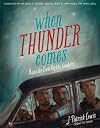
This is an incredibly powerful collection of poems by J. Patrick Lewis. Through driving rhythm and stinging rhyme, Lewis brings to life the voices of Civil Rights leaders from around the world. The anger, passion, and injustice beneath the meter of the poems gives them a momentum that had me turning the pages one by one. "Freedom Summer," a free verse paragraph in the center, is a heartstopping departure from the rhythm and rhyme scheme, depicting the murder of three Black boys by the Klan show more without music or embellishment. Five illustrators give each voice a face with muted colors. Although the formatting on the ebook version removed what I imagine are impactful page spreads, this is still a book that shouldn't be missed in a middle or high school library. show less
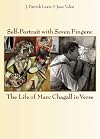
This biography was a delightful trip through the life of artist Marc Chagall, told through a combination of verse and the subject's own painting and photographs. More of a fan of the Impressionist school of painting, I had only a passing familiarity with Chagall's works (though I do love his stained glass panels at the Art Institution of Chicago) but all that has changed thanks to this wonderful book, which has shined a wonderful light onto this early Modernist.
On regards to the artwork show more chosen, they are perfect to illustrate the various important moments in Chagall's life, from his birth in a small Russian village ("I am the Village" to his family ("The Violinist") to his wife and daughter ("Double Portrait with a Glass of Wire") to his travels ("Paris Through the Window") to his later years ("The Fall of Icarus"). I definitely want to check out more of his artwork now.
As for the verse that accompany each painting, they are perfect companion pieces to help fully illustrate Chagall's life. Though they are all good and Jane Yolen is a fine young adult author, overall I found that I preferred the ones written by co-author J. Patrick Lewis more. Two personal favorites are, "The Promenade" which devotes a stanza each to the various cities that Chagall has lived in:
"Paris, City of Lights and scarlet nights, imagines
itself the patron of color to those it shelters,
people who believe that color is their reward
for not being born elsewhere"
And "The Tribe of Levi" which describes the various ways people interact with the stained glass windows they encounter:
"And a child, tying her shoe
besides the pulpit, is stopped
by the plot of a picture-book
story written in air,"
All together, the witty verses and the beautiful paintings combine to enlighten the reader about the artist Marc Chagall and maybe a bit about humanity as a whole. show less
On regards to the artwork show more chosen, they are perfect to illustrate the various important moments in Chagall's life, from his birth in a small Russian village ("I am the Village" to his family ("The Violinist") to his wife and daughter ("Double Portrait with a Glass of Wire") to his travels ("Paris Through the Window") to his later years ("The Fall of Icarus"). I definitely want to check out more of his artwork now.
As for the verse that accompany each painting, they are perfect companion pieces to help fully illustrate Chagall's life. Though they are all good and Jane Yolen is a fine young adult author, overall I found that I preferred the ones written by co-author J. Patrick Lewis more. Two personal favorites are, "The Promenade" which devotes a stanza each to the various cities that Chagall has lived in:
"Paris, City of Lights and scarlet nights, imagines
itself the patron of color to those it shelters,
people who believe that color is their reward
for not being born elsewhere"
And "The Tribe of Levi" which describes the various ways people interact with the stained glass windows they encounter:
"And a child, tying her shoe
besides the pulpit, is stopped
by the plot of a picture-book
story written in air,"
All together, the witty verses and the beautiful paintings combine to enlighten the reader about the artist Marc Chagall and maybe a bit about humanity as a whole. show less

"In September, three hundred gangly innocents shipped out by Channel steamer from Southampton to Boulogne. Then, wedged in by heat, sweat, and stink, we rode for hours by cattle car at cattle speed, wheels click-clacking across France." And so begins this extraordinary picture-book examination of the horrors of World War I, and the brief respite from those horrors that occurred along the Western Front during the "Christmas Truce" of 1914. Narrated by Owen Davies, a young Welshman far from show more his Cardiff home, the text paints a realistic portrait of life in the trenches: the cold, the rats and lice, the "the constant clamor" that "made silence seem a quaint word." But then, late one wintry night, he hears a German soldier singing Stille Nacht (Silent Night), and stirred, he responds with the First Noel Soon, soldiers from both sides are venturing out into No Man's Land, and - for this night, at least - peace is breaking out...
A powerful book, with a poetic narrative that is both beautiful and terrible, and strong, expressive illustrations - they have a quality of grotesquerie to them, but also something of beauty - And the Soldiers Sang is not a picture-book for the very young. It tells an important and true story, but it has no happy ending, and isn't in the business of offering hope. The scene in which Owen Davies, dreaming of his homecoming in Wales, is shot down by a sniper, whose bullet shatters the top of his spine, is simply heartbreaking, and its placement at the conclusion of the tale leaves the reader with the impression that, yes, peace breaks out, but it never stays long enough, and is not be relied upon. I really appreciated the fact that this is not a "dumbed down" depiction of war, intended to assuage fears by imparting half truths. A beautiful thing happened, during the Christmas Truce, and light pierced the darkness. But for Owen Davies, it wasn't enough.
With its mature subject matter, and advanced vocabulary - Lewis' language is rich, and makes frequent use of British slang with which American readers may be unfamiliar (lying doggo = lying concealed; daisies = boots; Maconochie = a kind of stew served to British infantry) - this is not a book for very young children. But for more advanced students, capable of reading on their own - I'd say middle school and above - this would make an excellent title to be used in the study of World War I specifically, and war in general. show less
A powerful book, with a poetic narrative that is both beautiful and terrible, and strong, expressive illustrations - they have a quality of grotesquerie to them, but also something of beauty - And the Soldiers Sang is not a picture-book for the very young. It tells an important and true story, but it has no happy ending, and isn't in the business of offering hope. The scene in which Owen Davies, dreaming of his homecoming in Wales, is shot down by a sniper, whose bullet shatters the top of his spine, is simply heartbreaking, and its placement at the conclusion of the tale leaves the reader with the impression that, yes, peace breaks out, but it never stays long enough, and is not be relied upon. I really appreciated the fact that this is not a "dumbed down" depiction of war, intended to assuage fears by imparting half truths. A beautiful thing happened, during the Christmas Truce, and light pierced the darkness. But for Owen Davies, it wasn't enough.
With its mature subject matter, and advanced vocabulary - Lewis' language is rich, and makes frequent use of British slang with which American readers may be unfamiliar (lying doggo = lying concealed; daisies = boots; Maconochie = a kind of stew served to British infantry) - this is not a book for very young children. But for more advanced students, capable of reading on their own - I'd say middle school and above - this would make an excellent title to be used in the study of World War I specifically, and war in general. show less
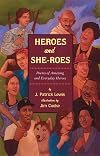
“Heroes and She-roes: Poems of Amazing and Everyday Heroes” was one of the best poetry children’s books I’ve read. I really enjoyed this book because it not only focused on historical heroes like Helen Keller or Rosie the Riveter, it also included everyday heroes as well. For example, there were poems on elementary school teachers and immigrants – people who one would not normally categorize as heroes. At the end of the book, the author also emphasizes this big idea: that heroes show more don’t need to be extraordinary; heroes are everyday people that help to make the world a better place as well. I also really enjoyed this story because with each poem, there was a paragraph that gave further information about the “hero” or “she-roe.” For example, “The Seeker” was a poem about Helen Keller and the paragraph below gave a brief explanation of her life and struggles. show less
Lists
Youth: Poetry (3)
Youth: Music (1)
Awards


You May Also Like


Associated Authors
Statistics
- Works
- 116
- Also by
- 6
- Members
- 7,805
- Popularity
- #3,121
- Rating
- 3.9
- Reviews
- 499
- ISBNs
- 310
- Languages
- 9

