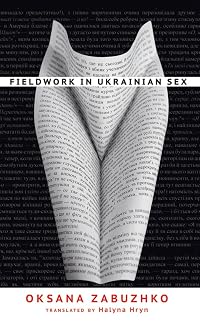
Fieldwork in Ukrainian Sex
by Oksana Zabuzhko
On This Page
Description
Called "the most influential Ukrainian book for the 15 years of independence," Oksana Zabuzhko's Fieldwork in Ukrainian Sex became an international phenomenon when it shot to number one on the Ukrainian bestseller list and remained there throughout the 1990s. The novel is narrated in first-person streams of thought by a sharp-tongued poet with an irreverently honest voice. She is visiting professor of Slavic studies at Harvard and her exposure to American values and behaviors conspires with show more her yearning to break free from Ukrainian conventions. In her despair over a recently ended affair, she turns her attention to the details of her lover's abusive behavior. In detailing the power her Ukrainian lover wielded over her, and in admitting the underlying reasons for her attraction to him, she begins to see the chains that have defined her as a Ukrainian woman - and in doing so, exposes and calls into question her country's culture of fear and repression at the very time that it wrestled its way toward independence. show lessTags
Recommendations










Member Reviews
Despite its importance during early years of Ukrainian independence, this book presents a few somewhat unnecessary challenges to a reader. My first complaint is about the language. The Ukrainian language is often appreciated for its structural musicality. A well-written prose could feel like it is on a verge of breaking into a song. Such musicality is missing for this reader in Zabuzhko’s writing. The author obviously has a formidable vocabulary in Ukrainian but her choice of words seems often puzzling, as if she insists on the most discordant combination she could find. Persistent use of Russian words, although often in a meaningful context, adds insult to the injury. On top of this there are conversation fillers in English, which show more are entirely unnecessary. Despite the author’s insistence on throwing in a number of her own poems, the narration stumbles along rather than flows. This might be an intentional reflection of the state of mind of the protagonist, to whose limping stream of consciousness a reader is exposed. The choice of this narrative technique is my second complaint and the protagonist herself and her undeniably soviet-formed mentality is the third.
Having gotten my complaints out of the way I will focus now on the admirable aspects of the novel. The author is very honest and does not avoid difficult subjects or ugly truths. Through her dislikable characters she conveys the lack of options available to a Ukrainian (woman) in soviet and post-soviet times. It’s a choice ‘between a victim and a torturer, between non-being and being that kills’. Zabuzhko’s most memorable phrase, which I do not include here for the risk of spoiling the best part of the reading experience, arrives close to the end of the book. Indeed, she has completed her research. show less
Having gotten my complaints out of the way I will focus now on the admirable aspects of the novel. The author is very honest and does not avoid difficult subjects or ugly truths. Through her dislikable characters she conveys the lack of options available to a Ukrainian (woman) in soviet and post-soviet times. It’s a choice ‘between a victim and a torturer, between non-being and being that kills’. Zabuzhko’s most memorable phrase, which I do not include here for the risk of spoiling the best part of the reading experience, arrives close to the end of the book. Indeed, she has completed her research. show less
More Rant Than Research
Review of the Amazon Crossing paperback (June 2011) translated by Halyna Hryn from the Ukrainian language original Польові дослідження з українського сексу (Field Research on Ukrainian Sex) (1996)
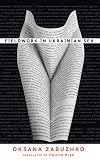
Despite the intriguing premise of the book's various synopses and the brilliant erotic simplicity of the English translation's cover design, its rant-link show more stream-of-consciousness one-long-paragraph one-long-chapter format made for a tiring and draining reading experience. There was little relief along the way except for the occasional poem inserted into the proceedings.
The protagonist bemoans her distant Ukrainian lover while in the process of delivering a faux-lecture on the title topic to a seminar crowd in Harvard University in Cambridge, Massachusetts. Towards the end of the book, having arranged for the absent artist/painter to come to America to join her, she finds him soon abandoning her to seek better prospects. It fizzles out from there.
The post-Soviet (post-Russian?) moral was summed up in a late paragraph:
Trivia and Links
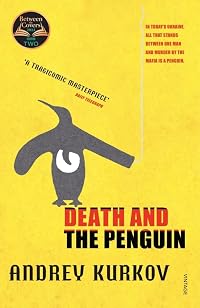
With the recent Russia-Ukraine War, I decided to increase my reading of Ukrainian authors. After Andrey Kurkov's Death and the Penguin (1996) I looked again at GR's listopia of Ukrainian Literature and most of the top of the list didn't seem to be clearly available in translation. Searching further I found an additional listopia of Best Ukrainian Books Translated into English, where Oksana Zabuzhko's Fieldwork in Ukrainian Sex is the top voted selection, so I chose it on that basis. I'll probably read either Kurkov's Penguin Lost (orig. 1996) or Zabuzhko's The Museum of Abandoned Secrets (orig. 2009) next in my Ukrainian writers survey. It is tempting to include some Nikolai Gogol and Mikhail Bulgakov as well, even if they are considered Russian authors, as they were both born in Ukraine.
Library Thing also has a useful Ukraine Reading List which includes fiction and non-fiction related to Ukraine by non-Ukrainian authors. show less
Review of the Amazon Crossing paperback (June 2011) translated by Halyna Hryn from the Ukrainian language original Польові дослідження з українського сексу (Field Research on Ukrainian Sex) (1996)
The sexual odyssey of the artist and poetess, unfolding in Ukraine and America in the late twentieth century, turns into a true medieval mystery, in which the heroine goes through the circles of recent Ukrainian history to meet face to face with the Devil. - a translation of the Ukrainian language edition synopsis.[2.5]
Despite the intriguing premise of the book's various synopses and the brilliant erotic simplicity of the English translation's cover design, its rant-link show more stream-of-consciousness one-long-paragraph one-long-chapter format made for a tiring and draining reading experience. There was little relief along the way except for the occasional poem inserted into the proceedings.
The protagonist bemoans her distant Ukrainian lover while in the process of delivering a faux-lecture on the title topic to a seminar crowd in Harvard University in Cambridge, Massachusetts. Towards the end of the book, having arranged for the absent artist/painter to come to America to join her, she finds him soon abandoning her to seek better prospects. It fizzles out from there.
The post-Soviet (post-Russian?) moral was summed up in a late paragraph:
..we were raised by men f***ed from all ends every which way? That later we ourselves screwed the same kind of guys, and that in both cases they were doing to us what others, the others, had done to them? And that we accepted them and loved them as they were, because not to accept them was to go over to the others, the other side? And that our only choice, therefore, was and still remains between victim and executioner: between nonexistence and an existence that kills you.It probably all seemed more profound and provocative in the early years of Ukrainian independence in the 1990s (the book was published in 1996). I admittedly am biased due t0 my own observations of the Homo-Sovieticus in post-Renewed Independence Estonian society.
Trivia and Links
With the recent Russia-Ukraine War, I decided to increase my reading of Ukrainian authors. After Andrey Kurkov's Death and the Penguin (1996) I looked again at GR's listopia of Ukrainian Literature and most of the top of the list didn't seem to be clearly available in translation. Searching further I found an additional listopia of Best Ukrainian Books Translated into English, where Oksana Zabuzhko's Fieldwork in Ukrainian Sex is the top voted selection, so I chose it on that basis. I'll probably read either Kurkov's Penguin Lost (orig. 1996) or Zabuzhko's The Museum of Abandoned Secrets (orig. 2009) next in my Ukrainian writers survey. It is tempting to include some Nikolai Gogol and Mikhail Bulgakov as well, even if they are considered Russian authors, as they were both born in Ukraine.
Library Thing also has a useful Ukraine Reading List which includes fiction and non-fiction related to Ukraine by non-Ukrainian authors. show less
A brilliant Eastern European poet learns the hard way that it can be hell to be a relationship with a painter. Not a conventional novel, more a prose-poem "rant" with aspirations to be the Ukrainian "Second Sex." Zabushko riffs on Ukrainian history, men and women, and the neglible place of poetry in today's society. Just be aware: if you can't handle stream-of-consciousness style, you're not going to be able to follow "Ukrainian Sex." Kudos to AmazonCrossing for publishing a bold book in translation.
Ratings
Members
- Recently Added By
Lists

A Ukraine Reading List
121 works; 90 members

Ukrainian Culture
17 works; 2 members

Books Read in 2022
5,226 works; 115 members
Author Information

24+ Works 476 Members
Some Editions
Awards and Honors
Common Knowledge
- Canonical title
- Fieldwork in Ukrainian Sex
- Original title
- Польові дослідження з українського сексу
- Alternate titles
- Feldstudien über ukrainischen Sex; Полевые исследования украинского секса
- Original publication date
- 1996
- People/Characters
- Oksana; Mykola K.; David; Donna
- Important places
- Cambridge, Massachusetts, USA; Boston, Massachusetts, USA; Washington, D.C., USA; Kyiv, Ukraine
- First words
- Not today, she says to herself.
- Last words*
- (Click to show. Warning: May contain spoilers.)Hi! Lassen wir's gut sein! - sage ich.
- Original language
- Ukrainian
*Some information comes from Common Knowledge in other languages. Click "Edit" for more information.
Classifications
- Genres
- General Fiction, Fiction and Literature
- DDC/MDS
- 891.7933 — Literature & rhetoric Literatures of other languages East Indo-European and Celtic literatures Russian and East Slavic languages Ukrainian and other East Slavic languages Ukrainian fiction 1917–1991
- LCC
- PG3949.36 .A313 .P6513 — Language and Literature Slavic languages and literatures. Baltic languages. Albanian language Slavic. Baltic. Albanian Slavic Ukrainian
- BISAC
Statistics
- Members
- 159
- Popularity
- 206,415
- Reviews
- 4
- Rating
- (3.36)
- Languages
- 7 — Dutch, English, German, Polish, Russian, Swedish, Ukrainian
- Media
- Paper, Audiobook, Ebook
- ISBNs
- 18
- ASINs
- 2