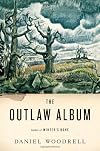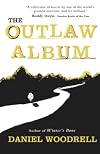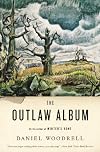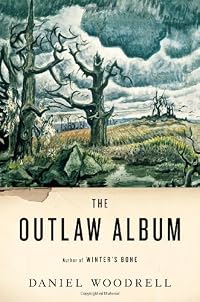
The Outlaw Album
by Daniel Woodrell
On This Page
Description
Twelve short stories depict people on the fringes of society, including an injured rapist who is cared for by a young girl and a husband who cruelly avenges the murder of his wife's pet.Tags
Recommendations



Member Reviews
There are an even dozen stories in Daniel Woodrell's THE OUTLAW ALBUM (2011), and they are all pure Woodrell, oozing Appalachia and the poor and dispossessed of that region. I've been a cautious fan of his work ever since WINTER'S BONE - 'cautious' because his characters often border on the grotesque and his stories are so dark. I am reminded of the Flannery O'Connor I read back in grad school nearly sixty years ago. But Woodrell's grotesques seem so much more depressing. The worst offender here is "Uncle," told by a girl who watches her uncle entrap and rape young women who are tubing or canoeing on the river. But she fixes him good - payback for the times he molested her - with a mattock blow to the head, leaving him a drooling idiot show more she has to care for - until she doesn't. And in "The Echo of Neighborly Bones" an uppity neighbor is killed, over and over. And in "Night Stand," a Vietnam vet and his wife are confronted with a naked, growling man who breaks into their home at night. What he does and the identity of the invader are the driving force in that story.
All of the stories here seem to have a very dark side, yet they are also oddly compelling. I finished them all, wincing my way through their odd casts of characters and grotesque mini-plots. I'm still not sure if I like Woodrell, but I will hesitantly recommend this story collection, if you are already a Woodrell fan, that is. Have at 'em.
- Tim Bazzett, author of the memoir, BOOKLOVER show less
All of the stories here seem to have a very dark side, yet they are also oddly compelling. I finished them all, wincing my way through their odd casts of characters and grotesque mini-plots. I'm still not sure if I like Woodrell, but I will hesitantly recommend this story collection, if you are already a Woodrell fan, that is. Have at 'em.
- Tim Bazzett, author of the memoir, BOOKLOVER show less
There’s a depth and complexity to Daniel Woodrell’s stories that few writers can approach. If the goal of a short story is to pack as much perfection as possible into a small space, Woodrell comes close more often than not. Plot, character, motivation and place are layered, intertwined and caressed to create truly original stories.
Desperation is the common theme. A young soldier damaged by Iraq and the suicide of his father may choose to return rather than accept his options at home. A girl cares for the “joyful and mean” uncle that she turned physically helpless – the uncle that raped her. A father loves his thieving son “like the way I love the Korean conflict. Something terrible I have lived through.” The carnage of show more the civil war -with former neighbors slaughtering one another - is explored.
Woodrell’s writing is brutally unique. A man describes the houses in his neighborhood as “the kind that if they were people they would cough a lot and spit up tangled stuff.” A man who’s had just about enough of another: “My arms ached already from the thought of digging his new home, for I was thinking he would soon be in it.” show less
Desperation is the common theme. A young soldier damaged by Iraq and the suicide of his father may choose to return rather than accept his options at home. A girl cares for the “joyful and mean” uncle that she turned physically helpless – the uncle that raped her. A father loves his thieving son “like the way I love the Korean conflict. Something terrible I have lived through.” The carnage of show more the civil war -with former neighbors slaughtering one another - is explored.
Woodrell’s writing is brutally unique. A man describes the houses in his neighborhood as “the kind that if they were people they would cough a lot and spit up tangled stuff.” A man who’s had just about enough of another: “My arms ached already from the thought of digging his new home, for I was thinking he would soon be in it.” show less
The Outlaw Album is a collection of short stories by Daniel Woodrell and although I am a huge fan of this author, I would suggest that newcomers to his work start with one of his novels rather than this collection of inventive, gritty stories that are about tough characters who always choose the dark side. The stories pull no punches whether they are about murder, rape or revenge. His characters are mostly backwoods folk from the Ozarks familiar with drugs, liquor and guns and it is often impossible to find any redeeming or likeable qualities in them.
As with all short story collections, I preferred some stories over others but all are written in his hauntingly simple, heart-felt prose that paint vivid pictures of the Ozark countryside show more and the intense people he places there. The Outlaw Album is a book filled with tense stories, hard characters and brutal actions and I am happy to include this timeless, provocative collection on my shelf alongside his other works. show less
As with all short story collections, I preferred some stories over others but all are written in his hauntingly simple, heart-felt prose that paint vivid pictures of the Ozark countryside show more and the intense people he places there. The Outlaw Album is a book filled with tense stories, hard characters and brutal actions and I am happy to include this timeless, provocative collection on my shelf alongside his other works. show less
Rereading this collection I'm struck at Woodrell's flexibility with each narrative. From an oral history of a man's death and racial violence in "The Horse in Our History" to the intimate first-person of a girl who was sexually abused and gets her revenge in "Uncle." There is also no repetition of one narrator or voice and though not all the narratives are as compelling, particularly the closing piece "Returning to the River," the majority of this collection is an enjoyable and meticulously delivered set of short stories grounded in the landscape of Missouri.
“Once Boshell finally killed his neighbor he couldn’t seem to quit killing him,” goes the first line in the first story of this searing but beautiful collection. “Outlaw” is a word that we sometimes confuse with “hero.” It’s a word that in our minds describes men (and women) who challenge the law, who defy it. The freedom of the individual versus the repression of the government. We tend to idolize rebels in this country. Defiance is a characteristic of the people in Woodrell’s stories, but his use of the word “outlaw” is more literal and tragic. . .
. . .Set mostly in the hills and hollers of the Ozarks, Woodrell’s own home, the stories in The Outlaw Album center around the kinds of us-versus-them conflicts that show more can make people do criminal things—desperation, being backed into a corner, having nothing left to lose. A girl who wants to stop her rapist. A man who murders a housebreaker in self defense. A man who burns down his neighbor’s house because it was built on land his own family was forced off of. Woodrell has a fine sense of how even ordinary and innocuous situations—like a dispute over a family pet and some chickens—seethe with potential violence that could erupt from the slightest match. In “Twin Forks,” Tom Morrow, retired from up north to run a riverside campground, finds himself facing down an meth addict who won’t stay in jail long enough to forget his grudge. He starts keeping a rifle in the campground office. In “Florianne” a father whose daughter has gone missing is starting to stare at friends he’s known all his life, wondering, wondering if one of them is responsible. In “Black Step,” an Iraqi war vet between tours quietly lets the boys who used to bully him in high school that things are a little different now: “After the desert, bro, the list of things you’re totally certain you’d never ever do gets a lot shorter.”
But if the stories simmer with violence, they are also filled with an aching beauty and pathos. With places in the woods where a house once stood but now can only be found by the remnants of an ancient flower garden gone wild. With girls laughing as they swim in under the bridge in the river. With the care a troubled vet takes over his cancer-ridden mother, and the strong bond between two brothers as they share a drink and wait for one to be arrested for arson. Woodrell writes poetically but without pretension, and without laying it on thick even though he’s obviously capable when the situation calls for it. (There’s a description of a dead cow where the situation definitely calls for it). And if he occasionally waves a metaphor in our faces—descriptions of the ramshackle houses of a shanty town an obvious parallel to the way family stories are created in “The Horse in Our History”—well, he does it so beautifully we hardly mind. read full review show less
. . .Set mostly in the hills and hollers of the Ozarks, Woodrell’s own home, the stories in The Outlaw Album center around the kinds of us-versus-them conflicts that show more can make people do criminal things—desperation, being backed into a corner, having nothing left to lose. A girl who wants to stop her rapist. A man who murders a housebreaker in self defense. A man who burns down his neighbor’s house because it was built on land his own family was forced off of. Woodrell has a fine sense of how even ordinary and innocuous situations—like a dispute over a family pet and some chickens—seethe with potential violence that could erupt from the slightest match. In “Twin Forks,” Tom Morrow, retired from up north to run a riverside campground, finds himself facing down an meth addict who won’t stay in jail long enough to forget his grudge. He starts keeping a rifle in the campground office. In “Florianne” a father whose daughter has gone missing is starting to stare at friends he’s known all his life, wondering, wondering if one of them is responsible. In “Black Step,” an Iraqi war vet between tours quietly lets the boys who used to bully him in high school that things are a little different now: “After the desert, bro, the list of things you’re totally certain you’d never ever do gets a lot shorter.”
But if the stories simmer with violence, they are also filled with an aching beauty and pathos. With places in the woods where a house once stood but now can only be found by the remnants of an ancient flower garden gone wild. With girls laughing as they swim in under the bridge in the river. With the care a troubled vet takes over his cancer-ridden mother, and the strong bond between two brothers as they share a drink and wait for one to be arrested for arson. Woodrell writes poetically but without pretension, and without laying it on thick even though he’s obviously capable when the situation calls for it. (There’s a description of a dead cow where the situation definitely calls for it). And if he occasionally waves a metaphor in our faces—descriptions of the ramshackle houses of a shanty town an obvious parallel to the way family stories are created in “The Horse in Our History”—well, he does it so beautifully we hardly mind. read full review show less
Daniel Woodrell became one of my favorite writers when I discovered Winter's Bone, a book that has a place in my top 10 favorite books. His stories are sly, brutally honest, removed from redneck stereotype - firmly rooted in a particular kind of reality. He also writes beautifully. Winter's Bone is a book that made me ache the first time I read and did so again after I finished it and read it all over a second time.
The Outlaw Album is a book of short stories - capsulized moments of revenge, of what can happen when people are pushed to the edge. It is strongly of its place - one that I know well from the time I spent living in Arkansas.
I spent a summer in college going out on the Little Rock library's bookmobile. Twice a week we sat in show more the big bookmobile in a suburban parking with lots of choice and air conditioning. The other two days we took the smaller bookmobile and drove back roads up into the Ouachita mountains - no air conditioning, but breathtaking beauty and patrons who brought us food from their gardens and homemade sausages. I can remember riding those roads through the woods with trees that formed a canopy over the road and wild roses growing in the trees that colored them all like a young girl's blush.
Daniel Woodrell gets the place and the people and its stories. His voice reminds me most of singers like Meredith Sisco or Levon Helm or early early Loretta Lynn or any of the people I've heard singing Appalachin folk songs and hymns at tent revivals, church, and bluegrass gatherings. The Outlaw Album isn't Winter's Bone, but it's still got that lonely soulful mountain feel and that's good enough. show less
The Outlaw Album is a book of short stories - capsulized moments of revenge, of what can happen when people are pushed to the edge. It is strongly of its place - one that I know well from the time I spent living in Arkansas.
I spent a summer in college going out on the Little Rock library's bookmobile. Twice a week we sat in show more the big bookmobile in a suburban parking with lots of choice and air conditioning. The other two days we took the smaller bookmobile and drove back roads up into the Ouachita mountains - no air conditioning, but breathtaking beauty and patrons who brought us food from their gardens and homemade sausages. I can remember riding those roads through the woods with trees that formed a canopy over the road and wild roses growing in the trees that colored them all like a young girl's blush.
Daniel Woodrell gets the place and the people and its stories. His voice reminds me most of singers like Meredith Sisco or Levon Helm or early early Loretta Lynn or any of the people I've heard singing Appalachin folk songs and hymns at tent revivals, church, and bluegrass gatherings. The Outlaw Album isn't Winter's Bone, but it's still got that lonely soulful mountain feel and that's good enough. show less
I wanted to like this one. The author was so cool when he was on Anthony Bourdain's show. I liked Winters Bone. But.. this was just a collection of stories with the same feeling over and over. Too much emphasis on evil or wrong makes it seem diluted. Or, overwhelming, like when you pour too much hot sauce on your dinner and then it's no fun to eat. Great writing and creepy ideas, but just not something I looked forward to reading.
Members
- Recently Added By
Lists

Books Set in Missouri
29 works; 4 members
Author Information

17+ Works 5,896 Members
Awards and Honors
Distinctions
Notable Lists
Work Relationships
Common Knowledge
- Canonical title
- The Outlaw Album
- Original publication date
- 2011-10-05
- Important places
- Ozark Mountains; Missouri, USA
- Important events
- American Civil War
Classifications
Statistics
- Members
- 341
- Popularity
- 92,485
- Reviews
- 22
- Rating
- (3.79)
- Languages
- English, French
- Media
- Paper, Audiobook, Ebook
- ISBNs
- 13
- ASINs
- 5