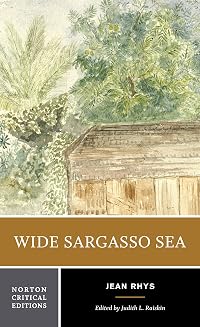
Wide Sargasso Sea [Norton Critical Edition]
by Jean Rhys
On This Page
Description
Written over the course of twenty-one years and published in 1966, Wide Sargasso Sea, based on Charlotte Brontë's Jane Eyre, takes place in Jamaica and Dominica in 1839-45. Textual notes illuminate the novel's historical background, regional references, and the non-translated Creole and French phrases necessary to fully understand this powerful story. Backgrounds include a wealth of material on the novel's long evolution, its connections to Jane Eyre, and Rhys's biographical impressions of show more growing up in Dominica. Criticism introduces readers to the critical debates inspired by the novel with a Derek Walcott poem and eleven essays. - Publisher. Beautiful and wealthy Antoinette Cosway's passionate love for an English aristocrat threatens to destroy her idyllic West Indian island existence and her very life; accompanied by notes and criticism. show lessTags
Recommendations
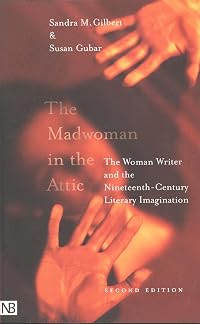
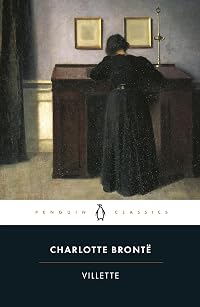
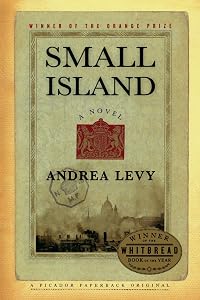
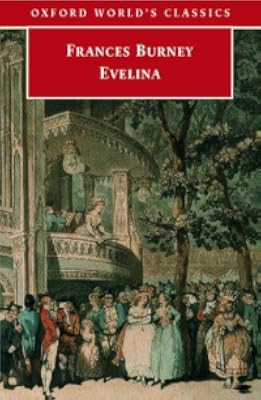


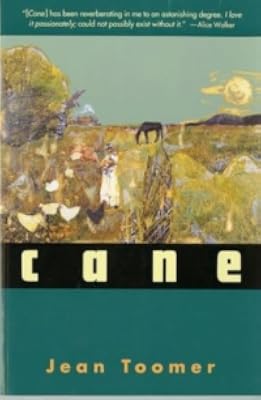
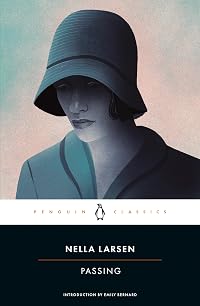
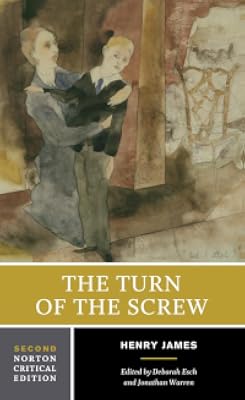
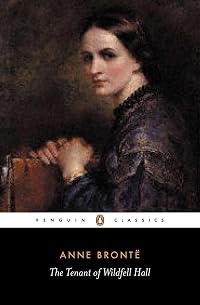
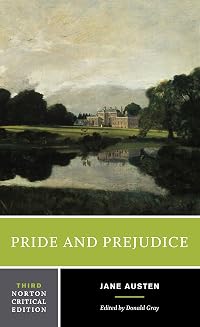
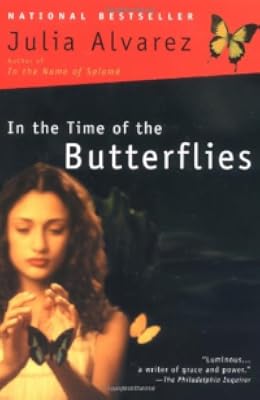
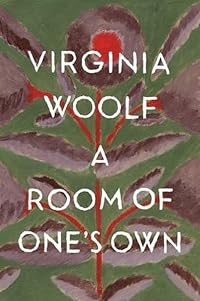
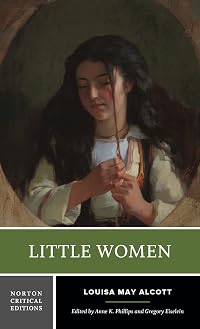

Member Recommendations
srdr This brilliant drama illuminates the themes that run through Jean Rhys's life, Wide Sargasso Sea, and Jane Eyre.
Member Reviews
Wide Sargasso Sea is one of the most intellectually challenging books I've read in a while. There is so much packed into this small 100-page novel that it's no surprise scholars love it.
In Charlotte Brontë's Jane Eyre, Mrs. Rochester is portrayed as a wild woman, mad, and subject to fits of violence and sexual depravity. True to Victorian mores, she is from the West Indies, where woman are promiscuous and prone to hysteria. Jean Rhys, herself born in Dominica, takes this assumption about women and especially Creole women and exposes it for what it is: the assumption of a culture steeped in colonial brutality and sexual violence against women of color.
Rhys's novel begins on Dominica in 1839, only a year after full emancipation had show more been granted to enslaved people in the British colonies. The Slavery Abolition Act, implemented in 1834, had paid lip-service to abolition, but required the formerly enslaved to work for their owners in an "apprenticeship" position for a year. This may have cushioned former slave owners from the immediate economic impact, but enraged those it supposedly freed. It is during this tumultuous and fraught time period that Antoinette was growing up. Heightening her precarious state, her father died, and her mother, a Creole from Martinique, was left in a vulnerable state, with both mother and daughter falling prey to avaricious men.
A young Mister Rochester, second son to a wealthy British gentleman and newly arrived in the Caribbean to seek his fortune, is quickly married to Antoinette, whom he renames Bertha (in itself a sort of violence), for thirty thousand pounds. But almost immediately, he becomes suspicious that she is promiscuous and has inherited a tendency to insanity. She must be controlled and subdued.
These dual themes of the aftermath of colonization and the treatment of women seen as Other make this a work ripe for analysis. Rhys builds on her family's history, some of whom were slave owners in Dominica, her youth on the island, and her subsequent life as a self-perceived outsider in Britain. Written over the course of two decades, when many thought she had died, so removed had she become from literary circles, the book is the result of innumerable revisions. The end product is written with an economy of language that makes every word significant. The work is divided into three parts, the first told from Antoinette's point of view growing up on the island, the second from Mr. Rochester's, and the last from Antoinette's and Grace Poole's.
Layering history, the literary relationship to Jane Eyre, and personal recollections, Wide Sargasso Sea puts the reader in the uncomfortable position between the colonizer and colonized, oppressor and oppressed, and forces them to reconsider their own relationship with both the classic text and history. show less
In Charlotte Brontë's Jane Eyre, Mrs. Rochester is portrayed as a wild woman, mad, and subject to fits of violence and sexual depravity. True to Victorian mores, she is from the West Indies, where woman are promiscuous and prone to hysteria. Jean Rhys, herself born in Dominica, takes this assumption about women and especially Creole women and exposes it for what it is: the assumption of a culture steeped in colonial brutality and sexual violence against women of color.
Rhys's novel begins on Dominica in 1839, only a year after full emancipation had show more been granted to enslaved people in the British colonies. The Slavery Abolition Act, implemented in 1834, had paid lip-service to abolition, but required the formerly enslaved to work for their owners in an "apprenticeship" position for a year. This may have cushioned former slave owners from the immediate economic impact, but enraged those it supposedly freed. It is during this tumultuous and fraught time period that Antoinette was growing up. Heightening her precarious state, her father died, and her mother, a Creole from Martinique, was left in a vulnerable state, with both mother and daughter falling prey to avaricious men.
A young Mister Rochester, second son to a wealthy British gentleman and newly arrived in the Caribbean to seek his fortune, is quickly married to Antoinette, whom he renames Bertha (in itself a sort of violence), for thirty thousand pounds. But almost immediately, he becomes suspicious that she is promiscuous and has inherited a tendency to insanity. She must be controlled and subdued.
These dual themes of the aftermath of colonization and the treatment of women seen as Other make this a work ripe for analysis. Rhys builds on her family's history, some of whom were slave owners in Dominica, her youth on the island, and her subsequent life as a self-perceived outsider in Britain. Written over the course of two decades, when many thought she had died, so removed had she become from literary circles, the book is the result of innumerable revisions. The end product is written with an economy of language that makes every word significant. The work is divided into three parts, the first told from Antoinette's point of view growing up on the island, the second from Mr. Rochester's, and the last from Antoinette's and Grace Poole's.
Layering history, the literary relationship to Jane Eyre, and personal recollections, Wide Sargasso Sea puts the reader in the uncomfortable position between the colonizer and colonized, oppressor and oppressed, and forces them to reconsider their own relationship with both the classic text and history. show less
A rather plausible nightmare history of the first Mrs Rochester. A young woman with no real protectors and very few resources within herself is treated only according to what others imagine of her. Is it any wonder she goes mad?
This review refers to the Norton Critical Edition of this book, which contains various background pieces, letters from Jean Rhys, and criticism related to the novel (as well as the text of the novel itself).
I had very mixed feelings about this book after finishing it. I had heard so much about it, especially in connection with Jane Eyre, to which it is related. Its kind of like Jane Eyre midrash, filling in the blanks in the perspectives of Mr. Rochester (we assume, as the main male character is never named) and his first wife, Bertha (Antoinette), the 'madwoman in the attic' from Bronte's book. I have to try to assess this book on two levels - first, as it relates to Jane Eyre (which is simpler but perhaps not as fair) and second, on show more its own merits (which is probably more difficult). I'm not sure this review will succeed in doing the latter.
I had really thought that I would come away with some additional insight into the relationship between Rochester and his wife or some new understanding of the 'truth' behind their story. Perhaps this was silly, as one of the underlying themes of this book seems to be that 'truth' is a very complicated and elusive thing. It was often unclear - purposefully? - what was going on in the story. Was Antoinette really insane or was Rochester simply bitter, angry, alienated and paranoid? I found myself doubting the accuracy of each of the narrator's perspectives. While this was often frustrating, I imagine that Rhys did not set out to clarify another author's work, but to deepen and enrich voices that had not been able to speak in that work. I did hope that I would come to understand Rochester's motivations a little better - full disclosure, I hated him in Jane Eyre - but he mostly came off as a brute and I did not understand why he was so cruel to Antoinette. Perhaps because of her background, he viewed her as less than fully white and therefore, less than fully human?
I loved how Antoinette finally gets to speak - reading Jane Eyre can often be irritating because the only things that we know about her come from Rochester, who is clearly not unbiased. The least enjoyable parts of this book for me were the portions narrated from his point of view because I thought that they mostly just confirmed the things he had told Jane about his marriage to Antoinette. These portions did show somewhat the workings of his psychology & his emotional-racial issues, however. I enjoyed her portions much more & wish more of their courtship, early marriage, and life in England had been narrated from her perspective. The jump from their move to Jamaica near the end of the second part of the book to England & the timeline of the Jane Eyre storyline in the third book was really jarring. What happened in between? How much time has passed? I don't remember of this is clarified in JE or if the lack of clarity is meant to mimic Antoinette's lack of knowledge of what has happened to her and where she is. It was disorienting and effective though.
On its own, I think the book raises a number of interesting issues about race & class. It was interesting to me how the white settlers in the West Indies were viewed with suspicion by both the local blacks and by the English whites - they were definitely associated with a powerful, privileged class but they were also viewed as lesser than fully white, I think. Rochester's fears - generally unarticulated, but clearly present - that his wife is somehow contaminated (spiritually and racially) by her West Indies background and upbringing - really reflected this. Antoinette's struggle to negotiate the dilemma of being neither white enough nor black enough was often painful to watch - as in the early scenes where she rejects her black friend Tia and then Tia attacks her, a fact which causes them both powerful sadness.
I am glad to have purchased the NCE of this book. Some letters Jean Rhys wrote while working on this book were included and I thought these provided a lot of insight into the author's thought processes & her inspiration for writing the story. A few also clarified minor plot points or questions that I had. I especially enjoyed the critical essay by Michael Thorpe entitled "'The Other Side': Wide Sargasso Sea and Jane Eyre" - it really enriched my understanding of the novel and its relationship to Bronte's work. Still finishing up all the other essays. About half the book is critical work, other material from the author, maps, etc. I will definitely be looking into getting the NCEs for other books, when they are available. show less
I had very mixed feelings about this book after finishing it. I had heard so much about it, especially in connection with Jane Eyre, to which it is related. Its kind of like Jane Eyre midrash, filling in the blanks in the perspectives of Mr. Rochester (we assume, as the main male character is never named) and his first wife, Bertha (Antoinette), the 'madwoman in the attic' from Bronte's book. I have to try to assess this book on two levels - first, as it relates to Jane Eyre (which is simpler but perhaps not as fair) and second, on show more its own merits (which is probably more difficult). I'm not sure this review will succeed in doing the latter.
I had really thought that I would come away with some additional insight into the relationship between Rochester and his wife or some new understanding of the 'truth' behind their story. Perhaps this was silly, as one of the underlying themes of this book seems to be that 'truth' is a very complicated and elusive thing. It was often unclear - purposefully? - what was going on in the story. Was Antoinette really insane or was Rochester simply bitter, angry, alienated and paranoid? I found myself doubting the accuracy of each of the narrator's perspectives. While this was often frustrating, I imagine that Rhys did not set out to clarify another author's work, but to deepen and enrich voices that had not been able to speak in that work. I did hope that I would come to understand Rochester's motivations a little better - full disclosure, I hated him in Jane Eyre - but he mostly came off as a brute and I did not understand why he was so cruel to Antoinette. Perhaps because of her background, he viewed her as less than fully white and therefore, less than fully human?
I loved how Antoinette finally gets to speak - reading Jane Eyre can often be irritating because the only things that we know about her come from Rochester, who is clearly not unbiased. The least enjoyable parts of this book for me were the portions narrated from his point of view because I thought that they mostly just confirmed the things he had told Jane about his marriage to Antoinette. These portions did show somewhat the workings of his psychology & his emotional-racial issues, however. I enjoyed her portions much more & wish more of their courtship, early marriage, and life in England had been narrated from her perspective. The jump from their move to Jamaica near the end of the second part of the book to England & the timeline of the Jane Eyre storyline in the third book was really jarring. What happened in between? How much time has passed? I don't remember of this is clarified in JE or if the lack of clarity is meant to mimic Antoinette's lack of knowledge of what has happened to her and where she is. It was disorienting and effective though.
On its own, I think the book raises a number of interesting issues about race & class. It was interesting to me how the white settlers in the West Indies were viewed with suspicion by both the local blacks and by the English whites - they were definitely associated with a powerful, privileged class but they were also viewed as lesser than fully white, I think. Rochester's fears - generally unarticulated, but clearly present - that his wife is somehow contaminated (spiritually and racially) by her West Indies background and upbringing - really reflected this. Antoinette's struggle to negotiate the dilemma of being neither white enough nor black enough was often painful to watch - as in the early scenes where she rejects her black friend Tia and then Tia attacks her, a fact which causes them both powerful sadness.
I am glad to have purchased the NCE of this book. Some letters Jean Rhys wrote while working on this book were included and I thought these provided a lot of insight into the author's thought processes & her inspiration for writing the story. A few also clarified minor plot points or questions that I had. I especially enjoyed the critical essay by Michael Thorpe entitled "'The Other Side': Wide Sargasso Sea and Jane Eyre" - it really enriched my understanding of the novel and its relationship to Bronte's work. Still finishing up all the other essays. About half the book is critical work, other material from the author, maps, etc. I will definitely be looking into getting the NCEs for other books, when they are available. show less
Aside from not being a huge fan of Jayne Eyre (gasp!), I am not usually a fan of fan fiction. This fan fiction based on Charlotte Brontë’s Jane Eyre surprised me with the way it is woven into the Jane Eyre plot and tackles the post-colonialist and patriarchal society in Jamaica and England in the early to mid-19th century, which led up to the action that transpired in Jane Eyre. In my opinion, this prequel, telling the backstory of the madwoman in the attic, is superior to Jane Eyre.
The story begins in the 1830s, soon after England abolished slavery in the British Empire in 1834. It is initially set on a sugar plantation called Coulibri that was once a wealthy estate, now derelict and plunged into poverty following the abolition. show more The protagonist, Antoinette Cosway (who represents the “madwoman in the attic” character in Jane Eyre) narrates the first of the three parts of the book, telling the story of her childhood at Coulibri, how her widowed mother, Annette, remarried a wealthy Englishmen, Mr. Mason, not long before the emancipated slaves rose up and burned down the estate, killing Antoinette’s disabled brother and causing her mother to have a breakdown. Mr. Mason exploits this situation; sends Annette away “to the country” and Antoinette is sent to a convent school. During this time, Antoinette is told that her mother has died.
The second part begins from the point of view of Edward Rochester, Antoinette’s new husband as they are traveling to their honeymoon house, the summer estate Antoinette inherited from her mother, on Dominica in the Windward Islands. Edward is an unfaithful and emotionally abusive second son with an agenda, and almost immediately, he begins to look down on Antoinette because of her status as a Creole (despite her pure English blood). A series of circumstances and events that begin to plunge Antoinette into despair, including Edward’s cold, manipulative insistence on calling Antoinette Bertha. In the final part, the Rochesters return to England to claim Thornfield Hall, the estate Edward inherited after his father’s and brother’s deaths, and he largely confines “Bertha” to the attic at Thornfield Hall, the mansion on the estate. Narrated by Antoinette, this part explores her relationship with the servant, Grace Poole, who is meant to be guarding her. The Norton Critical Edition is annotated with bits of history and definitions for local vernacular, and the novel is followed by excerpts from Jane Eyre, where the stories intersect, as well as the usual thoughtful essays. show less
The story begins in the 1830s, soon after England abolished slavery in the British Empire in 1834. It is initially set on a sugar plantation called Coulibri that was once a wealthy estate, now derelict and plunged into poverty following the abolition. show more The protagonist, Antoinette Cosway (who represents the “madwoman in the attic” character in Jane Eyre) narrates the first of the three parts of the book, telling the story of her childhood at Coulibri, how her widowed mother, Annette, remarried a wealthy Englishmen, Mr. Mason, not long before the emancipated slaves rose up and burned down the estate, killing Antoinette’s disabled brother and causing her mother to have a breakdown. Mr. Mason exploits this situation; sends Annette away “to the country” and Antoinette is sent to a convent school. During this time, Antoinette is told that her mother has died.
The second part begins from the point of view of Edward Rochester, Antoinette’s new husband as they are traveling to their honeymoon house, the summer estate Antoinette inherited from her mother, on Dominica in the Windward Islands. Edward is an unfaithful and emotionally abusive second son with an agenda, and almost immediately, he begins to look down on Antoinette because of her status as a Creole (despite her pure English blood). A series of circumstances and events that begin to plunge Antoinette into despair, including Edward’s cold, manipulative insistence on calling Antoinette Bertha. In the final part, the Rochesters return to England to claim Thornfield Hall, the estate Edward inherited after his father’s and brother’s deaths, and he largely confines “Bertha” to the attic at Thornfield Hall, the mansion on the estate. Narrated by Antoinette, this part explores her relationship with the servant, Grace Poole, who is meant to be guarding her. The Norton Critical Edition is annotated with bits of history and definitions for local vernacular, and the novel is followed by excerpts from Jane Eyre, where the stories intersect, as well as the usual thoughtful essays. show less
This was amazing and changed the way I will think about Jane Eyre forever. Rhys's style is lyrical, the historical era she evokes so fraught and nuanced, so haunting and heartbreaking (that tension between white guilt and systemic cultures of oppression!)
Jean Rhys's Wide Sargasso Sea is one of those novels: I know I ought to read them, because they're touchstones of entire genres of creative and critical writing, but I put them off for one reason or another. Well, let me be blunt: I put off reading anything else by Jean Rhys after slogging through her incredibly bleak 1939 novel Good Morning, Midnight in a British Modernism class in college. Regular readers of this blog will know that I do not shy away from the dark or dismal. Most of my favorite authors are widely regarded as "depressing," and I'm sure for many people there wouldn't be much to choose between the comically cynical (Bukowski, Céline, Thompson, Beckett) and the fluidly psychological (Woolf, Welty, Rushdie, Joyce). I show more devour the works of all these writers with abandon, and find many of them laugh-out-loud funny. But Jean Rhys almost did me in. Good Morning, Midnight struck me as the actual experience of clinical depression, distilled into book form. There was absolutely no relief from drab, ugly surroundings and crushing loneliness, not even in the form of a few equally-depressed friends to share the protagonist Sasha Jensen's burden, or an occasional wry humorous touch. There seemed to be no passion, love, or even affection left in any part of Sasha's psyche. Dismal, unredeemed, solitary alcoholism reigned from the book's opening pages to its brutal close. When I put it down, I had had enough.
Luckily, Wide Sargasso Sea is a much different novel. This re-working of Jane Eyre's madwoman-in-the-attic, which Rhys set largely in her native West Indies, was published in 1966 - ten years after most people thought its author had perished in an alcoholic stupor. It was instrumental in kicking off the whole field of postcolonial studies, and remains a touchstone text. Although the story of Antoinette Bertha Mason's terrifying childhood, arranged marriage, and subsequent slide into insanity is certainly dark, a few factors save this late novel from the all-out brutality of Rhys's early work. For one thing, whereas Good Morning, Midnight is set on the cold, rain-drenched streets of Paris and London, which Rhys and her characters plainly detest, Wide Sargasso Sea unfolds in the sometimes-sinister but always vibrantly beautiful West Indies, a place Antoinette loves passionately. (This alone separates her from Sasha, who I remember as loving nothing, even tepidly.) Rhys's feelings about her Dominican roots are not unmixed, but she and Antoinette share an ability to relate deeply to the West Indian landscape in a way she certainly doesn't do with Europe.
Encapsulated here is the tension of Antoinette's early life: a neglected existence in a beautiful place she loves, which is nonetheless full of darkness and forbidden objects and ideas. It is also host to an explosive racial politics that means she is never fully "at home," even in the house where she grows up. As the young daughter of a former slave owner just after emancipation, she is caught in a position impossible for a child to understand: her parents and the other white colonizers represent a shameful legacy that has recently been rejected, but she in turn is rejected by the black community for her white skin (and privileged attitude). Rhys conjures the oppressive atmosphere of secrets and fear with a sure and vivid hand; I love her style, particularly in the sections narrated by Antoinette.
Not only that, but I was pleasantly surprised by the complexity Rhys brings to both Antoinette and her husband (who is not explicitly named, but is patterned on Brontë's Rochester). Rochester is not cast as an unmitigated villain, nor Antoinette as a blameless victim. Their relationship from the first has the doomed cast of a Greek tragedy, but not because one or the other begins the story as a tyrant. I admired Rhys's subtlety and compassion in this regard: she obviously feels strongly for the oppressed West Indians both black and white, but she does not pretend that any particular member of the oppressing class is a heartless monster. At the same time, being a sympathetic person doesn't stop Rochester (or Antoinette, for that matter) from perpetuating the prejudices and cruelties begun by their compatriots.
Rhys does make a number of decisions that puzzle me - chief among them, the structure of the novel. One of her stated aims in Wide Sargasso Sea is to give a voice and a personal story to the "poor ghost" Bertha Mason in Charlotte Brontë's novel. This is what she starts out doing, letting Antoinette Bertha Cosway/Mason narrate the events of her childhood and early adulthood. But then, just as we reach the eve of Antoinette's meeting with Rochester, the narration switches to his internal monologue. With one brief exception, we don't regain Antoinette's narrative voice until she has succumbed to madness and been locked up in Thornfield Hall. This was obviously a conscious choice on Rhys's part, but it strikes me as such a strange one: just at the point when the reader would benefit most from Antoinette's point of view, she is silenced. I can think of a number of rationales for structuring the book this way; if it was important to Rhys to make Rochester a sympathetic character, for example, the easiest way is to get inside his head. In one of the essays appended to my edition (the Norton Critical), Lee Erwin argues that the structure of Wide Sargasso Sea is meant as a reaction against the traditional Regency/Victorian novel that ends (we assume happily) with the heroine's marriage. Antoinette's story seems to "end" with her wedding, but since her marriage rather spectacularly doesn't work out, she must return to enact the only other traditional feminine ending: madness and death. Erwin also points out that Rochester's narration, in which he is disgusted because his white wife reminds him of a black woman, lets us see how closely allied are the white Creoles and the black ex-slaves in the eyes of the colonizer, even if they are forever sundered in their own eyes. All of these ideas are interesting, but I was still left unsatisfied with Rhys's decision to let Rochester tell such a large portion of Antoinette's story. In a novel this short, it seemed tantamount to denying Bertha Mason a voice all over again.
And speaking of the appended essays to the Norton Critical Edition: I got a lot out of them. I collect Nortons but don't always read the additional materials; sometimes I finish the actual novel and feel "done." This time, though, maybe because the novel itself is so concise, I felt primed for some high-quality critical responses, and the Norton editors did not disappoint. I especially appreciated Sandra Drake's discussion of how Rhys incorporates West Indian obeah/voodoo beliefs, specifically imagery around zombi-ism, into Antoinette's story. She points out that:
So interesting! I will quite possibly never think of zombie movies in the same way again. Drake goes on to explain that Caribbean believers in obeah/voodoo feared zombi-ism much more than they feared death, since they believed that upon death their spirits would be transported back to Africa, whereas zombi-ism trapped the spirit indefinitely in a helpless slave state. Therefore, she argues, Antoinette's "awakening" from her zombi trance and plunge off the roof of Thornfield is actually a triumph, rather than a tragedy. I started out quite skeptical about this claim, but I have to say that Drake summons such strong textual evidence that I ended up more or less convinced.
As a postcolonial re-telling of Jane Eyre, Rhys's novel was hardly a revelation to me. When I studied Brontë's novel in college, there wasn't a student in the class that didn't gag, groan, or otherwise react negatively to the passage where Rochester equates the West Indies to a sinfully contaminated Hell, and is about to commit suicide until a "wind fresh from Europe blew over the ocean and rushed through the open casement...and the air grew pure." To a modern reader, the cultural chauvinism and xenophobia in this scene fairly leaps off the page; I hardly need an entire response novel to convince me of it. That wasn't the case, though, in 1966, and the fact that some of Rhys's points now seem obvious is a testament to how influential Wide Sargasso Sea and similar studies have been over the past forty years. Not only that, but its stylistic and character-driven merits make it a compelling read even without its political agenda. show less
Luckily, Wide Sargasso Sea is a much different novel. This re-working of Jane Eyre's madwoman-in-the-attic, which Rhys set largely in her native West Indies, was published in 1966 - ten years after most people thought its author had perished in an alcoholic stupor. It was instrumental in kicking off the whole field of postcolonial studies, and remains a touchstone text. Although the story of Antoinette Bertha Mason's terrifying childhood, arranged marriage, and subsequent slide into insanity is certainly dark, a few factors save this late novel from the all-out brutality of Rhys's early work. For one thing, whereas Good Morning, Midnight is set on the cold, rain-drenched streets of Paris and London, which Rhys and her characters plainly detest, Wide Sargasso Sea unfolds in the sometimes-sinister but always vibrantly beautiful West Indies, a place Antoinette loves passionately. (This alone separates her from Sasha, who I remember as loving nothing, even tepidly.) Rhys's feelings about her Dominican roots are not unmixed, but she and Antoinette share an ability to relate deeply to the West Indian landscape in a way she certainly doesn't do with Europe.
Our garden was large and beautiful as that garden in the Bible - the tree of life grew there. But it had gone wild. The paths were overgrown and a smell of dead flowers mixed with the fresh living smell. Underneath the tree ferns, tall as forest tree ferns, the light was green. Orchids flourished out of reach or for some reason not to be touched. One was snaky looking, another like an octopus with long thin brown tentacles bare of leaves hanging from a twisted root. Twice a year the octopus orchid flowered - then not an inch of tentacle showed. It was a bell-shaped mass of white, mauve, and deep purples, wonderful to see. The scent was very sweet and strong. I never went near it.
Encapsulated here is the tension of Antoinette's early life: a neglected existence in a beautiful place she loves, which is nonetheless full of darkness and forbidden objects and ideas. It is also host to an explosive racial politics that means she is never fully "at home," even in the house where she grows up. As the young daughter of a former slave owner just after emancipation, she is caught in a position impossible for a child to understand: her parents and the other white colonizers represent a shameful legacy that has recently been rejected, but she in turn is rejected by the black community for her white skin (and privileged attitude). Rhys conjures the oppressive atmosphere of secrets and fear with a sure and vivid hand; I love her style, particularly in the sections narrated by Antoinette.
Not only that, but I was pleasantly surprised by the complexity Rhys brings to both Antoinette and her husband (who is not explicitly named, but is patterned on Brontë's Rochester). Rochester is not cast as an unmitigated villain, nor Antoinette as a blameless victim. Their relationship from the first has the doomed cast of a Greek tragedy, but not because one or the other begins the story as a tyrant. I admired Rhys's subtlety and compassion in this regard: she obviously feels strongly for the oppressed West Indians both black and white, but she does not pretend that any particular member of the oppressing class is a heartless monster. At the same time, being a sympathetic person doesn't stop Rochester (or Antoinette, for that matter) from perpetuating the prejudices and cruelties begun by their compatriots.
Rhys does make a number of decisions that puzzle me - chief among them, the structure of the novel. One of her stated aims in Wide Sargasso Sea is to give a voice and a personal story to the "poor ghost" Bertha Mason in Charlotte Brontë's novel. This is what she starts out doing, letting Antoinette Bertha Cosway/Mason narrate the events of her childhood and early adulthood. But then, just as we reach the eve of Antoinette's meeting with Rochester, the narration switches to his internal monologue. With one brief exception, we don't regain Antoinette's narrative voice until she has succumbed to madness and been locked up in Thornfield Hall. This was obviously a conscious choice on Rhys's part, but it strikes me as such a strange one: just at the point when the reader would benefit most from Antoinette's point of view, she is silenced. I can think of a number of rationales for structuring the book this way; if it was important to Rhys to make Rochester a sympathetic character, for example, the easiest way is to get inside his head. In one of the essays appended to my edition (the Norton Critical), Lee Erwin argues that the structure of Wide Sargasso Sea is meant as a reaction against the traditional Regency/Victorian novel that ends (we assume happily) with the heroine's marriage. Antoinette's story seems to "end" with her wedding, but since her marriage rather spectacularly doesn't work out, she must return to enact the only other traditional feminine ending: madness and death. Erwin also points out that Rochester's narration, in which he is disgusted because his white wife reminds him of a black woman, lets us see how closely allied are the white Creoles and the black ex-slaves in the eyes of the colonizer, even if they are forever sundered in their own eyes. All of these ideas are interesting, but I was still left unsatisfied with Rhys's decision to let Rochester tell such a large portion of Antoinette's story. In a novel this short, it seemed tantamount to denying Bertha Mason a voice all over again.
And speaking of the appended essays to the Norton Critical Edition: I got a lot out of them. I collect Nortons but don't always read the additional materials; sometimes I finish the actual novel and feel "done." This time, though, maybe because the novel itself is so concise, I felt primed for some high-quality critical responses, and the Norton editors did not disappoint. I especially appreciated Sandra Drake's discussion of how Rhys incorporates West Indian obeah/voodoo beliefs, specifically imagery around zombi-ism, into Antoinette's story. She points out that:
Like many Caribbean beliefs, the zombi is of African origin. A number of African societies thought that bokors - "sorcerers" who turned great powers to evil ends - could reduce persons to automatons and force them to do the bokor's will, including work for him. A number of Caribbean scholars have been intrigued with the question of why this belief should have attained much greater importance in the Caribbean than in Africa, coming to its fullest development in Sant Domingue, later Haiti. Laroche and Depestre suggest that it was because it was so well suited to represent the condition of plantation slavery in the Americas.
So interesting! I will quite possibly never think of zombie movies in the same way again. Drake goes on to explain that Caribbean believers in obeah/voodoo feared zombi-ism much more than they feared death, since they believed that upon death their spirits would be transported back to Africa, whereas zombi-ism trapped the spirit indefinitely in a helpless slave state. Therefore, she argues, Antoinette's "awakening" from her zombi trance and plunge off the roof of Thornfield is actually a triumph, rather than a tragedy. I started out quite skeptical about this claim, but I have to say that Drake summons such strong textual evidence that I ended up more or less convinced.
As a postcolonial re-telling of Jane Eyre, Rhys's novel was hardly a revelation to me. When I studied Brontë's novel in college, there wasn't a student in the class that didn't gag, groan, or otherwise react negatively to the passage where Rochester equates the West Indies to a sinfully contaminated Hell, and is about to commit suicide until a "wind fresh from Europe blew over the ocean and rushed through the open casement...and the air grew pure." To a modern reader, the cultural chauvinism and xenophobia in this scene fairly leaps off the page; I hardly need an entire response novel to convince me of it. That wasn't the case, though, in 1966, and the fact that some of Rhys's points now seem obvious is a testament to how influential Wide Sargasso Sea and similar studies have been over the past forty years. Not only that, but its stylistic and character-driven merits make it a compelling read even without its political agenda. show less
This short story was fabulous. But the background of it is even more fascinating. Jean Rhys grew up as a white woman in the Caribbean and went to study in England when she was 17. Even though she never returned for more than a few weeks, she always considered herself to be a white Creole and resented the English. She read Jane Eyre and felt that she related less to Jane and more to the minor character of Bertha. (I won't ruin it for anyone who hasn't read Jane Eyre.) So she wrote a beautiful story with Bertha as the main character. It's meaningful and interesting, and talks about zombies! (Although the voudou kind, not the contagious rage-filled monkeys kind)
Members
- Recently Added By
Lists

1960s
281 works; 16 members
Author Information

36+ Works 16,426 Members
Jean Rhys, 1890 - 1979 Writer Jean Rhys was born in Roseau, Dominica, West Indies. Her father was a Welsh doctor and her mother was a Dominican Creole. Her heritage deeply influenced her life as well as her writing. At seventeen, her father sent her to England to attend the Perse School, Cambridge and the Royal Academy of Dramatic Art in London. show more Unfortunately, she was forced to abandon her studies when her father died. Rhys worked as a chorus girl and ghostwrote a book on furniture. During World War I, she volunteered in a soldier canteen and, in 1918, worked in a pension office. In 1919, she went to Holland and married the French-Dutch journalist and songwriter Jean Langlet. They had two children, a daughter and a son who died as an infant. She began writing under the patronage of Ford Madox Ford. Her husband was sentenced to prison for illegal financial transactions. Her affair ended badly with Ford, and her marriage ended in divorce. In 1934, she married Leslie Tilden Smith who died in 1945. Two years later, she married Max Hamer who died in 1966. Rhys lived many years in the West Country, most often in great poverty. In 1927, Rhys' first collection of stories, "The Left Bank and Other Stories," was published. Her first novel, "Quartet" (1928), is considered to be an account of her affair with Ford Madox Ford told through Marya, a young English woman. In "Voyage in the Dark" (1934), the character is a young chorus girl involved with an older lover. She has also written "Good Morning, Midnight" (1939) and "Sleep It Off Lady" (1976) and the internationally acclaimed "Wide Sargasso Sea" (1960). Rhys was made a CBE in 1978 and received the W.H. Smith Award, the Royal Society of Literature Award and an Arts Council Bursart. Rhys died on May 14, 1979 in Exeter. In the same year, her unfinished autobiography "Smile Please" appeared. (Bowker Author Biography) show less
Some Editions
Series
Belongs to Publisher Series
Work Relationships
Contains
Common Knowledge
- Canonical title
- Wide Sargasso Sea [Norton Critical Edition]
- Original publication date
- 1998-11-17 (Norton Critical Edition) (Norton Critical Edition); 1966-10 (Wide Sargasso Sea) (Wide Sargasso Sea)
- Important places
- Dominica
- First words
- They say when trouble comes close ranks, and so the white people did.
- Last words
- (Click to show. Warning: May contain spoilers.)But I shielded it with my hand and it burned up again to light me along the dark passage.
- Original language
- English
- Disambiguation notice
- Do Not Combine: This is a "Norton Critical Edition", it is a unique work with significant added material, including essays and background materials. Do not combine with other editions of the work. Please maintain the p... (show all)hrase "Norton Critical Edition" in the Canonical Title and Publisher Series fields.
Classifications
Statistics
- Members
- 952
- Popularity
- 27,805
- Reviews
- 21
- Rating
- (3.61)
- Languages
- English
- Media
- Paper
- ISBNs
- 1
- ASINs
- 3