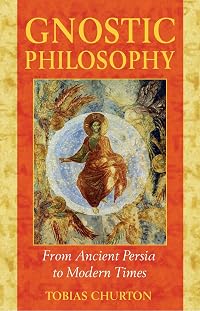
Gnostic Philosophy: From Ancient Persia to Modern Times
by Tobias Churton
On This Page
Description
Gnosticism was a contemporary of early Christianity, and its demise can be traced to Christianity's efforts to silence its teachings. The Gnostic message, however, was not destroyed but simply went underground. Starting with the first emergence of Gnosticism, the author shows how its influence extended from the teachings of neo-Platonists and the magical traditions of the Middle Ages to the beliefs and ideas of the Sufis, Jacob Böhme, Carl Jung, Rudolf Steiner, and the Rosicrucians and show more Freemasons. In the language of spiritual freemasonry, gnosisis the rejected stone necessary for the completion of the Temple, a Temple of a new cosmic understanding that today's heirs to Gnosticism continue to strive to create. The Gnostics believed that the universe embodies a ceaseless contest between opposing principles. Terrestrial life exhibits the struggle between good and evil, life and death, beauty and ugliness, and enlightenment and ignorance: gnosisand agnosis. The very nature of physical space and time are obstacles to humanity's ability to remember its divine origins and recover its original unity with God. Thus the preeminent gnostic secret is that we are God in potential and the purpose of bona fide gnostic teaching is to return us to our godlike nature. Tobias Churton is a filmmaker and the founding editor of the magazine FreemasonryToday. He studied theology at Oxford University and created the award-winning documentary series and accompanying book The Gnostics, as well as several other films on Christian doctrine, mysticism, and magical folklore. He lives in England. show lessTags
Recommendations



Member Reviews
Unlike the previous reviewer, I read every word of this book. First, it is not about some slightly interesting "idea" circulating in the development of Christianity. It's about gnosis which is the full realization of being. It's about the ancient and eternal quest for the Meaning of Existence. It's the history of a philosophical search based on the illusion of separation from source that's become entangled over the long years in complex literalism. And it's made thrillingly clear to a careful reader because it's well understood by its own writer. This one will always have space on my bookshelves, shelves that get smaller as the years pass rather than larger. I seem to be getting very picky as I go along.
I haven't read all of this, but i've set it down for a couple months, sooo... before i forget, and maybe never pick it back up again.. Does that say anything?..I don't know really it is a good book. The thread that holds this book together is the idea of a gnostic philosophy that winds it's way through history, from jewish/greek sources, to what we would think of as proper gnostics or christian era gnostics, to troubadors, freemasons, to Aleister Crowley. I don't know how well he proves his thesis, but it looked plausible to me. I was interested in the Greek/jewish/christian era gnostics at the time and that's what i read it for. He dealt with those era's very well. Interesting insight that seemed to develope a believable chronolgy or show more flow of a diverse and complex idea through the christian era. show less
Subtle masonic references. Read this while going through Blue Lodge degrees and found it very enlightening. Also enjoyed chapter on Crowley although it rubbed out many of the ugly spots others leave on. Did not read chapter on Troubadours but they are set up and can be read independently of each other.
Ratings
Members
- Recently Added By
Author Information

33+ Works 1,672 Members
Britain's leading scholar of Western esotericism, Tobias Churton is a world authority on Gnosticism, Hermeticism, Freemasonry, and Rosicrucianism. Holding a master's degree in theology from Brasenose College, Oxford, he was appointed Honorary Fellow of Exeter University in 2005. The author of many books, including Gnostic Philosophy and Aleister show more Crowley in America, he lives in the heart of England. show less
All Editions
Common Knowledge
- People/Characters
- Aleister Crowley
Classifications
- Genres
- Religion & Spirituality, Nonfiction, Philosophy, General Nonfiction, History
- DDC/MDS
- 299.932 — Religion Other religions Shintoism/Taoism/Other Mythologies Religions of other origin Religions of eclectic and syncretistic origin Gnosticism
- LCC
- B638 .C48 — Philosophy, Psychology and Religion Philosophy (General) By period Ancient
- BISAC
Statistics
- Members
- 191
- Popularity
- 171,313
- Reviews
- 3
- Rating
- (3.85)
- Languages
- English
- Media
- Paper, Ebook
- ISBNs
- 3
- ASINs
- 1