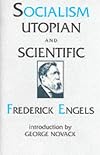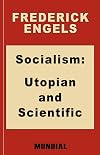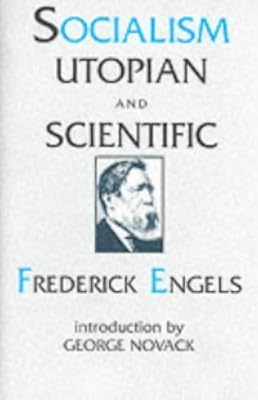
Socialism: Utopian and Scientific
by Friedrich Engels
On This Page
Description
Historical analysis of revolutions and their impact on social movements.Tags
Recommendations
















Member Reviews
Summary: Engels sought to make the case for what he termed "scientific socialism" in contrast to other forms of socialism and the capitalist world in which he thought he lived. With the introductory material, he gave special attention to the reception among the English who were resistant to the historical materialism which was a foundation of the socialist system. He sought to help them understand that the English were pioneers of materialism. He dismissed philosophical problems concerning "the one and the many" by affirming that empiricism works. In his view, if one can conceive of a purpose of a thing and sense experience confirms that conception, then one knows the thing in itself. Essentially, if sense confirms sense then real show more knowledge has been obtained. Engels then provided the English with a sketch of history that demonstrated progress towards socialism. He addressed utopian socialism (with critiques that could be easily applied to his own scientific socialism) and the social upheaval of the French Revolution. Though utopian socialism, especially that practiced by Robert Owen had value, it was flawed in its foundation. What was needed was the dialectic method. That would have revealed a proper materialistic view of history and Marx's own discovery of surplus-value. To Engels, it was inevitable that capitalism would collapse on itself. The capitalist would turn to machines which would reduce the laborer to irrelevance. Eventually, society through the state would intervene and confiscate the means of production. With the proletariat in control of the means of production, all class distinctions will then be abolished, for there will no longer be an exploiting or exploited class. The state itself will also cease to exist in time, for it will no longer be necessary. As he says, "the government of persons is replaced by the administration of things."
Cons: Engels as a philosopher is sloppy. His answer to Kant's critique is almost embarrassing. That failure leaves his foundational tenet unsupported. Engels history is cherry-picked and flawed. His praise of the French Revolution does not address the bloodshed. He also overestimates the level of organization among the upper classes, presuming that they acted in unity and purpose rather than according to each of their own interests. His prophecies concerning the inevitable end of capitalism have proven to be wrong. He does not understand the nature and motivations of men. He assumes that in the economic sphere, gain in one place inevitably means loss in another. He cannot grasp that everyone can benefit even if not to the same degree.
Evaluation: Engels is clever but not grounded in reality. He cherry-picks evidence, ignores thorny issues, declares himself right on problems he does not fully understand, and makes up a narrative to package the whole thing. The time since the writing of this book serve not only to demonstrate that he was wrong but also that his ideas were destructive to mankind in a way that few other ideas have been. show less
Cons: Engels as a philosopher is sloppy. His answer to Kant's critique is almost embarrassing. That failure leaves his foundational tenet unsupported. Engels history is cherry-picked and flawed. His praise of the French Revolution does not address the bloodshed. He also overestimates the level of organization among the upper classes, presuming that they acted in unity and purpose rather than according to each of their own interests. His prophecies concerning the inevitable end of capitalism have proven to be wrong. He does not understand the nature and motivations of men. He assumes that in the economic sphere, gain in one place inevitably means loss in another. He cannot grasp that everyone can benefit even if not to the same degree.
Evaluation: Engels is clever but not grounded in reality. He cherry-picks evidence, ignores thorny issues, declares himself right on problems he does not fully understand, and makes up a narrative to package the whole thing. The time since the writing of this book serve not only to demonstrate that he was wrong but also that his ideas were destructive to mankind in a way that few other ideas have been. show less
This I feel is a good starting point for communist theory. It is very interesting to read the optimism here, it makes me wonder what Engels would think of society today and how the capitalists have mananged to stubbornly hold onto their illegitimate power.
The hardest 84 pages I've ever read. Not overly complicated, though. Probably requires multiple reads for full digestion. Conveyed a more full understanding of the contradictions of capitalism and the solutions of socialism.
Great ideas, miserable to read though
Translation:
انگلس است که از سوی برخی از دانشمندان از آن به عنوان مخترع مارکسیسم. کار او تبدیل به یکی از تاثیر گذار ترین جنبش های سیاسی از دوران مدرن. او ماتریالیسم dialectal و تاریخی -- فلسفه رسمی از تاریخ و علوم در کشورهای کمونیستی بسیاری نه تنها در توسعه است -- اما همچنین 1 مورخ مارکسیست ، انسان شناس ، فیلسوف و مفسر در تاریخ مارکس در اوایل. این کتاب آغاز می شود با حساب حرفه انگلس به عنوان یک روزنامه نگار افراطی در آلمان و show more انگلستان است. قبل از ملاقات کرد مارکس ، او خود را به عنوان منتقد صنعتی و تاثیر آن بر مردم کار ایجاد کرده است. با هم آنها پیوستند او در حال حاضر تبدیل به علت کمونیستی. با هم آنها را ترویج نقطه متمایز نظر در فلسفه و سیاست ، خلاصه شده در "مانیفست کمونیست" ، که انگلس ساخته شده کمک قابل توجهی کردند. در سال بعد خود را توسعه انگلس تفسیر مادی خود را از تاریخ ، میراث فکری او رئیس ، که تا به حال اثر عمده ای بر هنر و علوم اجتماعی است. آثار نویسنده مبدأ آن و اثر آن بر توسعه نظریه مارکسیستی و عمل ، ارزیابی ابزار آن مورد بحث و مشکلاتی است که مارکسیست ها دارند enco This is the Amazon description in Farsi. show less
انگلس است که از سوی برخی از دانشمندان از آن به عنوان مخترع مارکسیسم. کار او تبدیل به یکی از تاثیر گذار ترین جنبش های سیاسی از دوران مدرن. او ماتریالیسم dialectal و تاریخی -- فلسفه رسمی از تاریخ و علوم در کشورهای کمونیستی بسیاری نه تنها در توسعه است -- اما همچنین 1 مورخ مارکسیست ، انسان شناس ، فیلسوف و مفسر در تاریخ مارکس در اوایل. این کتاب آغاز می شود با حساب حرفه انگلس به عنوان یک روزنامه نگار افراطی در آلمان و show more انگلستان است. قبل از ملاقات کرد مارکس ، او خود را به عنوان منتقد صنعتی و تاثیر آن بر مردم کار ایجاد کرده است. با هم آنها پیوستند او در حال حاضر تبدیل به علت کمونیستی. با هم آنها را ترویج نقطه متمایز نظر در فلسفه و سیاست ، خلاصه شده در "مانیفست کمونیست" ، که انگلس ساخته شده کمک قابل توجهی کردند. در سال بعد خود را توسعه انگلس تفسیر مادی خود را از تاریخ ، میراث فکری او رئیس ، که تا به حال اثر عمده ای بر هنر و علوم اجتماعی است. آثار نویسنده مبدأ آن و اثر آن بر توسعه نظریه مارکسیستی و عمل ، ارزیابی ابزار آن مورد بحث و مشکلاتی است که مارکسیست ها دارند enco This is the Amazon description in Farsi. show less
Includes an essay on "The Mark".
Esse livro traz marrxismo como nasce o materialismo dialetico e histórico a descoberta de marx e interprestação materialista da historia e teoris e o socialismo se torna uma cienciaE mostra que contradição principal do capistalismo existente entre caracter social da produção e apropriaço capistalista.
Oct 24, 2022Portuguese (Brazil)
Members
- Recently Added By
Lists

Economics
16 works; 1 member
Author Information

346+ Works 35,241 Members
Friedrich Engels is perhaps best remembered as the confidant, colleague, and benefactor of Karl Marx. Engels was born into a Calvinist family on November 28, 1820. The family owned fabric mills in the Rhineland and had business interests in Manchester, England, Engels joined the family business at age 16; he never had a formal university show more education. Despite his family's industrial background, Engels was sympathetic to the poverty of the working masses. At age 18 he published an attack on industrial poverty, and later joined the Hegelian movement that so influenced Marx and bothered conservative Prussian authorities. Engels first met Marx in 1842, while Marx was editor of a radical newspaper in Cologne. However, they did not establish their lifelong friendship until they met again in Paris two years later. Engels published several works related to economics, the first of which, Outlines of a Critique of Political Economy (1844), attempted to reconcile Hegelian philosophy with the principles of political economy. His second book, The Condition of the Working Class in England (1845), was a damning description and condemnation of the poverty generated by the Industrial Revolution. Engels also co-authored three major works with Marx, the most important being the Communist Manifesto (1948). Engels also wrote several historical works, which are more important to historians than to economists. These include The Peasant War in Germany (1850), Germany: Revolution and Counter-Revolution (1851), and The Origin of the Family, Private Property and the State (1884). In general, these works are more descriptive than theoretical, and they closely parallel Marx's views on industrialization and class struggle. In addition to being a friend of Marx, Engels was his prime benefactor for a number of years. During their early years in London, beginning in 1849, the Marx family was nearly destitute, and it was only through the generosity of Engels that they prevailed. Engels was also responsible for the publication of Marx's Das Kapital. Before his death, Marx was only able to complete the first volume of this work, and so Engels edited and arranged for the publication of the last two volumes after Marx's death. Engels was an engaging and thoughtful writer. It was perhaps his great fortune and misfortune that he was connected so closely to Marx. On the one hand, he was responsible for bringing much of Marx's work to fruition in his role as benefactor and editor. On the other hand, the shadow of Marx eclipsed some of the exposure that Engels's own ideas and contributions might have had. Engels died of throat cancer in London, 1895. Following cremation at Woking Crematorium, his ashes were scattered off Beachy Head, near Eastbourne as he had requested. (Bowker Author Biography) Friedrich Engels, German political economist, was born in what is now known as Wuppertal, in 1820. From 1842 to 1844 Engels worked in a textile mill in Manchester, England. During this time Engels theorized that all of the social unrest and worker discontent he encountered were the direct result of private ownership of property. He concluded that social ills could be eliminated only through a class struggle culminating in the end of private ownership and the establishment of a communistic form of government. The publication of his Condition of the Working Class (1844) reiterated his philosophy and his conclusions about an inevitable class struggle. Friedrich Engels first met Karl Marx in 1842. When they met again in Paris in 1844, the two men discovered they had a great similarity of views and decided to work together. They delineated the principles of communism, later known as Marxism, and their work resulted in the founding of an international communistic movement. The Communist Manifesto, penned by Marx, was based in part on a draft Engels prepared. It became renowned as the classic exposition of modern communism, and it had a profound influence upon all subsequent literature dealing with communism. Marx and Engels' partnership lasted until Marx's death in 1883. Engels carried on his work by editing the second and third volumes of Marx's Das Kapital. Friedrich Engels died in 1895. (Bowker Author Biography) show less
Some Editions
Series
Belongs to Publisher Series
Work Relationships
Is contained in
Common Knowledge
- Canonical title*
- Sosialismin kehitys utopiasta tieteeksi
- Original title
- Socialisme utopique et Socialisme scientifique
- Alternate titles
- Development of Socialism from Utopia to Science
- Original publication date
- 1880
- Original language
- French
- Canonical DDC/MDS
- 335.423
*Some information comes from Common Knowledge in other languages. Click "Edit" for more information.
Classifications
- Genres
- Economics, Nonfiction, Philosophy, General Nonfiction, Politics and Government, History
- DDC/MDS
- 335.423 — Society, government, & culture Economics Socialism and related systems Marxian systems Marxian systems, 1848-1917 Scientific Socialism, 1875-1917
- LCC
- HX276 .E55 — Social sciences Socialism. Communism. Anarchism Socialism. Communism. Anarchism
- BISAC
Statistics
- Members
- 853
- Popularity
- 31,922
- Reviews
- 9
- Rating
- (3.95)
- Languages
- 17 — Catalan, Danish, Dutch, English, Finnish, French, German, Hungarian, Italian, Japanese, Norwegian (Bokmål), Polish, Portuguese (Portugal), Serbian, Spanish, Swedish, Turkish
- Media
- Paper, Audiobook, Ebook
- ISBNs
- 68
- ASINs
- 36