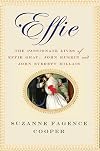
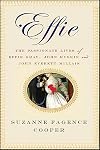
Effie: The Passionate Lives of Effie Gray, John Ruskin and John Everett Millais
by Suzanne Fagence Cooper
On This Page
Description
Effie Gray, a beautiful and intelligent young socialite, rattled the foundations of England's Victorian age. Married at nineteen to John Ruskin, the leading art critic of the time, she found herself trapped in a loveless, unconsummated union after Ruskin rejected her on their wedding night. On a trip to Scotland she met John Everett Millais, Ruskin's protégé, and fell passionately in love with him. In a daring act, Effie left Ruskin, had their marriage annulled, and entered into a long, show more happy marriage with Millais. Suzanne Fagence Cooper has gained exclusive access to Effie's previously unseen letters and diaries to tell the complete story of this scandalous love triangle. In Cooper's hands, this passionate love story also becomes an important new look at the work of both Ruskin and Millais with Effie emerging as a key figure in their artistic development. Effie is a heartbreakingly beautiful book about three lives passionately entwined with some of the greatest paintings of the pre-Raphaelite period.. show less
Tags
Recommendations












Member Recommendations
Member Reviews
‘I do not think I am John Ruskin’s Wife at all,’ said his wife Effie when she could not endure her six year marriage any longer. It was a decision as brave Helen Graham slamming her bedroom door in her husband’s face. By this point in Suzanne Fagence Cooper’s excellent triple biography every reader is urging Effie to leave Ruskin. Famous critic and intellect, in private he had become increasingly abusive and tormented wife with the non-consummation of their marriage. The delight is that when the stuffy Victorians heard about what went on (or didn’t) in the Ruskin household they thought Effie should have been having a jolly time in bed and have been producing lots of babies. As one marriage ended another began, that of Effie show more to the painter Millais. ‘Another life lies before you, my dearest child – and one that cannot but sparkle brightly,’ Lady Eastlake told her. It was a happy and glittering marriage. Effie struggled hard to succeed bothered as she was by much of Victorian society thinking her not quite nice and modern day critics - with a mix of misogyny and intellectual snobbery – despising her supposed malign influence on Millais. This is a tremendous and extraordinary book. show less
Pretty interesting biography of the wife of John Ruskin; perhaps the first section on their doomed marriage is the most compulsive part. Ruskin remains a total enigma- genius in the art world, a man who liked his own company, liked living with his parents, liked little girls but not women : just why did he saddle himself with a wife? As the (much younger) Effie, ignored and untouched by her husband, takes to socializing, she faces the increasing unpleasantness of Ruskin and his doting parents. And as a growing friendship develops with her husband's protégé, artist John Millais, separation is on the cards.
The scandal in Victorian England of divorce following this 'non-marriage' (much public censure, particularly of Effie); and the show more subsequent life with Millais takes up the rest of the volume. Effie remained close all her life to her family in Scotland, and they, too, form a large part of the narrative, notably her sister - mentally ill and anorexic. Effie and Millais went on to have eight children, who also brought their issues (and who seem to have been shunted off a lot to their maternal grandparents). And all the time Millais' reputation in the art world grew...
Very readable. show less
The scandal in Victorian England of divorce following this 'non-marriage' (much public censure, particularly of Effie); and the show more subsequent life with Millais takes up the rest of the volume. Effie remained close all her life to her family in Scotland, and they, too, form a large part of the narrative, notably her sister - mentally ill and anorexic. Effie and Millais went on to have eight children, who also brought their issues (and who seem to have been shunted off a lot to their maternal grandparents). And all the time Millais' reputation in the art world grew...
Very readable. show less
Effie Gray was only twelve when she met the celebrated young art critic John Ruskin in 1841. A friendship developed, and within a few years, he proposed; the two married when Effie was nineteen, Ruskin 29. Effie imagined the two of them as the perfect couple, her social charm as asset to his brilliance. But on their wedding night, something went terribly wrong. Despite her innocence, Effie knew that there had to be more to marriage than taking walks along the riverbank: Ruskin either would not or could not consummate their union. In a letter to her parents, she wrote:
"He alleged various reasons, hatred to children, religious motives, a desire to preserve my beauty, and finally this last year he told me his true reason... that he had show more imagined women were quite different to what he saw I was, and that the reason he did not make me his Wife was because he was disgusted with my person the first evening 10th April [1848]."
Ashamed, Effie remained in the marriage for six years before formally filing for an annulment. She was subjected to a physical examination to verify her chastity and humiliated by Ruskin's testimony that "though her face was beautiful, her person was not formed to excite passion. On the contrary, there were certain circumstances in her person which completely checked it." The doctor who examined her declared that she was normal in every way; it has been speculated that Ruskin might have been repelled by his wife's pubic hair, or that she was menstruating. As one would expect, the case created a scandal in Victorian England.
Fortunately, a happier future was in store. Effie had posed for Ruskin's friend, the artist John Everett Millais, who accompanied the couple on a trip to Scotland. The two fell in love and were married a year after the annulment was granted. Cooper devotes the first half of her biography to the scandal, but the second details Effie's 42-year marriage, which, despite some losses and difficulties, was a happy one. Effie continued to model for Millais (as did her siblings, her eight children, and later their grandchildren), and "Everett," as she called him, eventually earned great success as a painter, as well as a baronetcy. But her one disappointment was that the queen would not receive "a divorced person" at court. It seemed she would never quite shake the scandal of NOT being a wife to Ruskin. And Ruskin, who apparently never learned when not to speak, publicly blamed Effie for 'ruining' Millais's potential as an artist, the necessity of feeding a family turning him to a more lucrative style.
Cooper does an admirable job of presenting this slice of Victorian scandal and a peek into the world of art. We learn not only about the three persons mentioned in her lengthy title, but also about her travels in Italy, the elder Ruskins, Effie's family in Scotland, the Millais children, and the friends who stood by her. I did find the second half a bit confusing at times, partly because of the profusion of Johns, Georges, Sophias and Effies, but also because of the author's tendency to jump back and forth through time.
*Spoiler* There is a bittersweet ending to Effie's story. On his deathbed, a visiting friend asked Millais if there was anything that she could do for him. His answer, scrawled on a slate as he had lost his ability to speak: "Please see that my wife is invited to court." Effie was received at an official function soon after, the queen's daughter having interceded on her behalf. She outlived her husband by only sixteen months. show less
"He alleged various reasons, hatred to children, religious motives, a desire to preserve my beauty, and finally this last year he told me his true reason... that he had show more imagined women were quite different to what he saw I was, and that the reason he did not make me his Wife was because he was disgusted with my person the first evening 10th April [1848]."
Ashamed, Effie remained in the marriage for six years before formally filing for an annulment. She was subjected to a physical examination to verify her chastity and humiliated by Ruskin's testimony that "though her face was beautiful, her person was not formed to excite passion. On the contrary, there were certain circumstances in her person which completely checked it." The doctor who examined her declared that she was normal in every way; it has been speculated that Ruskin might have been repelled by his wife's pubic hair, or that she was menstruating. As one would expect, the case created a scandal in Victorian England.
Fortunately, a happier future was in store. Effie had posed for Ruskin's friend, the artist John Everett Millais, who accompanied the couple on a trip to Scotland. The two fell in love and were married a year after the annulment was granted. Cooper devotes the first half of her biography to the scandal, but the second details Effie's 42-year marriage, which, despite some losses and difficulties, was a happy one. Effie continued to model for Millais (as did her siblings, her eight children, and later their grandchildren), and "Everett," as she called him, eventually earned great success as a painter, as well as a baronetcy. But her one disappointment was that the queen would not receive "a divorced person" at court. It seemed she would never quite shake the scandal of NOT being a wife to Ruskin. And Ruskin, who apparently never learned when not to speak, publicly blamed Effie for 'ruining' Millais's potential as an artist, the necessity of feeding a family turning him to a more lucrative style.
Cooper does an admirable job of presenting this slice of Victorian scandal and a peek into the world of art. We learn not only about the three persons mentioned in her lengthy title, but also about her travels in Italy, the elder Ruskins, Effie's family in Scotland, the Millais children, and the friends who stood by her. I did find the second half a bit confusing at times, partly because of the profusion of Johns, Georges, Sophias and Effies, but also because of the author's tendency to jump back and forth through time.
*Spoiler* There is a bittersweet ending to Effie's story. On his deathbed, a visiting friend asked Millais if there was anything that she could do for him. His answer, scrawled on a slate as he had lost his ability to speak: "Please see that my wife is invited to court." Effie was received at an official function soon after, the queen's daughter having interceded on her behalf. She outlived her husband by only sixteen months. show less
This is an utterly fascinating book, not only regarding the sexless marriage of John Ruskin and Effie Gray, but most importantly the social roles of women in Victorian age.
John Ruskin wanted to marry the much younger Effie Gray. He toyed and played games regarding his commitment and possible love of Effie. Finally, he tried to put aside his penchant for little girls, but continued to allowed his parents to rule his life and marriage.
Ruskin was the foremost art critic of his time. Well admired and an opinion that mattered greatly in the art world. He gradually grew to like and admire the art of the Pre Raphaelite painters, of which handsome, intelligent and accomplished Millais was well respected.
He solidified his role in the Pre show more Raphaelite world by painting one of the most respected works of Ophelia.
Effie Gray was a mere 19 years old when she married Ruskin, a much older dapper man. On the night of her honeymoon, there was no intimacy. Through the years, this continued. Despite her attempts to woe him, she was told that her body abhorred him and brought no desire to touch her.
In the Victorian courts, it was exceedingly difficult for a woman to seek and win a divorce. With her parents assistance, she fought the courts and gradually won a split from Ruskin on the grounds of impotence.
A man who was attached to his parents, loving only his mommy, the divorce brought scandal to Ruskin.
Ruskin admired the works of Millais, and during a summer vacation to Scotland, Effie's home of origin, he asked Millais to paint him. This too became one of the famous paintings of Millais.
The three shared a small house, and while Millias left them behind most of the day, Effie and Millais grew to admire and love each other. Sensing her extreme unhappiness, Effie disclosed hers was a seven year marriage with no intimacy.
This is a fascinating look of Victorian mores and rules. Effie did win a divorce, and she and Millias married and produced eight children.
If you, like me admire the works of the Pre Raphelites, this is a must read. show less
John Ruskin wanted to marry the much younger Effie Gray. He toyed and played games regarding his commitment and possible love of Effie. Finally, he tried to put aside his penchant for little girls, but continued to allowed his parents to rule his life and marriage.
Ruskin was the foremost art critic of his time. Well admired and an opinion that mattered greatly in the art world. He gradually grew to like and admire the art of the Pre Raphaelite painters, of which handsome, intelligent and accomplished Millais was well respected.
He solidified his role in the Pre show more Raphaelite world by painting one of the most respected works of Ophelia.
Effie Gray was a mere 19 years old when she married Ruskin, a much older dapper man. On the night of her honeymoon, there was no intimacy. Through the years, this continued. Despite her attempts to woe him, she was told that her body abhorred him and brought no desire to touch her.
In the Victorian courts, it was exceedingly difficult for a woman to seek and win a divorce. With her parents assistance, she fought the courts and gradually won a split from Ruskin on the grounds of impotence.
A man who was attached to his parents, loving only his mommy, the divorce brought scandal to Ruskin.
Ruskin admired the works of Millais, and during a summer vacation to Scotland, Effie's home of origin, he asked Millais to paint him. This too became one of the famous paintings of Millais.
The three shared a small house, and while Millias left them behind most of the day, Effie and Millais grew to admire and love each other. Sensing her extreme unhappiness, Effie disclosed hers was a seven year marriage with no intimacy.
This is a fascinating look of Victorian mores and rules. Effie did win a divorce, and she and Millias married and produced eight children.
If you, like me admire the works of the Pre Raphelites, this is a must read. show less
Retelling the story of Effie Gray, whose annulled marriage to John Ruskin has been the stuff of myth for well over a century ( I always thought he saw her on their wedding night and fainted dead away, but apparently this is not the case). This fascinating book finally goes beyond that to the life she lived, with all its joys and sorrows, during her immensely fulfilling life as Mrs. Millais. She was complex; lovely, loving, tormented, effervescent, reserved, ambitious, intelligent, talented. Profiling her family was genius. Her story would not have been complete without it. A wonderful book, and thankfully, not a doorstop.
This was really interesting. So much to think about - women's roles in Victorian England, the staggering size of families and surrounding issues, the marriage market, the social production of art, etc etc. Such a special time and a great choice of subject to get into it all: She was right in the thick of it, and an outsider simultaneously. Euphamia "Effie" Gray is a fascinating character, strong and quite sure of what she wants. Her first marriage could absolutely have destroyed a weaker woman. There were quite sympathetic portrayals of most of the people mentioned, with attempts to explain their actions and speculation into their thought processes. Importantly, they felt alive, and I got an impression of their humanity. The controversy show more surrounding John Everett Millais "selling out" is covered, and seemed quite fair to me (with an obvious explanation for why you wouldn't trust John Ruskin's judgement on this matter).
I'd recommend this to anyone interested in the social side of art history, and especially the Pre-Raphaelites. It's not an art book, so lacks the large detailed prints you would want if you were looking for information on techniques etc. It's also a fascinating snapshot of a special time in English history. It's definitely piqued my interested in both Pre-Raphaelites (Millais specifically) and Victorian women. I'm hungry for more.
I gave it 4 rather than 5 stars because I found the families quite confusing (needed more of a guide to that, though there is a family tree at the back of the book which I discovered too late), and the same with the dates. A kind of basic timeline might have helped. I like the way it's written but would also have loved to see some unedited letters, maybe with original handwriting (especially the criss-cross ones her mum wrote). show less
I'd recommend this to anyone interested in the social side of art history, and especially the Pre-Raphaelites. It's not an art book, so lacks the large detailed prints you would want if you were looking for information on techniques etc. It's also a fascinating snapshot of a special time in English history. It's definitely piqued my interested in both Pre-Raphaelites (Millais specifically) and Victorian women. I'm hungry for more.
I gave it 4 rather than 5 stars because I found the families quite confusing (needed more of a guide to that, though there is a family tree at the back of the book which I discovered too late), and the same with the dates. A kind of basic timeline might have helped. I like the way it's written but would also have loved to see some unedited letters, maybe with original handwriting (especially the criss-cross ones her mum wrote). show less
A fine, lively portrait of Effie Gray and John Everett Millais. Ruskin remains a complex mystery. (How unfortunate that drab, listless waif Dakota Fanning was chosen to play vivacious Effie in the movie version of her story.)
Members
- Recently Added By
Published Reviews
ThingScore 50
Though Ms. Fagence Cooper is somewhat sympathetic to him, you would not immediately gather from her book that Ruskin was not just an undersexed, self-absorbed workaholic but also one of the towering figures of his age — a brilliant and indefatigable writer, critic and social reformer who changed the way Victorians looked at the world — or that his end was tragic and pitiable.
But Ms. show more Fagence Cooper’s book is for the most part graceful and judicious, and Effie Gray emerges from it as a very likable figure: lively, fashionable, brave enough to resist publicly the Victorian code that said wives were subject to their husbands and should suffer in silence. show less
But Ms. show more Fagence Cooper’s book is for the most part graceful and judicious, and Effie Gray emerges from it as a very likable figure: lively, fashionable, brave enough to resist publicly the Victorian code that said wives were subject to their husbands and should suffer in silence. show less
added by lilithcat
Lists

Books Read in 2015
3,299 works; 129 members
Author Information

8 Works 287 Members
Suzanne Fagence Cooper is the author of Pre-Raphaelite Art in the Victoria Albert Museum. Her knowledge of Victorian art, gained during her twelve years as a curator and research fellow at the Victoria Albert Museum, has led her to work as a consultant for the BBC. She lives in Yorkshire.
Common Knowledge
Classifications
- Genres
- Art & Design, Nonfiction, Biography & Memoir, General Nonfiction, History
- DDC/MDS
- 700.92 — Arts & recreation Arts Arts & Recreation Historical, geographic, persons treatment of the arts Biography
- LCC
- PR5263 .C78 — Language and Literature English English Literature 19th century , 1770/1800-1890/1900
- BISAC
Statistics
- Members
- 142
- Popularity
- 231,063
- Reviews
- 11
- Rating
- (3.94)
- Languages
- English, Italian
- Media
- Paper, Audiobook, Ebook
- ISBNs
- 14
- ASINs
- 4