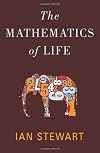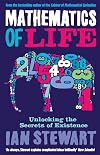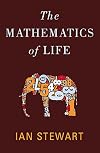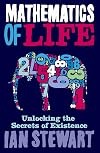
The Mathematics of Life
by Ian Stewart
On This Page
Description
Biologists have long dismissed mathematics as being unable to meaningfully contribute to our understanding of living beings. Within the past ten years, however, mathematicians have proven that they hold the key to unlocking the mysteries of our world, and ourselves. In this book the author provides an overview of the vital but little recognized role mathematics has played in pulling back the curtain on the hidden complexities of the natural world, and how its contribution will be even more show more vital in the years ahead. He explains how mathematicians and biologists have come to work together on some of the most difficult scientific problems that the human race has ever tackled, including the nature and origin of life itself. It is an introduction to the role of mathematics in life sciences, from cellular organization to the behavior and evolution of entire organisms. show lessTags
Recommendations





Member Reviews
Ian Stewart has written an introduction to 'biomathematics' for the non-specialist. He begins thus:
"Biology used to be about plants, animals, and insects, but five great revolutions have changed the way scientists think of life.
A sixth is on its way."
Those first five were the microscope, systematic classification, evolution theory, discovery of genes, and the discovery of DNA structure. The sixth, of course, is the increasingly important place of mathematics in cutting-edge research into the life sciences.
I found this book informative and interesting but I did have to slow down about a third of the way into the book in order to understand the topics Stewart was covering since my knowledge of the life sciences is spotty and my my math is show more definitely rusty. However, the author is knowledgeable and he covers the field pretty much up to the present day. (published in 2011).
Recommended. show less
"Biology used to be about plants, animals, and insects, but five great revolutions have changed the way scientists think of life.
A sixth is on its way."
Those first five were the microscope, systematic classification, evolution theory, discovery of genes, and the discovery of DNA structure. The sixth, of course, is the increasingly important place of mathematics in cutting-edge research into the life sciences.
I found this book informative and interesting but I did have to slow down about a third of the way into the book in order to understand the topics Stewart was covering since my knowledge of the life sciences is spotty and my my math is show more definitely rusty. However, the author is knowledgeable and he covers the field pretty much up to the present day. (published in 2011).
Recommended. show less
Biologists have long dismissed mathematics as being unable to meaningfully contribute to our understanding of living beings. Within the past ten years, however, mathematicians have proven that they hold the key to unlocking the mysteries of our world--and ourselves.
In The Mathematics of Life, Ian Stewart provides a fascinating overview of the vital but little-recognized role mathematics has played in pulling back the curtain on the hidden complexities of the natural world--and how its contribution will be even more vital in the years ahead. In his characteristically clear and entertaining fashion, Stewart explains how mathematicians and biologists have come to work together on some of the most difficult scientific problems that the show more human race has ever tackled, including the nature and origin of life itself. show less
In The Mathematics of Life, Ian Stewart provides a fascinating overview of the vital but little-recognized role mathematics has played in pulling back the curtain on the hidden complexities of the natural world--and how its contribution will be even more vital in the years ahead. In his characteristically clear and entertaining fashion, Stewart explains how mathematicians and biologists have come to work together on some of the most difficult scientific problems that the show more human race has ever tackled, including the nature and origin of life itself. show less
I have long enjoyed Ian Stewart's mathematics books. This one started off pretty slow, but got better as the book went on. The first four chapters were a bit of a waste; from chapter ten onwards, the book became quite rewarding.
This is, obviously, a layman's book about advances in biology. Unlike most popular science books, however, this one assumes a mathematical background on behalf of the layman. Whether this works or not will depend on the reader. I found it quite useful, as concepts in biology were mapped onto mathematical constructs which I already knew and understood.
I found The Mathematics of Life to be much less mathematically demanding than [b:A Mathematical Nature Walk|5596798|A Mathematical Nature Walk|John A. show more Adam|https://d202m5krfqbpi5.cloudfront.net/books/1348948909s/5596798.jpg|5768146]. The discussion here is driven by narrative, rather than by equation, and the techniques tend to rely on abstract and linear algebra (which I encounter fairly frequently) more than geometry (which I rarely encounter). show less
This is, obviously, a layman's book about advances in biology. Unlike most popular science books, however, this one assumes a mathematical background on behalf of the layman. Whether this works or not will depend on the reader. I found it quite useful, as concepts in biology were mapped onto mathematical constructs which I already knew and understood.
I found The Mathematics of Life to be much less mathematically demanding than [b:A Mathematical Nature Walk|5596798|A Mathematical Nature Walk|John A. show more Adam|https://d202m5krfqbpi5.cloudfront.net/books/1348948909s/5596798.jpg|5768146]. The discussion here is driven by narrative, rather than by equation, and the techniques tend to rely on abstract and linear algebra (which I encounter fairly frequently) more than geometry (which I rarely encounter). show less
Mathman Stewart offers a biology book, working in diverse mathematical concepts wherever he can. But biology still seems to me to be a quite non-mathematical science, and the preface's contention that "biology will be the great mathematical frontier of the twenty-first century" seemed as dubious after reading the book as it was before. I most liked the late chapters on artificial life and possible ET life.
Meh. Not one of his best efforts. I found it pretty boring, and I expected more drawings, diagrams, pictures, etc. to accompany the text. It has the feel of a much older book, though it was published in 2010.
Pretty good, with some problems. Chapters 6 and 7 are best ( esp. 7 ) Uneven, tries to cover too much. Needs damn glossary like all these books.
Indeholder "Preface", "1. Mathematics and biology", "2. Creatures small and smaller", "3. Long list of life", "4. Florally finding Fibonacci", "5. The origin of species", "6. In a monastery garden", "7. The molecule of life", "8. The book of life", "9. Taxonomist, taxonomist, spare that tree", "10. Virus from the Fourth Dimension", "11. Hidden wiring", "12. Knots and folds", "13. Spots and stripes", "14. Lizard games", "15. Networking opportunities", "16. The paradox of the plankton", "17. What is life?", "18. Is anybody out there?", "19. The Sixth Revolution", "Notes", "Acknowledgements", "Index".
"Preface" handler om at matematik og biologi er ved at få meget mere med hinanden at gøre.
"1. Mathematics and biology" handler om fem show more revolutioner i videnskabens syn på liv: mikroskopet, Carl Linnaeus' systematiske katalogisering af alt levende, Charles Darwin og The Origin of Species, Gregor Mendel og genetik, Francis Crick og James Watson og DNA's struktur. Ian Stewart mener at den sjette revolution allerede er her og at det er matematik.
"2. Creatures small and smaller" handler om Anton van Leeuwenhoek og mikroskopets rolle. Amoeber bliver beskrevet i 1757. Leeuwenhoek beskriver også Paramecium - dvs tøffeldyr - og volvox. Han nåede at lave mindst 400 mikroskoper selv. Robert Hooke tegnede hvad han så i mikroskopet og fx hans tegning af en loppe var en øjenåbner. Han tegnede også kortskiver og navngav cellerne han så. Lidt om prokaryoter og eukaryoter - og en bemærkning om archaer. Prokaryoter har ingen cellekerne og lever et simpelt liv. Flercellede dyr er komplicerede. De første mange celledelinger af et æg ændrer ikke ved volumen, dvs cellerne bliver flere og flere, men også mindre og mindre.
"3. Long list of life" handler om ???
"4. Florally finding Fibonacci" handler om ???
"5. The origin of species" handler om ???
"6. In a monastery garden" handler om ???
"7. The molecule of life" handler om ???
"8. The book of life" handler om ???
"9. Taxonomist, taxonomist, spare that tree" handler om ???
"10. Virus from the Fourth Dimension" handler om ???
"11. Hidden wiring" handler om ???
"12. Knots and folds" handler om ???
"13. Spots and stripes" handler om ???
"14. Lizard games" handler om ???
"15. Networking opportunities" handler om ???
"16. The paradox of the plankton" handler om ???
"17. What is life?" handler om ???
"18. Is anybody out there?" handler om ???
"19. The Sixth Revolution" handler om ???
"Notes" handler om ???
"Acknowledgements" handler om kredit for billeder og figurer rundt om i bogen.
"Index" er et opslagsregister.
??? show less
"Preface" handler om at matematik og biologi er ved at få meget mere med hinanden at gøre.
"1. Mathematics and biology" handler om fem show more revolutioner i videnskabens syn på liv: mikroskopet, Carl Linnaeus' systematiske katalogisering af alt levende, Charles Darwin og The Origin of Species, Gregor Mendel og genetik, Francis Crick og James Watson og DNA's struktur. Ian Stewart mener at den sjette revolution allerede er her og at det er matematik.
"2. Creatures small and smaller" handler om Anton van Leeuwenhoek og mikroskopets rolle. Amoeber bliver beskrevet i 1757. Leeuwenhoek beskriver også Paramecium - dvs tøffeldyr - og volvox. Han nåede at lave mindst 400 mikroskoper selv. Robert Hooke tegnede hvad han så i mikroskopet og fx hans tegning af en loppe var en øjenåbner. Han tegnede også kortskiver og navngav cellerne han så. Lidt om prokaryoter og eukaryoter - og en bemærkning om archaer. Prokaryoter har ingen cellekerne og lever et simpelt liv. Flercellede dyr er komplicerede. De første mange celledelinger af et æg ændrer ikke ved volumen, dvs cellerne bliver flere og flere, men også mindre og mindre.
"3. Long list of life" handler om ???
"4. Florally finding Fibonacci" handler om ???
"5. The origin of species" handler om ???
"6. In a monastery garden" handler om ???
"7. The molecule of life" handler om ???
"8. The book of life" handler om ???
"9. Taxonomist, taxonomist, spare that tree" handler om ???
"10. Virus from the Fourth Dimension" handler om ???
"11. Hidden wiring" handler om ???
"12. Knots and folds" handler om ???
"13. Spots and stripes" handler om ???
"14. Lizard games" handler om ???
"15. Networking opportunities" handler om ???
"16. The paradox of the plankton" handler om ???
"17. What is life?" handler om ???
"18. Is anybody out there?" handler om ???
"19. The Sixth Revolution" handler om ???
"Notes" handler om ???
"Acknowledgements" handler om kredit for billeder og figurer rundt om i bogen.
"Index" er et opslagsregister.
??? show less
Feb 4, 2013 (Edited)Danish
Members
- Recently Added By
Published Reviews
ThingScore 75
Mathematics of Life is dense with information, written with Stewart's characteristic lightness of touch and will please the dedicated maths reader. I would like to think it will also appeal to the wider audience of Curiosities and Hoard but I fear they may struggle with the volume of conceptual ideas and the many scientific terms. This would be a shame since the book is a testament to the show more versatility of maths and how it is shaping our understanding of the world. show less
added by souloftherose
Author Information

89+ Works 20,241 Members
Ian Stewart is a professor emeritus of mathematics at the University of Warwick. The author of numerous books on math, he has written for New Scientist, Discover, and Scientific American, among other publications in the United Kingdom and the United States. He lives in Coventry, England.
Awards and Honors
Common Knowledge
- Original publication date
- 2011
Classifications
Statistics
- Members
- 305
- Popularity
- 105,519
- Reviews
- 7
- Rating
- (3.32)
- Languages
- 6 — Czech, English, French, Italian, Polish, Spanish
- Media
- Paper, Ebook
- ISBNs
- 15
- ASINs
- 1