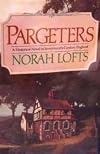
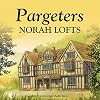
Pargeters
by Norah Lofts
On This Page
Description
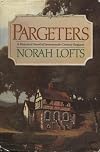
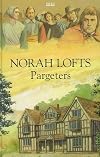
Pargeting is a highly skilled trade. And Pargeters is the name given to the Suffolk home of John Mercer in honour of Adam Woodley, the craftsman who had decorated it so lovingly. Over two generations, and throughout the turbulent years of the Civil War, Pargeters comes to stand as a symbol of unity for a household divided by conflicting political loyalties and abandoned by its menfolk. And it is the mistress of Pargeters, Sarah Woodley-Mercer - a woman of unflinching courage and quiet show more strength - who holds the small household together in this troubled time, battling against all odds to secure the home she loves and will not readily give up... show lessTags
Recommendations



















Member Reviews
Protagonist: Sarah Woodley-Mercer
Setting: "Pargeters", a manor house in 17th-century East Anglia, England
Standalone
First Line: Pargeting is hard work, very different from just slapping on plaster; and my own, self-chosen method made it harder still.
A very special house is the centerpiece of this historical narrative that begins in 17th century England when Adam Woodley, a skilled pargeter (plasterer), has a house named in honor of his craft. His one-sided marriage to the daughter of Pargeter's owner begins the line of men and women who, through the Civil War between Royalists and Roundheads, tried to hold on to the beloved property. It is Adam's daughter Sarah who ultimately survives, enduring a loveless marriage to save her heritage show more when it is sequestered in the postwar spoils.
It can be dangerous, re-reading a beloved book from decades ago, which is probably why I don't do it often. Many times I'm left wondering why I liked the book in the first place. For the most part, I'm content to leave these special books in a place of honor in my memory, not trusting the reader I am now to peruse them with different eyes. But after a visit to some splendid examples of pargeting in Suffolk this past April, I decided to revisit Lofts' last novel. I'm glad I did. Lofts' book about a very special house and the woman who fought for it in the only way she knew how stands the test of time well. show less
Setting: "Pargeters", a manor house in 17th-century East Anglia, England
Standalone
First Line: Pargeting is hard work, very different from just slapping on plaster; and my own, self-chosen method made it harder still.
A very special house is the centerpiece of this historical narrative that begins in 17th century England when Adam Woodley, a skilled pargeter (plasterer), has a house named in honor of his craft. His one-sided marriage to the daughter of Pargeter's owner begins the line of men and women who, through the Civil War between Royalists and Roundheads, tried to hold on to the beloved property. It is Adam's daughter Sarah who ultimately survives, enduring a loveless marriage to save her heritage show more when it is sequestered in the postwar spoils.
It can be dangerous, re-reading a beloved book from decades ago, which is probably why I don't do it often. Many times I'm left wondering why I liked the book in the first place. For the most part, I'm content to leave these special books in a place of honor in my memory, not trusting the reader I am now to peruse them with different eyes. But after a visit to some splendid examples of pargeting in Suffolk this past April, I decided to revisit Lofts' last novel. I'm glad I did. Lofts' book about a very special house and the woman who fought for it in the only way she knew how stands the test of time well. show less
There are technical problems with this tale that make me want to wish the author could have told a tale that engaged me.
We start with the Plasterer of the house, a few decades before the English Civil War. But once this man is wed to a woman he does not love we jump forward and the entire book changes to his daughters viewpoint. In essence we have just had pages and pages of backstory. Too much backstory.
We now have a first person view of the 20 years of the Civil War and the Protectorate of Cromwell. But here is the second major problem. Time elapses in this period of misery so poorly done that my sense was that the war took place over months, not years. Charles I was a 'guest' of Parliament for weeks, not years, and Cromwell had free show more reign with his horrid Puritanism for a few seasons, not more than a decade.
First Person stories should engage and this does not. The tale of living under the dogmatic, unfair laws of the era are told to us, and somehow the distance that the heroine places to survive force a distance in the reading. One minute she has a baby, the next the baby is able to work in the farm.
The passage of time is very skewed.
Then my last problem is that the book is about misery. And Lofts puts in a ten page love story amidst 400+ pages of story. I just can't buy it.
I want to study the period. I want to have the derring do of the Cavaliers and the glitter of the Restoration, and instead I get the dark dankiness of Puritanism so bad that I am inclined to think of all Puritans in any form as the most close minded of people. I am led to further believe that Parliament and Roundheads are still the enemy today. And that this tale gives you three lines of happiness and all the rest anguish.
There are other parts of the writing where it looks like Lofts wanted to put a historical term in and just dropped those in to the monologue without the heroine actually using that period relevancy in their every day life. This is a never again read, and a read I would never recommend. show less
We start with the Plasterer of the house, a few decades before the English Civil War. But once this man is wed to a woman he does not love we jump forward and the entire book changes to his daughters viewpoint. In essence we have just had pages and pages of backstory. Too much backstory.
We now have a first person view of the 20 years of the Civil War and the Protectorate of Cromwell. But here is the second major problem. Time elapses in this period of misery so poorly done that my sense was that the war took place over months, not years. Charles I was a 'guest' of Parliament for weeks, not years, and Cromwell had free show more reign with his horrid Puritanism for a few seasons, not more than a decade.
First Person stories should engage and this does not. The tale of living under the dogmatic, unfair laws of the era are told to us, and somehow the distance that the heroine places to survive force a distance in the reading. One minute she has a baby, the next the baby is able to work in the farm.
The passage of time is very skewed.
Then my last problem is that the book is about misery. And Lofts puts in a ten page love story amidst 400+ pages of story. I just can't buy it.
I want to study the period. I want to have the derring do of the Cavaliers and the glitter of the Restoration, and instead I get the dark dankiness of Puritanism so bad that I am inclined to think of all Puritans in any form as the most close minded of people. I am led to further believe that Parliament and Roundheads are still the enemy today. And that this tale gives you three lines of happiness and all the rest anguish.
There are other parts of the writing where it looks like Lofts wanted to put a historical term in and just dropped those in to the monologue without the heroine actually using that period relevancy in their every day life. This is a never again read, and a read I would never recommend. show less
Ratings
Members
- Recently Added By
Author Information

85+ Works 6,098 Members
Celebrated novelist Norah Lofts perfected the art of bringing the past alive in her works of historical fiction. She remains one of England's most distinguished and best loved women of letters, selling more than a million books and captivating generations of readers. Lofts' first novel, "I Met a Gypsy", won the American Booksellers' Award for show more 1935. In her long and prolific career, she wrote more than 60 books of nonfiction, biography and historical fiction, animating history and yet preserving historical accuracy. In works such as "Scent of Cloves" (1940), "Bless This House" (1954), and "Crown of Aloes" (1979), period detail and language are blended with a masterful storytelling technique. Lofts is also well known for biographical novels about great and fascinating women of history such as Anne Boleyn and Catherine of Aragon. In addition, Lofts has written thrillers under the pseudonym Peter Curtis and novels as Juliet Astley. Norah (Robinson) Lofts was born in Norfolk, England on August 27, 1904. She credited her history-teaching years, 1925 to 1936, for developing a sense of history which became the foundation for her writings. Married and the mother of two sons, she lived in an ancient English city, among medieval ruins, in a 250-year-old house. She died there on September 10, 1983. (Bowker Author Biography) show less
Common Knowledge
- Canonical title
- Pargeters
- Original publication date
- 1984
- People/Characters
- Adam Woodley; John Mercer; Penelope Mercer; Sarah Woodley-Mercer
- Important places
- England, UK (as England)
- Important events
- English Civil War
- First words
- Pargeting is hard work, very different from just slapping on plaster, and my own, self-chosen method made it harder still.
- Last words
- (Click to show. Warning: May contain spoilers.)I stood up, re-shoudered the burden of living and stepped out, quite briskly, towards Pargeters.
Classifications
Statistics
- Members
- 101
- Popularity
- 314,667
- Reviews
- 2
- Rating
- (3.53)
- Languages
- English
- Media
- Paper, Audiobook, Ebook
- ISBNs
- 11
- ASINs
- 5