On This Page
Description
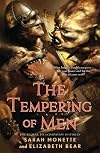
In Iskryne, the war against the Trollish invasion has been won, and the lands of men are safe again...at least for a while. Isolfr and his sister, the Konigenwolf Viradechtis, have established their own wolfhaell. Viradechtis has taken two mates, and so the human pack has two war leaders. And in the way of the pack, they must come to terms with each other, must become brothers instead of rivals--for Viradechtis will not be gainsaid. She may even be prescient. A new danger comes to Iskryne. show more An army of men approaches, an army that wishes to conquer and rule. The giant trellwolves and their human brothers have never hunted men before. They will need to learn if they are to defend their homes. show lessTags
Recommendations




















Member Reviews
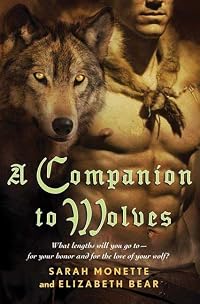
I read the first novel in this trilogy, A Companion to Wolves, together with Leander from The Idle Woman blog and urge you all to read her excellent review to get an idea of what it is about.
If you check out the reviews of this second volume at Goodreads or Amazon, you are going to find a lot of complaints about its disjointed plot or even the absence of a plot at all. Those are not quite wrong as statement of fact, but I think they’re not really valid as complaints, because, like its predecessor, The Tempering of Men is not really about plot, what there is of it is mostly a vehicle for other things. At their heart, both novels of this trilogy which I’ve read so far, are not the traditional Fantasy novels they might at first glance show more appear to be, but rather an in-depth analysis of various Fantasy tropes (I’d even say a deconstruction, but recent usage of that term has been sloppy to a degree that makes it pretty much useless).
The first novel was quite clearly about animal bonding and gender; while it’s plot was also rather episodic it presented a tightly-knit web of motifs and images around those central themes. It is a bit harder to make out what The Tempering of Men is about, and I think it is chiefly this which has caused many readers, even those who enjoyed A Companion to Wolves, problems with its sequel.
The Tempering of Men is told from three points of view, none of which is Isolfr who was the protagonist of the first volume and on whom we get several fascinating outside perspectives here. Each of those gets his own narrative thread, and in an interesting narrative move each of those threads describes a different kind of encounter: with animals, with non-human sentients, with other humans. Each of those threads then is resolved in a different manner: the first with violence, the second with diplomacy, the third with a mixture of both. Obviously, the authors (and I consider both Monette and Bear to be among the most intelligent currently working in the SFF field) put some thought into this, and even if the threads have only a superficial connection as regards plot, they are firmly linked on a thematic level, running underneath the surface action. And I think that from the interplay between those threads (and there is a lot of mirroring back and forth going on), there arises the central concern of this novel which, if I’d have to nail it down in word, would be consequences.
Your classic Epic Fantasy novel always has some kind of Evil Power trying to take over, and once our heroes have defeated the evil overlord everything is presumed to return to the status quo ante. Not so here: After they defeated the trolls and killed the trollqueen the wolfthreat have pacified the North – and got rid of their own raison d’être. They face the choice to other fade into insignificance and eventually disappear or to find some new reason for being and for the wolfless men to give them support and tithe boys. In short, this novels poses the question of what happens after the good guys have won, and while it suggests some answers it does not settle on a single one. The Tempering of Men is much more interested in working through the problem then coming up with a solution, and generally showing that things are rarely as neat as traditional Fantasy Epics like to paint them but tend to be considerably more messy – which very likely also is a reason why so many readers were frustrated with this novel. But I strongly suspect that frustrating readers’ expectations also was a major part of the authors’ narrative strategy, and generally your enjoyment of The Tempering of Men (and probably the trilogy as a whole) will depend on whether you like that kind of thing or not. For my part, I do (a lot) and am already looking forward to reading the concluding volume. show less
If you check out the reviews of this second volume at Goodreads or Amazon, you are going to find a lot of complaints about its disjointed plot or even the absence of a plot at all. Those are not quite wrong as statement of fact, but I think they’re not really valid as complaints, because, like its predecessor, The Tempering of Men is not really about plot, what there is of it is mostly a vehicle for other things. At their heart, both novels of this trilogy which I’ve read so far, are not the traditional Fantasy novels they might at first glance show more appear to be, but rather an in-depth analysis of various Fantasy tropes (I’d even say a deconstruction, but recent usage of that term has been sloppy to a degree that makes it pretty much useless).
The first novel was quite clearly about animal bonding and gender; while it’s plot was also rather episodic it presented a tightly-knit web of motifs and images around those central themes. It is a bit harder to make out what The Tempering of Men is about, and I think it is chiefly this which has caused many readers, even those who enjoyed A Companion to Wolves, problems with its sequel.
The Tempering of Men is told from three points of view, none of which is Isolfr who was the protagonist of the first volume and on whom we get several fascinating outside perspectives here. Each of those gets his own narrative thread, and in an interesting narrative move each of those threads describes a different kind of encounter: with animals, with non-human sentients, with other humans. Each of those threads then is resolved in a different manner: the first with violence, the second with diplomacy, the third with a mixture of both. Obviously, the authors (and I consider both Monette and Bear to be among the most intelligent currently working in the SFF field) put some thought into this, and even if the threads have only a superficial connection as regards plot, they are firmly linked on a thematic level, running underneath the surface action. And I think that from the interplay between those threads (and there is a lot of mirroring back and forth going on), there arises the central concern of this novel which, if I’d have to nail it down in word, would be consequences.
Your classic Epic Fantasy novel always has some kind of Evil Power trying to take over, and once our heroes have defeated the evil overlord everything is presumed to return to the status quo ante. Not so here: After they defeated the trolls and killed the trollqueen the wolfthreat have pacified the North – and got rid of their own raison d’être. They face the choice to other fade into insignificance and eventually disappear or to find some new reason for being and for the wolfless men to give them support and tithe boys. In short, this novels poses the question of what happens after the good guys have won, and while it suggests some answers it does not settle on a single one. The Tempering of Men is much more interested in working through the problem then coming up with a solution, and generally showing that things are rarely as neat as traditional Fantasy Epics like to paint them but tend to be considerably more messy – which very likely also is a reason why so many readers were frustrated with this novel. But I strongly suspect that frustrating readers’ expectations also was a major part of the authors’ narrative strategy, and generally your enjoyment of The Tempering of Men (and probably the trilogy as a whole) will depend on whether you like that kind of thing or not. For my part, I do (a lot) and am already looking forward to reading the concluding volume. show less
The Tempering of Men is the sequel to A Companion to Wolves, which came out in 2007. It picks up right where Companion left off, at the end of the trellwars, and this is the story of how the wolfcarls and their intelligent wolfish brothers and sisters learn what to do with themselves now. The wolfhaellen were formed to keep men safe from the trolls of the north, but now that the trolls are gone, is there still a purpose to the wolf-and-human packs?
Where Companion was the story of Isolfr learning how to live as part of the pack and how to become the brother of a konigenwolf, a queen wolf, Tempering follows several different characters, all of them being drawn out of their comfortable place in the pack and into new roles. Vethulf and show more Skjaldwulf are Isolfr’s wolfjarls, the pack’s war-leaders, still learning how to rule together; Brokkolfr is one of the only survivors of his previous pack and is learning his place (and regaining his confidence) in his new one. Between the three of them you have a great range of characters, providing very different points of view on their changing world.
Skjaldwulf is my favorite, though. He’d been in training for a poet before he bonded to a wolf, and it still shows in his sense of the dramatic and his instinct for narrative; he knows he’s in a story, and he tells it as he goes along. He’s frighteningly smart and more ambitious than he gives himself credit for. Although his moment of glory is at the AllThing, my favorite scene was his conversation with the invading Rhean captain. Skjaldwulf is not willing to see his countrymen become vassals to a foreign empire — but he knows that such an outcome would not be all bad, either. His internal tension is enthralling to see.
The cultural details, both historical and invented, are just lovely — the politics of town and wolfhaell, and of the northern and southern alfs; the godsmen and sworn-sons and city jarls. This is a huge, wonderful, complicated world, and The Tempering of Men gives you plenty of opportunity to indulge in exploring it.
Aside from its individual merits, though – of which there are plenty – the Iskryne world is a breaking down and re-imagining of the telepathic animal companion fantasy. Tempering is a little less biting in its way thanCompanion - which introduced the open mating, or what happens when the wolf bitch you’ve been telepathically bonded to goes into heat and all the dogs are willing to fight over her. Iskryne is a wonderful fantasy world, but it’s a gritty one. That doesn’t mean it’s bleak – far from it. The wolves and their men love each other with a love that is adorable to see, and in many ways Tempering is a book about the men learning to love each other as well. (…Yes, in that way, too.)
I love both Bear and Monette’s work, and with The Tempering of Men, they are continuing to work wonderfully well together. (For more examples of their collaboration, check out their short story “Boojum” in the Fast Ships, Black Sails anthology, or the many-author shared-world series Shadow Unit.) And if all goes well, there’s a third book in the Iskryne series scheduled for 2013, An Apprentice to Elves. Hurrah! show less
Where Companion was the story of Isolfr learning how to live as part of the pack and how to become the brother of a konigenwolf, a queen wolf, Tempering follows several different characters, all of them being drawn out of their comfortable place in the pack and into new roles. Vethulf and show more Skjaldwulf are Isolfr’s wolfjarls, the pack’s war-leaders, still learning how to rule together; Brokkolfr is one of the only survivors of his previous pack and is learning his place (and regaining his confidence) in his new one. Between the three of them you have a great range of characters, providing very different points of view on their changing world.
Skjaldwulf is my favorite, though. He’d been in training for a poet before he bonded to a wolf, and it still shows in his sense of the dramatic and his instinct for narrative; he knows he’s in a story, and he tells it as he goes along. He’s frighteningly smart and more ambitious than he gives himself credit for. Although his moment of glory is at the AllThing, my favorite scene was his conversation with the invading Rhean captain. Skjaldwulf is not willing to see his countrymen become vassals to a foreign empire — but he knows that such an outcome would not be all bad, either. His internal tension is enthralling to see.
The cultural details, both historical and invented, are just lovely — the politics of town and wolfhaell, and of the northern and southern alfs; the godsmen and sworn-sons and city jarls. This is a huge, wonderful, complicated world, and The Tempering of Men gives you plenty of opportunity to indulge in exploring it.
Aside from its individual merits, though – of which there are plenty – the Iskryne world is a breaking down and re-imagining of the telepathic animal companion fantasy. Tempering is a little less biting in its way thanCompanion - which introduced the open mating, or what happens when the wolf bitch you’ve been telepathically bonded to goes into heat and all the dogs are willing to fight over her. Iskryne is a wonderful fantasy world, but it’s a gritty one. That doesn’t mean it’s bleak – far from it. The wolves and their men love each other with a love that is adorable to see, and in many ways Tempering is a book about the men learning to love each other as well. (…Yes, in that way, too.)
I love both Bear and Monette’s work, and with The Tempering of Men, they are continuing to work wonderfully well together. (For more examples of their collaboration, check out their short story “Boojum” in the Fast Ships, Black Sails anthology, or the many-author shared-world series Shadow Unit.) And if all goes well, there’s a third book in the Iskryne series scheduled for 2013, An Apprentice to Elves. Hurrah! show less
This sequel to a Companion to Wolves has a very different feel to it, but is still very readable. What do you do when the Epic Battle is won, the trolls are defeated, and you are halls of Viking Warriors psychically bonded to wolves with no enemy left to fight? I liked seeing the hero of the last book through other's eyes, and I loved the discovery of the svartalfar, and the subtle change of the elves from 'the mystical Other' to people with their own intricate differences and politics.
I'm still amused and interested by this series -- now the wolf men need someone to fight -- enter Romans! Perfect. I'm so enjoying this very fantastical-historical story.
Ok, so you have your soulbonded wolves, with the resultant man- or men-on-man action come mating time. The first book found them fighting off a threat to their survival from the trolls; this book is instead a lot of journeys and smaller investigations and battles as the wolf-folk try to figure out to do without an immediate existential threat (and begin to detect the Roman-analogue threat from the south). No palaces, but the equivalent in palace intrigue: it's about relationships and planning for the future. If you liked the world of A Companion to Wolves, you may like this, but it's really the characters wandering around in that world rather than a new adventure specifically.
In [b:Companion to Wolves|333356|A Companion to Wolves (Iskryne World, #1)|Sarah Monette|http://d.gr-assets.com/books/1312035520s/333356.jpg|2703562], Bear and Monette presented a dark and grim twist on the classic fantasy trope of telepathic bonds with animals. Men were forced to give up their expected lives and occupations when one of the gigantic wolves chose them, and lived instead the fierce but short lives of troll-fighters. In [b:Companion to Wolves|333356|A Companion to Wolves (Iskryne World, #1)|Sarah Monette|http://d.gr-assets.com/books/1312035520s/333356.jpg|2703562], the troll queen was finally destroyed, which will probably eradicate trolls from Iskyrne forever. In this sequel, the men are left with the question of what to show more do with themselves once their original reason for existing is gone. Even as they struggle with this question, a new threat appears: the endless armies of the Rhean.
The story is told through the eyes of Skjaldwulf and Vethulf, who must share both the title of wolf-jarl and Isoflr's bed. A completely boring subplot about the aelfs is told via Brokklfr, who never seems to do anything; even his romance with Kari goes nowhere. And really, that's the basic problem with this book: it's all either clean-up of problems from the last book or set-up for the next book. There are a couple skirmishes, but it's all pretty low-key. Even the emotions and characters feel tamped down. All the pov characters talked and thought in similar ways, so I had a hard time keeping Skjaldwulf and Vethulf apart, even though supposedly they're completely different. (My other character related problem was that the wolves and the humans have similar naming conventions, so it was sometimes hard to remember which species someone belonged to.) The only character I was interested in was Fargrimr, who was born female but raised to be the male heir. The idea of a "sworn-man" is intriguing, but Fargrimr himself felt a bit like Aragorn back when he was Strider, and I super loved him.
I'll read the next book in the series, because I'm already tense about the clash between the wolfthreats and the pseudo-Roman armies. But the characters and their interactions aren't interesting me; I hope Monette and Bear put a little more work into them. show less
The story is told through the eyes of Skjaldwulf and Vethulf, who must share both the title of wolf-jarl and Isoflr's bed. A completely boring subplot about the aelfs is told via Brokklfr, who never seems to do anything; even his romance with Kari goes nowhere. And really, that's the basic problem with this book: it's all either clean-up of problems from the last book or set-up for the next book. There are a couple skirmishes, but it's all pretty low-key. Even the emotions and characters feel tamped down. All the pov characters talked and thought in similar ways, so I had a hard time keeping Skjaldwulf and Vethulf apart, even though supposedly they're completely different. (My other character related problem was that the wolves and the humans have similar naming conventions, so it was sometimes hard to remember which species someone belonged to.) The only character I was interested in was Fargrimr, who was born female but raised to be the male heir. The idea of a "sworn-man" is intriguing, but Fargrimr himself felt a bit like Aragorn back when he was Strider, and I super loved him.
I'll read the next book in the series, because I'm already tense about the clash between the wolfthreats and the pseudo-Roman armies. But the characters and their interactions aren't interesting me; I hope Monette and Bear put a little more work into them. show less
To be quite truthful, I didn't really need this book. Don't get me wrong, it was nice. But I loved the first book. This book was less brutal than the first and less harsh, but it also missed some of its beauty. The world is expanded and we get to know more about the humans in the warmer south. The wolfheallan need a new purpose now that all the trolls are gone and this book is about them rebuilding their halls and finding a purpose, as well as identifying a new (human) threat. Unfortunately, I wasn't really that interested in the south. And it isn't interesting: it's just a human world like ours a few hundred years back. In book 1, the wolfcarls lived in a world with magic, trolls and svart alfar. In this one, they live in an ordinary show more world, almost. Ok, there are some scenes with svart alfar, but those don't seem to be going anywhere. Which is another problem I had with this book: it seems to be ambling along, not really going anywhere, describing scenes whose purpose is unclear, and then it ends at a weird spot. I would almost think that this book is a very long introduction to the third upcoming one. I hope so. Because this book may have been enjoyable, it didn't have the quality of the first by a long shot. show less
Members
- Recently Added By
Lists

My Wishlist-SciFi-Fantasy
65 works; 3 members

Speculative Fiction to Read
706 works; 32 members

al.vick-wishlist-scifi-fant
180 works; 2 members

mom
729 works; 1 member
Author Information

63+ Works 12,577 Members

Sarah Monette is a LibraryThing Author, an author who lists their personal library on LibraryThing.

176+ Works 16,448 Members
Elizabeth Bear is a LibraryThing Author, an author who lists their personal library on LibraryThing.
Some Editions
Awards and Honors
Awards
Notable Lists
Series

Common Knowledge
- Original publication date
- 2011-08-16
- First words
- Vethulf and Skjaldwulf did not get along.
- Last words
- (Click to show. Warning: May contain spoilers.)"I missed you," Vethulf said. He sounded aggrieved.
- Publisher's editor
- Meacham, Beth
Classifications
Statistics
- Members
- 247
- Popularity
- 130,793
- Reviews
- 11
- Rating
- (3.66)
- Languages
- English
- Media
- Paper, Audiobook, Ebook
- ISBNs
- 7
- ASINs
- 5