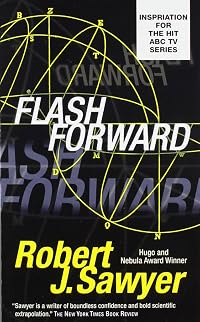
Flashforward
by Robert J. Sawyer
On This Page
Description
A scientific experiment begins, and as the button is pressed, the unexpected occurs: everyone in the world goes to sleep for a few moments while everyone's consciousness is catapulted more than twenty years into the future. At the end of those moments, when the world reawakens, all human life is transformed by foreknowledge.Tags
Recommendations
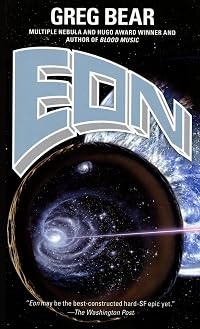

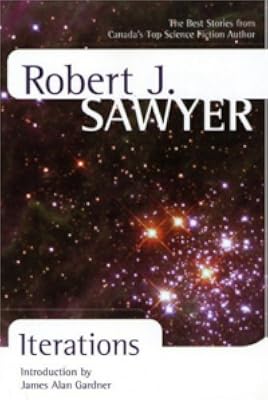
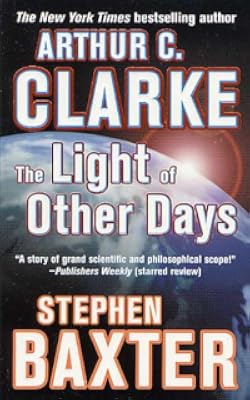
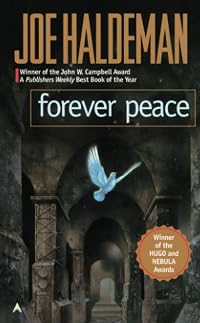
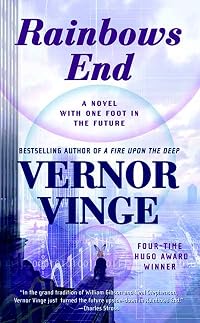
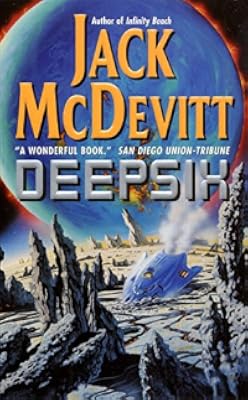
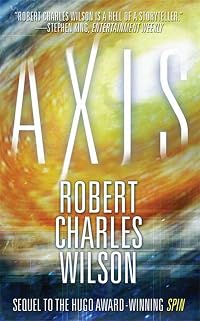
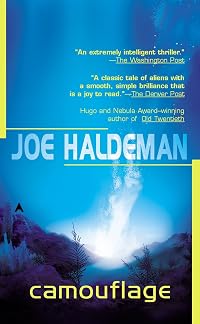
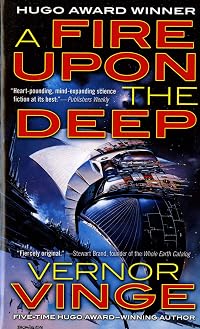
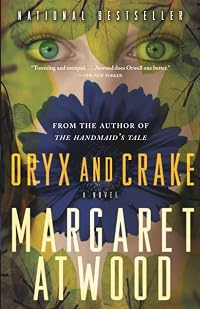
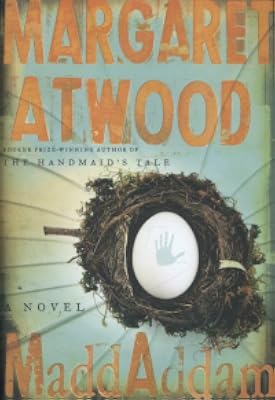
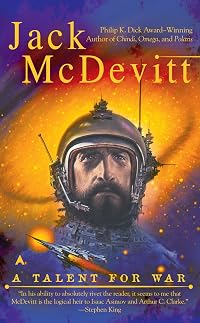
Member Recommendations
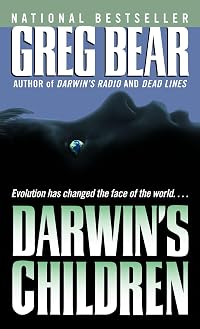
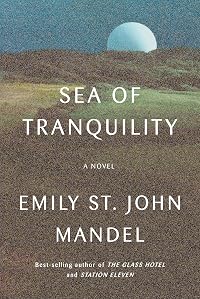
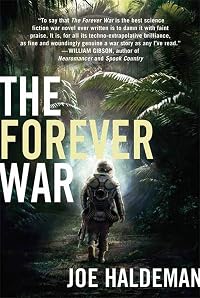
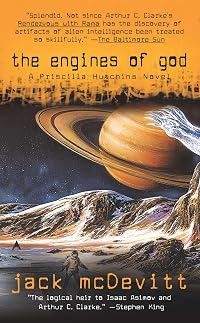
SFdolon Best Michael Crichton book, a story about the repercussions of an unexpected scientific discovery.
Member Reviews
An experiment at CERN designed to detect the Higgs Boson instead has the unanticipated effect of causing everyone on Earth to black out and experience one minute and forty-three seconds' worth of their lives twenty-one years in the future.
If this premise sounds almost familiar, you may be remembering the short-lived TV series of the same name, which was based on this novel. I did watch that when it was on, but eventually found myself growing frustrated with it. It felt to me like it was trying way too hard to be the new Lost and not doing a terribly good job of it. So I finally gave up on it, a couple of episodes before the network did. But I still thought the concept was intriguing, so I figured I'd pick up the book and see if what the show more original did with it was any better.
As it happens, the novel bears very little resemblance to the TV show, except for the basic idea of the blackout and future vision, and some cases of what people see in that future being broadly similar. (E.g. one man discovering that he's been murdered in the future, and another learning that he's no longer with the woman he thought he'd love forever.)
But the premise is still fascinating, even on encountering it for the second time, and it opens up a lot of interesting discussion about the physics and philosophy of time. Is the future fixed, something that already exists out there somewhere, or is it malleable? Is there such a thing as free will? And if you could see the future, what would that do to your present? There's some nifty, thought-provoking stuff here. Unfortunately, I think it goes off the rails a bit by the end, getting into some rather nutty, or at the very least scientifically and philosophically dubious territory. Which maybe shouldn't be too surprising; this is the kind of story where it seems hard to imagine an ending that would be entirely satisfying.
That's not the only thing that I found not quite satisfying, though. Sawyer does a really good job of setting up personal situations that make this time-jump idea and its human consequences feel very grounded and relatable, and that's good. But his characters are a little too flat to make it all quite as effective as it might have been. Most of the time, it feels more like we're being told how the characters feel, rather than shown their emotions and made to feel along with them. Also, this was written in 1999 and set (mostly) in 2009, and the fact that Sawyer inevitably failed to correctly predict the world ten years in his future means it takes a little too much effort to suspend my disbelief in the world he predicts twenty years beyond that.
Still, it's a quick, interesting read, and may well be worth a look if you find time travel stories appealing and would like to see a somewhat different-than-usual take on the idea. show less
If this premise sounds almost familiar, you may be remembering the short-lived TV series of the same name, which was based on this novel. I did watch that when it was on, but eventually found myself growing frustrated with it. It felt to me like it was trying way too hard to be the new Lost and not doing a terribly good job of it. So I finally gave up on it, a couple of episodes before the network did. But I still thought the concept was intriguing, so I figured I'd pick up the book and see if what the show more original did with it was any better.
As it happens, the novel bears very little resemblance to the TV show, except for the basic idea of the blackout and future vision, and some cases of what people see in that future being broadly similar. (E.g. one man discovering that he's been murdered in the future, and another learning that he's no longer with the woman he thought he'd love forever.)
But the premise is still fascinating, even on encountering it for the second time, and it opens up a lot of interesting discussion about the physics and philosophy of time. Is the future fixed, something that already exists out there somewhere, or is it malleable? Is there such a thing as free will? And if you could see the future, what would that do to your present? There's some nifty, thought-provoking stuff here. Unfortunately, I think it goes off the rails a bit by the end, getting into some rather nutty, or at the very least scientifically and philosophically dubious territory. Which maybe shouldn't be too surprising; this is the kind of story where it seems hard to imagine an ending that would be entirely satisfying.
That's not the only thing that I found not quite satisfying, though. Sawyer does a really good job of setting up personal situations that make this time-jump idea and its human consequences feel very grounded and relatable, and that's good. But his characters are a little too flat to make it all quite as effective as it might have been. Most of the time, it feels more like we're being told how the characters feel, rather than shown their emotions and made to feel along with them. Also, this was written in 1999 and set (mostly) in 2009, and the fact that Sawyer inevitably failed to correctly predict the world ten years in his future means it takes a little too much effort to suspend my disbelief in the world he predicts twenty years beyond that.
Still, it's a quick, interesting read, and may well be worth a look if you find time travel stories appealing and would like to see a somewhat different-than-usual take on the idea. show less
Lloyd Simcoe and Theo Procopides, two physicists working for CERN, have prepared their whole lives for this moment: trying to capture the Higgs boson with a Large Hadron Collider by recreating energy levels that haven't been seen in the universe since directly after the Big Bang. But when they start the experiment, their consciousnesses move forward twenty-one years into the future for a brief minute or two before returning to the present. In the aftermath, they realize that everyone in the universe experienced something similar, and no one - including the scientists - are quite sure why.
Flashforward takes a common question of humanity and literature, "What would you do if you could see your future?" and investigates it from a science-y show more point of view. Can the future be changed, or is it as immutable as the past? Does free will exist? Since the characters are physicists, you know their answer is going to be pretty heady, and I was grateful for the science nonfiction I'd read last year or their discussions would have been even further over my head. Lest this sounds like a slog, let me assure you that the reading is generally fast-paced, a good blend of mystery and very human characters that kept me reading even if I didn't always understand things like the Minkowski principle and what not. (Actually, that sounds a good bit like watching Lost...) The book is set in 2009, which I had to remember was ten years in the future when the book was originally written, but I had fun "spotting the differences" between last year and how Sawyer imagined things might be. An entertaining read, and recommended if you don't mind (or can comprehend) the physics theories and discussions. show less
Flashforward takes a common question of humanity and literature, "What would you do if you could see your future?" and investigates it from a science-y show more point of view. Can the future be changed, or is it as immutable as the past? Does free will exist? Since the characters are physicists, you know their answer is going to be pretty heady, and I was grateful for the science nonfiction I'd read last year or their discussions would have been even further over my head. Lest this sounds like a slog, let me assure you that the reading is generally fast-paced, a good blend of mystery and very human characters that kept me reading even if I didn't always understand things like the Minkowski principle and what not. (Actually, that sounds a good bit like watching Lost...) The book is set in 2009, which I had to remember was ten years in the future when the book was originally written, but I had fun "spotting the differences" between last year and how Sawyer imagined things might be. An entertaining read, and recommended if you don't mind (or can comprehend) the physics theories and discussions. show less
In 2009 Lloyd Simcoe and Theo Procopides were physicists at CERN, the particle collider institute in Switzerland, and they were hoping to create conditions to finally see the Higgs boson. Instead, when they started their instrument everyone in the world blacked out for two minutes. Most people had a vision of themselves in the future. But the tragedy was that all those people who were driving or doing other things that required attention were no longer in control and many people died. Lloyd's fiancee's daughter was hit by an out of control car and died. Theo did not have a vision which meant that he was not alive at that point in the future even though he is quite a bit younger than Lloyd. Lloyd has his own dilemma in that his vision show more showed him in bed with a woman who is not his fiancee.
It wasn't clear whether the experiment caused the world-wide black out but Lloyd is convinced it did. While he tries to work out what went wrong (because they didn't see any Higgs boson) Theo tries to find out his cause of death. He soon learns that he was murdered a few days before the date of the vision and he is determined to find out who killed him.
These story lines and others are gripping and I had trouble turning off my PDA in order to sleep or work. What would happen if people had a glimpse of their future? Is the future immutable? Will Lloyd and his fiancee marry and stay together despite his vision? Will Theo be murdered?
Yet another winner from Sawyer. show less
It wasn't clear whether the experiment caused the world-wide black out but Lloyd is convinced it did. While he tries to work out what went wrong (because they didn't see any Higgs boson) Theo tries to find out his cause of death. He soon learns that he was murdered a few days before the date of the vision and he is determined to find out who killed him.
These story lines and others are gripping and I had trouble turning off my PDA in order to sleep or work. What would happen if people had a glimpse of their future? Is the future immutable? Will Lloyd and his fiancee marry and stay together despite his vision? Will Theo be murdered?
Yet another winner from Sawyer. show less
Flash forward is an interesting take on the time travel phenomenon. Instead of one person (or even just a few people) using a time machine, a scientific experiment gone wrong causes the entire world to move forward in time to get a glimpse of the future. This book asks the question: What would happen if the whole world saw the future? It's not conventional time travel fiction, and I like that.
I listened to the audio version, and it was fantastic. The narrator did very well. All in all, if you like time travel fiction, this book is one I would buy in hardcover.
I listened to the audio version, and it was fantastic. The narrator did very well. All in all, if you like time travel fiction, this book is one I would buy in hardcover.
For me, Robert J. Sawyer novels are either hit or miss. They're either incredibly brilliant and I can't turn the pages fast enough ("Rollback") or I can't wait for the final page to turn just to be done with the novel ("Homonids"). And I'll admit I picked up this one because ABC has put it on the fast-track for development for a potential TV series. One that could air after "Lost" and is being sold as a "companion" piece for one of my favorite TV shows.
Being a book-snob, I knew I had to try the original novel before the series comes out, so I can spend hours boring friends and family about how the book is better. I've tried to get help for this condition, but so far, no luck.
Thankfully, "Flashfoward" falls into the category of really show more good Robert J. Saywer novels. The premise is that on the day an experiment is conducted at the CERT supercollider, people experience a flash forward of thirty years into the future for two minutes. Everyone has visions for about two minutes of where they'll be and what they'll be doing thirty years hence. Then everything shifts back and we have to deal with the fallout and ramifications of things.
The driving focus of the story is a mystery. One of the lead characters sees no vision of the future, but by talking to others determines he was murdered two days before the events everyone saw. He then begins to slowly try and unravel who killed him and why in an attempt to prevent that future from becoming reality.
One of the many interesting debates in the story is whether or not the future is "set" or can we make changes to it. Two character are engaged, but in the future he sees himself married to another woman. So, should the two continue their path to marriage given than it appears things don't work out? Do we have free will? Is the timeline set or are there an infinite number of universes based on decisions we make today that change things in small but interesting ways? Or all we just robots acting out some grand drama and we have no control over our lives? Sawyer brings up these questions and some theories on the nature of time and free will vs determinism in a fascinating way. To counter the engaged couple, Sawyer gives us two scientists who have a vision of engaging in sexual intercourse at a lab during the flashforward. The moment is thirty years from now, but when they get back the two find each other, meet and begin a relationship. Will the passion still be there in thirty years or have they changed the future? Were they destined to meet? Did the flashfoward push them together sooner?
The novel also brings up the interesting idea of if you know too much about your future, can that be a negative thing? One aspiring author sees himself in the future, working as a waiter and having never "made it" as a writer. Rather than toil, he decides his life is over and commits suicide. The novel also brings up that this happens to a lot of other people, many of whom lose hope over not seeing their dreams come true or the future as something that want to move forward to.
Reading the novel, I can see the potential for a great TV series here and why it could be a good companion show for "Lost." You've got a diverse set of characters who are thrown together and must come to grips with a central mystery of what happened and why. There is a similar interconnectedness among the characters like we have in "Lost" as well. Will it work as a TV show if you remove or have to solve the "will I or won't I be murdered?" thread that drives the main plot? Yes, it could. While that plotline is sufficiently satisfying and drives the story forward, it's still the philosophical questions that Sawyer raises that really linger with the reader after the final page is turned. show less
Being a book-snob, I knew I had to try the original novel before the series comes out, so I can spend hours boring friends and family about how the book is better. I've tried to get help for this condition, but so far, no luck.
Thankfully, "Flashfoward" falls into the category of really show more good Robert J. Saywer novels. The premise is that on the day an experiment is conducted at the CERT supercollider, people experience a flash forward of thirty years into the future for two minutes. Everyone has visions for about two minutes of where they'll be and what they'll be doing thirty years hence. Then everything shifts back and we have to deal with the fallout and ramifications of things.
The driving focus of the story is a mystery. One of the lead characters sees no vision of the future, but by talking to others determines he was murdered two days before the events everyone saw. He then begins to slowly try and unravel who killed him and why in an attempt to prevent that future from becoming reality.
One of the many interesting debates in the story is whether or not the future is "set" or can we make changes to it. Two character are engaged, but in the future he sees himself married to another woman. So, should the two continue their path to marriage given than it appears things don't work out? Do we have free will? Is the timeline set or are there an infinite number of universes based on decisions we make today that change things in small but interesting ways? Or all we just robots acting out some grand drama and we have no control over our lives? Sawyer brings up these questions and some theories on the nature of time and free will vs determinism in a fascinating way. To counter the engaged couple, Sawyer gives us two scientists who have a vision of engaging in sexual intercourse at a lab during the flashforward. The moment is thirty years from now, but when they get back the two find each other, meet and begin a relationship. Will the passion still be there in thirty years or have they changed the future? Were they destined to meet? Did the flashfoward push them together sooner?
The novel also brings up the interesting idea of if you know too much about your future, can that be a negative thing? One aspiring author sees himself in the future, working as a waiter and having never "made it" as a writer. Rather than toil, he decides his life is over and commits suicide. The novel also brings up that this happens to a lot of other people, many of whom lose hope over not seeing their dreams come true or the future as something that want to move forward to.
Reading the novel, I can see the potential for a great TV series here and why it could be a good companion show for "Lost." You've got a diverse set of characters who are thrown together and must come to grips with a central mystery of what happened and why. There is a similar interconnectedness among the characters like we have in "Lost" as well. Will it work as a TV show if you remove or have to solve the "will I or won't I be murdered?" thread that drives the main plot? Yes, it could. While that plotline is sufficiently satisfying and drives the story forward, it's still the philosophical questions that Sawyer raises that really linger with the reader after the final page is turned. show less
In April 2009, two scientists spearheading an experiment in particle physics at CERN switch on the Large Hadron Collider. Entirely unexpectedly, something happens: the consciousness of every person on Earth slips forward approximately twenty years into the future. Two minutes later, they return to themselves - but the world has been irrevocably changed by foreknowledge. Isn't that a great idea for a novel? I thought so. It's shame the execution is so terrible. Detailing all that is wrong with it will take time, but I'll make that sacrifice. First of all, the prose is, well, it has a utilitarian cast at best. At worst, it can descend into he said and then she said and then they went out but they opened the door first. He's particularly show more fond of emphasising how much research he's done. Two-page digressions on quantum physics are not uncommon.
And then, there are the characters - all of which are puppet-like, wheeled on and off stage as the author likes without a spark of life to them; particularly awful are his women, who exist to cry after men or get naked for men. There's one incident where a male character Has! A! Realisation! that for a woman, going out on a dark street at night with a man she's only just met is a bad idea. For some reason, Sawyer tells us this as though it's a great and profound insight. (And I'm sure someone will want to tell me that women aren't really the target audience for the novel, blah blah blah shut up. A novel about the future that doesn't have anything to say about women is, shall we say, fundamentally lacking.)
In the end, though, I give this three stars. Because the idea, which could have been done so well, is a really great idea, and perhaps some day someone will steal it and extract the great, literary novel out of it that Sawyer could have. show less
And then, there are the characters - all of which are puppet-like, wheeled on and off stage as the author likes without a spark of life to them; particularly awful are his women, who exist to cry after men or get naked for men. There's one incident where a male character Has! A! Realisation! that for a woman, going out on a dark street at night with a man she's only just met is a bad idea. For some reason, Sawyer tells us this as though it's a great and profound insight. (And I'm sure someone will want to tell me that women aren't really the target audience for the novel, blah blah blah shut up. A novel about the future that doesn't have anything to say about women is, shall we say, fundamentally lacking.)
In the end, though, I give this three stars. Because the idea, which could have been done so well, is a really great idea, and perhaps some day someone will steal it and extract the great, literary novel out of it that Sawyer could have. show less
Book vs TV series: review (mostly) written in 2010
The only thing this shares with the TV series of the same name is the concept of everyone in the world simultaneously blacking out for two minutes, during which they have a “flashforward” of their future. In the TV series that is 6 months hence; in the book it is just over 21 years hence, so the implications are very different. (However, the second series, which was never made, was going to have a 20-year jump.)
Concept
It’s a fantastic premise and it’s explored in a variety of interesting ways, but it is poorly written, despite the many sci-fi awards Sawyer has won.
Although it is primarily sci-fi, and is set at CERN, there is a murder investigation, presumably to widen its show more appeal, and a poor pastiche of Arthur C Clarke's 2001.
After the flashforward, people pool their sightings on a website to see if they match (for example, if I was lunching with John, was he lunching with me?). Some find their visions reaffirming and others want to fight against their apparent destiny - echoes of Scrooge in A Christmas Carol, and of Oedipus. Meanwhile, governments investigate the cause amid recriminations about those who died or were injured when vehicles crashed and surgeons passed out.
Image: Crystal ball: do you want to know your future? (Source)
Interesting questions
* Would you want a flashforward - and does your answer depend if it's 6 months or 20 years?
* What are the geopolitical implications for governments?
* Would insurers pay up and maybe go bankrupt, or refuse?
* Would patent offices be swamped?
* Would it weaken or strengthen religious belief?
* How would small children cope with seeing their adult selves in situations they may not understand?
* Could you marry someone if you knew that you would be with a different person in 20 years time?
* The big one: is our future immutable or do we live in a multiverse?
1999, 2009-2010, 2021
One oddity is that most of it is set last year (2009), which was the near future when it was written in 1999, so there is unintended entertainment from the things he got wrong, though I do live in hope of newspapers voluntarily dropping horoscopes because "printing such nonsense was at odds with their fundamental purpose of disseminating truth".
Comment added 2021: Oh for the days when I naively thought horoscopes were the only untruths in newspapers!
Why only 3*?
Despite the high concept, this book has weaknesses common to poor sci-fi: explaining the science with dialogue between experts who would already know whatever it is, along with trivial references to life in the future which neither illuminate nor amuse (Ikea's Billy bookcase will still be around in 2009, but George Lucas still won't have filmed all of Star Wars).
Comment added in 2021: I was too snarky in 2010. Billy bookcase is still selling well, and I think George Lucas has given up on filming all of Star Wars, though there have been spin-offs that weren't anticipated back in 1999, such as The Clone Wars.
It's padded with plodding, pointless prose: "As headquarters of numerous international organisations, Geneva attracted people from all over the world." Wow (not).
There are odd and unnecessarily plot holes and gaps in plausibility. For example, we are meant to believe that CERN has no emergency procedures, not even of the kind that an ordinary office has.
So, read it for the concept, try to let the poor writing wash over you, and pay attention when Sanduleak is first explained. show less
The only thing this shares with the TV series of the same name is the concept of everyone in the world simultaneously blacking out for two minutes, during which they have a “flashforward” of their future. In the TV series that is 6 months hence; in the book it is just over 21 years hence, so the implications are very different. (However, the second series, which was never made, was going to have a 20-year jump.)
Concept
It’s a fantastic premise and it’s explored in a variety of interesting ways, but it is poorly written, despite the many sci-fi awards Sawyer has won.
Although it is primarily sci-fi, and is set at CERN, there is a murder investigation, presumably to widen its show more appeal, and a poor pastiche of Arthur C Clarke's 2001.
After the flashforward, people pool their sightings on a website to see if they match (for example, if I was lunching with John, was he lunching with me?). Some find their visions reaffirming and others want to fight against their apparent destiny - echoes of Scrooge in A Christmas Carol, and of Oedipus. Meanwhile, governments investigate the cause amid recriminations about those who died or were injured when vehicles crashed and surgeons passed out.
Image: Crystal ball: do you want to know your future? (Source)
Interesting questions
* Would you want a flashforward - and does your answer depend if it's 6 months or 20 years?
* What are the geopolitical implications for governments?
* Would insurers pay up and maybe go bankrupt, or refuse?
* Would patent offices be swamped?
* Would it weaken or strengthen religious belief?
* How would small children cope with seeing their adult selves in situations they may not understand?
* Could you marry someone if you knew that you would be with a different person in 20 years time?
* The big one: is our future immutable or do we live in a multiverse?
1999, 2009-2010, 2021
One oddity is that most of it is set last year (2009), which was the near future when it was written in 1999, so there is unintended entertainment from the things he got wrong, though I do live in hope of newspapers voluntarily dropping horoscopes because "printing such nonsense was at odds with their fundamental purpose of disseminating truth".
Comment added 2021: Oh for the days when I naively thought horoscopes were the only untruths in newspapers!
Why only 3*?
Despite the high concept, this book has weaknesses common to poor sci-fi: explaining the science with dialogue between experts who would already know whatever it is, along with trivial references to life in the future which neither illuminate nor amuse (Ikea's Billy bookcase will still be around in 2009, but George Lucas still won't have filmed all of Star Wars).
Comment added in 2021: I was too snarky in 2010. Billy bookcase is still selling well, and I think George Lucas has given up on filming all of Star Wars, though there have been spin-offs that weren't anticipated back in 1999, such as The Clone Wars.
It's padded with plodding, pointless prose: "As headquarters of numerous international organisations, Geneva attracted people from all over the world." Wow (not).
There are odd and unnecessarily plot holes and gaps in plausibility. For example, we are meant to believe that CERN has no emergency procedures, not even of the kind that an ordinary office has.
So, read it for the concept, try to let the poor writing wash over you, and pay attention when Sanduleak is first explained. show less
Members
- Recently Added By
Published Reviews
ThingScore 75
Although uneven, the book was a more rewarding experience for me than the television series. If you enjoyed FlashForward on television, you should probably read the book as it delves far more deeply into many of the issues raised by its core concept.
added by sdobie
Lists

Best Time Travel Novels
165 works; 125 members

Read the book and saw the movie
1,170 works; 195 members

CBC Books - Canada's 100 (+ bonus 10): Which have you read?
110 works; 23 members

Books Read in 2013
1,630 works; 51 members
Fate vs. Free Will
63 works; 8 members
Author Information

107+ Works 20,032 Members
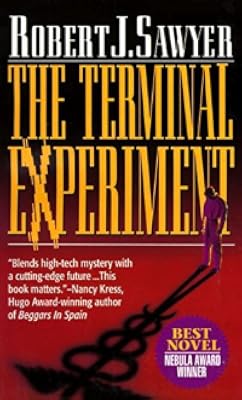
Robert J. Sawyer was born in Ottawa on April 29, 1960, but raised in Toronto. In 1980, while still in high school, Sawyer submitted a short story to the the Rochester Museum and Science Center, which was running a contest for light show ideas. Sawyer didn't win, but the Museum purchased his story Motive anyway and it ran for 192 performances. show more Sawyer went on to attend Toronto's Ryerson Polytechnical Institute, majoring in Radio and Television Arts. In September 1979, he had his first piece of fiction published at the end of his first year, in Ryerson's literary annual, White Wall Review. Sawyer graduated from Ryerson in 1982. Sawyer was hired back the following semester to teach television studio production techniques to second- and third-year students. In the four months interim, he worked for minimum wage at the local SF bookstore, spending all his earnings on books. From 1984 to 1992, while teaching, Sawyer also coordinated a social group of Toronto-area science-fiction writers founded by SF editor Judith Merril. He established a Canadian region of the Science Fiction and Fantasy Writers of America; and in 1998, served as that organization's president. Sawyer also retained freelance nonfiction writing contracts, writing articles for newspapers and magazines, press releases and brochures for corporations, newsletters for government departments. He churned out vast amounts of promotional materials and over 200 articles for computing and personal-finance magazines in a span of five years. But in that time, his only really significant publication was the novelette Golden Fleece, which appeared as the cover story in the September 1988 edition of Amazing Stories. The novel-length Golden Fleece was sold to Warner Books a year later in 1989. The sales of his first five books were uninspiring and Sawyer faced being dropped by his publisher. Sawyer decided to take the time to write a book, without a contract, take as long as necessary, and produce a blockbuster. He also wanted to tackle a controversial issue and deal with it head on. With that in mind, Sawyer wrote The Terminal Experiment, about abortion and the soul. His publisher rejected it on grounds of controversy. HarperPrism then bought the book and serialization rights were sold to Analog, the number-one best-selling English-language SF magazine. The Terminal Experiment went on to win the Science Fiction and Fantasy Writers of America's Nebula Award for Best Novel of 1995. His novel Frameshift was his first book published in hardcover, and was nominated for the Hugo Award, and won Japan's Seiun Award for best foreign novel of the year. (Bowker Author Biography) show less
Awards and Honors
Awards
Work Relationships
Is contained in
Common Knowledge
- Canonical title*
- FlashForward
- Original title
- Flashforward
- Original publication date
- 1999-06
- People/Characters
- Lloyd Simcoe; Michiko Komura; Theo Procopides; Gaston Beranger; Jacob Horowitz
- Important places
- CERN
- Related movies
- FlashForward (2009 | IMDb)
- Epigraph
- "He who foresees calamities suffers them twice over." --Beilby Porteus
""Free will is an illusion. It is synonymous with incomplete perception." --Walter Kubilius
"Lost time is never found again." --John H. A... (show all)ughey - Dedication
- For Richard M. Gotlib
Richard and I first met in high school in 1975. Back then, we each envisioned very different futures for ourselves. But one thing seemed absolutely clear: no matter how many years would pass, we'd... (show all) always be friends. It's now a quarter-century later, and I'm delighted that at least that part turned out exactly as planned. - First words
- The control building for CERN's Large Hadron Collider was new: it had been authorized in A.D. 2004 and completed in 2006.
- Last words
- (Click to show. Warning: May contain spoilers.)But only time will tell.
- Original language
- English
*Some information comes from Common Knowledge in other languages. Click "Edit" for more information.
Classifications
Statistics
- Members
- 2,286
- Popularity
- 8,683
- Reviews
- 118
- Rating
- (3.50)
- Languages
- 13 — Czech, Dutch, English, French, German, Hebrew, Hungarian, Italian, Polish, Portuguese, Romanian, Spanish, Turkish
- Media
- Paper, Audiobook, Ebook
- ISBNs
- 34
- ASINs
- 26