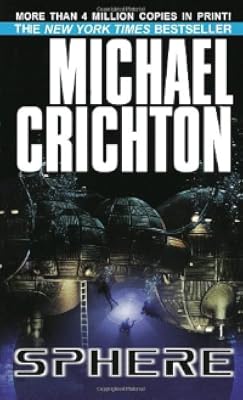
Sphere
by Michael Crichton
On This Page
Description
From the author of Jurassic Park, Timeline, and Congo comes a psychological thriller about a group of scientists who investigate a spaceship discovered on the ocean floor.In the middle of the South Pacific, a thousand feet below the surface, a huge vessel is unearthed. Rushed to the scene is a team of American scientists who descend together into the depths to investigate the astonishing discovery. What they find defies their imaginations and mocks their attempts at logical show more explanation. It is a spaceship, but apparently it is undamaged by its fall from the sky. And, most startling, it appears to be at least three hundred years old, containing a terrifying and destructive force that must be controlled at all costs.
. show less
Tags
Recommendations

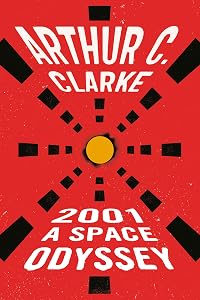
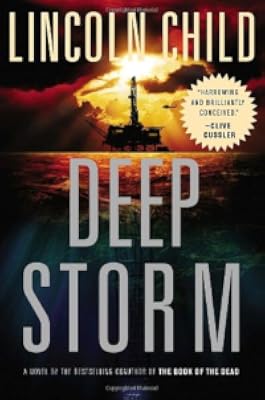
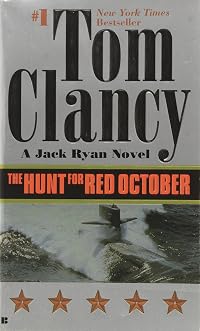
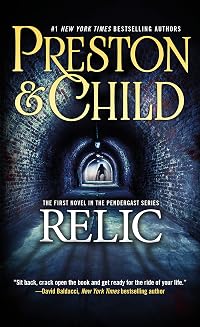
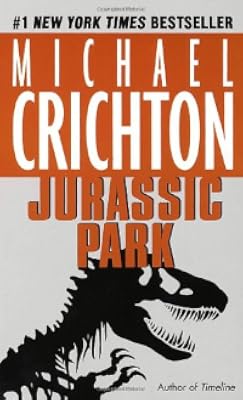

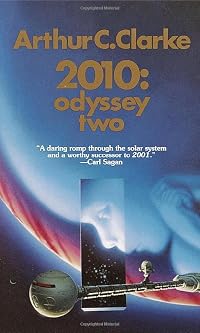
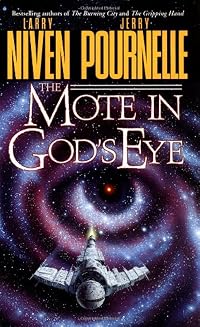
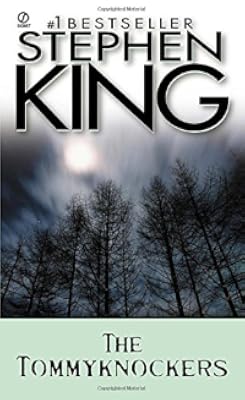


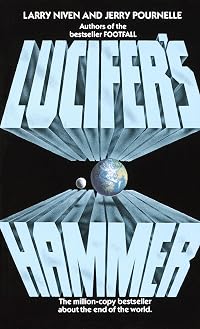
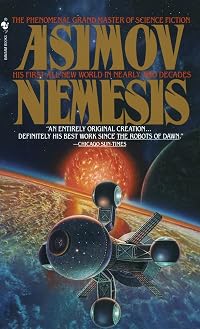

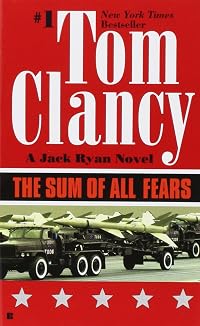
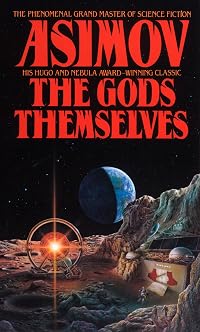




Member Recommendations

Konran Darker And Edgier underwater tale, including an alien (maybe) lifeform.
11
Member Reviews
This is a serious study in how to keep a reader on edge. Maybe I'm just easily scared, but I find surprising that such a simple concept can generate such a strong reaction from me.
Four scientists are called to a crash site. It turns out to be the site of a spaceship that has been there for more than three hundred years. As they explore, mysterious events and messages begin to appear around the site of their habitat. The mission becomes a race to discover who or what is causing these attacks and why, before it kills them all.
For me, Sphere derives a great deal of its power from the veneer of science that it layers over the entire experience. We're placed among a group of intellectuals who knife away at the problems using the tools they show more are normally accustomed to. The origin of the ship, the nature of the codes, their mutual behaviours - I could spot no obvious, immersion breaking discrepancies and I was consequently quite vulnerable to the feelings that the book generates. Crichton uses Sphere as a way to indicate the issues surrounding alien contact, caricatured somewhat but still a real indicator to someone who is not aware of the situation. I think it would be best not take his novels too seriously, though. Not everything is quite as clear cut as he makes it out.
The other issue I would mention is the relative lack of feelings that the characters have. The main character is a psychologist, but I don't think that you can explain the weird reactions of the scientists to deaths and inexplicable events as just hiding from the reality. I think most people would have some kind of more extreme reaction than that. It makes Beth and Harry, in particular, feel like constructions more than people.
The "message" of the book then, if there is one, would probably go something like this. We're looking at a clash between the soft and the hard sciences, and their ways of interpreting problems. Norman ends up proving that the hard scientists that ignore psychology and their own psychological problems are a danger to themselves and others (although the sequence of deductions that he generates is enough to make any reader feel inadequate). The other topic is the power of the human imagination. Norman decides that the ability to control our thoughts and maintain self-control is the factor being tested by the sphere. As a species, we have to learn this kind of restraint if we are going to explore the stars.
Highly recommended if you have a little time on your hands. No literary masterpiece, but thoroughly enjoyable and it will get you thinking hard about a great deal of increasingly relevant issues. show less
Four scientists are called to a crash site. It turns out to be the site of a spaceship that has been there for more than three hundred years. As they explore, mysterious events and messages begin to appear around the site of their habitat. The mission becomes a race to discover who or what is causing these attacks and why, before it kills them all.
For me, Sphere derives a great deal of its power from the veneer of science that it layers over the entire experience. We're placed among a group of intellectuals who knife away at the problems using the tools they show more are normally accustomed to. The origin of the ship, the nature of the codes, their mutual behaviours - I could spot no obvious, immersion breaking discrepancies and I was consequently quite vulnerable to the feelings that the book generates. Crichton uses Sphere as a way to indicate the issues surrounding alien contact, caricatured somewhat but still a real indicator to someone who is not aware of the situation. I think it would be best not take his novels too seriously, though. Not everything is quite as clear cut as he makes it out.
The other issue I would mention is the relative lack of feelings that the characters have. The main character is a psychologist, but I don't think that you can explain the weird reactions of the scientists to deaths and inexplicable events as just hiding from the reality. I think most people would have some kind of more extreme reaction than that. It makes Beth and Harry, in particular, feel like constructions more than people.
The "message" of the book then, if there is one, would probably go something like this.
Highly recommended if you have a little time on your hands. No literary masterpiece, but thoroughly enjoyable and it will get you thinking hard about a great deal of increasingly relevant issues. show less
This is the third Crichton I've read that underwhelmed, and I think it heralds the end of my Crichton reading. Like other reviewers, I think there is a solid framework for the story - unidentified spacecraft with mysterious, if recognizable features, discovered at the bottom of the Pacific Ocean, investigated by a team of scientists at the top of their fields. But the story devolves into psychology and philosophy debates once too often, and the entity doesn't end up that frightening in the long run. Made into a film version in the late 90s, and maybe that was the better way to tell the story. And maybe that's the problem for Crichton in the long run - good ideas with a problem fleshing them out with real meat for the length of a novel show more as opposed to a screenplay.
3 bones!!! show less
3 bones!!! show less
This is my second time reading this one and it remains one of my favorite Crichton titles, I think because it forces him out of his infodump comfort zone and into a more philosophical place. While there are a few things that don't entirely hold up (some of the racial and gender dynamics are cringey at best) its still something that provokes me to think about long after I've finished.
This was my first Crichton and I haven’t read it since it first came out and I needed to read it again. This really showed just how small our species is. We’re barely conscious of anything, much less intellectually superior in any way. This was a fast mover with great dialogue. The “alien” intelligence was so childish and petulant not caring if his manifestations hurt or killed the scientists and crew. I liked the subtle interplay of Beth’s manifestations with regard to her looks. Also, Harry’s alteration of Norman’s looks was interesting.
I liked the references to War of the Worlds – our only documented reaction to an “alien invasion”. What would we do? We can barely tolerate each other. We’re the only species to show more practice wholesale extermination of other species. I wonder whom we’d react to the same treatment? I keep singing that song by Porno for Pyros – We’d make great pets – if only we could truly imagine a species so far above us, that we’re only viewed as pets or zoo exhibits? It seems Crichton created one. The power he describes is one we certainly couldn’t handle. We don’t know anything about our own subconscious minds so anything we imagine either consciously or unconsciously would manifest itself. We don’t have the necessary control. It’s a good thing it takes effort for us to make thoughts reality. We’re destructive enough as it is. show less
I liked the references to War of the Worlds – our only documented reaction to an “alien invasion”. What would we do? We can barely tolerate each other. We’re the only species to show more practice wholesale extermination of other species. I wonder whom we’d react to the same treatment? I keep singing that song by Porno for Pyros – We’d make great pets – if only we could truly imagine a species so far above us, that we’re only viewed as pets or zoo exhibits? It seems Crichton created one. The power he describes is one we certainly couldn’t handle. We don’t know anything about our own subconscious minds so anything we imagine either consciously or unconsciously would manifest itself. We don’t have the necessary control. It’s a good thing it takes effort for us to make thoughts reality. We’re destructive enough as it is. show less
A decent but unspectacular thriller, Sphere at first threatens to be extremely exciting. The sci-fi mystery at the start, with the ancient alien spaceship found buried in the ocean, containing an enigmatic alien sphere, is the sort of thing where you read on wanting to know more about it. Unfortunately, Michael Crichton veers away from this into a sort of high-pressure psychological thriller, and the explanation for the sphere proves rather weak (and the spaceship is more or less forgotten about). It's all readable enough, and the pages keep turning, but the lack of payoff on the high concept means the book ultimately proves underwhelming. It's a B-movie in book form, and while that's fine to chew on, you'd be well within your rights to show more want something more. show less
It seems strange to write a review for a novel that I've read over twenty times, but I'm determined to keep up with my resolution to review every book I read.
A small team of scientists are hastily assembled in the middle of the Pacific Ocean, in order to investigate an aircraft that has crashed in the middle of the ocean. What they don't realize is that ship appears to have crashed over three hundred years ago, and that its alien cargo presents a danger to them unlike anything they've ever experienced. (Oh, and there's a giant squid, too.)
Michael Crichton seems to be an author that other people frown upon in the ever-present rift between "popular" fiction and "literary" fiction. I have very little patience for this argument, as there is show more no writing style that is more valid than another, and Crichton's writing is extremely well suited for his genre of choice.
Sphere delivers all of the features that Crichton fans can expect from his writing: snappy dialogue, a cinematic story that moves at a breakneck speed, and wildly speculative, yet seemingly plausible science. This last aspect is one of the main reasons why I've devoured Michael Crichton novels since middle school - even though the science is way beyond anything I could ever hope to truly understand, he does a great job at making the story accessible for the average reader. In this case, the science involves space, time travel, and black holes, as well as the power of psychology. And as always, there are philosophical issues to consider as well. What is the price of discovery? Will the power of discovery prove to be too much for humans to handle responsibly?
The main action takes place 1000 feet under the ocean in a military underwater habitat, so there's a distinctly claustrophobic feel to the entire story. And as the danger mounts and suspicions are raised, the claustrophobia increases.
Surprisingly, the ending for Sphere is unusually open-ended, which some readers find frustrating. I didn't mind the ending, since much of the book centered around psychology, which is not a "hard" science and does not lean towards neatly-wrapped conclusions. But if the reader has a strong preference for books where everything gets explained and tied up by the last page, Sphere might not be the best option. But thriller and/or Michael Crichton fans will likely find themselves staying up into the wee hours of the morning finishing this book.
Recommended for fans of: "soft" science fiction, scientific thrillers, novels with a strong psychological element, cinematic stories, sea monster stories.
Readalikes: Just about any of Michael Crichton's other novels would work as readalikes, but novels like Jurassic Park, State of Fear, or The Andromeda Strain best demonstrate Crichton's signature style of blending speculative science with philosophical and ethical issues.
Deception Point by Dan Brown: Both fast-paced thrillers focus on mankind's fear of extraterrestrial life, as well as the government's role in covering up the existence of extraterrestrial life. Deception Point, however, has more of a political focus. show less
A small team of scientists are hastily assembled in the middle of the Pacific Ocean, in order to investigate an aircraft that has crashed in the middle of the ocean. What they don't realize is that ship appears to have crashed over three hundred years ago, and that its alien cargo presents a danger to them unlike anything they've ever experienced. (Oh, and there's a giant squid, too.)
Michael Crichton seems to be an author that other people frown upon in the ever-present rift between "popular" fiction and "literary" fiction. I have very little patience for this argument, as there is show more no writing style that is more valid than another, and Crichton's writing is extremely well suited for his genre of choice.
Sphere delivers all of the features that Crichton fans can expect from his writing: snappy dialogue, a cinematic story that moves at a breakneck speed, and wildly speculative, yet seemingly plausible science. This last aspect is one of the main reasons why I've devoured Michael Crichton novels since middle school - even though the science is way beyond anything I could ever hope to truly understand, he does a great job at making the story accessible for the average reader. In this case, the science involves space, time travel, and black holes, as well as the power of psychology. And as always, there are philosophical issues to consider as well. What is the price of discovery? Will the power of discovery prove to be too much for humans to handle responsibly?
The main action takes place 1000 feet under the ocean in a military underwater habitat, so there's a distinctly claustrophobic feel to the entire story. And as the danger mounts and suspicions are raised, the claustrophobia increases.
Surprisingly, the ending for Sphere is unusually open-ended, which some readers find frustrating. I didn't mind the ending, since much of the book centered around psychology, which is not a "hard" science and does not lean towards neatly-wrapped conclusions. But if the reader has a strong preference for books where everything gets explained and tied up by the last page, Sphere might not be the best option. But thriller and/or Michael Crichton fans will likely find themselves staying up into the wee hours of the morning finishing this book.
Recommended for fans of: "soft" science fiction, scientific thrillers, novels with a strong psychological element, cinematic stories, sea monster stories.
Readalikes: Just about any of Michael Crichton's other novels would work as readalikes, but novels like Jurassic Park, State of Fear, or The Andromeda Strain best demonstrate Crichton's signature style of blending speculative science with philosophical and ethical issues.
Deception Point by Dan Brown: Both fast-paced thrillers focus on mankind's fear of extraterrestrial life, as well as the government's role in covering up the existence of extraterrestrial life. Deception Point, however, has more of a political focus. show less
I can never forgive Michael Crichton. It happens again and again. His pace is unrelenting, his logic nearly flawless. His stories are invariably intense and suspenseful. I can never regain the sleep I’ve lost when reading "just one more chapter" each night. Michael Crichton, I rue the day you got me hooked.
"Sphere" is a terrific sci-fi thriller. Instead of space though, the story takes place deep within the Pacific Ocean, where a team of scientists, in support of a US Navy exercise, explore and try to understand what appears to be a spaceship.
Like most of Crichton’s novels, “Sphere’s” characters are created to give voice to varying personality types and perspectives. Crichton populates his undersea thriller with show more representatives from multiple scientific disciplines. Norman Goodman is a psychologist and explores the deepest parts of the human (and alien) mind. Beth Halperin is a biologist and brings her perspectives of earth and space-bound biological beings. Ted Fielding is the obnoxious astrophysicist, and Harold Barnes is the Navy commander who provides a militaristic, and conspiratorial, perspective.
Harry Adams is a savant mathematician with prodigious reasoning skills. The character seems to be an early sketch of the well-known Dr. Ian Malcolm from Crichton’s “Jurassic Park”. Adams serves as the big brain and foil to the narrow-sighted exuberance of the martial Barnes in “Sphere”, whereas Malcolm served the same role as counterpoint to John Hammond’s financially-fueled dinosaur fervor on "Jurassic Park".
Goodman works through the causalities of events and actions and gives Crichton a mechanism and mouthpiece for the exploration of human nature and motivation. Crichton utilizes Norman's field of expertise to provide the psychological context to the story. And instead of delivering the themes through a disembodied narrator, Norman’s internal monologue and dialogue with the other characters provides the mental framework driving the psychological horror and intensity.
Crichton uses his plot, as usual, to delve into numerous scientific theories and perspectives. The alien presence provides the platform for the discussion of extraterrestrial contact, space travel and time travel. The underwater setting provides Crichton with the physical background to delve into ocean biology, and the capabilities and possibilities of living for extended periods under water. Within all of the scientific disciplines, Crichton enables his characters to explore the most modern and extreme theories of science.
Norman uses the isolation and extreme existence of underwater habitats to provide readers with a view of a full-scale, real-time Rorschach test. Everyone and everything is viewed, absorbed and translated uniquely. Everything impacts the personalities in a different way, which drives the story's human elements in unison with the well-paced action surrounding and impacting the characters.
The book has moments of horror, but is fueled by suspense. The conclusion - literally the last 2 pages - is a little weak, but the ride to get there is fantastic and fast. show less
"Sphere" is a terrific sci-fi thriller. Instead of space though, the story takes place deep within the Pacific Ocean, where a team of scientists, in support of a US Navy exercise, explore and try to understand what appears to be a spaceship.
Like most of Crichton’s novels, “Sphere’s” characters are created to give voice to varying personality types and perspectives. Crichton populates his undersea thriller with show more representatives from multiple scientific disciplines. Norman Goodman is a psychologist and explores the deepest parts of the human (and alien) mind. Beth Halperin is a biologist and brings her perspectives of earth and space-bound biological beings. Ted Fielding is the obnoxious astrophysicist, and Harold Barnes is the Navy commander who provides a militaristic, and conspiratorial, perspective.
Harry Adams is a savant mathematician with prodigious reasoning skills. The character seems to be an early sketch of the well-known Dr. Ian Malcolm from Crichton’s “Jurassic Park”. Adams serves as the big brain and foil to the narrow-sighted exuberance of the martial Barnes in “Sphere”, whereas Malcolm served the same role as counterpoint to John Hammond’s financially-fueled dinosaur fervor on "Jurassic Park".
Goodman works through the causalities of events and actions and gives Crichton a mechanism and mouthpiece for the exploration of human nature and motivation. Crichton utilizes Norman's field of expertise to provide the psychological context to the story. And instead of delivering the themes through a disembodied narrator, Norman’s internal monologue and dialogue with the other characters provides the mental framework driving the psychological horror and intensity.
Crichton uses his plot, as usual, to delve into numerous scientific theories and perspectives. The alien presence provides the platform for the discussion of extraterrestrial contact, space travel and time travel. The underwater setting provides Crichton with the physical background to delve into ocean biology, and the capabilities and possibilities of living for extended periods under water. Within all of the scientific disciplines, Crichton enables his characters to explore the most modern and extreme theories of science.
Norman uses the isolation and extreme existence of underwater habitats to provide readers with a view of a full-scale, real-time Rorschach test. Everyone and everything is viewed, absorbed and translated uniquely. Everything impacts the personalities in a different way, which drives the story's human elements in unison with the well-paced action surrounding and impacting the characters.
The book has moments of horror, but is fueled by suspense. The conclusion - literally the last 2 pages - is a little weak, but the ride to get there is fantastic and fast. show less
Members
- Recently Added By
Published Reviews
Een team wetenschappers onderzoekt vanuit een habitat op de oceaanbodem een "buitenaards ruimtevaartuig", dat een tijdreizend schip uit de aardse toekomst blijkt te zijn. Na opening van een geheimzinnige bol volgen talloze moorddadige aanvallen, gestuurd door de macht die de bol bevat. Bestseller-auteur Crighton doet zijn naam eer aan. Hij schrijft los en soepel en verlevendigt de show more wetenschappelijke verklaringen met het gekissebis tussen zijn hoofdpersonen, die psychologisch heel best aanvaardbaar zijn. Hij houdt de spanning er goed in en komt met een prettig onverwachte draai aan het eind. Het gewelddadig verscheiden van 6 van de 9 personen, gekoppeld aan het uiteindelijke waarom, kan voor een aantal lezers misschien wat veel van het goede zijn. show less
added by karnoefel
Lists

Read the book and saw the movie
1,170 works; 195 members

Books That Will Keep You on the Edge of Your Seat
73 works; 20 members

Novels Published in 1987
81 works; 19 members

Best Books With Aliens
67 works; 10 members

Best Adventure Stories
66 works; 15 members

Novels that you shouldn't waste your time on
94 works; 52 members

Carole's List
445 works; 13 members

Very Very Bad
22 works; 7 members
Books Read in 2018
4,360 works; 110 members

Ranking
66 works; 1 member

N.T. McQueen's Inspiration List
23 works; 1 member

Biggest Disappointments
606 works; 168 members

Books Read in 2024
4,727 works; 128 members

Survey of Science Fiction and Fantasy
101 works; 13 members

Best Science Fiction Novels
816 works; 430 members
Talk Discussions
Past Discussions
Chricton's Sphere Arrived in Easton Press Collectors (July 2023)
Author Information

145+ Works 172,747 Members
John Michael Crichton, known as Michael Crichton, was born on October 28, 1942 in Chicago, Illinois. He wrote novels while attending Harvard University and Harvard Medical School to help pay the tuition. One of these, The Andromeda Strain, which was published in 1969, became a bestseller. After graduating summa cum laude, he was a postdoctoral show more fellow at the Salk Institute in California before becoming a full-time writer and film director. His carefully researched novels included Eaters of the Dead, The Terminal Man, The Great Train Robbery, Congo, Sphere, Jurassic Park, Rising Sun, Disclosure, The Lost World, Airframe, and Micro. He also wrote non-fiction works including Five Patients: The Hospital Explained, Jasper Johns, and Travels. In the late 1960s, he also wrote under the pen names Jeffrey Hudson and John Lange. He has received several awards including Writer of the Year in 1970 from the Association of American Medical Writers and two Edgar Awards in 1968 and in 1979. Many of his novels have been made into highly successful films, six of which he directed. He was also the creator and executive producer of the Emmy Award-winning television series ER. In addition to his writing and directorial success, his expertise in information science enabled him to run a software company and develop a computer game. He died of cancer on November 4, 2008 at the age of 66. (Bowker Author Biography) show less
Some Editions
Awards and Honors
Series
Belongs to Publisher Series
Work Relationships
Is contained in
Has the adaptation
Has as a supplement
Common Knowledge
- Canonical title
- Sphere
- Original title
- Sphere
- Original publication date
- 1987
- People/Characters
- Norman Johnson; Harry Adams; Elizabeth Halpern; Theodore Fielding; Harold Barnes; Jerry (show all 7); Tina Chan
- Important places
- Pacific Ocean; the Sphere
- Related movies
- Sphere (1998 | IMDb)
- Epigraph
- When a scientist views things, he's not considering the incredible at all.
Louis I. Kahn
You can't fool nature.
Richard Feynman - Dedication
- For Lynn Nesbit
- First words
- For a long time the horizon had been a monotonous flat blue line separating the Pacific Ocean from the sky.
- Quotations
- Wanneer een wetenschapsman dingen in ogenschouw neemt, houdt hij absoluut geen rekening met het ongelooflijke. (Louis I. Kahn) De natuur kun je niet voor de gek houden. (Richard Feynman)
'"Plumbing's been screwed up ... (show all)since last night. We're working on the problem and hope to have it solved soon." He peered at Norman. "We have a lot of women on board at the moment, sir."
"I see," Norman said.' - Last words
- (Click to show. Warning: May contain spoilers.)And she smiled.
- Blurbers*
- In den Tiefen des Pazifiks wird ein unbekanntes Raumschiff-Wrack entdeckt. Seine Herkunft, sein Design, seine bösartige Energie geben Rätsel auf. Aber was immer es ist, es kann Gedanken lesen und kennt die verborgenen Ängste. Als sich Wissenschaftler in die Tiefe begeben, werden die schlimmsten Befürchtungen wahr...
- Original language
- English
*Some information comes from Common Knowledge in other languages. Click "Edit" for more information.
Classifications
Statistics
- Members
- 10,994
- Popularity
- 847
- Reviews
- 133
- Rating
- (3.58)
- Languages
- 24 — Bulgarian, Chinese, Czech, Danish, Dutch, English, Finnish, French, German, Greek, Hungarian, Italian, Norwegian (Bokmål), Norwegian, Polish, Portuguese, Romanian, Russian, Serbian, Croatian, Slovenian, Spanish, Swedish, Turkish
- Media
- Paper, Audiobook, Ebook
- ISBNs
- 104
- ASINs
- 56