On This Page
Description
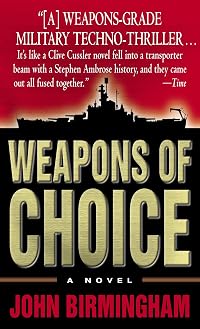
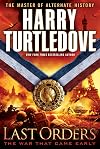
On the eve of America’s greatest victory in the Pacific, a catastrophic event disrupts the course of World War II, forever changing the rules of combat. . . .The impossible has spawned the unthinkable. A military experiment in the year 2021 has thrust an American-led multinational armada back to 1942, right into the middle of the U.S. naval task force speeding toward Midway Atoll—and what was to be the most spectacular U.S. triumph of the entire war.
Thousands died in the chaos, but show more the ripples had only begun. For these veterans of Pearl Harbor—led by Admirals Nimitz, Halsey, and Spruance—have never seen a helicopter, or a satellite link, or a nuclear weapon. And they’ve never encountered an African American colonel or a British naval commander who was a woman and half-Pakistani. While they embrace the armada’s awesome firepower, they may find the twenty-first century sailors themselves far from acceptable.
Initial jubilation at news the Allies would win the war is quickly doused by the chilling realization that the time travelers themselves—by their very presence—have rendered history null and void. Celebration turns to dread when the possibility arises that other elements of the twenty-first century task force may have also made the trip—and might now be aiding Yamamoto and the Japanese.
What happens next is anybody’s guess—and everybody’s nightmare. . . . show less
Tags
Recommendations
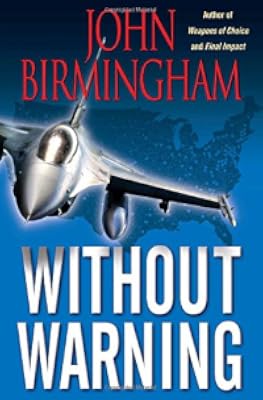
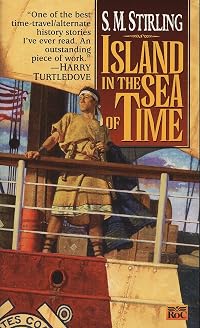
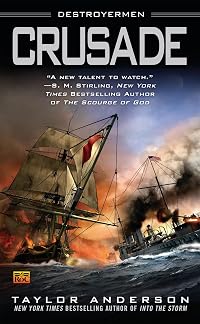
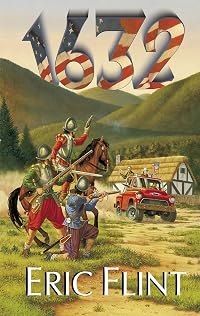


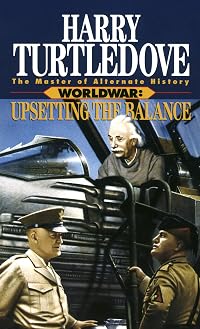
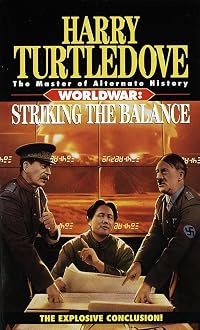
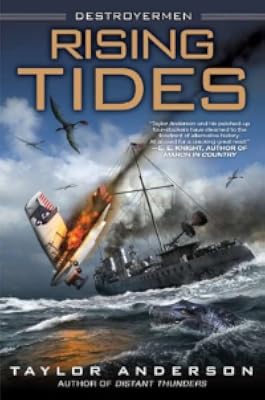
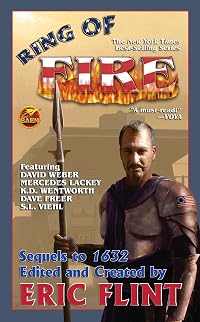

Member Recommendations
Dragget Alternate History of World War II
Member Reviews
It’s January 2021, and an international task force headed up by the USS Hillary Clinton (a George Bush class supercarrier), is off Indonesia, responding to a political crisis caused by the overthrow of the legitimate government and its replacement by the extremist Caliphate. Because of the haste with which the task force was thrown together, they’ve got with them a research ship that had to come along with its protective escort—no time and no spare forces available to send it off to a safer distance. While the rest of the task force waits and prepares for action, the scientists continue their experiments—which, contrary to the official story, do not involve sea floor mapping. Something goes horribly wrong, and major pieces of show more the task force find themselves someplace else, surrounded by unfamiliar ships behaving in a hostile manner. It’s now 1942, and the unfamiliar ships turn out to be very familiar, once the naval history buffs recover enough to identify them. It’s the US fleet steaming toward Midway. Unfortunately, the two fleets do major damage to each other before the 21st century officers realize they’re all ostensibly friendlies, and then manage to convey that message convincingly to the 1942 Americans.
Conveying this message convincingly is somewhat hampered by the fact that they’ve got a Japanese ship with them, as well as some German officers. And of course life is further complicated by the racially mixed crew, and the fact that both women and blacks are well-represented among the officers. But with major damage to both fleets, including the fact that some of the 21st century task force apparently didn’t make the trip successfully, they have to learn to work together if they’re going to prevent a disaster at Midway.
It’s extremely well-done, fast-paced and exciting. The characters, from Admiral Phillip Kolhammer on the Hillary Clinton, down to Able Seaman Slim Jim Davidson, on the USS Astoria, are mostly well-rounded and convincing (although some of the 1942 British officers do seem to have been cobbled together out of left-over cardboard. Birmingham, by the way, is Australian.) And mostly the history seems correct, up to the point where it starts changing, and if any of the military details are wrong, I’m not knowledgable enough to catch them. There is one minor error, though, demonstrating why it’s dangerous for British and Australian writers to assume that America is as much like their homes as the language sometimes suggests: At one point, Birmingham has two of his 1940s American enlisted seamen, Moose Molloy and Slim Jim Davidson, talking about American “Girl Guides.” While it’s perfectly correct that the organization was originally founded as “Girl Guides of America” in 1912, they changed their name to “Girl Scouts of America” in 1913. Moose and Slim Jim would never have heard the name “Girl Guides,” much less used it in casual conversation. This is such an obscure bit of information that googling “Girl Guides of America” takes you to the Wikipedia article that explains this in its first few sentences: http://en.wikipedia.org/wiki/Girl_Scouts_of_the_USA This does give me some concerning, wondering what other details he missed that may be glaringly obvious to someone else.
Nevertheless, it’s a fun book and I recommend it. show less
Conveying this message convincingly is somewhat hampered by the fact that they’ve got a Japanese ship with them, as well as some German officers. And of course life is further complicated by the racially mixed crew, and the fact that both women and blacks are well-represented among the officers. But with major damage to both fleets, including the fact that some of the 21st century task force apparently didn’t make the trip successfully, they have to learn to work together if they’re going to prevent a disaster at Midway.
It’s extremely well-done, fast-paced and exciting. The characters, from Admiral Phillip Kolhammer on the Hillary Clinton, down to Able Seaman Slim Jim Davidson, on the USS Astoria, are mostly well-rounded and convincing (although some of the 1942 British officers do seem to have been cobbled together out of left-over cardboard. Birmingham, by the way, is Australian.) And mostly the history seems correct, up to the point where it starts changing, and if any of the military details are wrong, I’m not knowledgable enough to catch them. There is one minor error, though, demonstrating why it’s dangerous for British and Australian writers to assume that America is as much like their homes as the language sometimes suggests: At one point, Birmingham has two of his 1940s American enlisted seamen, Moose Molloy and Slim Jim Davidson, talking about American “Girl Guides.” While it’s perfectly correct that the organization was originally founded as “Girl Guides of America” in 1912, they changed their name to “Girl Scouts of America” in 1913. Moose and Slim Jim would never have heard the name “Girl Guides,” much less used it in casual conversation. This is such an obscure bit of information that googling “Girl Guides of America” takes you to the Wikipedia article that explains this in its first few sentences: http://en.wikipedia.org/wiki/Girl_Scouts_of_the_USA This does give me some concerning, wondering what other details he missed that may be glaringly obvious to someone else.
Nevertheless, it’s a fun book and I recommend it. show less
I had picked up the third book of the series without knowing it was a series. After 5-6 pages I started feeling like I had come into the middle of a story. So I found the first book. I wasn't disappointed. I'm a fan of alternative history stories which was what attracted me. My only real problem with the story is the central event of how they got into the past in the first place. I'd have thought that the black hole or whatever would have killed them all but that wouldn't have been much of a story. So let's get past that. So here's a few whys. Why did the bulk of the fleet just happen to land in the middle of the US Navy fleet in 1941? Why didn't they all land in the same place? Why did one ship land on top of and partially in a show more mountain, seemingly fused together? A future ship and a 1941 ship end up fused together, with grotesque results for crewmen and furniture. Why did all the other ships arrive floating in the ocean and not somehow fused with the water? What happened to all the air they landed in?
Despite these questions I still enjoyed the book and plan to read the rest of the series.
Comment show less
Despite these questions I still enjoyed the book and plan to read the rest of the series.
Comment show less
I think Birmingham may be doing something very important. He may be telling the story of what 20 years of the War on Terrorism does to our world. This novel is structured as a straight forward alternate history. What happens when a 21st century naval task force is transported back to 1942 in the pacific. But the meat of the story is the way mid 20th century Americans react to their 80 years later countrymen and allies and vice versa.
Weapons of Choice made compelling reading - and set the stage for more stories set in this world. There were some loose ends, but I'm looking forward to them being resolved as the trilogy plays itself out. I especially like the fact that the Japanese and Germans have their own chance at the technology. With show more Germany's lead in rocket science, and American resentment of the women and minorities represented in the future UN force, it'll be interesting to see how the battle for technological supremacy unfolds. show less
Weapons of Choice made compelling reading - and set the stage for more stories set in this world. There were some loose ends, but I'm looking forward to them being resolved as the trilogy plays itself out. I especially like the fact that the Japanese and Germans have their own chance at the technology. With show more Germany's lead in rocket science, and American resentment of the women and minorities represented in the future UN force, it'll be interesting to see how the battle for technological supremacy unfolds. show less
The premise of this book is simple: What if a contingent of 21st century naval ships get sucked through time and land back in the middle of World War 2? If that makes you intrigued, you should read this book.
Once I got past the first hundred pages of the 21st century folks and the 20th century folks mindlessly killing each other (which was a terrible slog), I enjoyed the story. There are a lot of characters thrown at you, both fictional and historical, and it's hard to keep them straight. But Birmingham focuses his attention on a select few to keep the reader interested and the story moving along. The Axis players had much weaker characterizations, but that is because they were not sympathetic characters to begin with.
It was really show more interesting to see how both the future and the past characters interact and clash, given technological, cultural, and ideological differences. show less
Once I got past the first hundred pages of the 21st century folks and the 20th century folks mindlessly killing each other (which was a terrible slog), I enjoyed the story. There are a lot of characters thrown at you, both fictional and historical, and it's hard to keep them straight. But Birmingham focuses his attention on a select few to keep the reader interested and the story moving along. The Axis players had much weaker characterizations, but that is because they were not sympathetic characters to begin with.
It was really show more interesting to see how both the future and the past characters interact and clash, given technological, cultural, and ideological differences. show less
I have not really been a great fan of alternative histories but this book is a serious exception. It could be compared to the S.M.Sterling's Nantucket series which I did enjoy when I read it but this series beginning with Weapons of Choice has a lot more meat on the bone.
This is not written in a linear fashion. You rarely have a scene last more than a half dozen pages before flashing to a new situation, parking the last scene on hold. This can be annoying at times and does not work at all in some books but Birmingham controls this well enough. You must be prepared to adsorb 20-100 character names and it is frustrating trying to figure out who is a throw away character and who you should remember.
The book is ostensibly about a battle show more group from 2021 that finds itself transferred to the past, most of the vessels wind up in the middle of the USA fleet on its way to Midway Island and since one of the international battle group is Japanese this starts a huge fight until reason prevails.
There is a strong theme of comparison of gender and race issues between 1942 and 2021. The multi-national force of 2021 is racially integrated and it seems a lot of the officers are female. Of course, this does not sit well with 1942 military attitudes and is the source of much of the conflict in the book.
I was also interested in the fact that a supercarrier is named the USS Hillary Clinton. I wonder if Hillary has read the book. There are interesting predictions subtly slipped into the text of the book that explain why the ship has her name. No Spoilers but the predictions made in the book are sort of mixed blessing for her.
If you are good with the racist use of the "N" word describing blacks, the good guys are mostly female officers from the future while the bad guys are not just the Japanese or German but mostly all males from the past, then you are in for a great read. Never boring, constant plot shifts though the final battle scenes in the book are surgical and predictable, well written and thought provoking. show less
This is not written in a linear fashion. You rarely have a scene last more than a half dozen pages before flashing to a new situation, parking the last scene on hold. This can be annoying at times and does not work at all in some books but Birmingham controls this well enough. You must be prepared to adsorb 20-100 character names and it is frustrating trying to figure out who is a throw away character and who you should remember.
The book is ostensibly about a battle show more group from 2021 that finds itself transferred to the past, most of the vessels wind up in the middle of the USA fleet on its way to Midway Island and since one of the international battle group is Japanese this starts a huge fight until reason prevails.
There is a strong theme of comparison of gender and race issues between 1942 and 2021. The multi-national force of 2021 is racially integrated and it seems a lot of the officers are female. Of course, this does not sit well with 1942 military attitudes and is the source of much of the conflict in the book.
I was also interested in the fact that a supercarrier is named the USS Hillary Clinton. I wonder if Hillary has read the book. There are interesting predictions subtly slipped into the text of the book that explain why the ship has her name. No Spoilers but the predictions made in the book are sort of mixed blessing for her.
If you are good with the racist use of the "N" word describing blacks, the good guys are mostly female officers from the future while the bad guys are not just the Japanese or German but mostly all males from the past, then you are in for a great read. Never boring, constant plot shifts though the final battle scenes in the book are surgical and predictable, well written and thought provoking. show less
I like alternative history, the whole "what if..." mindset. While we could never know, it's an interesting thought experiment to change something small or big in the past and try to figure out what the result would have been.
This book, published 2004, is a mix of science fiction and alternative history since it begins jumping 20 years into the future (though judging from the technology it's more like 100 years into the future), followed by moving that future back to 1942 and the second word war.
The result of this alternative history is a lot of clashes on both social and military levels so it's absolutely an interesting idea. The problem is that the author uses a lot of stereotypes to illustrate those conflicts and those stereotypes show more become nothing but the stereotype. No depth, nothing but surface.
One thing in particular grates me. To create interesting scenes the author had to gift some characters with a great deal of single minded stupidity. Stupidity of a kind that is incompatible with the positions they occupy. It just does not make any sense.
For people considering this and the series it starts, I can at least say that the end is better than the beginning. It's possible the rest of the series is better. show less
This book, published 2004, is a mix of science fiction and alternative history since it begins jumping 20 years into the future (though judging from the technology it's more like 100 years into the future), followed by moving that future back to 1942 and the second word war.
The result of this alternative history is a lot of clashes on both social and military levels so it's absolutely an interesting idea. The problem is that the author uses a lot of stereotypes to illustrate those conflicts and those stereotypes show more become nothing but the stereotype. No depth, nothing but surface.
One thing in particular grates me. To create interesting scenes the author had to gift some characters with a great deal of single minded stupidity. Stupidity of a kind that is incompatible with the positions they occupy. It just does not make any sense.
For people considering this and the series it starts, I can at least say that the end is better than the beginning. It's possible the rest of the series is better. show less
A fun reading and fascinating concept. John Birmingham hasn't disappointed again in this my second book under his authorship. The battle descriptions while enjoyable (read like a Clancy Novel) were a little long in some areas (like the first 100 pages), but the anachronistic interactions between the time travelers and residents of 1942 were not only entertaining and fascinating. The happenings and ideas from the plot line seemed very plausible and the hint of future plot directions make me excited about reading the next in this trilogy.
Members
- Recently Added By
Lists

Best Alternate History
111 works; 60 members

Best Time Travel Novels
165 works; 125 members

Recommended AltHist
24 works; 1 member
Author Information

49+ Works 5,830 Members
John Birmingham was born in Liverpool, England on August 7, 1964. He migrated with his parents to Australia in 1970. He attended St. Edmunds Christian Brother's College and the University of Queensland in Brisbane. He holds a degree in international relations. He has written numerous fiction and nonfiction books including The Axis of Time Trilogy, show more Without Warning, He Died with a Felafel in His Hand, and How to Be a Man. Leviathan won the National Award for Nonfiction at Australia's Adelaide Festival of the Arts. He has also written for numerous magazine including The Sydney Morning Herald, Rolling Stone, Penthouse, and Playboy. (Bowker Author Biography) show less
Some Editions
Awards and Honors
Distinctions
Series

Common Knowledge
- Canonical title
- Weapons of Choice
- Original publication date
- 2004-06
- People/Characters
- William F. Halsey Jr. (admiral); Chester W. Nimitz (admiral); Raymond A. Spruance (admiral)
- Important places
- Midway Atoll; Pacific Ocean
- Important events
- World War II (1939 | 1945); World War II, Pacific Theater (1941-12-07 | 1945-09-02)
- Dedication
- For Jane, the believer
- First words
- The Caliphate spy, a Javanese carpenter known simply as Adil, resettled himself against a comfortable groove in the sandalwood tree.
- Last words
- (Click to show. Warning: May contain spoilers.)The German Foreign Minister, Joachim von Ribbentrop, brushed a piece of lint from his sleeve as he waited for Joseph Stalin to admit him to the Soviet Politburo, to argue the case for a cease fire and a new alliance with the Axis against the liberal democracies.
Classifications
Statistics
- Members
- 1,075
- Popularity
- 23,951
- Reviews
- 21
- Rating
- (3.69)
- Languages
- English, Polish
- Media
- Paper, Audiobook, Ebook
- ISBNs
- 11
- ASINs
- 8