On This Page
Description
A recognized master fantasist, Tanith Lee has won multiple awards for her craft, including the British Fantasy Award, the World Fantasy Award for Life Achievement, and the Bram Stoker Award for Lifetime Achievement in Horror.The fourth installment in Lee’s breathtaking series, Tales from the Flat Earth, Delirium’s Mistress returns to a shadowy and mythic world where demons battle for dominion, and the fate of mankind is shaped by the whims of capricious and volatile beings.
Beneath the show more mortal realm of the Flat Earth, demons lurk. But Azhriaz—daughter of the mortal priestess Dunizel and the demon known as Night’s Master, Azhrarn—bridges these two worlds, a being of both light and darkness. Raised on an isolated isle in the demons’ realm of Underearth, guarded and hidden away from demon and mortal alike, Azhriaz was meant to sleep forever, never knowing the world outside her dreams.
But other forces in the Underearth are moving to wake Azhriaz. Prince Chuz, the demon known as Delusion’s Master, has made an enemy of Azhrarn, after his betrayal cost Dunizel her life. Chuz seeks out Azhriaz’s island, drawn by her latent power and entranced by her beauty. To release Azhriaz from her eternal slumber, Chuz must create the grandest illusion he has ever rendered. If he succeeds, Azhriaz will be reborn as Delirium’s Mistress, a sorcerous of extraordinary power. Perhaps even more powerful than Azhrarn himself....
Delirium's Mistress in the fourth book in the Flat Earth sereies. show less
Tags
Recommendations

























Member Reviews
I am not the only one to have remarked the Arabian Nights quality to the nested and proliferating stories in Tanith Lee's Flat Earth books. But by this fourth volume, the use of biblical tropes seems to have increased to the point where they help to inform the content as much as Scheherazade does the style. Always subverted in the amoral otherworldly context of Lee's fantasy, incidents in Delerium's Mistress include her versions of the destruction of the Cities of the Plain (i.e. Sodom and Gomorrah) and the tempting of Jesus in the wilderness, among others.
Earlier books in this series have not lacked for sexiness, but wow. The coition of the undersea prince Tavir with the witch goddess Azhriaz is quite a textual achievement (281-3). show more This book also plays up the cosmic in impressive sequences like the creation of the three avenging angels (207-12). On the whole, it is the least capable of standing alone among the books of its series, being especially dependent on the events of Delusion's Master and also often referencing the other two prior volumes. In fact, it knits together the various threads of previous stories so well, that I wonder if Lee can have had this book, centered on the half-mortal daughter of one of the Lords of Darkness, as a planned destination all along.
My suspicions in this regard are also informed by the strong resonance of Delerium's Mistress with Lee's first-published novel for adults, The Birthgrave. There is a shared scale and narrative sensibility, and the parallel roles of the protagonist seem to run in a reversed sequence. The philosophical outcomes are much the same, although a significant maturation of perspective is also present in this later book.
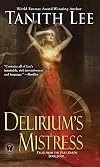
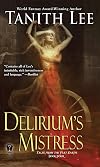
In addition to the attractive and appropriate cover art from Michael Whelan, this original paperback edition includes a handful of interior illustrations by Lee herself. show less
Earlier books in this series have not lacked for sexiness, but wow. The coition of the undersea prince Tavir with the witch goddess Azhriaz is quite a textual achievement (281-3). show more This book also plays up the cosmic in impressive sequences like the creation of the three avenging angels (207-12). On the whole, it is the least capable of standing alone among the books of its series, being especially dependent on the events of Delusion's Master and also often referencing the other two prior volumes. In fact, it knits together the various threads of previous stories so well, that I wonder if Lee can have had this book, centered on the half-mortal daughter of one of the Lords of Darkness, as a planned destination all along.
My suspicions in this regard are also informed by the strong resonance of Delerium's Mistress with Lee's first-published novel for adults, The Birthgrave. There is a shared scale and narrative sensibility, and the parallel roles of the protagonist seem to run in a reversed sequence. The philosophical outcomes are much the same, although a significant maturation of perspective is also present in this later book.
In addition to the attractive and appropriate cover art from Michael Whelan, this original paperback edition includes a handful of interior illustrations by Lee herself. show less
The Basics
This is the fourth installment in Tanith Lee’s Tales of the Flat Earth. Last we left off in Delusion’s Master, Azhrarn, Prince of Demons, had fallen in love with a mortal and sired a child. This is the story of that child.
My Thoughts
Tales of the Flat Earth is Lee’s masterstroke when it comes to fantasy writing. It’s a dark fairy tale that makes no attempt at being anything but purely adult. I have copies of the previous three books that plainly state “adult fantasy” on the cover, as if to say, “don’t say we didn’t warn you.” And going back to that “masterstroke” statement, its scope is enormous and the writing is perfectly beautiful. It’s purple, but it suits the world and these characters and the show more lustrous quality of everything shown.
From birth until Azhriaz’s ultimate fate, Lee covers it all. She is amazing at showing a character’s entire life, leaving out no detail, and yet condensing it so perfectly. It never drags. And it’s never rushed. But you’ve lived an entire life with Azhriaz, gone through all her changes (which include several name changes to denote her different stages), and it’s incredibly satisfying.
It’s hard for me to go into details without spoiling, because this is the fourth book in a series, but I will say it’s hard to get me hooked into a series. I tend toward standalone novels. Trilogies and series are hard to commit to for me. I ask a lot of a story that long. Namely that it be engaging throughout and have a world worth exploring. So admitting that I mostly avoid long series of books, that should be a testament to how wonderful these books are. I’ve been making my way through this series over the years, and I’m always so involved in the story and characters, every time. The same goes for this particular volume.
Lee is a highly overlooked author who deserves a great deal more attention, and this series is a fantastic place to start if you’re interested.
Final Rating
5/5 show less
This is the fourth installment in Tanith Lee’s Tales of the Flat Earth. Last we left off in Delusion’s Master, Azhrarn, Prince of Demons, had fallen in love with a mortal and sired a child. This is the story of that child.
My Thoughts
Tales of the Flat Earth is Lee’s masterstroke when it comes to fantasy writing. It’s a dark fairy tale that makes no attempt at being anything but purely adult. I have copies of the previous three books that plainly state “adult fantasy” on the cover, as if to say, “don’t say we didn’t warn you.” And going back to that “masterstroke” statement, its scope is enormous and the writing is perfectly beautiful. It’s purple, but it suits the world and these characters and the show more lustrous quality of everything shown.
From birth until Azhriaz’s ultimate fate, Lee covers it all. She is amazing at showing a character’s entire life, leaving out no detail, and yet condensing it so perfectly. It never drags. And it’s never rushed. But you’ve lived an entire life with Azhriaz, gone through all her changes (which include several name changes to denote her different stages), and it’s incredibly satisfying.
It’s hard for me to go into details without spoiling, because this is the fourth book in a series, but I will say it’s hard to get me hooked into a series. I tend toward standalone novels. Trilogies and series are hard to commit to for me. I ask a lot of a story that long. Namely that it be engaging throughout and have a world worth exploring. So admitting that I mostly avoid long series of books, that should be a testament to how wonderful these books are. I’ve been making my way through this series over the years, and I’m always so involved in the story and characters, every time. The same goes for this particular volume.
Lee is a highly overlooked author who deserves a great deal more attention, and this series is a fantastic place to start if you’re interested.
Final Rating
5/5 show less
This fourth volume in the series is very long and perhaps that was part of the problem I had with it because it has a very meandering plot, and the characters are all supernatural - demonic or half demon or angels or a man who is immortal - and it is therefore very difficult to relate to them or really care much about them. Even one mortal character who appears only briefly and is a prince of the sea people is a mage and not human.
In this, Azhrarn's half human daughter is left alone and neglected as he mourns the death of her mother. Prince Chuz, prince of madness, who was responsible for that death in the last book, comes to steal her away and she goes willingly. She becomes his lover but their idyll is interrupted when her father show more catches up with them and with Chuz's agreement ends the war between them by inflicting real madness on Chuz and a lifetime of degradation etc. Initially Azhriaz follows him and on the way encounters a town full of vampires which she puts in their place, but eventually she gets fed up, capitulates and agrees to follow her father's original plan of proving to mortals that the gods are pitiless and disinterested, by becoming a goddess set over them. The trouble is, humanity seems to enjoy being degraded and co-operates by, among other things, "anticipating" her demands by slaughtering their families and other excesses. And then all this finally impinges on the notice of the otherwise remote uncaring gods.......
Up to the point where his daughter capitulates and agrees to take the name Azhiraz there is quite a bit of wandering and then a lot more afterwards. Various colourful characters are encountered, the writing is exotic and at times beautifully evocative of colours, shapes, creatures and so on. But I found it dragged because it didn't engage me. Various characters from previous volumes are name checked or even encountered and we learn why one of them changed his name in book 2 when he became a sorceror - male sorcerors are denoted by having 'k' on the end of their names and female sorcerors by having 'as' or 'az'. The reunion of Azhriaz with Chuz at the end puzzled me where she seems to accept his version of events whereby he denies responsibility for her mother's stoning with the blood stone of Azhrarn, the only thing which could have killed her, because the sequence in book 3 made it quite clear that he was acting deliberately. Although the ending is quite touching and various characters learn to relinquish the hatred which had spurned them on previously, there is still quite a jaundiced viewpoint towards human nature through much of the book. At least by the end two of the characters have been spreading a message of love, peace and the value of the human soul for some years.
Given the standard of the writing I didn't want to be too harsh, but on the other hand, giving this 3 stars would mean "I liked it". As I found it dragged, I have to award a 2 star 'OK' valuation. show less
In this, Azhrarn's half human daughter is left alone and neglected as he mourns the death of her mother. Prince Chuz, prince of madness, who was responsible for that death in the last book, comes to steal her away and she goes willingly. She becomes his lover but their idyll is interrupted when her father show more catches up with them and with Chuz's agreement ends the war between them by inflicting real madness on Chuz and a lifetime of degradation etc. Initially Azhriaz follows him and on the way encounters a town full of vampires which she puts in their place, but eventually she gets fed up, capitulates and agrees to follow her father's original plan of proving to mortals that the gods are pitiless and disinterested, by becoming a goddess set over them. The trouble is, humanity seems to enjoy being degraded and co-operates by, among other things, "anticipating" her demands by slaughtering their families and other excesses. And then all this finally impinges on the notice of the otherwise remote uncaring gods.......
Up to the point where his daughter capitulates and agrees to take the name Azhiraz there is quite a bit of wandering and then a lot more afterwards. Various colourful characters are encountered, the writing is exotic and at times beautifully evocative of colours, shapes, creatures and so on. But I found it dragged because it didn't engage me. Various characters from previous volumes are name checked or even encountered and we learn why one of them changed his name in book 2 when he became a sorceror - male sorcerors are denoted by having 'k' on the end of their names and female sorcerors by having 'as' or 'az'. The reunion of Azhriaz with Chuz at the end puzzled me where she seems to accept his version of events whereby he denies responsibility for her mother's stoning with the blood stone of Azhrarn, the only thing which could have killed her, because the sequence in book 3 made it quite clear that he was acting deliberately. Although the ending is quite touching and various characters learn to relinquish the hatred which had spurned them on previously, there is still quite a jaundiced viewpoint towards human nature through much of the book. At least by the end two of the characters have been spreading a message of love, peace and the value of the human soul for some years.
Given the standard of the writing I didn't want to be too harsh, but on the other hand, giving this 3 stars would mean "I liked it". As I found it dragged, I have to award a 2 star 'OK' valuation. show less
This has been the first Tanith Lee book I have read. I had heard that she is a writer with a lerical style on a par with Patricia MkKillip whom I love as a writer. So I was shocked when I read the first chapter with a character that was less magical and maybe more deviate than I would have liked, but soon the story began to grab me. Some people may find this a hard read because the story is more personal than it is grandios more in the vain of Tolkien's Sillmarillion than GRRM's Fire and Ice series. However, the under pinnings are as deep and strong as they are subtle and quiet and if you are looking for a deeply rewarding read that delves suprisingly deep into the nature of family and love, this is your book. The ending will resonate show more with you long after you finish the story. show less
Next in the Flat Earth series, this one leads directly on from the last, with Azhrarn's daughter being liberated from Underearth by Chuz, Delusion's Master. Azhrarn gets upset by this, Chuz gets a mortal lifetime's punishment, and Azhriaz goes off and have adventures, changing her name as she moves from goddess to child to woman. The scope of this book was expansive, it tied together threads from all the previous installments in the series, but I felt that magic was a bit too casually used. There were a few journeys but most often she'd just will herself to appear where she wanted to go.
Quotes I liked:
"He had had no need to prepare himself for this journey. To some, the habit of itinerance is ordinary."
"A hungry man who finds a fruit show more tree may eat some of the fruit. It is perhaps sour or perhaps deliciously sweet. Etiher way, the matter is soon discovered and the man may go on with his journey. Conversely, he may halt under the tree for an hour with his stomach crying to him for food, deciding if it is worth biting at the fruit, since it may not be to his liking." show less
Quotes I liked:
"He had had no need to prepare himself for this journey. To some, the habit of itinerance is ordinary."
"A hungry man who finds a fruit show more tree may eat some of the fruit. It is perhaps sour or perhaps deliciously sweet. Etiher way, the matter is soon discovered and the man may go on with his journey. Conversely, he may halt under the tree for an hour with his stomach crying to him for food, deciding if it is worth biting at the fruit, since it may not be to his liking." show less
I seem to be enjoying each volume less than its predecessor. Perhaps I am wearying of the storytelling style. As the longest of the Tales, it did tend to ramble at times, almost to the point of incoherence. Or else it was just a matter of my waning interest.
The ending was poignant, however.
The ending was poignant, however.
This one just didn't work for me. I loved Night's Master and Death's Master, liked Delusion's Master, and didn't like this one, though I do like Night's Sorceries. I think part of the reason I didn't like it is the length - Tanith Lee seems to be better with shorter works, and this novel is twice the length of the other novels in the series. Or it could be that I simply never warmed to the central character - she seemed too passive to me.
Members
- Recently Added By
Lists

Our Favorite Comfort Reads
334 works; 200 members
Author Information

314+ Works 30,147 Members
Tanith Lee, September 19, 1947 - May 24, 2015 Tanith Lee was born on September 19, 1947 in London, England, the daughter of ballroom dancers. She attended various primary schools and had a variety of jobs, from file clerk and assistant librarian to shop assistant and waitress. Lee attended an art college for one year, but felt she would be better show more writing her ideas than painting them. Her first professional sale was "Eustace," a 90 page vignette which appeared in The Ninth Pan Book of Horror Stories in 1968. While Lee was working as an assistant librarian, she wrote a children's story that was accepted for publication. Others of her stories were also bought but never published. In 1971, Macmillan published "The Dragon Hoard," another children's book, which was followed by "Animal Castle" and "Princess Hynchatti and Other Stories" in 1972. Lee was looking for a British publisher for her book "The Birthgrave," but was denied at every House she went. She then wrote to American publisher DAW, known for it's fantasy and horror selections, who immediately accepted her manuscript and published the book in 1975. Thus began a partnership between the two that lasted till 1989 and resulted in 28 books. After the publication of her third book by DAW, Lee quit her job and became a full-time freelance writer. Lee has been nominated for the World Fantasy Award, the August Derleth Award and the Nebula. She has had more than 40 novels published, along with over 200 short stories. Lee died peacefully in her sleep after a long illness on May 24, 2015. (Bowker Author Biography) show less
Some Editions
Awards and Honors
Awards
Series

Belongs to Publisher Series
DAW Book Collectors (674)
Work Relationships
Common Knowledge
- Canonical title
- Delirium's Mistress
- Original title
- Delirium's Mistress
- Original publication date
- 1986
- People/Characters
- Azhrarn; Azhriaz; Chuz
- Dedication*
- Für Rosemary Hawley Jarman, eine Magierin des Wortes von der runden Welt
- First words
- It was dusk, and for a while the young man seated on the high roof gazed up into the great sloping dome of the sky.
- Last words
- (Click to show. Warning: May contain spoilers.)Who does not know?
- Original language*
- Englisch
*Some information comes from Common Knowledge in other languages. Click "Edit" for more information.
Classifications
Statistics
- Members
- 427
- Popularity
- 72,399
- Reviews
- 8
- Rating
- (4.08)
- Languages
- Dutch, English, French, German
- Media
- Paper, Audiobook, Ebook
- ISBNs
- 10
- ASINs
- 6