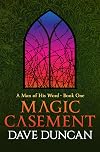
Magic Casement
by Dave Duncan
The Pandemia Books (1), A Man of His Word {Dave Duncan} (1), Die Pandemia-Saga (1)
On This Page
Description
The Man of His Word series debut—a novel "with enough fresh ideas to allow it to sit unashamedly alongside the great fantasy books of recent times" (Fantasy Book Review)."Duncan's unique concept of goblins, fauns, and imps adds a new twist to this imaginative fantasy adventure" as Princess Inosolan is forced to leave behind her carefree childhood—as well as her dear friend, the stableboy Rap (Library Journal). Now of marriageable age, she is sent to a finishing school to hone the show more skills that all noble ladies should possess. Mystery, menace, and the gods appear in short order, as Inos and Rap begin to discover their magical powers, even as Inos is courted by a charming man with motives far more dangerous than the eye—and heart—can see . . .
"Magic Casement has a charm and vibrant sense of humor. . . . If it's traditional fantasy adventure with a bit of nudge-nudge wink-wink you're after, Dave Duncan is your go-to guy." —SFReviews.net. show less
Tags
Recommendations















Member Reviews
Duncan takes traditional archetypes and tweaks them just enough to turn the page faster and faster. With other authors where I know immediately where they are going I tend to get bored easily, not so with Duncan. In Magic Casement you've got to pay attention to the brush strokes as the fantasy elements are like lines from a Dylan Moran monologue. Bonus are the nuggets of wisdom shared with Rap and the intriguing magic system.
{First of 4: A Man of His Word series. Fantasy, magic, YA}
Re-read
The world of Pandemia is inhabited by imps, jotuns, goblins, fauns, djinni, faery and so on - but this fantasy is no fairy-tale. The tiny island kingdom of Krasnegar lies in a forgotten corner of Pandemia, strategic only in that in neither belongs to the Impire nor the jotnaar. It is not much more than a rock in the icy northern sea with only a causeway, which shuts down in winter, connecting it to the mainland. Princess Inosolan has grown up here and, necessarily, her childhood friends have been those destined to become chambermaids or herders. Or stableboys, like Rap. But now she is growing up so her father and aunt decide to send her to Kinvale, her cousin's elegant show more estate in the Impire, to polish her manners - and possibly find a suitable prince.
Meanwhile, Rap is growing too and discovers he has strange new powers which make his friends uncomfortable around him. Then he discovers that there is danger to Inos and he is persuaded to undertake a journey overland in the depths of winter to warn her. But will he be too late?
The magic system Duncan has created for this world is innovative although we only discover it gradually along with Rap; in this book, we only uncover the basics. The title of the series is a pun - but to say more would be to spoil things.
The races who inhabit Pandemia are based on the fairy-tale creatures we know but they are human rather than magical. Each race has its idiosyncracies such as the height of jotuns, goblins' green skin and cruel customs or the hairy legs of fauns. In Inos, Rap feels, all traits are blended to perfection.
My son is currently in the middle of sitting his GCSE exams and I remember when I was his age, not long before I first read this book, I had to learn Keat's [Ode to a Nightingale] for my English Literature exam. I can still quote 'My heart aches and a drowsy numbness stills My sense as though of hemlock I had drunk...' . Duncan uses phrases from the penultimate verse as the titles for this four book series.
Thou wast not born for death, immortal Bird!
No hungry generations tread thee down;
The voice I hear this passing night was heard
In ancient days by emperor and clown:
Perhaps the self-same song that found a path
Through the sad heart of Ruth, when, sick for home,
She stood in tears amid the alien corn;
The same that ofttimes hath
Charm'd magic casements, opening on the foam
Of perilous seas, in faery lands forlorn.
I like the way Duncan uses phrases from other poets' poems as the chapter headings and is kind enough to include the lines at the end of that chapter.
I would say that this is a YA book but it has a grittiness to it that readers at the younger end of the spectrum might not appreciate; the inhabitants of Krasnegar wrest their living from the land immediately across the causeway in summer and then hunker down on the rock to wait out the winter and goblins are very enthusiastic about their methods of torture, which they use to test prisoners and cull the weaker of their own boys.
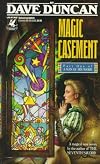
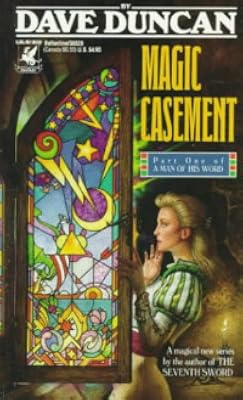
But I like Rap; he has a steadfast loyalty and he's learning as he goes. And I love the colourful cover on my book which is by Don Maitz and has Inos opening the magic casement of the title to be surprised by what lies beyond (although we can't tell what it is).
4.5**** show less
Re-read
The world of Pandemia is inhabited by imps, jotuns, goblins, fauns, djinni, faery and so on - but this fantasy is no fairy-tale. The tiny island kingdom of Krasnegar lies in a forgotten corner of Pandemia, strategic only in that in neither belongs to the Impire nor the jotnaar. It is not much more than a rock in the icy northern sea with only a causeway, which shuts down in winter, connecting it to the mainland. Princess Inosolan has grown up here and, necessarily, her childhood friends have been those destined to become chambermaids or herders. Or stableboys, like Rap. But now she is growing up so her father and aunt decide to send her to Kinvale, her cousin's elegant show more estate in the Impire, to polish her manners - and possibly find a suitable prince.
Meanwhile, Rap is growing too and discovers he has strange new powers which make his friends uncomfortable around him. Then he discovers that there is danger to Inos and he is persuaded to undertake a journey overland in the depths of winter to warn her. But will he be too late?
The magic system Duncan has created for this world is innovative although we only discover it gradually along with Rap; in this book, we only uncover the basics. The title of the series is a pun - but to say more would be to spoil things.
The races who inhabit Pandemia are based on the fairy-tale creatures we know but they are human rather than magical. Each race has its idiosyncracies such as the height of jotuns, goblins' green skin and cruel customs or the hairy legs of fauns. In Inos, Rap feels, all traits are blended to perfection.
My son is currently in the middle of sitting his GCSE exams and I remember when I was his age, not long before I first read this book, I had to learn Keat's [Ode to a Nightingale] for my English Literature exam. I can still quote 'My heart aches and a drowsy numbness stills My sense as though of hemlock I had drunk...' . Duncan uses phrases from the penultimate verse as the titles for this four book series.
Thou wast not born for death, immortal Bird!
No hungry generations tread thee down;
The voice I hear this passing night was heard
In ancient days by emperor and clown:
Perhaps the self-same song that found a path
Through the sad heart of Ruth, when, sick for home,
She stood in tears amid the alien corn;
The same that ofttimes hath
Charm'd magic casements, opening on the foam
Of perilous seas, in faery lands forlorn.
I like the way Duncan uses phrases from other poets' poems as the chapter headings and is kind enough to include the lines at the end of that chapter.
I would say that this is a YA book but it has a grittiness to it that readers at the younger end of the spectrum might not appreciate; the inhabitants of Krasnegar wrest their living from the land immediately across the causeway in summer and then hunker down on the rock to wait out the winter and goblins are very enthusiastic about their methods of torture, which they use to test prisoners and cull the weaker of their own boys.
But I like Rap; he has a steadfast loyalty and he's learning as he goes. And I love the colourful cover on my book which is by Don Maitz and has Inos opening the magic casement of the title to be surprised by what lies beyond (although we can't tell what it is).
4.5**** show less
Entirely terrific.
I felt like I was reading a classic (in the best possible sense of the world) and am surprised this isn't better known--I chose it because it was on bestfantasybooks.com's list of under-appreciated books, and it sounded appealing, but I had no idea how much I would like this.
All the characters were interesting and well-developed (sadly, this happens all too rarely!), the rules for magic were very different and well-thought-out, the world building seemed strong and, joy of joys, parceled out as needed (rather than everything at once just because the author had gone to the trouble of creating it), the plot was exciting--I mean, it had it all.
And (I'm a delicate soul) it wasn't too grisly for me, so hurrah for show more that!
Reminded me in some ways of those marvelous sagas in the 19th century, like Eugene Sue's The Wandering Jew, and in other ways like the rather breathless historical novels of the 1960s/70s (e.g. Jean Plaidy's Plantagenet sequence), rather than any particular fantasy novel I can think of--so that's a nice change. (I'm a bit bored of fantasy novels that are so very consistently in the vein of some particular progenitor or other).
So even though the raw elements do not seem like the freshest stuff imaginable (princess, sorceror, stable boy, etc.) the telling of the tale manages to be very new and very classic at the same time. It's a real treat.
(Note: 5 stars = rare and amazing, 4 = quite good book, 3 = a decent read, 2 = disappointing, 1 = awful, just awful. There are a lot of 4s and 3s in the world!) show less
I felt like I was reading a classic (in the best possible sense of the world) and am surprised this isn't better known--I chose it because it was on bestfantasybooks.com's list of under-appreciated books, and it sounded appealing, but I had no idea how much I would like this.
All the characters were interesting and well-developed (sadly, this happens all too rarely!), the rules for magic were very different and well-thought-out, the world building seemed strong and, joy of joys, parceled out as needed (rather than everything at once just because the author had gone to the trouble of creating it), the plot was exciting--I mean, it had it all.
And (I'm a delicate soul) it wasn't too grisly for me, so hurrah for show more that!
Reminded me in some ways of those marvelous sagas in the 19th century, like Eugene Sue's The Wandering Jew, and in other ways like the rather breathless historical novels of the 1960s/70s (e.g. Jean Plaidy's Plantagenet sequence), rather than any particular fantasy novel I can think of--so that's a nice change. (I'm a bit bored of fantasy novels that are so very consistently in the vein of some particular progenitor or other).
So even though the raw elements do not seem like the freshest stuff imaginable (princess, sorceror, stable boy, etc.) the telling of the tale manages to be very new and very classic at the same time. It's a real treat.
(Note: 5 stars = rare and amazing, 4 = quite good book, 3 = a decent read, 2 = disappointing, 1 = awful, just awful. There are a lot of 4s and 3s in the world!) show less
I liked this, want more of the story, but wished Inos was a better character. I loved her at the beginning - spunky and adventurous, not afraid to get dirty. but the character she became (even when not directly under Andor's influence) was a stereotypical princess - concerned with clothes and balls and comfort. Disappointing.
Princess Inosolan and her close friend, the stableboy Rap, in the world of Pandemia confronts a prophecy that demands the teenage princess marry. She leaves her idyllic life for school, while Rap discovers a unique magic system based on secret, powerful words.
Inosolan, a spirited princess, and Rap, an underestimated, resourceful stableboy, grow from childhood friends into young adults facing danger. Their tale begins in the small, isolated kingdom of Krasnegar before expanding throughout a world populated by humans, imps, trolls, and goblins.
Inosolan, a spirited princess, and Rap, an underestimated, resourceful stableboy, grow from childhood friends into young adults facing danger. Their tale begins in the small, isolated kingdom of Krasnegar before expanding throughout a world populated by humans, imps, trolls, and goblins.
Synopsis:
A stableboy begins to exhibit mysterious powers that draw attention that could be dangerous, and he finds himself a prisoner on the goblin waste as the princess he’s sworn to serve comes ever closer to a danger that only he is aware of.
Review:
Magic Casement is a fantastic start to a four book series that [read the rest:]
http://superfastreader.com/magic-casement-by-dave-duncan.htm
A stableboy begins to exhibit mysterious powers that draw attention that could be dangerous, and he finds himself a prisoner on the goblin waste as the princess he’s sworn to serve comes ever closer to a danger that only he is aware of.
Review:
Magic Casement is a fantastic start to a four book series that [read the rest:]
http://superfastreader.com/magic-casement-by-dave-duncan.htm
fun enough that I'm on the third book of the series now
Members
- Recently Added By
Author Information

94+ Works 14,815 Members
Dave Duncan was born in Scotland in 1933. He graduated from the University of St. Andrews in 1955 and moved to Canada. He worked for 31 years as a geologist in the petroleum industry. He started writing novels in 1984 and became a full-time author in 1986. He has written over 40 novels including the series The Seventh Sword, A Man of His Word, A show more Handful of Men, The King's Blades, The Great Game, Years of Longdirk, King's Daggers, and Seventh Sword. He has also written under the names Sarah B. Franklin and Ken Hood. (Bowker Author Biography) show less
Some Editions
Awards and Honors
Awards
Series


Work Relationships
Is contained in
Common Knowledge
- Canonical title*
- Der Weg nach Kinvale
- Original title
- Magic Casement
- Alternate titles
- La Stanza Fatata
- Original publication date
- 1990
- People/Characters
- Rap; Inosolan of Krasnegar; Kadolan "Aunt Kade" of Krasnegar; Holindarn of Krasnegar; Doctor Sagorn; Andor (show all 14); Jalon; Darad; Thinal; Death Bird "Little Chicken"; Bright Water; Hononin; Mother Unonini; Foronod
- Important places
- Krasnegar, Pandemia; Kinvale, Julgistro, Impire, Pandemia; Raven Totem, Goblin Country, Pandemia
- Epigraph
- The voice I hear this passing night was heard
In ancient days, by emperor and clown:
Perhaps the self-same song that found a path
Through the sad heart of Ruth, when sick for home,
She stood in tears amid the alie... (show all)n corn;
The same that oft-times hath
Charmed magic casements, opening on the foam
Of perilous seas, in faery lands forlorn.
KEATS, Ode to a Nightingale - Dedication
- for Janet, sine qua non
- First words
- Since long before the coming of Gods and mortals, the great rock of Krasnegar had stood amid the storms and ice of the Winter Ocean, resolute and eternal.
- Last words
- (Click to show. Warning: May contain spoilers.)One window was open. There was some discarded bedding on the floor. Otherwise, the chamber was empty.
*Some information comes from Common Knowledge in other languages. Click "Edit" for more information.
Classifications
Statistics
- Members
- 725
- Popularity
- 39,278
- Reviews
- 7
- Rating
- (3.82)
- Languages
- 5 — Czech, English, German, Italian, Swedish
- Media
- Paper, Audiobook, Ebook
- ISBNs
- 13
- UPCs
- 1
- ASINs
- 4