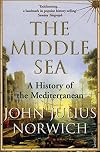
The Middle Sea: A History of the Mediterranean
by John Julius Norwich
The Middle Sea (Collections and Selections — 1-2)
On This Page
Description
A one-volume narrative history of the Mediterranean from Ancient Egypt to 1919. Written in the racy, readable prose for which author Norwich is famous, this is colorful, character-driven history. He tackles a vast subject--vast in time, from the oldest surviving pyramid to the First World War; vast in geography, from Gibraltar to Jerusalem; and vast in culture, including as it does the civilizations of the Phoenicians, the Egyptians, Greece, Carthage, Rome and Byzantium, the Borgias and the show more Medicis, Muhammad and El Cid, Napoleon and Nelson, Moslems, Jews and Christians. This book is not a dry record of facts; it is a rackety read about historical figures--dissolute popes and wily emperors, noble-hearted generals and beautiful princesses. Towns are besieged and sacked, kingdoms won and lost. The narrative covers the glories of Constantinople and Venice, and the stirring history of the islands of Malta, Sicily, Crete and Cyprus.--From publisher description. show lessTags
Recommendations


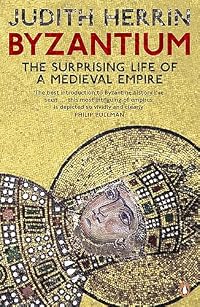
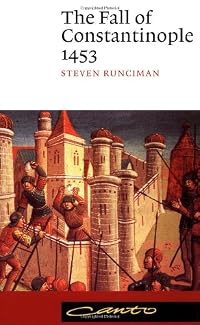
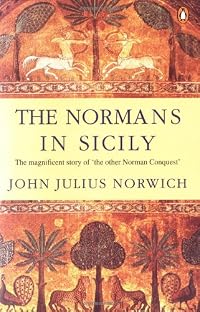
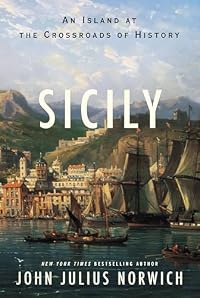



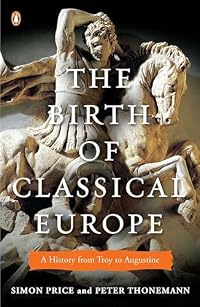
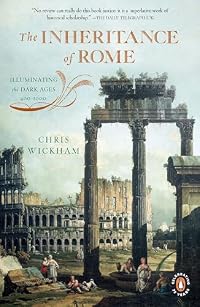
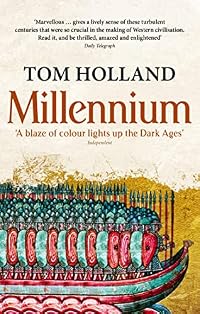
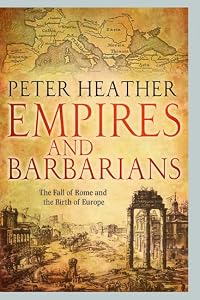



Member Reviews
This book is bad on so many different levels, many of which simply derive from the fact that the concept of the book itself is irretrievably poor. Let's see, how about I write a book about the 5,000 years of civilizations bordering the Mediterranean Sea. Included will be Ancient Egypt, Ancient Greece, Ancient Rome, the rise and spread of Islam .... You get the idea, and the author was able to fit all of that in the first 86 pages!!!
As a result, we're left with writing that looks something like this: Caesar conquered Gaul. He returned to Rome and entered an alliance with Pompey and Crassus. Crassus went to Syria where he was defeated and killed by the Parthians. Pompey and Caesar had a civil war. Caesar chased Pompey to Egypt where he show more seduced Cleopatra. He returned to Rome where he was killed in the Senate. Mark Antony and Octavian avenged Caesar, then had their own civil war. Octavian won, changed his name to Augustus and became Emperor.
There, the last twenty years of the Roman Republic in one paragraph, mission accomplished. If that's the kind of writing you enjoy, and you don't already know the most basic historical background, then have at it.
Added to the faulty concept, is a very informal and borderline inappropriate writing style which detracts from the work.
I must say that after the initial 100 pages, wherein the author tears through 3,500 years of ancient history, things do improve, however not to the point of presenting a rational, well presented view of regional history.
In the Introduction, the author himself states, "...how could the whole thing possibly be compressed into one volume?" IT CAN'T, and therein lies the problem. I've thought that perhaps it could be helpful for a junior high student with no background in history whatsoever, but upon reflection, any effort that attempts a history of Ancient Greece in nine pages, the rise of Islam and the succeeding Caliphates of Damascus, Baghdad and al-Andalus in 14 pages and, believe it or not, Ancient Egypt in two pages, should best be left alone. show less
As a result, we're left with writing that looks something like this: Caesar conquered Gaul. He returned to Rome and entered an alliance with Pompey and Crassus. Crassus went to Syria where he was defeated and killed by the Parthians. Pompey and Caesar had a civil war. Caesar chased Pompey to Egypt where he show more seduced Cleopatra. He returned to Rome where he was killed in the Senate. Mark Antony and Octavian avenged Caesar, then had their own civil war. Octavian won, changed his name to Augustus and became Emperor.
There, the last twenty years of the Roman Republic in one paragraph, mission accomplished. If that's the kind of writing you enjoy, and you don't already know the most basic historical background, then have at it.
Added to the faulty concept, is a very informal and borderline inappropriate writing style which detracts from the work.
I must say that after the initial 100 pages, wherein the author tears through 3,500 years of ancient history, things do improve, however not to the point of presenting a rational, well presented view of regional history.
In the Introduction, the author himself states, "...how could the whole thing possibly be compressed into one volume?" IT CAN'T, and therein lies the problem. I've thought that perhaps it could be helpful for a junior high student with no background in history whatsoever, but upon reflection, any effort that attempts a history of Ancient Greece in nine pages, the rise of Islam and the succeeding Caliphates of Damascus, Baghdad and al-Andalus in 14 pages and, believe it or not, Ancient Egypt in two pages, should best be left alone. show less
I remember loving John Julius Norwich's books about Byzantium as a teenager: big, sweeping epic histories with lots of drama and adventure and some slyly funny asides. Reading The Middle Sea told me that I can never go back and re-read them because I would find them far more tarnished works than they are in my memory. Now, with many more years and training behind me, I can see how shallow are the foundations on which Norwich builds his narrative: the assumptions and generalisations (often gendered, almost always racialised), the thin bibliography, the Eurocentrism, and on and on. Norwich's prose is still pleasurable and there is something of the raconteur here that's appealing. But to the old saw about how you should never meet your show more heroes should perhaps be added one about never going back to re-read their work, either. show less
To write a single-volume history of the entire Mediterranean region starting with the beginnings of recorded history and ending with World War I is quite a project, particularly for an author well into his seventies. Norwich, of course, pulls it off with all his usual chutzpah. The style is lively, we are guided efficiently through the political, military and dynastic complexities of the story without ever getting bogged down in the details, and there is always time for a little digression about an interesting personality. If you're unfamiliar with European history, this would make a very pleasant, unpedantic sort of introduction.
Negative points: the first half of the book, inevitably, often reads like a condensed version of his earlier show more books on Byzantium, Sicily and Venice. If you've read those, you will probably end up skimming quite a lot here. Norwich, oddly for someone supposedly writing the history of a sea, isn't particularly interested in ships or naval affairs - any Patrick O'Brian fan will spot a few minor howlers of a technical nature, and will be disappointed to find Nelson's pursuit of the French fleet and the battle of the Nile treated in a couple of paragraphs, while his relationship with Lady Hamilton and the Neapolitan court gets about half a chapter. Don't read this book looking for profound academic analysis - but do expect to find the author taking advantage of the privileges of age and showing clearly where his sympathies lie i.e. with Byzantium, Venice, Norman Sicily and Moorish Spain and against Catholic Spain, the Hapsburgs and the Bourbons.
The book comes with a lot of nice glossy photographs, most of them rather unoriginally selected. The maps are adequate, if a bit on the mean side, and the book includes a useful index, bibliography and some apparently randomly-selected family trees. show less
Negative points: the first half of the book, inevitably, often reads like a condensed version of his earlier show more books on Byzantium, Sicily and Venice. If you've read those, you will probably end up skimming quite a lot here. Norwich, oddly for someone supposedly writing the history of a sea, isn't particularly interested in ships or naval affairs - any Patrick O'Brian fan will spot a few minor howlers of a technical nature, and will be disappointed to find Nelson's pursuit of the French fleet and the battle of the Nile treated in a couple of paragraphs, while his relationship with Lady Hamilton and the Neapolitan court gets about half a chapter. Don't read this book looking for profound academic analysis - but do expect to find the author taking advantage of the privileges of age and showing clearly where his sympathies lie i.e. with Byzantium, Venice, Norman Sicily and Moorish Spain and against Catholic Spain, the Hapsburgs and the Bourbons.
The book comes with a lot of nice glossy photographs, most of them rather unoriginally selected. The maps are adequate, if a bit on the mean side, and the book includes a useful index, bibliography and some apparently randomly-selected family trees. show less
By its nature this must be a survey book, quite useful for its maps [there's a good one of Gibraltar] and its family trees. The Bibliography is useful if you want to delve more deeply. Norwich is also up to his usual standard of epigramry and the torturous history of Greece from the Napoleonic period is worth the price of admission. There is, of course a better book for each of the chapters, but it provides a good framework for the other barnacles of knowledge to attach themselves. Definitely a readable book, but not the final word on much.
Succinct, entertaining, enjoyable - history for those who want to find out a bit and then choose where they want to go from there. Fascinating read - doesn't dwell too heavily on a particular period, but still manages to pull together a cohesive narrative and include the salient points.
This is the type of history book that will tweak your interest, not bore you rigid and the informal writing style is a joy - I actually laughed out loud on a couple of occasions!
For anyone who just wants an 'overview' - this is your book. For those who want in-depth it would be better to look elsewhere.
This is the type of history book that will tweak your interest, not bore you rigid and the informal writing style is a joy - I actually laughed out loud on a couple of occasions!
For anyone who just wants an 'overview' - this is your book. For those who want in-depth it would be better to look elsewhere.
**start date is approximate**
So this was a very long read, but it was entirely enjoyable.
This book was a very hefty book, going between wars, marriages, deals, deaths, the list goes on.
I really enjoyed and appreciated, however, how much time and effort Norwich put into the book — it really shows in how detailed everything was — since focusing on the history of a sea basically focuses on the histories of all the countries surrounding that sea.
Norwich deftly takes the reader through these histories, focusing mainly on countries surrounding the Mediterranean Sea, and only bringing in countries that didn’t border the Middle Sea when it was absolutely necessary and vital to understanding the material.
So this was a very long read, but it was entirely enjoyable.
This book was a very hefty book, going between wars, marriages, deals, deaths, the list goes on.
I really enjoyed and appreciated, however, how much time and effort Norwich put into the book — it really shows in how detailed everything was — since focusing on the history of a sea basically focuses on the histories of all the countries surrounding that sea.
Norwich deftly takes the reader through these histories, focusing mainly on countries surrounding the Mediterranean Sea, and only bringing in countries that didn’t border the Middle Sea when it was absolutely necessary and vital to understanding the material.
To my mind the most readable historian
Members
- Recently Added By
Author Information

100+ Works 12,595 Members
John Julius Norwich was born in the United Kingdom on September 15, 1929. He served in the Royal Navy before receiving a degree in French and Russian at New College, Oxford. After graduation, he joined the H. M. Foreign Service and served in Belgrade, Beirut, and as a member of British delegation to the Disarmament Conference in Geneva. In 1954, show more he inherited the title of Viscount Norwich. In 1964, he resigned from the Foreign Service to become a writer. He was a historian, travel writer, and television personality. His books included The Normans in the South, A History of Venice, The Italian World, Venice: A Traveller's Companion, 50 Years of Glyndebourne: An Illustrated History, A Short History of Byzantium, Absolute Monarchs: A History of the Papacy, Sicily: An Island at the Crossroads of History, and A History of France. He and H. C. Robbins Landon wrote Five Centuries of Music in Venice. Norwich was the host of the BBC radio panel game My Word! from 1978 to 1982. He wrote and presented more than 30 television documentaries including Maestro, The Fall of Constantinople, Napoleon's Hundred Days, Cortés and Montezuma, Maximilian of Mexico, The Knights of Malta, The Treasure Houses of Britain, and The Death of the Prince Imperial in the Zulu War. In 1993, he was appointed CVO for having curated an exhibition at the Victoria and Albert Museum to mark the 40th anniversary of the Queen's accession to the throne. In 2015, he was awarded the Biographers' Club award for his lifetime service to biography. He died on June 1, 2018 at the age of 88. (Bowker Author Biography) show less
Some Editions
Series

The Middle Sea (Collections and Selections — 1-2)
Work Relationships
Common Knowledge
- Original publication date
- 2006
- Important places
- Venice, Veneto, Italy; Constantinople; Egypt; Greece; Spain; Sicily, Italy (show all 8); Syria; Palestine
- Original language
- English
Classifications
- Genres
- History, Nonfiction, General Nonfiction
- DDC/MDS
- 909.09822 — History & geography History World history Other Geographic Classifications Other Classifications Ocean And Sea Basins Mediterranean
- LCC
- DE80 .N67 — History of Europe, Asia, Africa and Oceania Greco-Roman World History of the Greco-Roman world History
- BISAC
Statistics
- Members
- 759
- Popularity
- 36,742
- Reviews
- 9
- Rating
- (3.68)
- Languages
- 6 — Dutch, English, French, Italian, Russian, Spanish
- Media
- Paper, Audiobook, Ebook
- ISBNs
- 16
- ASINs
- 8