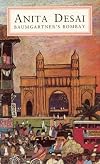
Baumgartner's Bombay
by Anita Desai
On This Page
Description
Hugo Baumgartner is a man who doesn't belong anywhere. He's a Berlin Jew who travelled to India to escape the Nazis and, after years spent the mercy of his past and his tumultuous adopted land, he has now retired to a seedy cat-filled apartment behind Bombay's Taj Hotel. But destiny has not finished with Baumgartner, in this haunting tale of the afflictions of exile.Tags
Recommendations



































Member Recommendations



Member Reviews
Hugo Baumgartner, a Berlin Jew who came all the way to India to escape the Nazis, has a seedy apartment behind Bombay's Taj Hotel. He lives for his cats, going out each day with a plastic bag to forage for them, shoving his way past the berserk family camped on the sidewalk where he lives, they themselves refugees from India's famines and droughts. Mixed in with neighbors called Hiramani, Taraporevala, Barodekar, Coelho, da Silva and Patel, he still does not know which language to use, but mumbles an all-purpose, inadequate ''Good morning, salaam.'' How do you politely say hello to a polyglot country, never mind an entire planet? Imagine someone so sensitive and selfless that he spends most of his day saying hello in all the languages show more there are.
Hugo does not belong at this address, or in the down-at-heel Cafe de Paris next door. He didn't belong in the detention camp for Germans that the Indians held him in for six years during World War II. And he didn't belong in Calcutta, where he lived happily enough before the war. He didn't even belong in Berlin, where life became increasingly complex and hazardous. Hugo's father, who owned a furniture showroom, tramped the streets with an ivory-knobbed cane, ''his head held high, his hat gleaming like the wing of an airborne beetle,'' only to end up in Dachau, from which he returns ''a fortnight later,'' shivering and with nothing to say. ''In that early year,'' we read, ''it was still possible to leave Dachau,'' yet not, one thinks, even in the presence of such a miracle, to know Berlin fully or even to know his son, Hugo Baumgartner.
But Ms. Desai, who rejoices in density of milieu, does her best, giving us a lot that will enable us to guess at more, as if her abiding passion on whatever continent were the opaqueness of people linked with our fever to know them, to have them know us. The Hugo who comes home with a hedgehog in his pocket, who runs home with the butter, who finds his mother awaiting him after his first day at school ''holding the traditional cone of bonbons,'' is also the Hugo who knows he does not belong to the picture-book world of the Christmas tree, or to the world of his father's suicide, or to the world of a foreigner (Firanghi) in India, trying to seem always a customer and not a beggar. show less
Hugo does not belong at this address, or in the down-at-heel Cafe de Paris next door. He didn't belong in the detention camp for Germans that the Indians held him in for six years during World War II. And he didn't belong in Calcutta, where he lived happily enough before the war. He didn't even belong in Berlin, where life became increasingly complex and hazardous. Hugo's father, who owned a furniture showroom, tramped the streets with an ivory-knobbed cane, ''his head held high, his hat gleaming like the wing of an airborne beetle,'' only to end up in Dachau, from which he returns ''a fortnight later,'' shivering and with nothing to say. ''In that early year,'' we read, ''it was still possible to leave Dachau,'' yet not, one thinks, even in the presence of such a miracle, to know Berlin fully or even to know his son, Hugo Baumgartner.
But Ms. Desai, who rejoices in density of milieu, does her best, giving us a lot that will enable us to guess at more, as if her abiding passion on whatever continent were the opaqueness of people linked with our fever to know them, to have them know us. The Hugo who comes home with a hedgehog in his pocket, who runs home with the butter, who finds his mother awaiting him after his first day at school ''holding the traditional cone of bonbons,'' is also the Hugo who knows he does not belong to the picture-book world of the Christmas tree, or to the world of his father's suicide, or to the world of a foreigner (Firanghi) in India, trying to seem always a customer and not a beggar. show less
No wonder she’s been Booker-listed three times! The story of a young Jewish man from Germany who goes to India in the late 1930s, ostensibly for business reasons, and spends the rest of his life there. The book is the story of his life there, spent in increasing poverty. Memory is a major theme; I thought the writing is very good and her observations quite keen. I read a number of her works long ago and don’t know why I stopped. She is a terrific writer and, more than that, her books are solid creations, well worth the time. Highly recommended.
This is not a typical Desai novel, as its central character Hugo is a German Jew, and quite a large part of the book is set in Europe.
Hugo has grown up in Berlin as the son of a fairly prosperous furniture dealer, in the 1920s and witnessed the gradual loss of the world he knows, escaping just in time having been promised a job working for a timber merchant in Calcutta.
His next misfortune is to be interned as a German for the duration of the war, and although his fresh start in Bombay seems to be going well, his prospects are derailed when his employer dies, leaving him to live on his savings in a flat full of rescued cats, his only companion being the fellow German Lotte, an alcoholic former dancer who he knew in Calcutta.
So on the show more surface this is a pretty gloomy story, but it is partially rescued by the liveliness of Desai's descriptive imagination. However I would not recommend it as a starting point for anyone who has never read Desai - [b:Clear Light of Day|35997|Clear Light of Day|Anita Desai|https://i.gr-assets.com/images/S/compressed.photo.goodreads.com/books/1440164048l/35997._SY75_.jpg|35908] and [b:Fasting, Feasting|271734|Fasting, Feasting|Anita Desai|https://i.gr-assets.com/images/S/compressed.photo.goodreads.com/books/1430821849l/271734._SY75_.jpg|2938959] are much better. show less
Hugo has grown up in Berlin as the son of a fairly prosperous furniture dealer, in the 1920s and witnessed the gradual loss of the world he knows, escaping just in time having been promised a job working for a timber merchant in Calcutta.
His next misfortune is to be interned as a German for the duration of the war, and although his fresh start in Bombay seems to be going well, his prospects are derailed when his employer dies, leaving him to live on his savings in a flat full of rescued cats, his only companion being the fellow German Lotte, an alcoholic former dancer who he knew in Calcutta.
So on the show more surface this is a pretty gloomy story, but it is partially rescued by the liveliness of Desai's descriptive imagination. However I would not recommend it as a starting point for anyone who has never read Desai - [b:Clear Light of Day|35997|Clear Light of Day|Anita Desai|https://i.gr-assets.com/images/S/compressed.photo.goodreads.com/books/1440164048l/35997._SY75_.jpg|35908] and [b:Fasting, Feasting|271734|Fasting, Feasting|Anita Desai|https://i.gr-assets.com/images/S/compressed.photo.goodreads.com/books/1430821849l/271734._SY75_.jpg|2938959] are much better. show less
I almost gave up on this book somewhere in the first 25 pages. I'm glad I didn't because halfway through, it just became unputdownable. Yes I know that's not a word. Anita Desai somehow manages to make us like this character who is almost character-less. He is grumpy, unambitious, dull, and lacks a zest for life. And yet, by the end of the book, you feel for him. He reminded me of the grumpy old man in the movie 'Up'. The book is littered with German poems and phrases which I had no clue about but to someone who does, these might add even more to the book.
Hugo Baumgartner is a German Jew who as a young man emigrated to India on the rise of Hitler. His life story, from childhood in Germany, to his internment in India with other German citizens during World War II, to his failed business enterprises after the war, alternates with scenes from his current life as an elderly man in Bombay, living in poverty and begging scraps of food from restaurants to feed the dozens of stray cats he cares for, both in his apartment and on the streets.
I've read other novels by Anita Desai which I've liked very much. She is an excellent writer. However, as I read the first parts of this novel, I was puzzled at why she, an Indian woman, would choose as her protagonist an elderly German Jewish man. It took me show more a while to suspend belief enough to feel that I was in Baumgartner's mind, not just seeing him from the outside. Also, for a novel with "Bombay" in its title, I didn't find the city itself (or even India--he lives in Calcutta at first) to be much of a presence, as it is, for example, present and permeating the entire lives of the characters in the novels of, say, Salman Rushdie.
SPOILER
My main problem with the novel, however, is that 5 or 6 pages from the end there is an abrupt and catastrophic event that comes out the blue, totally unexpected. I was unprepared, and felt that this just did not fit into the novel.
Although the book was engaging enough that I kept reading, it is not entirely successful, and it is not one I would recommend.
2 1/2 stars show less
I've read other novels by Anita Desai which I've liked very much. She is an excellent writer. However, as I read the first parts of this novel, I was puzzled at why she, an Indian woman, would choose as her protagonist an elderly German Jewish man. It took me show more a while to suspend belief enough to feel that I was in Baumgartner's mind, not just seeing him from the outside. Also, for a novel with "Bombay" in its title, I didn't find the city itself (or even India--he lives in Calcutta at first) to be much of a presence, as it is, for example, present and permeating the entire lives of the characters in the novels of, say, Salman Rushdie.
SPOILER
My main problem with the novel, however, is that 5 or 6 pages from the end there is an abrupt and catastrophic event that comes out the blue, totally unexpected. I was unprepared, and felt that this just did not fit into the novel.
Although the book was engaging enough that I kept reading, it is not entirely successful, and it is not one I would recommend.
2 1/2 stars show less
The absorbing tale of Hugo Baumgartner, a German Jew who grows up in Berlin in the lead up to WW11. Leaving Germany for India just before WW11, he finds himself interned and on his release after the war having to come to terms with life in India as return to Germany is not an option. Desai conjures up the trauma of life in Nazi Germany & India for Baumgartner - very vivid story telling and a poignant tale with a tragic end.
This book was just "okay." I honestly was expecting a lot more from this book, but the storyline was just so implausible. I mean, first Baumgartner leaves his widowed mother alone in war-torn Germany (oh, did I mention his dad kills himself by sticking his head in the oven???) to go all the way to India by himself, then he gets captured and put into a POW camp, right alonside Nazis. Then he leaves the camp, lives well into retirement in India, then takes in some drugged up kid who stabs him and steals his silver horse-racing cups (who in their right mind would take in an obvious drug addict? This is where I just lost faith in the story completely), and somewhere along the way he becomes friends with an extremely weird dancing girl of show more some sort. Their relationship is so awkward (I'm not sure what we're supposed to make of them sleeping together but not "sleeping together.").
The storyline just has way too much going on, and it was too unlikely for any of it to be truly believable. This story could have been wonderful in so many ways, but it just fell short of the mark. show less
The storyline just has way too much going on, and it was too unlikely for any of it to be truly believable. This story could have been wonderful in so many ways, but it just fell short of the mark. show less
Members
- Recently Added By
Lists

le donne raccontano
116 works; 1 member
Author Information

39+ Works 4,744 Members
Anita Desai was born in Mussoorie, India, in 1937 of Indian and German parentage. Her works focus on relationships and family life in India, particularly the problems of women in Indian society. She has written for both adults and children, winning the Winifred Holtby Prize from the Royal Society of Literature for Fire on the Mountain (1977) and show more the Guardian Prize for Children's Fiction for her novel The Village by the Sea (1982). Among her numerous other honors is a Literary Lion Award from the New York Public Library in 1993. Desai came to America in 1987. She has taught at Mount Holyoke College, Baruch College, and Smithe College. Desai is currently Emeritus John E. Burchard Professor of Humanities at MIT. (Bowker Author Biography) Anita Desai was born & educated in India. Among her many published works are "Fasting, Feasting" (a finalist for the 1999 Booker Prize), "Baumgartner's Bombay," "In Custody," "Games at Twilight," & "Diamond Dust." Her awards & honors include the Alberto Moravia Award, the National Academy of Letters Award, & the Winifred Holtby Prize of the Royal Society of Literature. She lives in Cambridge, Massachusetts, where she teaches writing at MIT. (Publisher Provided) show less
Awards and Honors
Awards
Distinctions
Notable Lists
Common Knowledge
- Original publication date
- 1988-07-04
- Important places
- Mumbai, India; Bombay, India
- Important events
- British Raj (1857 | 1947)
- Epigraph*
- Mitt slut är min början. Efter vartannat växer och skövlas husen, vittrar, påbyggs, flyttas, rivs ner, restaureras... - T. S. Eliot "East Coker"
- Dedication
- LJCRS Book Fair Selection 1990
- First words*
- Fastän Lotte hade flytt den blodbestänkta scenen och flytt den samlade skocken identiskt lika individer - enbenta. näspetande, skådelystna - och skyndat bort längs gatan med en fart som var ovanlig för henne, en fart so... (show all)m ingen skulle ha tilltrott henne, på de höga klackarna som inte längre var stadiga utan vickade berusat under tyngden av hennes tjocka rödådrade ben, saktade hon in när hon närmade sig sin egen dörr.
- Last words*
- (Click to show. Warning: May contain spoilers.)Som om de gav henne en ledtråd till en gåta, gav mening åt det meningslösa.
*Some information comes from Common Knowledge in other languages. Click "Edit" for more information.
Classifications
Statistics
- Members
- 350
- Popularity
- 90,396
- Reviews
- 9
- Rating
- (3.28)
- Languages
- 5 — Dutch, English, German, Italian, Swedish
- Media
- Paper, Ebook
- ISBNs
- 21
- UPCs
- 1
- ASINs
- 5