Witches: The Absolutely True Tale of Disaster in Salem
by Rosalyn Schanzer
On This Page
Description
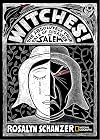
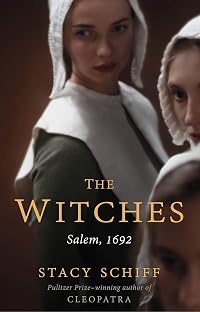
Tackling the same twisted subject as Stacy Schiff's much-lauded book The Witches: Salem, 1692, this Sibert Honor book for young readers features unique scratchboard illustrations, chilling primary source material, and powerful narrative to tell the true tale.In the little colonial town of Salem Village, Massachusetts, two girls began to twitch, mumble, and contort their bodies into strange shapes. The doctor tried every remedy, but nothing cured the young Puritans. He grimly announced the show more dire diagnosis: the girls were bewitched! And then the accusations began.
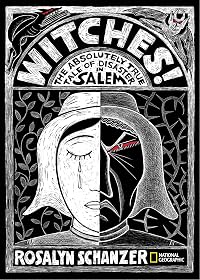
The riveting, true story of the victims, accused witches, crooked officials, and mass hysteria that turned a mysterious illness affecting two children into a witch hunt that took over a dozen people's lives and ruined hundreds more unfolds in chilling, novelistic detail--complete with stylized black-white-and-red scratchboard illustrations of young girls having wild fits in the courtroom, witches flying overhead, and the Devil and his servants terrorizing the Puritans-- in this young adult book by award-winning author and illustrator Rosalyn Schanzer.
Taught in middle and high schools around the U.S., the 17th-century saga remains hauntingly resonant as people struggle even today with the urgent need to find someone to blame for their misfortunes.
Witches! has been honored with many prestigious awards, including:. Robert F. Sibert Informational Book Honor Book
2012 Notable Children's Books--ALSC
NCSS--Notable Social Studies Trade Books in the Field of Social Studies 2012
School Library Journal Best Books of 2011
SLJ's 100 Magnificent Children's Books of 2011
Chicago Public Library Best of the Best 2011
From the Hardcover edition.. show less
Tags
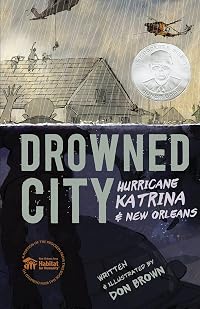
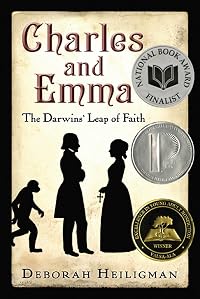
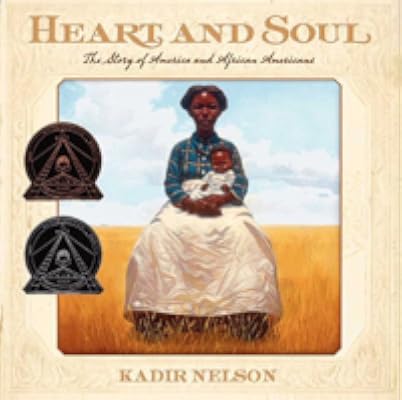
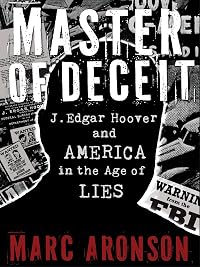
Recommendations


Member Reviews
As the title suggests, “Witches” documents an “absolutely true tale of disaster in Salem.” Beginning with the initial witchcraft accusations in 1692, the book tells the story of the supernatural-fueled hysteria that swept over Salem, MA and its surrounding areas, resulting in the executions of twenty people.
It’s hard to read the historical facts of the Salem Witch Trials and not feel infuriated. Conveniently, most of those convicted of practicing witchcraft were either social outcasts (ex: an Indian slave, a bedridden woman who no longer attended church, a beggar, the mother of a multi-racial son, etc.), or adversaries of powerful Puritan political or church leaders. As the story goes, what began as a few isolated accusations show more of witchcraft from several young girls became a regional witch hunt, which led to the imprisonment of over fifty people.
Once the actual witch trials began, virtually zero physical evidence was brought forth to prompt the sentencing of those accused. Rather, the court (which lacked a single judge formally trained in law) relied on “spectral evidence” from the accusers, or hearsay accounts of an invisible world. During the trial, attendees (mostly young girls) writhed on the floor and claimed that they were being tormented in real time by the “witch” on the stand. According to the documents in the book, the spectacle was said to be very convincing. Years later, it was reported by at least one of the girls that their actions were falsified. Also, on multiple occasions, attendees were seen smuggling pins into the courtroom, which they used to draw blood and blame the “witch” on the stand for.
In the end, despite the obviously corrupted trials, twenty people went to the gallows. Many of those who did not were bullied into confessing their guilt -- an act that caused them to lose their land and possessions and continue to suffer in prison.
The author ends the book with possible explanations of what fueled the events: disease, post-traumatic stress, lies, attention seeking, political corruption, financial corruption, or even the supernatural. While the book closes on a “we’ll never know” note, it is clear from the author’s writing that she views the event as an absolute tragedy.
I initially picked up “Witches” for two reasons, 1) because it was a Sibert Honor Book, and 2) I thought it might be an interesting companion piece to “The Scarlet Letter.” After reading the book, I do think it would align nicely with “The Scarlet Letter,” but also any discussion, lesson or unit (fictional, historical, or contemporary) that deals with the theme of injustice. The frustration I felt while reading this book is similar to one that I’ve felt many times before while reading literature, historical texts, and even the news (ex: To Kill A Mockingbird, The Civil Rights Movement, Trayvon Martin, etc.) It may be worthwhile to teach an entire unit on injustice and consider the ways in which events and stories relate. “Witches” could serve as an interesting examination of a particularly confusing time in American history. show less
It’s hard to read the historical facts of the Salem Witch Trials and not feel infuriated. Conveniently, most of those convicted of practicing witchcraft were either social outcasts (ex: an Indian slave, a bedridden woman who no longer attended church, a beggar, the mother of a multi-racial son, etc.), or adversaries of powerful Puritan political or church leaders. As the story goes, what began as a few isolated accusations show more of witchcraft from several young girls became a regional witch hunt, which led to the imprisonment of over fifty people.
Once the actual witch trials began, virtually zero physical evidence was brought forth to prompt the sentencing of those accused. Rather, the court (which lacked a single judge formally trained in law) relied on “spectral evidence” from the accusers, or hearsay accounts of an invisible world. During the trial, attendees (mostly young girls) writhed on the floor and claimed that they were being tormented in real time by the “witch” on the stand. According to the documents in the book, the spectacle was said to be very convincing. Years later, it was reported by at least one of the girls that their actions were falsified. Also, on multiple occasions, attendees were seen smuggling pins into the courtroom, which they used to draw blood and blame the “witch” on the stand for.
In the end, despite the obviously corrupted trials, twenty people went to the gallows. Many of those who did not were bullied into confessing their guilt -- an act that caused them to lose their land and possessions and continue to suffer in prison.
The author ends the book with possible explanations of what fueled the events: disease, post-traumatic stress, lies, attention seeking, political corruption, financial corruption, or even the supernatural. While the book closes on a “we’ll never know” note, it is clear from the author’s writing that she views the event as an absolute tragedy.
I initially picked up “Witches” for two reasons, 1) because it was a Sibert Honor Book, and 2) I thought it might be an interesting companion piece to “The Scarlet Letter.” After reading the book, I do think it would align nicely with “The Scarlet Letter,” but also any discussion, lesson or unit (fictional, historical, or contemporary) that deals with the theme of injustice. The frustration I felt while reading this book is similar to one that I’ve felt many times before while reading literature, historical texts, and even the news (ex: To Kill A Mockingbird, The Civil Rights Movement, Trayvon Martin, etc.) It may be worthwhile to teach an entire unit on injustice and consider the ways in which events and stories relate. “Witches” could serve as an interesting examination of a particularly confusing time in American history. show less
Great research, written in a relatable way that middle-grade readers will enjoy. This book focuses more on the timeline of events, and the specific accusations, than it does on why the Salem Witchtrials occurred.
Did you know that accused witches were searched for warts "that could be used as teats to feed their evil animal familiars?" Too bad that and many of the other tell-tale signs of witches and non-witches were totally ignored during the Salem witch trials.
In reading this, I realized just how little I really knew about the events in Salem. Schanzer gives us the blow by blow of what happened in Salem in this interesting read. Many of my questions went unanswered (what was fake and what was real? What were the motivations?) because the evidence and information simply does not exist. Schanzer briefly goes over a number of theories, which gave me a sense of what might have happened. (I'm dying to know!)
And the scratchboard illustrations are show more FANTASTIC. show less
In reading this, I realized just how little I really knew about the events in Salem. Schanzer gives us the blow by blow of what happened in Salem in this interesting read. Many of my questions went unanswered (what was fake and what was real? What were the motivations?) because the evidence and information simply does not exist. Schanzer briefly goes over a number of theories, which gave me a sense of what might have happened. (I'm dying to know!)
And the scratchboard illustrations are show more FANTASTIC. show less
The account of the Salem witch trials, what led up to them and the aftermath written for children. Schanzer manages to snag the reader's interest from the start with interesting tidbits and a tone that captures the hysteria of the time. She profiles both the accusers and the accused and uses primary source materials from the trials as well as other sources to give a vivid and accurate account of what happened. The artwork is done in stark black and white with a smattering of red accentuating the tone of the book. Overall it is a well written interesting account of the trials that shook New England, and a tale of what happens when common sense and justice is ignored.
Relates the shockingly true story of the Salem Witch Trials with theatrical intensity and building suspense. This book is gripping from the first page with its combination of macabre, period-style illustrations and engaging narration. Schanzer effectively places the readers amidst the madness of the witch craze in the colonies, but though the story is a dark one, she still manages to keep it light enough for younger readers by trying to rationalize and explain the seemingly erratic and illogical behavior that unfolds. A great way to introduce reluctant readers to history.
A great non-fiction read for ages 10-14 (per the publisher), but I would say that it's more like an YA book, mainly because of the vocabulary. It's a very smooth read and I enjoyed this book very much. The black, white, and red ink drawings were also excellent. 238 pages
Witches! is a non-fiction book that reads like fiction. It was factually interesting and the illustrations really helped to add an extra level of creepy to the book. Sometimes truth is stranger than fiction. The gruesome stories and accusations that come to light in this book give kids a lot to mull over. I think this is a book that would be great to recommend to a high level middle reader who is beginning to exhaust the available selections in the children's section.
With that said, although School Library Journal rates this book for ages 10 and up, remember, this book is about the Salem witch trials. I opened this book thinking I knew what happened, but I think most people have a rather vague knowledge of what occurred during this show more point in history. Some pretty gruesome things took place and the book is through in describing the events, claims and even some name calling by the people participating.
A sensitive child might be upset by the illustrations and content. I know some ten year old's who would eat this up, and others who might be pretty freaked out. I think one of the positive aspects of this book is that it can spark conversations about deep topics. Adults who provide this book might want to prepare themselves for discussions about ethics, religion, peer pressure, history, science and social behavior.
This book received many honors including, Robert F. Sibert Informational Book Honor Book, 2012 Notable Children's Books—ALSC, NCSS—Notable Social Studies Trade Books in the Field of Social Studies 2012, School Library Journal Best Books of 2011, SLJ’s 100 Magnificent Children’s Books of 2011 and Chicago Public Library Best of the Best 2011. show less
With that said, although School Library Journal rates this book for ages 10 and up, remember, this book is about the Salem witch trials. I opened this book thinking I knew what happened, but I think most people have a rather vague knowledge of what occurred during this show more point in history. Some pretty gruesome things took place and the book is through in describing the events, claims and even some name calling by the people participating.
A sensitive child might be upset by the illustrations and content. I know some ten year old's who would eat this up, and others who might be pretty freaked out. I think one of the positive aspects of this book is that it can spark conversations about deep topics. Adults who provide this book might want to prepare themselves for discussions about ethics, religion, peer pressure, history, science and social behavior.
This book received many honors including, Robert F. Sibert Informational Book Honor Book, 2012 Notable Children's Books—ALSC, NCSS—Notable Social Studies Trade Books in the Field of Social Studies 2012, School Library Journal Best Books of 2011, SLJ’s 100 Magnificent Children’s Books of 2011 and Chicago Public Library Best of the Best 2011. show less
Members
- Recently Added By
Lists

Robert F. Sibert Informational Book Medal
102 works; 1 member
Author Information

14+ Works 3,990 Members
Awards and Honors
Awards
Distinctions
Common Knowledge
- Important places
- Salem, Massachusetts, USA
Classifications
Statistics
- Members
- 472
- Popularity
- 64,486
- Reviews
- 27
- Rating
- (3.65)
- Languages
- English
- Media
- Paper, Audiobook, Ebook
- ISBNs
- 12
- ASINs
- 3